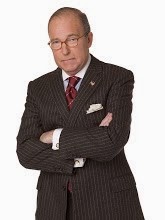
Last night I had the chance to sit down with Sen. Tom Coburn (R-OK) to discuss the government's handling of the swine flu pandemic, as well as what Republicans need to do in order to stage a sorely needed recovery. Sen. Coburn is a medical doctor and a principled, smart-as-a-whip conservative, so his thoughts on these two subjects are worth paying attention to.
Thursday, April 30, 2009
Don't Turn America Into France
My friend Dan Mitchell from the Center for Freedom and Prosperity sent me his latest video today from -- of all places -- an Internet cafe in France. It explores how "President Obama and many other politicians want to expand the burden of government and make America more like France." The video features Veronique de Rugy of the Mercatus Center who explains that the United States should not emulate the policies of her native country.


Wednesday, April 29, 2009
100-Day Lurch to the Left
In a blink of an eye, Obama may have ended the Reagan Revolution.
In the early 1980s, Ronald Reagan’s popularity and policies moved American politics firmly to the right. In only 100 days, Barack Obama’s politics and policies have shifted America way to the left.
The president is seeking to change the whole relationship between the government and the free-enterprise private sector. He is steering the country away from democratic capitalism and toward his big-government command-and-control vision. We are witnessing a triumph of government bureaucrats over entrepreneurs, investors, and small businesses.
And with Sen. Arlen Specter switching from Republican to Democrat, Obama can now move the nation even further to the left. A filibuster-proof Senate will mean even greater economic restructuring with expanded government control of health care and energy and increased unionization.
This looks very much like a war against investors, businesses, and entrepreneurs. Shareholder rights are being eviscerated. Political decisions are replacing the rule of law, the rule of bankruptcy courts, and free-market principles.
We are witnessing more spending, deficits, and debt-creation than anyone ever imagined. Bailout Nation has run amok. This started under Bush, but Obama is raising the stakes exponentially.
The latest federal budget would double the debt in five years and triple it in ten. For some perspective, that debt level is higher than the combined debt levels generated under every president from George Washington to George W. Bush. According to the CBO, federal debt held by the public as a percentage of GDP under Obama is projected to rise to 82 percent in ten years. The budget deficit itself never drops below $670 billion and closes the period at $1.2 trillion. That’s nearly a 6 percent share of the economy.
All of this will certainly lead to large tax-rate hikes that will rob incentive power from entrepreneurs, investors, and small-business owners. Just look at Britain, where the top tax rate has been raised to 50 percent from 40 percent. The Thatcher Revolution is being repealed over there. Unless current trends are reversed, the Reagan Revolution will be repealed over here.
The Obama budget already will raise taxes on overseas corporate earnings and oil-and-gas companies at home. It will elevate taxes on capital gains and dividends for investors and will lift the top tax rate for successful earners. And more is coming.
But this is the wrong direction for economic growth. Instead, business tax rates should be slashed — which, by the way, would repatriate corporate earnings for domestic investment. We need a capital-gains tax holiday. We should be flattening individual tax rates across-the-board. And all manner of loopholes and special-interest deductions should be repealed to broaden the taxable-income base.
Nowhere is the Obama vision of government interference more evident than on the banking front. The White House and Treasury are using TARP as a bullying club to force government control on the country’s financial institutions. There is no exit strategy; no endgame in sight. Quite the opposite: News reports suggest that six major banks could be subjected to government ownership, putting them in the same club as Fannie Mae, Freddie Mac, AIG, GM, and Chrysler. This reminds one of Francois Mitterrand, the former socialist president of France. It’s way outside the American economic tradition.
And TARP itself is riddled with criminal-enterprise undertones. According to Special Inspector General Neil Barofsky, the $700 billion TARP program — which has ballooned to more than $3 trillion in spending, loans, and loan guarantees — is “inherently vulnerable to fraud, waste and abuse.” Barofsky already has opened 20 separate TARP-related criminal investigations and six audits into whether taxpayer dollars are being stolen or wasted. Rest assured that they are.
Economic recovery is still likely in the second half of the year. And President Obama will claim victory for his big-spending policies. But the reality is much different. Massive Federal Reserve pump-priming is moving the economy from deep recession to some kind of recovery. Meanwhile, the combination of deficit spending and easy money increases the threat of stagflation.
Will Republicans take advantage of the wide opening created by Obama’s 100-day lurch to the left? So far the GOP has produced only fragmented policy alternatives and no central spokesperson. That’s not unusual for the party out of power. But the Specter defection underscores the GOP’s sagging fortunes.
Right now, the most promising Republican leader — at least in a policy sense — is former Vice President Dick Cheney. His attack against the release of the CIA interrogation memos and his forceful call for the release of the information gathered during those interrogations — facts that helped keep America safe after 9/11 — clearly rattled Team Obama. Mr. Cheney should now launch a counterattack on Obama’s tax-and-spend New Deal/Great Society enlargement of government power.
It would make for delicious irony, but Dick Cheney may be most effective spokesperson the GOP has.
In the early 1980s, Ronald Reagan’s popularity and policies moved American politics firmly to the right. In only 100 days, Barack Obama’s politics and policies have shifted America way to the left.
The president is seeking to change the whole relationship between the government and the free-enterprise private sector. He is steering the country away from democratic capitalism and toward his big-government command-and-control vision. We are witnessing a triumph of government bureaucrats over entrepreneurs, investors, and small businesses.
And with Sen. Arlen Specter switching from Republican to Democrat, Obama can now move the nation even further to the left. A filibuster-proof Senate will mean even greater economic restructuring with expanded government control of health care and energy and increased unionization.
This looks very much like a war against investors, businesses, and entrepreneurs. Shareholder rights are being eviscerated. Political decisions are replacing the rule of law, the rule of bankruptcy courts, and free-market principles.
We are witnessing more spending, deficits, and debt-creation than anyone ever imagined. Bailout Nation has run amok. This started under Bush, but Obama is raising the stakes exponentially.
The latest federal budget would double the debt in five years and triple it in ten. For some perspective, that debt level is higher than the combined debt levels generated under every president from George Washington to George W. Bush. According to the CBO, federal debt held by the public as a percentage of GDP under Obama is projected to rise to 82 percent in ten years. The budget deficit itself never drops below $670 billion and closes the period at $1.2 trillion. That’s nearly a 6 percent share of the economy.
All of this will certainly lead to large tax-rate hikes that will rob incentive power from entrepreneurs, investors, and small-business owners. Just look at Britain, where the top tax rate has been raised to 50 percent from 40 percent. The Thatcher Revolution is being repealed over there. Unless current trends are reversed, the Reagan Revolution will be repealed over here.
The Obama budget already will raise taxes on overseas corporate earnings and oil-and-gas companies at home. It will elevate taxes on capital gains and dividends for investors and will lift the top tax rate for successful earners. And more is coming.
But this is the wrong direction for economic growth. Instead, business tax rates should be slashed — which, by the way, would repatriate corporate earnings for domestic investment. We need a capital-gains tax holiday. We should be flattening individual tax rates across-the-board. And all manner of loopholes and special-interest deductions should be repealed to broaden the taxable-income base.
Nowhere is the Obama vision of government interference more evident than on the banking front. The White House and Treasury are using TARP as a bullying club to force government control on the country’s financial institutions. There is no exit strategy; no endgame in sight. Quite the opposite: News reports suggest that six major banks could be subjected to government ownership, putting them in the same club as Fannie Mae, Freddie Mac, AIG, GM, and Chrysler. This reminds one of Francois Mitterrand, the former socialist president of France. It’s way outside the American economic tradition.
And TARP itself is riddled with criminal-enterprise undertones. According to Special Inspector General Neil Barofsky, the $700 billion TARP program — which has ballooned to more than $3 trillion in spending, loans, and loan guarantees — is “inherently vulnerable to fraud, waste and abuse.” Barofsky already has opened 20 separate TARP-related criminal investigations and six audits into whether taxpayer dollars are being stolen or wasted. Rest assured that they are.
Economic recovery is still likely in the second half of the year. And President Obama will claim victory for his big-spending policies. But the reality is much different. Massive Federal Reserve pump-priming is moving the economy from deep recession to some kind of recovery. Meanwhile, the combination of deficit spending and easy money increases the threat of stagflation.
Will Republicans take advantage of the wide opening created by Obama’s 100-day lurch to the left? So far the GOP has produced only fragmented policy alternatives and no central spokesperson. That’s not unusual for the party out of power. But the Specter defection underscores the GOP’s sagging fortunes.
Right now, the most promising Republican leader — at least in a policy sense — is former Vice President Dick Cheney. His attack against the release of the CIA interrogation memos and his forceful call for the release of the information gathered during those interrogations — facts that helped keep America safe after 9/11 — clearly rattled Team Obama. Mr. Cheney should now launch a counterattack on Obama’s tax-and-spend New Deal/Great Society enlargement of government power.
It would make for delicious irony, but Dick Cheney may be most effective spokesperson the GOP has.
Tonight on The Kudlow Report
 On tonight's show at 7pm ET on CNBC:
OBAMA'S 100-DAY NEWS CONFERENCE
Issues On The Table
CNBC's John Harwood reports.
REBUILDING THE REPUBLICAN PARTY
The GOP Needs A Recovery Plan
*Sen. Tom Coburn (R-OK)
*Sen. Jim DeMint (R-SC)
KEN LEWIS FEELS THE HEAT
CNBC’s Mary Thompson has the story on today's BofA shareholder meeting.
WHAT ARE THE FEDS GOING TO DO ABOUT THE BIG BANKS?
Cam Fine, President & CEO Independent Community Bankers of America will join us with his perspective.
THE NEXT 100 DAYS:
Backdoor Nationalization – Is The Govt About To Own 6 Banks?
*Peter Morici, University of Maryland business professor and former chief economist of the U.S. International Trade Commission
*Keith Boykin, CNBC Contributor, Daily Voice Editor, Former Clinton White House Aide
MARKET REPORT
CNBC’s Scott Wapner will be live with a report from the Nasdaq.
MARKET & ECONOMY DEBATE
If Things Are So Bad, Why Are Stocks Rising?
*Zach Karabell, CNBC Contributor, River Twice Research President
*Michael Pento, Delta Global Advisors, Inc. Senior Market Strategist
*Stefan Abrams, Bryden-Abrams Investment Management Managing Partner
Please join us. The Kudlow Report. 7pm ET. CNBC.
Specter’s Switcheroo and America's Lurch to the Left
My initial thought on Arlen Specter jumping the GOP ship is Katy bar the door. This is just the latest indication of a lurch to the left in Washington. It does not bode well for investors, businesses and entrepreneurs.
Meanwhile, GOP political prospects are looking increasingly grim. Just this past Friday, Republicans in upstate New York conceded defeat in a hotly contested battle for a congressional seat where the Republican, James Tedisco, held a 25-point lead at the start. His opponent, Democrat Scott Murphy, credits Obama with his come-from-behind victory. Out in Minnesota, Norm Coleman is all but guaranteed to lose to Democrat Al Franken. Sure, pollster Scott Rasmussen shows the GOP even in the generic Congressional race, but it’s getting difficult to find concrete evidence.
Here’s the problem right now: Republicans lack a clear and defining alternative message on the economy, spending, and the unchecked growth of big government. They have been sorely ineffective on TARP, and sorely ineffective on bank and auto bailout nation where Team Obama is threatening to take over six U.S. banks, not to mention GM and Chrysler. This is on top of the already consummated union of Fannie, Freddie, and AIG into the government fold.
Strange as it may seem, the best GOP spokesman right now appears to be former Vice President Dick Cheney who has taken the Obama administration to task over its declassification of CIA torture memos. He says Team Obama has made America less safe. He’s right. Perhaps he can rally the party?
Perhaps we won’t have a lurch to the left. But my worry remains that with Republican ranks dwindling, and the specter of a filibuster proof majority in sight, we could soon be faced with unprecedented government control over healthcare, energy, and unionization.
Moreover, if this massive, anti-business, regulatory apparatus otherwise known as cap-and-trade ever sees the light of day, we’ve got problems. It is a huge, unwieldy tax and economic depressant.
How about card check and ending the secret ballot for unions? Oh my goodness. Wal-Mart, retailers, tech companies, banks and financial services will all feel the union assault.
And how about healthcare nationalization? That will bankrupt the budget, if it hasn’t happened already. It will worsen services and jack up costs.
And let’s not forget the threat of higher tax rates. Great Britain has already gone from 40 percent to 50 percent to finance their gigantic spending appetite. In the name of balancing the already humongous budget here, we are headed in the same direction. Guess what? Big tax hikes will only inhibit growth and slow the economy down.
Unfortunately, all of this looks like the polar opposite of 1981, when Ronald Reagan progressively moved the nation to the right. Today, Obama is tugging the country left. It appears that the president is more popular than his policies, but he is effectively using this popularity to simultaneously move his agenda forward, and increase the strength of his party.
The Democratic machine is gathering steam and looming large in Washington. None of this is good.
Meanwhile, GOP political prospects are looking increasingly grim. Just this past Friday, Republicans in upstate New York conceded defeat in a hotly contested battle for a congressional seat where the Republican, James Tedisco, held a 25-point lead at the start. His opponent, Democrat Scott Murphy, credits Obama with his come-from-behind victory. Out in Minnesota, Norm Coleman is all but guaranteed to lose to Democrat Al Franken. Sure, pollster Scott Rasmussen shows the GOP even in the generic Congressional race, but it’s getting difficult to find concrete evidence.
Here’s the problem right now: Republicans lack a clear and defining alternative message on the economy, spending, and the unchecked growth of big government. They have been sorely ineffective on TARP, and sorely ineffective on bank and auto bailout nation where Team Obama is threatening to take over six U.S. banks, not to mention GM and Chrysler. This is on top of the already consummated union of Fannie, Freddie, and AIG into the government fold.
Strange as it may seem, the best GOP spokesman right now appears to be former Vice President Dick Cheney who has taken the Obama administration to task over its declassification of CIA torture memos. He says Team Obama has made America less safe. He’s right. Perhaps he can rally the party?
Perhaps we won’t have a lurch to the left. But my worry remains that with Republican ranks dwindling, and the specter of a filibuster proof majority in sight, we could soon be faced with unprecedented government control over healthcare, energy, and unionization.
Moreover, if this massive, anti-business, regulatory apparatus otherwise known as cap-and-trade ever sees the light of day, we’ve got problems. It is a huge, unwieldy tax and economic depressant.
How about card check and ending the secret ballot for unions? Oh my goodness. Wal-Mart, retailers, tech companies, banks and financial services will all feel the union assault.
And how about healthcare nationalization? That will bankrupt the budget, if it hasn’t happened already. It will worsen services and jack up costs.
And let’s not forget the threat of higher tax rates. Great Britain has already gone from 40 percent to 50 percent to finance their gigantic spending appetite. In the name of balancing the already humongous budget here, we are headed in the same direction. Guess what? Big tax hikes will only inhibit growth and slow the economy down.
Unfortunately, all of this looks like the polar opposite of 1981, when Ronald Reagan progressively moved the nation to the right. Today, Obama is tugging the country left. It appears that the president is more popular than his policies, but he is effectively using this popularity to simultaneously move his agenda forward, and increase the strength of his party.
The Democratic machine is gathering steam and looming large in Washington. None of this is good.
Tuesday, April 28, 2009
Tonight on The Kudlow Report
On tonight's show at 7pm ET on CNBC:THE FED’S SWINE FLU RESPONSE
CNBC’s Hampton Pearson reports from Washington.
SPECTOR BECOMES A DEM
What Are The Implications?
CNBC chief Washington correspondent John Harwood has the story.
SPECTER'S SWITCHEROO
Current GOP Senate Contender & former Club for Growth president Pat Toomey will offer his perspective.
A FILIBUSTER PROOF SENATE
What Is The Investor Impact?
On to debate will be The Wall Street Journal’s Steve Moore and David Min from the Center for American Progress.
CITI & BofA NEED BIGGER CAPITAL CUSHION
CNBC’s Mary Thompson reports.
WASHINGTON TO WALL STREET
Banks..Stress Tests..Prosecution of Bernanke/Paulson/Geithner
*Harvey Pitt, former SEC Chairman, Kalorama Partners Founder & CEO
*Tom Curran, Partner, Gafner & Shore, LLP
*Bob McTeer, former Dallas Federal Reserve Bank Pres. & CEO
TODAY'S MARKETS
CNBC’s Matt Nesto reports today's top market news.
HOUSING, MARKETS & ECONOMY
*Michael Darda, MKM Partners chief economist
*Robert Shiller, economics professor, Yale School of Management, chief economist Macromarkets
Please join us. The Kudlow Report. 7pm ET. CNBC.
The Man Who Called the Bottom: What Is He Thinking Now?
Here's the tape from last night's Kudlow Report with Dougie Kass. My old friend remains confident that a generational stock market low is now in place. His recap of his key stock market and economic insights from our conversation follows below.
With My Fav'rite Host
4/28/2009 8:08 AM EDT
I had a segment to myself last night with Sir Larry on CNBC's "The Kudlow Report." Here were my bullet points in last night's show:
* I am confident that a generational stock market low is now in place.
* Our equity markets have now fully discounted a "less worse" domestic economy.
* The next up leg will occur when we can quantify and have a better feel of whether the massive doses of fiscal and monetary policy have gotten traction.
* For the shorter term, the U.S. stock market appears vulnerable to a number of unconventional headwinds. It will be a refreshing pause, likely laying the ground for a higher move in the summer.
* More tangible signs of economic traction are necessary before the markets move toward my 1,050 target for the S&P 500.
* Among the investment clouds are an increased and more costly regulatory burden and the increasingly intrusive role of the public sector. This is a valuation headwind, a P/E ratio-moderating phenomenon.
* Going forward, credit will be less plentiful (especially of a securitized kind), and its transmission will not be normalized for some time to come.
* In the current cycle, several other negative catalysts exist, such as the absence of mortgage equity withdrawals that bolstered 2001-2006 growth. This will diminish the prospects for a 2009-2011 economic recovery.
* The specter of rising taxes and higher interest rates in late 2009/early 2010 could negatively impact the already fragile recovery in the economy and in the markets.
* The weakened state of the consumer is the most significant intermediate-term market/economic challenge. It continues to render the market as near-term exposed and must be closely monitored.
* The threat of swine flu, for now, seems to be more of a sideshow to the above than something that will materially impact equities.
Monday, April 27, 2009
Geithner: The Fox Guarding the Henhouse?
 What is going on in this country? The government is about to take over GM in a plan that completely screws private bondholders and favors the unions. Get this: The GM bondholders own $27 billion and they’re getting 10 percent of the common stock in an expected exchange. And the UAW owns $10 billion of the bonds and they’re getting 40 percent of the stock. Huh? Did I miss something here? And Uncle Sam will have a controlling share of the stock with something close to 50 percent ownership. And no bankruptcy judge. So this is a political restructuring run by the White House, not a rule-of-law bankruptcy-court reorganization.
Meanwhile, top Obama adviser Valerie Jarrett opened the door wide on CNN yesterday to bank nationalization and CEO firings. Unfortunately, my take that the economic stress tests are a political stalking horse for more government ownership, more government control of the banks, and more government disruption of shareholder rights and normal corporate governance looks to be coming true.
Then there’s today’s huge New York Times story about Tim Geithner. It starts on the front page and goes on and on for thousands of words. Yes, he missed early signs of the crisis. But he was altogether too cozy with the New York banks, especially Citibank — and Robert Rubin along with Sandy Weill. In fact, at one point Weill asked Geithner to be Citi’s new CEO. And Geithner joined the board of a Weill-run non-profit to help inner-city high-school students. There were numerous lunches and dinners with Rubin and Weill and other Wall Street luminaries.
With Geithner running the Treasury and the potentially criminal enterprise called TARP, is his incestuous relationship with Wall Street bigwigs a perfect example of the fox guarding the henhouse? Was he too cozy to keep a critical eye on the very institutions that blew up later?
By the way, Geithner sometimes worried about derivatives. But he also worked hard for a plan that would reduce the amount of capital banks were required to keep on hand.
You just have to wonder about this cozy relationship with a trillion dollars of TARP money at stake — essentially a second government budget for Bailout Nation run by a young guy who is in bed and under the covers with the leading bankers he’s supposed to regulate, all while the TARP inspector general is launching 20 criminal probes into how all this taxpayer money is going to be spent.
I don’t usually agree with Nobel economist Joe Stiglitz, but he talks about how mindsets can be shaped by people you associate with and that “you come to think that what’s good for Wall Street is good for America.” I know Stiglitz, Krugman, and the other lefties want to nationalize the banks, and allegedly Geithner does not. But frankly, backdoor nationalization is coming and Mr. Geithner’s independence is suspect.
No, the Times article doesn’t mention Geithner’s failure to pay back taxes until just before he was nominated for Treasury secretary. But it seems that at this point in history we need a strong, credible, and independent TARP and bank regulator.
The New York Times really makes me wonder all over again about Mr. Geithner.
Tonight on The Kudlow Report
On tonight's show at 7pm ET on CNBC:OBAMA’S FIRST 100 DAYS
CNBC chief Washington correspondent John Harwood will take a look.
Also joining us…Robert Reich, “Supercapitalism” author, public policy professor & former Clinton labor secretary
LATEST ON THE SWINE FLU
CNBC's Brian Shactman is following the story.
THE STRONG-ARMING OF KEN LEWIS
On to debate:
*Quentin Hardy, Forbes National Editor
*Peter Morici, University of Maryland business professor and former chief economist of the U.S. International Trade Commission
AUTO BAILOUT NATION
The Latest On The GM & Chrysler Bailout Saga
CNBC’s Phil LeBeau and Michelle Caruso Cabrera have the latest.
MONDAY MARKET RUNDOWN
CNBC’S Matt Nesto will report on today’s top market news and developments.
Also on board…Doug Kass, president of Seabreeze Partners Management will join us with his latest investment perspective.
WASHINGTON TO WALL STREET
A Look At The Markets, Economy & Team Obama
On to debate will be Joe Battipaglia, market strategist at Stifel Nicolaus and Jerry Bowyer, chief economist at Benchmark Financial Network.
Please join us. The Kudlow Report. 7pm ET. CNBC.
Friday, April 24, 2009
Tonight on The Kudlow Report
On tonight's show at 7pm ET on CNBC:BANK STRESS TEST REPORT
CNBC’s Rebecca Jarvis has the latest.
GEITHNER’S PRESS CONFERENCE
CNBC’s Hampton Pearson reports from Washington.
DEBATE: BANK STRESS TESTS
*Don Luskin, chief investment officer at Trend Macro
*Noam Scheiber, The New Republic
*Bob McTeer, former President of the Federal Reserve Bank of Dallas
*Bill Isaac, former FDIC Chairman, The Secura Group, LLC Founder & Chairman
AUTO BAILOUT NATION
CNBC’s Phil Lebeau has the latest.
THE MARKET
CNBC’s Matt Nesto will join us with today’s top market news.
Market Panel:
*Robert Albertson, chief strategist at Sandler O'Neill
*Vince Farrell, chief investment officer at Soleil Securities
*Lynn Tilton, Patriarch Partners CEO
*Zach Karabell, CNBC Contributor, River Twice Research President
Please join us. The Kudlow Report. 7pm ET. CNBC.
A Damaging First 100 Days
President Obama’s first 100 days are nearly over and his supporters are already suggesting that he is the greatest president of all time. Hmm. Of course, only history will tell. But my single-greatest concern remains the fact that Mr. Obama is moving the country away from democratic free-market capitalism and toward a big-government, command-and-control vision of our nation’s economy. What we are witnessing is a triumph of government bureaucrats over entrepreneurs, investors, and small businesses.
President Obama has spent more money in his first 100 days than any president in U.S. history. In fact, the Pelosi-Reid budget Congress just passed with Obama’s blessing doubles the debt in five years, and triples it in ten. To give some perspective, that debt level is higher than the combined debt levels generated under every president from George Washington to George W. Bush. This will almost certainly lead to much higher tax rates down the road. Incidentally, all this talk of raising tax rates on investors and businesses, especially offshore companies, robs the incentive power from entrepreneurship.
Over on the banking front, Team Obama is using TARP as a bullying club to force government control on the country’s financial institutions. There is no exit strategy; no endgame in sight. TARP itself is riddled with criminal-enterprise undertones. According to Special Inspector General Neil Barofsky’s report released earlier this week, the $700 billion program is “inherently vulnerable to fraud, waste and abuse.” The proof is in the pudding: Barofsky says he has already opened up 20 separate criminal investigations and six audits into whether taxpayer dollars are being stolen or wasted. Rest assured that they are, and that more will be revealed on that front.
As for President Obama’s cap-and-trade-and-tax proposal, it represents perhaps the most massive big-government restructuring of our economy in American history. It is a radical, regulatory, command-and-control nightmare. If this tax experiment passes, it will choke and kill the economy.
Universal health care is another illustration of big-government intrusion, and it potentially could result in a government takeover of 16 percent of the economy. It would give government unprecedented power to set prices and allocate resources. And yes, the threat of rationing would be very real.
All of these are worrisome threats to our long-run economic future.
President Obama has spent more money in his first 100 days than any president in U.S. history. In fact, the Pelosi-Reid budget Congress just passed with Obama’s blessing doubles the debt in five years, and triples it in ten. To give some perspective, that debt level is higher than the combined debt levels generated under every president from George Washington to George W. Bush. This will almost certainly lead to much higher tax rates down the road. Incidentally, all this talk of raising tax rates on investors and businesses, especially offshore companies, robs the incentive power from entrepreneurship.
Over on the banking front, Team Obama is using TARP as a bullying club to force government control on the country’s financial institutions. There is no exit strategy; no endgame in sight. TARP itself is riddled with criminal-enterprise undertones. According to Special Inspector General Neil Barofsky’s report released earlier this week, the $700 billion program is “inherently vulnerable to fraud, waste and abuse.” The proof is in the pudding: Barofsky says he has already opened up 20 separate criminal investigations and six audits into whether taxpayer dollars are being stolen or wasted. Rest assured that they are, and that more will be revealed on that front.
As for President Obama’s cap-and-trade-and-tax proposal, it represents perhaps the most massive big-government restructuring of our economy in American history. It is a radical, regulatory, command-and-control nightmare. If this tax experiment passes, it will choke and kill the economy.
Universal health care is another illustration of big-government intrusion, and it potentially could result in a government takeover of 16 percent of the economy. It would give government unprecedented power to set prices and allocate resources. And yes, the threat of rationing would be very real.
All of these are worrisome threats to our long-run economic future.
An Interview with Senator Jon Kyl: Is Government Taking Over the Economy?
On last night’s Kudlow Report I asked Sen. Jon Kyl (R-AZ) his thoughts on President Obama’s first one hundred days and whether he believes that government is taking over the economy.
LARRY KUDLOW: All right, back to our theme of the night, Obama’s first one hundred days almost over. Is the government taking over the economy? Well we’re honored to welcome back Republican Whip, Senator Jon Kyl from Arizona. Hello Mr. Kyl, thank you sir.
SENATOR JON KYL: Hi Larry.
KUDLOW: All right no one does this better than you do. I want to run the table on four or five really important issues. First of all, we’re coming down to the first one hundred days, Obama’s supporters are saying he’s the best president in history. You got a quick thought on that one? It’s an easy one.
KYL: Well, if the test is has he spent more money than any president in history, the answer is yes—in the first one hundred days. How about increasing the debt? Yes. As a matter of fact, the budget that both the House and Senate have passed doubles the debt in five years; triples it in ten years. More debt than every president from George Washington through George W. Bush, just in one Obama budget. I would say that he’s really accomplished a lot on his agenda.
KUDLOW: All right, let me go on to expansion of TARP. And by the way, the TARP Inspector General himself says this thing could be a whole totally corrupt program. $3 trillion dollars, it’s a separate budget. But the expansion of TARP, throwing out GM CEO Wagoner, we may see some bank CEOs thrown out—we don’t know that yet but that’s a possibility. What is your take? Is this a state takeover of the economy? Are they riding roughshod over investors and shareholders?
KYL: Yes, and yes. And this is what you get when you have a lot of government involvement in your life. Good lesson: Don’t invite the government in, the government will take over. Now, TARP originally was intended to provide credit to the markets. That’s a good thing. But, it has been expanded beyond its original intent—especially with regard to bailing out, for example, the auto companies. And as quickly as these banks can get out from under it, they need to do so.
KUDLOW: Are you ready to bailout the Boston Globe and The New York Times with more TARP?
KYL: No.
KUDLOW: I was shocked to hear you say that. Okay. What about the next step in this, cap-and-trade. The president was out there on earth day yesterday in Iowa. Now to me, cap-and-trade, I’m obviously not a supporter. It would be one of the most incredible restructurings of our economy in the nation’s history…
KYL: It would kill the economy, kill it…
KUDLOW: Will cap-and-trade pass though?
KYL: No. No I don’t think so. It’s flopped in Europe. The president has now gone to a version of it that is simply, or primarily, a revenue raiser. That was not what was intended. And no, I don’t think it will pass. Even my colleague John McCain from Arizona, who supports a version of cap-and-trade, said not this version. All this does is provide the president with a big source of money to perhaps pay for something like healthcare. What’s the sense in that?
KUDLOW: Is anybody talking about an exit strategy from TARP that we were talking about a moment ago?
KYL: Yes indeed. And incidentally, just to go back on the cap-and-trade, when the president talked about reducing taxes on 95 percent of America, remember, this is a tax increase for everybody. Well not everybody, if you turn on a light switch, it’s a big tax increase. If you use any energy, it’s a big tax increase. As the president has said, under his cap-and-trade program, “energy prices will skyrocket”. That’s a quote from the president.
Exit strategy from TARP? Those that are under it right now can’t get out from under it fast enough. I think what we’re going to try to do is promote in the Senate a way for them to get out of it as quickly as they can without any residual obligations. And incidentally, when they repay the money, not to have it go back into a revolving fund, but to go back to the Treasury to reduce the debt.
KUDLOW: What about the rumor that Senator Schumer and Senator Dodd want some kind of emergency freeze or immediate disclosure so that the credit card companies cannot raise rates or increase charge offs. We’ve been talking about it. Mr. Frank, Barney Frank, and the House has a much better version. But have you heard anything about this immediate emergency cap on the credit card companies?
KYL: No I haven’t. But there is a lot of talk about it. They need to be careful about the way that they raise their rates and the kind of disclosure they give to their users and so on. But hopefully we’ll have time to do whatever we do in a sensible way so that it doesn’t kill the very industry that provides us the credit that we need to continue to buy things.
KUDLOW: All right what about universal healthcare insurance—the big expansion, Medicare, Medicaid, the threat of rationing and the threat of allocation of resources?
KYL: The threat of rationing is very, very real. And if you want the government to get in between you and your doctor, if you want the government bureaucrats to delay or to deny you coverage, then I think supporting the kind of thing that we’ve heard is predicted to come out of the administration is what you want to support.
KUDLOW: Can Republicans stop it sir?
KYL: Oh I think we can. I am sure that the American people can stop a program that puts bureaucrats in between patients and their doctor, and that delays and denies care to them. Yes.
KUDLOW: It’s a big issue. When’s this going to heat up? When’s it going to come down to votes?
KYL: This will take a while Larry. I think that you’ll see through the month of May, the legislation being written in the Senate. Not sure when it will come to the Senate floor. It’s actually pretty quick. But there is at least some time to try and stop this kind of “healthcare reform.”
KUDLOW: And Senator Kyl can you stop an overseas tax on business profits which could be decimating to business? Can you stop it?
KYL: I hope so. Because people do not realize that when we ask our companies to go abroad and do business, they have to make money. And when they do they shouldn’t be taxed on all of it. Bottom line is I hope we can.
KUDLOW: Senator Jon Kyl, nobody does it better sir. We really appreciate your time.
KYL: Thanks Larry.
LARRY KUDLOW: All right, back to our theme of the night, Obama’s first one hundred days almost over. Is the government taking over the economy? Well we’re honored to welcome back Republican Whip, Senator Jon Kyl from Arizona. Hello Mr. Kyl, thank you sir.
SENATOR JON KYL: Hi Larry.
KUDLOW: All right no one does this better than you do. I want to run the table on four or five really important issues. First of all, we’re coming down to the first one hundred days, Obama’s supporters are saying he’s the best president in history. You got a quick thought on that one? It’s an easy one.
KYL: Well, if the test is has he spent more money than any president in history, the answer is yes—in the first one hundred days. How about increasing the debt? Yes. As a matter of fact, the budget that both the House and Senate have passed doubles the debt in five years; triples it in ten years. More debt than every president from George Washington through George W. Bush, just in one Obama budget. I would say that he’s really accomplished a lot on his agenda.
KUDLOW: All right, let me go on to expansion of TARP. And by the way, the TARP Inspector General himself says this thing could be a whole totally corrupt program. $3 trillion dollars, it’s a separate budget. But the expansion of TARP, throwing out GM CEO Wagoner, we may see some bank CEOs thrown out—we don’t know that yet but that’s a possibility. What is your take? Is this a state takeover of the economy? Are they riding roughshod over investors and shareholders?
KYL: Yes, and yes. And this is what you get when you have a lot of government involvement in your life. Good lesson: Don’t invite the government in, the government will take over. Now, TARP originally was intended to provide credit to the markets. That’s a good thing. But, it has been expanded beyond its original intent—especially with regard to bailing out, for example, the auto companies. And as quickly as these banks can get out from under it, they need to do so.
KUDLOW: Are you ready to bailout the Boston Globe and The New York Times with more TARP?
KYL: No.
KUDLOW: I was shocked to hear you say that. Okay. What about the next step in this, cap-and-trade. The president was out there on earth day yesterday in Iowa. Now to me, cap-and-trade, I’m obviously not a supporter. It would be one of the most incredible restructurings of our economy in the nation’s history…
KYL: It would kill the economy, kill it…
KUDLOW: Will cap-and-trade pass though?
KYL: No. No I don’t think so. It’s flopped in Europe. The president has now gone to a version of it that is simply, or primarily, a revenue raiser. That was not what was intended. And no, I don’t think it will pass. Even my colleague John McCain from Arizona, who supports a version of cap-and-trade, said not this version. All this does is provide the president with a big source of money to perhaps pay for something like healthcare. What’s the sense in that?
KUDLOW: Is anybody talking about an exit strategy from TARP that we were talking about a moment ago?
KYL: Yes indeed. And incidentally, just to go back on the cap-and-trade, when the president talked about reducing taxes on 95 percent of America, remember, this is a tax increase for everybody. Well not everybody, if you turn on a light switch, it’s a big tax increase. If you use any energy, it’s a big tax increase. As the president has said, under his cap-and-trade program, “energy prices will skyrocket”. That’s a quote from the president.
Exit strategy from TARP? Those that are under it right now can’t get out from under it fast enough. I think what we’re going to try to do is promote in the Senate a way for them to get out of it as quickly as they can without any residual obligations. And incidentally, when they repay the money, not to have it go back into a revolving fund, but to go back to the Treasury to reduce the debt.
KUDLOW: What about the rumor that Senator Schumer and Senator Dodd want some kind of emergency freeze or immediate disclosure so that the credit card companies cannot raise rates or increase charge offs. We’ve been talking about it. Mr. Frank, Barney Frank, and the House has a much better version. But have you heard anything about this immediate emergency cap on the credit card companies?
KYL: No I haven’t. But there is a lot of talk about it. They need to be careful about the way that they raise their rates and the kind of disclosure they give to their users and so on. But hopefully we’ll have time to do whatever we do in a sensible way so that it doesn’t kill the very industry that provides us the credit that we need to continue to buy things.
KUDLOW: All right what about universal healthcare insurance—the big expansion, Medicare, Medicaid, the threat of rationing and the threat of allocation of resources?
KYL: The threat of rationing is very, very real. And if you want the government to get in between you and your doctor, if you want the government bureaucrats to delay or to deny you coverage, then I think supporting the kind of thing that we’ve heard is predicted to come out of the administration is what you want to support.
KUDLOW: Can Republicans stop it sir?
KYL: Oh I think we can. I am sure that the American people can stop a program that puts bureaucrats in between patients and their doctor, and that delays and denies care to them. Yes.
KUDLOW: It’s a big issue. When’s this going to heat up? When’s it going to come down to votes?
KYL: This will take a while Larry. I think that you’ll see through the month of May, the legislation being written in the Senate. Not sure when it will come to the Senate floor. It’s actually pretty quick. But there is at least some time to try and stop this kind of “healthcare reform.”
KUDLOW: And Senator Kyl can you stop an overseas tax on business profits which could be decimating to business? Can you stop it?
KYL: I hope so. Because people do not realize that when we ask our companies to go abroad and do business, they have to make money. And when they do they shouldn’t be taxed on all of it. Bottom line is I hope we can.
KUDLOW: Senator Jon Kyl, nobody does it better sir. We really appreciate your time.
KYL: Thanks Larry.
Thursday, April 23, 2009
Tonight on The Kudlow Report
On tonight's show at 7pm ET on CNBC:OBAMA MEETS CREDIT CARD CEOs
CNBC chief Washington correspondent John Harwood reports.
MONEY POLITICS DEBATE
Credit Cards..Is TARP A Criminal Program?..PPIP & More
*Rep. Barney Frank (D-MA)
*Ed Yingling, President & CEO of the American Bankers Association
THE OBAMA ECONOMIC VISION
Cap-And-Trade..Banks..Detroit..Housing..Healthcare
On to debate will be former Vermont governor Howard Dean and Jerry Bowyer, chief economist at Benchmark Financial Network.
SPOTLIGHT ON BofA's KEN LEWIS
Does Government Have The Right To Do What It Did?
CNBC's Mary Thompson reports.
On to debate...Chris Whalen, managing director for Institutional Risk Analytics and Peter Morici, University of Maryland business professor and former chief economist of the U.S. International Trade Commission.
IS THIS THE END OF CAPITALISM?
One-on-one with Sen. Jon Kyl.
THE MARKET
CNBC's Matt Nesto will be aboard with today's top market news.
Also... A bull vs. bear debate between David Sowerby, chief market analyst at Loomis Sayles & Co. and Frank Curzio, portfolio manager of Stocks Under $10.
Please join us. The Kudlow Report. 7pm ET. CNBC.
Is Capitalism At Risk?
Sen. Jim Inhofe (R-OK) discusses cap-and-trade and central planning on last night's Kudlow Report.
Wednesday, April 22, 2009
Tonight on The Kudlow Report
On tonight's show at 7pm ET on CNBC:TARP MESS – INSIDE THE BAROFSKY REPORT
Is This the End of Free Market Capitalism?
On to debate will be Don Luskin, chief investment officer at Trend Macro and Democratic strategist Julian Epstein.
FREDDIE MAC CFO FOUND DEAD
CNBC’s Hampton Pearson reports.
OBAMA TALKS ENERGY
CNBC chief Washington correspondent John Harwood has the story.
Also…Sen. Jim Inhofe (R-OK) will be aboard to offer his energy perspective.
RATTNER & QUADRANGLE FEEL THE HEAT
CNBC’s Bertha Coombs reports.
THE MARKETS
CNBC’s Rebecca Jarvis will join us with today’s top market news.
Also…A bull versus bear debate between Forbes magazine’s Mike Ozanian and Jim LaCamp, RBC Dain Rauscher Sr. VP, Portfolio Manager & Financial Advisor.
Please join us. The Kudlow Report. 7pm ET. CNBC.
TARP, the Criminal Enterprise?
Is the whole TARP plan a criminal enterprise? Sounds farfetched, I suppose. But after reading about Special Inspector General Neil Barofsky’s report, it may well be that TARP is just one big criminal problem.
Listen to this: Barofsky’s investigators reported Monday that they have opened 20 criminal probes into possible securities fraud, tax-law violations, insider-trading, and mortgage-modification fraud related to TARP. Yup, those are criminal probes. Barofsky is the special IG overseeing the bailout program. And for some reason the mainstream media refuses to report this on the front pages where it belongs.
Barofsky’s report spans 247 pages. And it says that the very character of the bailout program makes it “inherently vulnerable to fraud, waste and abuse, including significant issues related to conflicts of interest facing fund managers, collusion between participants and vulnerabilities to money laundering.”
By the way, one of Barofsky’s recommendations is for Treasury to abandon its whole plan of buying toxic assets from banks and investors. The IG’s report also notes that what started last October as a single-purpose $750 billion effort to buy toxic securities has morphed into twelve separate programs that cover up to $3 trillion in direct spending, loans, and loan guarantees. In other words, TARP is nearly equal in size to the entire federal budget.
Now, Geithner & Co. has said very little about this. Even in yesterday’s TARP oversight hearing, very little was said about the Barofsky critique. That’s too bad, because this is a crucial area of investigation. TARP is badly in need of reform — or maybe better yet, badly in need of termination.
Think about this: TARP, which is now linked to substantial criminal activity, has ballooned to the size of a second federal budget and represents the biggest government-directed intrusion into the economy in history — vastly bigger than the New Deal. And not only is there TARP for banks, insurance companies, and non-bank financial institutions, but also for GM, Chrysler, and various auto suppliers, and perhaps soon enough for credit cards, newspapers, and other sectors of the economy.
This is why I believe the era of democratic free-market capitalism is coming to an end. It is being replaced by state-directed corporatism on a grand scale. This is central planning that goes way beyond the American tradition.
Now we will wait and see if the investigative process for TARP turns into a judicial process, and whether this criminal enterprise puts the long arm of the law onto specific, individual criminals.
Listen to this: Barofsky’s investigators reported Monday that they have opened 20 criminal probes into possible securities fraud, tax-law violations, insider-trading, and mortgage-modification fraud related to TARP. Yup, those are criminal probes. Barofsky is the special IG overseeing the bailout program. And for some reason the mainstream media refuses to report this on the front pages where it belongs.
Barofsky’s report spans 247 pages. And it says that the very character of the bailout program makes it “inherently vulnerable to fraud, waste and abuse, including significant issues related to conflicts of interest facing fund managers, collusion between participants and vulnerabilities to money laundering.”
By the way, one of Barofsky’s recommendations is for Treasury to abandon its whole plan of buying toxic assets from banks and investors. The IG’s report also notes that what started last October as a single-purpose $750 billion effort to buy toxic securities has morphed into twelve separate programs that cover up to $3 trillion in direct spending, loans, and loan guarantees. In other words, TARP is nearly equal in size to the entire federal budget.
Now, Geithner & Co. has said very little about this. Even in yesterday’s TARP oversight hearing, very little was said about the Barofsky critique. That’s too bad, because this is a crucial area of investigation. TARP is badly in need of reform — or maybe better yet, badly in need of termination.
Think about this: TARP, which is now linked to substantial criminal activity, has ballooned to the size of a second federal budget and represents the biggest government-directed intrusion into the economy in history — vastly bigger than the New Deal. And not only is there TARP for banks, insurance companies, and non-bank financial institutions, but also for GM, Chrysler, and various auto suppliers, and perhaps soon enough for credit cards, newspapers, and other sectors of the economy.
This is why I believe the era of democratic free-market capitalism is coming to an end. It is being replaced by state-directed corporatism on a grand scale. This is central planning that goes way beyond the American tradition.
Now we will wait and see if the investigative process for TARP turns into a judicial process, and whether this criminal enterprise puts the long arm of the law onto specific, individual criminals.
An Interview with Congressman Jeb Hensarling on Tim Geithner, TARP & Team Obama
On last night’s Kudlow Report I spoke with Rep. Jeb Hensarling (R-TX) about his thoughts on Treasury Secretary Tim Geithner’s TARP testimony and Team Obama’s overall handling of the banking system and economy.
LARRY KUDLOW: Earlier I spoke with the chairman of the Republican Study Committee, that’s Congressman Jeb Hensarling of Texas. He also serves on the Congressional Oversight Panel on TARP. I asked him what did he take away from Tim Geithner’s testimony today. Here’s what he said.
REP. JEB HENSARLING: Well what’s more important Larry is what I didn’t take away. What I didn’t take away is any kind of measurement of success for the program. What I didn’t take away is any exit strategy. What I didn’t take away is any plan for these firms that have taken money to be able to pay it back when they want to pay it back. And what I didn’t take away was any commitment to ensure that we don’t have federal control of our financial institutions, that TARP is being used as kind of a backdoor for control. That’s what I didn’t take away.
KUDLOW: Let me ask you this, this is a very key point—the payback of TARP. Yesterday the market plunged 300 points on fears of a backdoor nationalization, no TARP payback. Now today Mr. Geithner said he would welcome some payback, but then he went on to say the final decision will depend on overall credit conditions in the economy. That sounded like a hedge to me. I don’t think that answered the question. What was your instinct and impression on this?
HENSARLING: My impression was that Secretary Geithner—and I respect the man—but in this case he gave a couple of different answers to the same question. On the one hand, he said, ‘well if the firm has met its regulator’s criteria for safety and soundness they can pay it back.’ Later he went on to say, ‘well, maybe there are macroeconomic considerations we have to take into consideration.’
What I took away is those who took the money, and let’s face it Larry, a lot of them didn’t want to take the money. They either had a proverbial gun put to their head, or somebody wrapped them in an Old Glory and said ‘you have to do this for the country.’ You know they ought to be able to give the money back, and the taxpayer wants his money back. And if Treasury won’t allow that to happen, it raises questions. Why not?
KUDLOW: Does Team Obama want to maintain control over the banking system? Is this some kind of newfangled, state-directed capitalism, state-directed economy? Something like Western Europe had for so many years, the so-called social market economy that gave them such slow growth? Is that where we’re going here?
HENSARLING: Well, I fear so. Now Secretary Geithner wouldn’t admit to that. And I suspect the administration wouldn’t either. But where was the exit strategy? And why won’t they take off the table this conservatorship option in perpetuity that will allow them to essentially tell Detroit what kinds of cars to manufacture; tell our financial services industry what kinds of loans they have to make, which by the way is what got us into this trouble in the first place with Fannie and Freddie and the affordable housing mission and all that. They won’t take it off the table Larry. And so a lot of people are rightfully concerned, including myself.
KUDLOW: Well look, absolutely, you’ve got control of the banks, control of General Motors and Detroit; control of the housing market; maybe control of the healthcare markets; maybe control of American industry through cap-and-trade coming down the road. But I mean, I think the big question here is some critics are saying this is socialism. Some critics are saying this is fascism. I want to get your take. I have a problem with [the suggestion] of fascism, because we are not a dictatorship, we are a democracy. We don’t own the means of production, which is socialism. But we are seeing a deeper government involvement in the economy than anything we’ve ever seen in the American tradition. What is you reaction to that?
HENSARLING: Well I don’t know what label to apply to it Larry. But if you like the way the federal government is running AIG, I’m sure that you’ll love the way that they run the rest of the financial services industry. And let’s remember something about TARP in the first place. Assuming the press reports can be believed, I mean, TARP was written in one case to help one bank, one specific bank in America. And it was also written in such a way to help for example Detroit.
You’ve got Washington picking winners and losers. And so all of a sudden, decisions are being made on what helps politicians, not what helps the economy. Some will call it socialism. Some will call it a command-and control economy. Whatever it is, it’s antithetical to the American experience. And it is the opposite of the dynamic of entrepreneurial capitalism which is the best housing program, nutrition program and healthcare program in the history of the world.
KUDLOW: I mean, looking at the management of this thing, I don’t know what your impression was of Mr. Geithner, whether you think he is a capable guy or not. But you’ve got the TARP inspector general Barofsky coming out today, he says they have opened twenty criminal probes. He says now, what was a $750 billion dollar TARP program has morphed into a $3 trillion dollar program of direct spending, loans and loans guaranteed. Do we believe that either the Treasury or the US government can actually manage this gargantuan program?
HENSARLING: Well absolutely not. I mean it’s not humanly possible. I mean that’s why we need the dynamic of entrepreneurial capitalism. Listen, I wish economic growth only went in one direction. It doesn’t. There are economic downturns. They’re painful, they’re harmful, and they hurt families. The question is how do we best get out of it? And history shows us that if we reduce the capital gains tax, put capital in the hands of the job engine of America—small business—if we’ll get tax relief to working families, historically that’s the recipe. That’s not theory, that’s history we have on my side. And that’s what we need to do.
KUDLOW: Well look, Mr. Geithner said today regarding TARP, and the housing assistance and all the rest of it, $3 trillion dollars worth according to [Inspector General] Barofsky, he said this is better than any of the other alternatives. What’s your response to that?
HENSARLING: Absolutely not. I would zero out the capital gains tax for any transaction done in the next year. We need the voluntary capital of investors, not the involuntary capital of taxpayers to help solve this problem. Second of all, I would bring down our corporate tax rate, the second highest in the industrial world, to at least the average of the EU. Next, I would create a greater tax deduction for the mortgage interest, to try to get some of the excess housing on the market. This is not the best plan. And again, I fear it is the slippery slope to European style socialism. Listen, if the people in my district wanted to live in France, they’d move to France.
KUDLOW: [laughter] All right, House member Jeb Hensarling, head of the Republican Study Committee, I can’t thank you enough sir.
HENSARLING: Thanks for having me Larry.
LARRY KUDLOW: Earlier I spoke with the chairman of the Republican Study Committee, that’s Congressman Jeb Hensarling of Texas. He also serves on the Congressional Oversight Panel on TARP. I asked him what did he take away from Tim Geithner’s testimony today. Here’s what he said.
REP. JEB HENSARLING: Well what’s more important Larry is what I didn’t take away. What I didn’t take away is any kind of measurement of success for the program. What I didn’t take away is any exit strategy. What I didn’t take away is any plan for these firms that have taken money to be able to pay it back when they want to pay it back. And what I didn’t take away was any commitment to ensure that we don’t have federal control of our financial institutions, that TARP is being used as kind of a backdoor for control. That’s what I didn’t take away.
KUDLOW: Let me ask you this, this is a very key point—the payback of TARP. Yesterday the market plunged 300 points on fears of a backdoor nationalization, no TARP payback. Now today Mr. Geithner said he would welcome some payback, but then he went on to say the final decision will depend on overall credit conditions in the economy. That sounded like a hedge to me. I don’t think that answered the question. What was your instinct and impression on this?
HENSARLING: My impression was that Secretary Geithner—and I respect the man—but in this case he gave a couple of different answers to the same question. On the one hand, he said, ‘well if the firm has met its regulator’s criteria for safety and soundness they can pay it back.’ Later he went on to say, ‘well, maybe there are macroeconomic considerations we have to take into consideration.’
What I took away is those who took the money, and let’s face it Larry, a lot of them didn’t want to take the money. They either had a proverbial gun put to their head, or somebody wrapped them in an Old Glory and said ‘you have to do this for the country.’ You know they ought to be able to give the money back, and the taxpayer wants his money back. And if Treasury won’t allow that to happen, it raises questions. Why not?
KUDLOW: Does Team Obama want to maintain control over the banking system? Is this some kind of newfangled, state-directed capitalism, state-directed economy? Something like Western Europe had for so many years, the so-called social market economy that gave them such slow growth? Is that where we’re going here?
HENSARLING: Well, I fear so. Now Secretary Geithner wouldn’t admit to that. And I suspect the administration wouldn’t either. But where was the exit strategy? And why won’t they take off the table this conservatorship option in perpetuity that will allow them to essentially tell Detroit what kinds of cars to manufacture; tell our financial services industry what kinds of loans they have to make, which by the way is what got us into this trouble in the first place with Fannie and Freddie and the affordable housing mission and all that. They won’t take it off the table Larry. And so a lot of people are rightfully concerned, including myself.
KUDLOW: Well look, absolutely, you’ve got control of the banks, control of General Motors and Detroit; control of the housing market; maybe control of the healthcare markets; maybe control of American industry through cap-and-trade coming down the road. But I mean, I think the big question here is some critics are saying this is socialism. Some critics are saying this is fascism. I want to get your take. I have a problem with [the suggestion] of fascism, because we are not a dictatorship, we are a democracy. We don’t own the means of production, which is socialism. But we are seeing a deeper government involvement in the economy than anything we’ve ever seen in the American tradition. What is you reaction to that?
HENSARLING: Well I don’t know what label to apply to it Larry. But if you like the way the federal government is running AIG, I’m sure that you’ll love the way that they run the rest of the financial services industry. And let’s remember something about TARP in the first place. Assuming the press reports can be believed, I mean, TARP was written in one case to help one bank, one specific bank in America. And it was also written in such a way to help for example Detroit.
You’ve got Washington picking winners and losers. And so all of a sudden, decisions are being made on what helps politicians, not what helps the economy. Some will call it socialism. Some will call it a command-and control economy. Whatever it is, it’s antithetical to the American experience. And it is the opposite of the dynamic of entrepreneurial capitalism which is the best housing program, nutrition program and healthcare program in the history of the world.
KUDLOW: I mean, looking at the management of this thing, I don’t know what your impression was of Mr. Geithner, whether you think he is a capable guy or not. But you’ve got the TARP inspector general Barofsky coming out today, he says they have opened twenty criminal probes. He says now, what was a $750 billion dollar TARP program has morphed into a $3 trillion dollar program of direct spending, loans and loans guaranteed. Do we believe that either the Treasury or the US government can actually manage this gargantuan program?
HENSARLING: Well absolutely not. I mean it’s not humanly possible. I mean that’s why we need the dynamic of entrepreneurial capitalism. Listen, I wish economic growth only went in one direction. It doesn’t. There are economic downturns. They’re painful, they’re harmful, and they hurt families. The question is how do we best get out of it? And history shows us that if we reduce the capital gains tax, put capital in the hands of the job engine of America—small business—if we’ll get tax relief to working families, historically that’s the recipe. That’s not theory, that’s history we have on my side. And that’s what we need to do.
KUDLOW: Well look, Mr. Geithner said today regarding TARP, and the housing assistance and all the rest of it, $3 trillion dollars worth according to [Inspector General] Barofsky, he said this is better than any of the other alternatives. What’s your response to that?
HENSARLING: Absolutely not. I would zero out the capital gains tax for any transaction done in the next year. We need the voluntary capital of investors, not the involuntary capital of taxpayers to help solve this problem. Second of all, I would bring down our corporate tax rate, the second highest in the industrial world, to at least the average of the EU. Next, I would create a greater tax deduction for the mortgage interest, to try to get some of the excess housing on the market. This is not the best plan. And again, I fear it is the slippery slope to European style socialism. Listen, if the people in my district wanted to live in France, they’d move to France.
KUDLOW: [laughter] All right, House member Jeb Hensarling, head of the Republican Study Committee, I can’t thank you enough sir.
HENSARLING: Thanks for having me Larry.
Tuesday, April 21, 2009
The Death of Democratic Capitalism?
Will a state-directed economy really produce strong growth?
How far will the Obama administration move to assert regulatory control over key sectors of the economy? Are we moving away from democratic capitalism, and toward some sort of corporatist state-directed economy? That could be the biggest stock market and economic-growth issue facing us today.
Stocks plunged almost 300 points on Monday over new fears of bank nationalization. On Tuesday shares recovered about 100 points after Treasury man Tim Geithner testified that repayment of TARP loans would be okay in some cases. But Geithner added that the decision to let banks repay the federal government will largely depend on the credit needs of the broader economy.
So while some investors believe Tim Geithner backed away from the prospect of government-controlled banks, it’s really not clear that he did so.
The issue at hand is the possible conversion of the TARP money now held by banks in the form of non-voting preferred stock into common stock with full voting rights. White House and Treasury officials have spoken of this possibility in recent days, and it plainly raises the issue of government ownership and backdoor nationalization of the banks -- or at least the major banks.
To wit, Goldman Sachs and JPMorgan look to be recovering their health. They want to de-TARP, and perhaps Geithner will let them. But if he doesn’t, these institutions might be forced to convert their preferred TARP shares into common stock, thereby giving Team Obama tremendous sway over their operations. As for the less-healthy big banks, one suspects the government will increase its 36 percent ownership in Citigroup and take a new ownership position in Bank of America.
The results of the government’s economic “stress tests” -- due early next month -- will complicate these calculations. And at the end of the day I think Team Obama will interpret the stress tests in whatever manner serves its larger purpose, which I suspect is backdoor nationalization.
Just to confuse matters more, the congressional strings attached to TARP might not only apply to the banks, but could apply to participants in TALF and PPIP -- the new government-lending programs designed to detoxify bank balance sheets. I don’t know this is the case, but it could well be the case.
This is why most private investors have stayed away from the two early TALF auctions. And JPMorgan CEO Jamie Dimon says his bank won’t play in PPIP because “we’ve learned our lesson.” He calls TARP a “scarlet letter.” But what he’s really saying as America’s leading banker is that he doesn’t want his bank or shareholders to be run by the government.
An old friend e-mailed me this week about how to characterize Obama’s economic interventions into the banking and auto sectors (with health care next on the list). He says it’s not really socialism. Nor is it fascism. He suggests its state capitalism. But I think of it more as corporate capitalism. Or even crony capitalism, as Cato’s Dan Mitchell puts it.
It’s not socialism because the government won’t actually own the means of production. It’s not fascism because America is a democracy, not a dictatorship, and Obama’s program doesn’t reach way down through all the sectors, but merely seeks to control certain troubled areas. And in the Obama model, it would appear there’s virtually no room for business failure. So the state props up distressed segments of the economy in some sort of 21st-century copy-cat version of Western Europe’s old social-market economy.
So call it corporate capitalism or state capitalism or government-directed capitalism. But it still represents a huge change from the American economic tradition. It’s a far cry from the free-market principles that governed the three-decade-long Reagan expansion, which now seems in jeopardy. And with cap-and-trade looming, this corporate capitalism will only grow more intense.
This is all very disturbing. For three decades supply-siders like me and my dear friend Jack Kemp talked about democratic capitalism. This refers to the small business that grows into the large one. It means necessary after-tax incentives are being provided to reward Schumpeterian entrepreneurship, innovation, and risk-taking.
At the center of this model is the much-vaunted entrepreneur who must be supported by a thriving investor class that will provide the necessary capital to finance the new economy. But also necessary for the Schumpeterian model is a healthy banking and financial system that will provide the necessary lending credit to finance new ideas.
Do we truly believe that raising tax rates on investors and moving to some sort of government-controlled banking system will sufficiently fund the entrepreneur and sustain democratic capitalism? Do we really believe that a federal-government-directed economic system will generate a sufficient supply of capital and credit to produce a strong economy?
I doubt it.
How far will the Obama administration move to assert regulatory control over key sectors of the economy? Are we moving away from democratic capitalism, and toward some sort of corporatist state-directed economy? That could be the biggest stock market and economic-growth issue facing us today.
Stocks plunged almost 300 points on Monday over new fears of bank nationalization. On Tuesday shares recovered about 100 points after Treasury man Tim Geithner testified that repayment of TARP loans would be okay in some cases. But Geithner added that the decision to let banks repay the federal government will largely depend on the credit needs of the broader economy.
So while some investors believe Tim Geithner backed away from the prospect of government-controlled banks, it’s really not clear that he did so.
The issue at hand is the possible conversion of the TARP money now held by banks in the form of non-voting preferred stock into common stock with full voting rights. White House and Treasury officials have spoken of this possibility in recent days, and it plainly raises the issue of government ownership and backdoor nationalization of the banks -- or at least the major banks.
To wit, Goldman Sachs and JPMorgan look to be recovering their health. They want to de-TARP, and perhaps Geithner will let them. But if he doesn’t, these institutions might be forced to convert their preferred TARP shares into common stock, thereby giving Team Obama tremendous sway over their operations. As for the less-healthy big banks, one suspects the government will increase its 36 percent ownership in Citigroup and take a new ownership position in Bank of America.
The results of the government’s economic “stress tests” -- due early next month -- will complicate these calculations. And at the end of the day I think Team Obama will interpret the stress tests in whatever manner serves its larger purpose, which I suspect is backdoor nationalization.
Just to confuse matters more, the congressional strings attached to TARP might not only apply to the banks, but could apply to participants in TALF and PPIP -- the new government-lending programs designed to detoxify bank balance sheets. I don’t know this is the case, but it could well be the case.
This is why most private investors have stayed away from the two early TALF auctions. And JPMorgan CEO Jamie Dimon says his bank won’t play in PPIP because “we’ve learned our lesson.” He calls TARP a “scarlet letter.” But what he’s really saying as America’s leading banker is that he doesn’t want his bank or shareholders to be run by the government.
An old friend e-mailed me this week about how to characterize Obama’s economic interventions into the banking and auto sectors (with health care next on the list). He says it’s not really socialism. Nor is it fascism. He suggests its state capitalism. But I think of it more as corporate capitalism. Or even crony capitalism, as Cato’s Dan Mitchell puts it.
It’s not socialism because the government won’t actually own the means of production. It’s not fascism because America is a democracy, not a dictatorship, and Obama’s program doesn’t reach way down through all the sectors, but merely seeks to control certain troubled areas. And in the Obama model, it would appear there’s virtually no room for business failure. So the state props up distressed segments of the economy in some sort of 21st-century copy-cat version of Western Europe’s old social-market economy.
So call it corporate capitalism or state capitalism or government-directed capitalism. But it still represents a huge change from the American economic tradition. It’s a far cry from the free-market principles that governed the three-decade-long Reagan expansion, which now seems in jeopardy. And with cap-and-trade looming, this corporate capitalism will only grow more intense.
This is all very disturbing. For three decades supply-siders like me and my dear friend Jack Kemp talked about democratic capitalism. This refers to the small business that grows into the large one. It means necessary after-tax incentives are being provided to reward Schumpeterian entrepreneurship, innovation, and risk-taking.
At the center of this model is the much-vaunted entrepreneur who must be supported by a thriving investor class that will provide the necessary capital to finance the new economy. But also necessary for the Schumpeterian model is a healthy banking and financial system that will provide the necessary lending credit to finance new ideas.
Do we truly believe that raising tax rates on investors and moving to some sort of government-controlled banking system will sufficiently fund the entrepreneur and sustain democratic capitalism? Do we really believe that a federal-government-directed economic system will generate a sufficient supply of capital and credit to produce a strong economy?
I doubt it.
Tonight on The Kudlow Report
On tonight's show at 7pm ET on CNBC:GEITHNER TESTIFIES
CNBC’s Hampton Pearson reports from Washington.
Also… Rep. Jeb Hensarling (R-TX) will be aboard with his take from today’s hearings.
DEBATE: GEITHNER, BANKS & TARP
*Bill Seidman, former FDIC Chairman & CNBC chief commentator
*Art Laffer, chief investment officer of Laffer Investments; former Reagan Economic Advisor
*Peter Morici, University of Maryland business professor and former chief economist of the U.S. International Trade Commission
THE MARKET
CNBC’s Rebecca Jarvis will join us with today’s top market news.
Also…A bull vs. bear debate between Joe Battipaglia, market strategist at Stifel Nicolaus and Jerry Bowyer, chief economist at Benchmark Financial Network.
TENSIONS AT CITI SHAREHOLDER MEETING
CNBC’s Mary Thompson has the story.
BANK DEBATE
*Dick Bove, bank analyst at Rochdale Securities
*Martin Weiss, bank analyst and president of Weiss Research
CREDIT CARD EXECS AT THE WHITE HOUSE
*Sen. Bernard Sanders (I-VT) will be aboard with his take.
Please join us. The Kudlow Report. 7pm ET. CNBC.
Want Less Corruption? Shrink the Size of Government
Big government facilitates corruption. That's the key point policy expert Dan Mitchell makes in this new video from the Center for Freedom and Prosperity. I happen to agree.
Monday, April 20, 2009
Backdoor Path to Bank Nationalization
A big New York Times story this morning strongly suggests that Team Obama is about to up the ante in an effort to control the banking system for as long as the eye can see.
White House and Treasury officials are now talking about turning government TARP loans into common stock for the 19 biggest banks. It’s clearly a backdoor path to nationalization, as Uncle Sam would be the largest shareholder in these institutions. What’s more, it’s not at all clear that the administration will even let certain banks pay down their TARP loans.
This is government intervention into the private sector on a grand scale. It is financial/industrial policy. Banks will be kept on a very short leash regarding compensation, loans, credit-card issuance, mergers, acquisitions, and all the rest.
Not surprisingly, stocks opened down 200 points today — with banks leading the freefall — and finished down about 300 points.
Government control of the banks is going to get worse. Team Obama won’t let go without a fight. And the hook may well be the so-called economic stress tests that will show certain big banks in need of more capital. The Treasury (a.k.a. the taxpayer) already owns 36 percent of Citigroup’s common stock, a position that comes with full voting rights. Now it looks like more of this is on the way.
As a political excuse, the White House says it’s not going to get more TARP money from Congress, so its next best step is to convert TARP into common-stock government ownership. But there’s a clear agenda here: to keep banks under the heavy boot of the government policymakers.
On the Sunday talk shows Larry Summers did not deny any of this. He was cagey about de-TARPing, and he left the door open for new federal action following the release of the stress tests early next month. Summers also turned up the burner on credit-card controls, bashing the banks for being unfair to consumers. But if consumer credit-card defaults are rising, any risk-based credit-card issuance would have to tighten rates or charges. Otherwise banks will just cut out the middle-income credit-card holders and stay with the top income earners. Is that what Congress wants? Is that what Obama wants? Is that what taxpayers want? Tougher credit-card terms are a solution — that is, if banks are still profit-maximizing institutions.
The irony here is that earnings reports from the banks have been very good. This is one of the key factors in a dramatic six-week stock market rally that foreshadows economic recovery later this year. But that rally was stopped dead in its tracks today by a new threat of bank nationalization.
Once again, the investor class got shafted.
White House and Treasury officials are now talking about turning government TARP loans into common stock for the 19 biggest banks. It’s clearly a backdoor path to nationalization, as Uncle Sam would be the largest shareholder in these institutions. What’s more, it’s not at all clear that the administration will even let certain banks pay down their TARP loans.
This is government intervention into the private sector on a grand scale. It is financial/industrial policy. Banks will be kept on a very short leash regarding compensation, loans, credit-card issuance, mergers, acquisitions, and all the rest.
Not surprisingly, stocks opened down 200 points today — with banks leading the freefall — and finished down about 300 points.
Government control of the banks is going to get worse. Team Obama won’t let go without a fight. And the hook may well be the so-called economic stress tests that will show certain big banks in need of more capital. The Treasury (a.k.a. the taxpayer) already owns 36 percent of Citigroup’s common stock, a position that comes with full voting rights. Now it looks like more of this is on the way.
As a political excuse, the White House says it’s not going to get more TARP money from Congress, so its next best step is to convert TARP into common-stock government ownership. But there’s a clear agenda here: to keep banks under the heavy boot of the government policymakers.
On the Sunday talk shows Larry Summers did not deny any of this. He was cagey about de-TARPing, and he left the door open for new federal action following the release of the stress tests early next month. Summers also turned up the burner on credit-card controls, bashing the banks for being unfair to consumers. But if consumer credit-card defaults are rising, any risk-based credit-card issuance would have to tighten rates or charges. Otherwise banks will just cut out the middle-income credit-card holders and stay with the top income earners. Is that what Congress wants? Is that what Obama wants? Is that what taxpayers want? Tougher credit-card terms are a solution — that is, if banks are still profit-maximizing institutions.
The irony here is that earnings reports from the banks have been very good. This is one of the key factors in a dramatic six-week stock market rally that foreshadows economic recovery later this year. But that rally was stopped dead in its tracks today by a new threat of bank nationalization.
Once again, the investor class got shafted.
Tonight on The Kudlow Report
On tonight's show at 7pm ET on CNBC:MONDAY MARKET REPORT
CNBC’s Rebecca Jarvis will join us with today’s top market news and developments.
WASHINGTON TO WALL STREET
Banks, TARP & Obama
CNBC chief Washington correspondent John Harwood reports.
IS UNCLE SAM NATIONALIZING BANKS?
*Robert Albertson, chief strategist at Sandler O'Neill
*Lee Hoskins, senior fellow at the Pacific Research Institute & former president of the Federal Reserve Bank in Cleveland
THE KEN LEWIS INTERVIEW
CNBC’s Maria Bartiromo has the story.
IS KEN LEWIS ON THE CHOPPING BLOCK AT BofA?
*Robert Reich, “Supercapitalism” author, public policy professor & former Clinton labor secretary
*Dan Mitchell, senior fellow at the Cato Institute and co-founder of the Center for Freedom and Prosperity
ALLEN STANFORD SPEAKS…
CNBC’s Scott Cohn has the story.
SCHWARZENEGGER & THE AUTO INDUSTRY
CNBC auto industry reporter Phil Lebeau reports.
BULL VS. BEAR BATTLE
*Rich Karlgaard, Forbes publisher, "Life 2.0" Author
*Dan Fitzpatrick, president of StockMarketMentor.com
Please join us. The Kudlow Report. 7pm ET. CNBC.
Is America Turning the Corner?
That's the question I posed to our market panel on Friday evening's Kudlow Report. My pal Dougie Kass seems to thinks so. As he said, "It's clear we're seeing the light at the end of the economic tunnel...and it's the consumer that's taking us out."
Click below to watch the debate.
Click below to watch the debate.
Friday, April 17, 2009
Tonight on The Kudlow Report
On tonight's show at 7pm ET on CNBC:FRIDAY MARKET REPORT
CNBC’s Rebecca Jarvis will join us with today’s top market news.
MARKET ALL-STARS
Is the United States Turning the Corner?
*Doug Kass, president of Seabreeze Partners Management
*Jerry Bowyer, chief economist at Benchmark Financial Network
*Peter Schiff, president of Euro Pacific Capital
*Don Luskin, Trend Macro chief investment officer
BANK WARRANTS
CNBC Senior Economics Reporter Steve Liesman has the story.
Also…Ed Yingling, President & CEO of the American Bankers Association will be aboard with his perspective.
DOWN THE “RATTNER” HOLE
CNBC’s Scott Cohn will be aboard with news that President Obama's auto adviser Steven Rattner is linked to a New York pension probe.
CAP & TRADE DEBATE
Is the EPA Going to Strangle Business?
*Steve Moore, Wall Street Journal senior economics writer & author of "The End of Prosperity"
*Robert Reich, “Supercapitalism” author, public policy professor & former Clinton labor secretary
Please join us. The Kudlow Report. 7pm ET. CNBC.
Heebner: The Worst is Behind Us
CGM Focus Fund manager Ken Heebner explains why the worst is behind us on last night's Kudlow Report.
Thursday, April 16, 2009
Tonight on The Kudlow Report
On tonight's show at 7pm ET on CNBC:A LOOK AT BANK EARNINGS
CNBC’s Mary Thompson will report.
THURSDAY MARKET ACTION
CNBC’s Margaret Brennan and Brian Shactman will join us with today’s top market news.
GOOGLE’S EARNINGS
CNBC’s Jim Goldman has the story.
NEW HOUSING DATA
CNBC real estate correspondent Diana Olick reports.
THE MARKETS & FINANCIALS
Joining us to discuss will be Ken Heebner, manager of the CGM Focus Fund.
Also on board:
*Gary Shilling, A. Gary Shilling & Co. president
*Jack Gage, Forbes magazine associate editor
*Zach Karabell, CNBC Contributor, River Twice Research President
BANK STRESS TEST UPDATE
CNBC senior economic reporter Steve Liesman will be aboard.
CREDIT ACTION
CNBC’s Rick Santelli reports.
DEBATE: BANK STRESS TESTS & TARP
*Vince Reinhart, former Director of the Federal Reserve Board's Division of Monetary Affairs; AEI resident scholar
*Peter Morici, University of Maryland business professor and former chief economist of the U.S. International Trade Commission
*Camden Fine, president & CEO Independent Community Bankers of America
*Steve Liesman, CNBC senior economic reporter
Please join us. The Kudlow Report. 7pm ET. CNBC.
Stress-Test Uncertainty
Big news today for the banks: The White House and Treasury announced that the economic stress-test results for the 19 largest banks will in fact be made public on May 4.
This whole stress-test business has opened up a Pandora’s box of difficult issues. No banks are going to fail, per se, but some will do better than others. We’ve already seen strong earnings reports from Wells Fargo, Goldman Sachs, and today JPMorgan Chase. Everyone is now waiting for Citigroup and Bank of America, two that are often regarded as weak sisters.
Will the stress-test results slam banks and the overall stock market, pushing each way down? Could the results wind up killing confidence, erasing the confidence-progress of the past two months?
There’s no question that once the government decided to run these stress tests to model worst-case economic scenarios, that the banks would be forced to report the results. New regulations by the SEC insist on transparency. It’s called the 8-K SEC filing. Individual banks may get their own results out before the Treasury does. That’s another issue, and presumably the stronger ones will do this. But the whole story is a cautionary tale for investors right now.
JPMorgan CEO Jamie Dimon said today that he wants to get out from under TARP, which he regards as “a scarlet letter.” Goldman Sachs is also ready to pull the de-TARP trigger. So is Wells Fargo. But here’s a key question: Will the de-TARPed banks move completely out from under government control?
Paying down TARP may not be the last word. Many of the big banks have issued large bond offerings under FDIC guarantees. Of course, the offerings sold easily since government backing makes the bonds risk-free at cheaper rates. But will the onerous TARP restrictions on compensation, H-1B foreign-visa hiring, and dividend- and share-buyback policies all be suspended with a TARP pay-down, or will the government’s bond guarantees keep these banks under those restrictions? No one knows.
So one really big question is whether Team Obama will relinquish control over most of these banks, or whether the bureaucracy will do everything it can to maintain control.
I still believe the best bailout policy for the banks is the upward-sloping Treasury yield curve created by the Fed’s easy-money policies. Borrowing short at near-zero interest and lending long at 5 or 6 percent is the ultimate solution to the credit crunch. Most of these banks will have the capacity to earn their way out of the toxic-asset problem. And the scoring of those toxic assets has been made somewhat easier as a result of mark-to-market accounting reform from FASB and the SEC. However, Jamie Dimon said today that his bank will not play in the Public-Private Investment Program (PPIP) created by the Treasury. That probably means his strategy is to earn his way out of the toxic-asset value problem. It also means he wants to stay away from any government programs that will interfere with the running of his bank.
So the stress-test issue is going to unlock a lot of these questions. But it also adds considerable uncertainty to the answers.
This whole stress-test business has opened up a Pandora’s box of difficult issues. No banks are going to fail, per se, but some will do better than others. We’ve already seen strong earnings reports from Wells Fargo, Goldman Sachs, and today JPMorgan Chase. Everyone is now waiting for Citigroup and Bank of America, two that are often regarded as weak sisters.
Will the stress-test results slam banks and the overall stock market, pushing each way down? Could the results wind up killing confidence, erasing the confidence-progress of the past two months?
There’s no question that once the government decided to run these stress tests to model worst-case economic scenarios, that the banks would be forced to report the results. New regulations by the SEC insist on transparency. It’s called the 8-K SEC filing. Individual banks may get their own results out before the Treasury does. That’s another issue, and presumably the stronger ones will do this. But the whole story is a cautionary tale for investors right now.
JPMorgan CEO Jamie Dimon said today that he wants to get out from under TARP, which he regards as “a scarlet letter.” Goldman Sachs is also ready to pull the de-TARP trigger. So is Wells Fargo. But here’s a key question: Will the de-TARPed banks move completely out from under government control?
Paying down TARP may not be the last word. Many of the big banks have issued large bond offerings under FDIC guarantees. Of course, the offerings sold easily since government backing makes the bonds risk-free at cheaper rates. But will the onerous TARP restrictions on compensation, H-1B foreign-visa hiring, and dividend- and share-buyback policies all be suspended with a TARP pay-down, or will the government’s bond guarantees keep these banks under those restrictions? No one knows.
So one really big question is whether Team Obama will relinquish control over most of these banks, or whether the bureaucracy will do everything it can to maintain control.
I still believe the best bailout policy for the banks is the upward-sloping Treasury yield curve created by the Fed’s easy-money policies. Borrowing short at near-zero interest and lending long at 5 or 6 percent is the ultimate solution to the credit crunch. Most of these banks will have the capacity to earn their way out of the toxic-asset problem. And the scoring of those toxic assets has been made somewhat easier as a result of mark-to-market accounting reform from FASB and the SEC. However, Jamie Dimon said today that his bank will not play in the Public-Private Investment Program (PPIP) created by the Treasury. That probably means his strategy is to earn his way out of the toxic-asset value problem. It also means he wants to stay away from any government programs that will interfere with the running of his bank.
So the stress-test issue is going to unlock a lot of these questions. But it also adds considerable uncertainty to the answers.
An Interview with Jim Grant on ‘Kitchen Sink’ Stimulus and How to Profit From Its Nasty Side Effects
On last night’s Kudlow Report I had the privilege of sitting down with a terribly smart old friend of mine, Jim Grant, editor of the popular newsletter Grant’s Interest Rate Observer. Put simply, Jim is blown away by the ‘caprice’ of total fiscal and monetary spending, which by his math, amounts to an astonishing 29 percent of GDP. (That’s ten times the typical government response in past recessions.) He predicts a tidal wave of future inflation and is puzzled by the complacency of most investors in the face of this threat. Unsurprisingly, he is very bearish on Treasuries and anticipates an eventual return to the not-so-distant past when the long bond yielded north of 12 percent.
LARRY KUDLOW: All right, let’s talk about the market consequences of the titanic scale, and I mean titanic scale, of federal economic stimulus across the board. Think ‘kitchen sink’ says Jim Grant, editor of Grant’s Interest Rate Observer. He is also the author of “Mr. Market Miscalculates: The Bubble Years and Beyond.” A very old and good friend of mine, and a brilliant analyst. Jim Grant, thank you for coming on.
JIM GRANT: It is a pleasure Larry.
KUDLOW: Look, you’ve got some pretty convincing stuff [in Grant’s Observer]. This is the most stimulus we have ever seen. I think what you’re saying is the Fed has poured in 18 percent of GDP. Fiscally, spending and taxing 12 percent of GDP. Those are world records. But this isn’t even the worst downturn.
GRANT: By the numbers, this is a garden-variety recession. So far, statistically, on the GDP numbers, it is ordinary. What is extraordinary of course is Wall Street’s self-inflicted wounds in credit. However, what is truly momentous is the government’s response. Nothing like it. So there have been 11 recessions/depressions since 1929. On average, the sum of the fiscal and the monetary response as we index them is like 2.9 percent of GDP. What is shaping up now, in sight and prospectively, is 29 percent of GDP. Ten times the average response. Now in the Great Depression, before the dawn of Keynesianism, this is three times that response for a recession that is 1/15th the magnitude of the Depression.
KUDLOW: And they may not be done yet! They may not be done yet!
GRANT: They’re probably not done yet.
KUDLOW: First of all, I saw today on one of the news services, my good friend Robert Shiller of Yale, he wants another stimulus package. And I know [Democratic House Speaker] Pelosi’s talked about another stimulus package, other members of the Senate and House...
GRANT: Larry what will they do for an encore?
KUDLOW: Right.
GRANT: Almost nobody on Wall Street has stopped to take the measure of these extraordinary measures and asked why are they necessary? And could they possibly be not helping, but hindering? So they say you got to do more. Imagine, even on Tax Day, that you have some money, and that you may invest it in a going concern. The sheer caprice of federal intervention, the sheer scale of it, must be frightening money under the bed.
KUDLOW: Well just a quick gander, talking about frightening money under the bed, is this in large measure what this [tea party protest] business is? Is that what this is all about? This tea revolt?
GRANT: I mean I have no idea what they are about. I wrote a couple of checks today and I’m glad to be here with you Larry. Listen, it’s better to have a tax problem than not to have a tax [inaudible]. That goes without saying. It’s better to be born in this country then say, in Senegal. We are grateful to be here. But, enough is enough. And 29 percent prospectively, the sum total of fiscal and monetary response to this recession, is the singular fact of this cycle. And what it might portend for the next cycle bears thinking about.
KUDLOW: So one could ask of Washington, what are you thinking? Let me ask you this. Let’s go to the sum of the market and economic implications of this analysis of yours. First of all, the Fed has just poured money in like there’s no tomorrow. And as you say, when you look at the expansion of the Fed’s balance sheet, that’s coming up to 18 percent of GDP…
GRANT: Larry when you and I were teenagers, we watched the Fed’s balance sheet evolve during the uh, the…
KUDLOW: The Carter seventies…
GRANT: The G. William Miller years…
KUDLOW: Ah right, G. William Miller.
GRANT: December of 2007, the Fed’s assets floated to $870 billion dollars, which is a lot of money even when you say it fast. Not quite a year and a half later it is $2 trillion plus on a downtick. Nothing like it ever seen.
KUDLOW: Is there a monetary boom coming for the economy? I mean even short run? What’s the effect of this in your judgment?
GRANT: Well the effect is to irrigate every single crevice of banking that can bear the water. This elixir called liquidity is all over the joint. Now the transmission mechanism for this elixir is of course a little bit out of commission. The banking system has seen better days. But come the time when the healing is more or less complete, all this money will still be here. The Fed insists it will not be, but the money will still be here…
KUDLOW: There could be a boom out there? Surprise everybody.
GRANT: There could be a huge boom and there could be a nasty inflation.
KUDLOW: Talk to me about the inflation. Now we don’t see it today. We had a consumer price report [decline today]. We don’t see it now. Talk to me about the threat.
GRANT: Well we had a consumer price report that showed inflation was going nowhere. But in view of the deflationary undertow, isn’t it surprising that there wasn’t more deflation? There wasn’t any deflation.
KUDLOW: Ohh. So that’s a tip-off. That’s an early tip-off.
GRANT: So as it is, the world is set up for ‘steady as she goes’. I’m saying that with the sum of these federal interventions, it might be much woollier and wilder than that.
KUDLOW: If I own Treasury bonds what should I do? What should I think about your point of view?
GRANT: I am very, very bearish on Treasury bonds. The upside is slight and the downside is immense. When we were breaking into the business, Treasuries yielded 13 and 14 percent. And you know, people couldn’t have imagined then that Treasury bills would yield nothing and that the long bond would yield…
KUDLOW: You think we’re going back there?
GRANT: Eventually, yes.
KUDLOW: Eventually. Not a year. Or is it a year? Two? Three?
GRANT: I wasn’t born yesterday. I’m not going to talk about timing!
KUDLOW: [laughter] Okay.
GRANT: But look, the world over, central banks are printing money as they never have before in modern times. Remarkably, in my judgment, people are complacent in the face of this inflationary threat. And they say, look, there’s a huge gap in capacity versus production, you know, our capacity utilization is way below…
KUDLOW: We can make that up pretty fast...
GRANT: Right. We can make that up.
KUDLOW: I mean, that’s happened before. Let me ask you a couple other things. What about the dollar? How does the dollar come out of this story?
GRANT: The dollar is not the worst brand of paper money on the planet. To me all these currencies are approximately the same. They are printed by central banks that owe no particular obligation to the holders of the currency for the stability of those units, for those pieces of paper. The central banks are in the business of demand management and of economic management. They are central planning agencies.
KUDLOW: So would you sell your dollars? Would you buy gold? Is gold the best investment here?
GRANT: No, it’s not necessarily the best investment. It is one monetary asset that can’t be printed and duplicated by governments. That is its charm and its appeal.
KUDLOW: So there’s some scarcity value in that.
GRANT: There’s some scarcity value. The trouble with gold is it yields nothing. There’s no earnings. There’s no conference calls. You can’t value it. It is a speculation like so many others.
KUDLOW: All right, last one. Producers are yelling at me. Is it possible there is a stock market boom in the short run because of all this money?
GRANT: Is it possible? Sure it’s possible. Sure it’s possible.
KUDLOW: I mean, have we seen the early stages of a real stock market boom? Because they’re just pouring all this money in. I mean that’s the deal.
GRANT: Our approach to the stock market is to look for ideas, idea by idea. We have been bearish for about—how many years have I been in business? For 25 years—we have been bearish for 50.
KUDLOW: Mmm, goodness.
GRANT: But we are seeing more things to do on the long side. We are seeing more opportunities in credit, in equities. Things are cheap. Many things are cheap and the government is printing money like there’s no tomorrow. That doesn’t sound so bearish.
KUDLOW: But it’s not going to have a great ending at the end of the day. Thanks to Mr. Jim Grant. That’s Grant’s Interest Rate Observer. You should get a hold of his April 3rd piece. It’s a wonderful article that lays out the dimensions of this ‘kitchen sink’ fiscal and monetary stimulus.
LARRY KUDLOW: All right, let’s talk about the market consequences of the titanic scale, and I mean titanic scale, of federal economic stimulus across the board. Think ‘kitchen sink’ says Jim Grant, editor of Grant’s Interest Rate Observer. He is also the author of “Mr. Market Miscalculates: The Bubble Years and Beyond.” A very old and good friend of mine, and a brilliant analyst. Jim Grant, thank you for coming on.
JIM GRANT: It is a pleasure Larry.
KUDLOW: Look, you’ve got some pretty convincing stuff [in Grant’s Observer]. This is the most stimulus we have ever seen. I think what you’re saying is the Fed has poured in 18 percent of GDP. Fiscally, spending and taxing 12 percent of GDP. Those are world records. But this isn’t even the worst downturn.
GRANT: By the numbers, this is a garden-variety recession. So far, statistically, on the GDP numbers, it is ordinary. What is extraordinary of course is Wall Street’s self-inflicted wounds in credit. However, what is truly momentous is the government’s response. Nothing like it. So there have been 11 recessions/depressions since 1929. On average, the sum of the fiscal and the monetary response as we index them is like 2.9 percent of GDP. What is shaping up now, in sight and prospectively, is 29 percent of GDP. Ten times the average response. Now in the Great Depression, before the dawn of Keynesianism, this is three times that response for a recession that is 1/15th the magnitude of the Depression.
KUDLOW: And they may not be done yet! They may not be done yet!
GRANT: They’re probably not done yet.
KUDLOW: First of all, I saw today on one of the news services, my good friend Robert Shiller of Yale, he wants another stimulus package. And I know [Democratic House Speaker] Pelosi’s talked about another stimulus package, other members of the Senate and House...
GRANT: Larry what will they do for an encore?
KUDLOW: Right.
GRANT: Almost nobody on Wall Street has stopped to take the measure of these extraordinary measures and asked why are they necessary? And could they possibly be not helping, but hindering? So they say you got to do more. Imagine, even on Tax Day, that you have some money, and that you may invest it in a going concern. The sheer caprice of federal intervention, the sheer scale of it, must be frightening money under the bed.
KUDLOW: Well just a quick gander, talking about frightening money under the bed, is this in large measure what this [tea party protest] business is? Is that what this is all about? This tea revolt?
GRANT: I mean I have no idea what they are about. I wrote a couple of checks today and I’m glad to be here with you Larry. Listen, it’s better to have a tax problem than not to have a tax [inaudible]. That goes without saying. It’s better to be born in this country then say, in Senegal. We are grateful to be here. But, enough is enough. And 29 percent prospectively, the sum total of fiscal and monetary response to this recession, is the singular fact of this cycle. And what it might portend for the next cycle bears thinking about.
KUDLOW: So one could ask of Washington, what are you thinking? Let me ask you this. Let’s go to the sum of the market and economic implications of this analysis of yours. First of all, the Fed has just poured money in like there’s no tomorrow. And as you say, when you look at the expansion of the Fed’s balance sheet, that’s coming up to 18 percent of GDP…
GRANT: Larry when you and I were teenagers, we watched the Fed’s balance sheet evolve during the uh, the…
KUDLOW: The Carter seventies…
GRANT: The G. William Miller years…
KUDLOW: Ah right, G. William Miller.
GRANT: December of 2007, the Fed’s assets floated to $870 billion dollars, which is a lot of money even when you say it fast. Not quite a year and a half later it is $2 trillion plus on a downtick. Nothing like it ever seen.
KUDLOW: Is there a monetary boom coming for the economy? I mean even short run? What’s the effect of this in your judgment?
GRANT: Well the effect is to irrigate every single crevice of banking that can bear the water. This elixir called liquidity is all over the joint. Now the transmission mechanism for this elixir is of course a little bit out of commission. The banking system has seen better days. But come the time when the healing is more or less complete, all this money will still be here. The Fed insists it will not be, but the money will still be here…
KUDLOW: There could be a boom out there? Surprise everybody.
GRANT: There could be a huge boom and there could be a nasty inflation.
KUDLOW: Talk to me about the inflation. Now we don’t see it today. We had a consumer price report [decline today]. We don’t see it now. Talk to me about the threat.
GRANT: Well we had a consumer price report that showed inflation was going nowhere. But in view of the deflationary undertow, isn’t it surprising that there wasn’t more deflation? There wasn’t any deflation.
KUDLOW: Ohh. So that’s a tip-off. That’s an early tip-off.
GRANT: So as it is, the world is set up for ‘steady as she goes’. I’m saying that with the sum of these federal interventions, it might be much woollier and wilder than that.
KUDLOW: If I own Treasury bonds what should I do? What should I think about your point of view?
GRANT: I am very, very bearish on Treasury bonds. The upside is slight and the downside is immense. When we were breaking into the business, Treasuries yielded 13 and 14 percent. And you know, people couldn’t have imagined then that Treasury bills would yield nothing and that the long bond would yield…
KUDLOW: You think we’re going back there?
GRANT: Eventually, yes.
KUDLOW: Eventually. Not a year. Or is it a year? Two? Three?
GRANT: I wasn’t born yesterday. I’m not going to talk about timing!
KUDLOW: [laughter] Okay.
GRANT: But look, the world over, central banks are printing money as they never have before in modern times. Remarkably, in my judgment, people are complacent in the face of this inflationary threat. And they say, look, there’s a huge gap in capacity versus production, you know, our capacity utilization is way below…
KUDLOW: We can make that up pretty fast...
GRANT: Right. We can make that up.
KUDLOW: I mean, that’s happened before. Let me ask you a couple other things. What about the dollar? How does the dollar come out of this story?
GRANT: The dollar is not the worst brand of paper money on the planet. To me all these currencies are approximately the same. They are printed by central banks that owe no particular obligation to the holders of the currency for the stability of those units, for those pieces of paper. The central banks are in the business of demand management and of economic management. They are central planning agencies.
KUDLOW: So would you sell your dollars? Would you buy gold? Is gold the best investment here?
GRANT: No, it’s not necessarily the best investment. It is one monetary asset that can’t be printed and duplicated by governments. That is its charm and its appeal.
KUDLOW: So there’s some scarcity value in that.
GRANT: There’s some scarcity value. The trouble with gold is it yields nothing. There’s no earnings. There’s no conference calls. You can’t value it. It is a speculation like so many others.
KUDLOW: All right, last one. Producers are yelling at me. Is it possible there is a stock market boom in the short run because of all this money?
GRANT: Is it possible? Sure it’s possible. Sure it’s possible.
KUDLOW: I mean, have we seen the early stages of a real stock market boom? Because they’re just pouring all this money in. I mean that’s the deal.
GRANT: Our approach to the stock market is to look for ideas, idea by idea. We have been bearish for about—how many years have I been in business? For 25 years—we have been bearish for 50.
KUDLOW: Mmm, goodness.
GRANT: But we are seeing more things to do on the long side. We are seeing more opportunities in credit, in equities. Things are cheap. Many things are cheap and the government is printing money like there’s no tomorrow. That doesn’t sound so bearish.
KUDLOW: But it’s not going to have a great ending at the end of the day. Thanks to Mr. Jim Grant. That’s Grant’s Interest Rate Observer. You should get a hold of his April 3rd piece. It’s a wonderful article that lays out the dimensions of this ‘kitchen sink’ fiscal and monetary stimulus.
Wednesday, April 15, 2009
Tonight on The Kudlow Report
On tonight's show at 7pm ET on CNBC:OBAMA TALKS TAX REFORM
CNBC chief Washington correspondent John Harwood has the story.
TAX-DAY TEA PARTIES
CNBC’s Hampton Pearson reports.
MONEY POLITICS TAX DEBATE
Tea Parties, Tax Fairness, Stimulus Spending & More
Squaring off will be Democratic strategist Bob Shrum and Dick Armey, former House Majority Leader and Chairman of FreedomWorks.
HOMEBUILDER SENTIMENT HEADS HIGHER
CNBC real estate correspondent Diana Olick has a report.
GOVERNMENT INTERVENTION OVERLOAD
Plus A Look At Stocks and Bonds
Jim Grant of Grant's Interest Rate Observer and author of "The Trouble with Prosperity" will join us.
DEBATE: BANK STRESS TESTS & TARP
*Josh Siegel, managing principal of StoneCastle Partners
*Chris Mayer, Columbia Business School Economics Prof
MARKET REPORT
CNBC’s Rebecca Jarvis will discuss today’s top market news.
BULL VS. BEAR
*Jim Paulsen, chief investment strategist at Wells Capital Management
*Michael Panzner, trader; author of "Financial Armageddon"; thestreet.com contributor
Please join us. The Kudlow Report. 7pm ET. CNBC.
Tax Day!
Joining me in a discussion on how to fix the broken U.S. tax system on last night's Kudlow Report were former Clinton Labor Secretary Robert Reich; former GWB White House Press Secretary Ari Fleischer; The Wall Street Journal's Steve Moore; and Loews CEO Jim Tisch.
Tuesday, April 14, 2009
Tonight on The Kudlow Report
On tonight's show at 7pm ET on CNBC:OBAMA’S ECONOMIC SPEECH AT GEORGETOWN
CNBC chief Washington correspondent John Harwood has the story.
LARRY SUMMERS SPEAKS
CNBC’s Maria Bartiromo will discuss.
EYE ON OBAMA-NOMICS
TARP & Financial Regulation
*John Harwood, CNBC chief Washington correspondent
*Steve Moore, Wall Street Journal senior economics writer & author of "The End of Prosperity"
*Robert Reich, “Supercapitalism” author, public policy professor & former Clinton labor secretary
INTEL CFO: OVERSEAS-PROFITS TAX
CNBC’s Jim Goldman will report.
TUESDAY MARKET REPORT
CNBC’s Bob Pisani will be aboard with today’s top market news.
GOLDMAN SACHS
Returning TARP Money, Profits & $5B New Equity
CNBC’s Mary Thompson will report.
MARKET PERSPECTIVE
*Stefan Abrams, Bryden-Abrams Investment Management Managing Partner
*Jim LaCamp, RBC Dain Rauscher Sr. VP, Portfolio Manager & Financial Advisor
FIXING THE U.S. TAX MESS
Corporate Tax Reform, Flat Taxes vs. Fair Tax & More
*Jim Tisch, President & CEO of Loews Corporation
*Steve Moore, Wall Street Journal senior economics writer & author of "The End of Prosperity"
*Robert Reich, “Supercapitalism” author, public policy professor & former Clinton labor secretary
Please join us. The Kudlow Report. 7pm ET. CNBC.
An Interview with Texas Governor Rick Perry
Talking Tax Day tea parties with the Texas governor on last night's show...
Monday, April 13, 2009
TARP the Life Insurers? This Is Nuts
That’s the heartland tea-party message to Washington.
Is bailout nation about to strike again? Sure looks like it. According to a bunch of front-page news stories, life-insurance companies are about to get TARPed. This is nuts.
The public is clamoring for and end to TARP and bailout nation. That’s a key message coming from the heartland tea parties that are cropping up spontaneously around the country. This is turning into a real populist uprising against rising taxes (especially state, local, and property taxes), TARP, and all the federal bailouts -- and the trillions of dollars of deficits and debt being used for financing.
If Team Obama ignores this uprising, it has a political tin ear.
While commercial banks of all sizes are increasingly profitable and want to pay back their TARP money, the Treasury Department is now proposing to extend bailout funds to life-insurance companies, most of which are in no danger of failing. And for those that are in danger, surely it’s time for a bankruptcy proceeding instead of more taxpayer money.
We are already on the hook for banks, GM and Chrysler, and lube jobs for guaranteed government-backed GM warranties. And the banks themselves may go to war against an Obama administration that wants to maintain control over the big-bank sector and prevent these financial institutions from paying down TARP. It’s as if Team Obama is saying, “Don’t worry about the taxpayers. Just keep expanding government control over the economy.”
And now comes life insurance. But when will this country stop saving losers and start rewarding winners?
Meanwhile, no one has proven that life-insurance companies constitute true systemic risk to the financial system. No one. This is nothing but a bailout. Actually, it’s a precautionary bailout, since none of these insurers has failed.
Despite the stock market rally and proliferating signs of an economic comeback, a new TARP regime is being prepared in case insurers lose more money in their stock portfolios, or their bond investments, or their residential- and commercial-mortgage purchases. (By the way, corporate bonds -- which are heavily owned by life insurers to pay out retirement contracts -- are rallying big time, with prices rising and yields declining.)
But for those insurers who may lose money on their investments, tough luck. A lot of these insurers own variable annuities, which are retirement products that guarantee minimum returns no matter what happens to the stock market. Most of these products won’t come due for ten years or more. And the break-even point is something like 600 on the S&P 500 index, which is now above 850 and rising.
Not all life insurers would be eligible for bailout funds -- only those that own federally chartered banks or thrifts, like Hartford Financial, Genworth, Prudential, MetLife, and Lincoln National. But a recent Wall Street Journal article indicates that a number of life insurers are doing very well and still have triple-A gilt-edged ratings. These include MassMutual, New York Life, Northwestern Mutual, and TIAA-CREF.
A senior executive at a large Midwestern insurance company e-mailed me to say he’s against an insurance-industry TARP: “Those that are in trouble, including Conseco, Genworth, Phoenix, The Hartford, etc., should go the way of the dodo bird. Imagine some Treasury bureaucrat investing your 401(k) or retirement-plan money, or worse setting prices on your insurance policy.”
A recent Bloomberg accounting of the federal financial-rescue package puts the grand total at $2.5 trillion for taxpayers on the hook. That’s a lot of future debt. And that total does not include the Federal Reserve’s $1.7 trillion, which is about to grow by at least another $1.5 trillion. It’s unclear right now how much money the life insurers might get from TARP. And with members of Congress on recess -- and undoubtedly hearing a mouthful from constituents who are fed up with bailout nation -- it remains to be seen if our elected lawmakers will actually back up the Treasury’s life-insurance bailout.
But is there any limit to this administration’s intentions to interfere and perhaps control large swaths of our economy? And do these life-insurance mavens know what they’re getting into by going on the hook to Congress? And does anybody remember that free-market capitalism is about success and failure?
Just say no to expanded TARP for insurance companies or anybody else. That’s the real message of the homegrown tea-party revolts against bailout nation and the higher taxes, deficits, and debt being used to finance it. Folks are trying to tell Washington on the April 15th tax day that enough is enough. They can’t take it anymore.
Is bailout nation about to strike again? Sure looks like it. According to a bunch of front-page news stories, life-insurance companies are about to get TARPed. This is nuts.
The public is clamoring for and end to TARP and bailout nation. That’s a key message coming from the heartland tea parties that are cropping up spontaneously around the country. This is turning into a real populist uprising against rising taxes (especially state, local, and property taxes), TARP, and all the federal bailouts -- and the trillions of dollars of deficits and debt being used for financing.
If Team Obama ignores this uprising, it has a political tin ear.
While commercial banks of all sizes are increasingly profitable and want to pay back their TARP money, the Treasury Department is now proposing to extend bailout funds to life-insurance companies, most of which are in no danger of failing. And for those that are in danger, surely it’s time for a bankruptcy proceeding instead of more taxpayer money.
We are already on the hook for banks, GM and Chrysler, and lube jobs for guaranteed government-backed GM warranties. And the banks themselves may go to war against an Obama administration that wants to maintain control over the big-bank sector and prevent these financial institutions from paying down TARP. It’s as if Team Obama is saying, “Don’t worry about the taxpayers. Just keep expanding government control over the economy.”
And now comes life insurance. But when will this country stop saving losers and start rewarding winners?
Meanwhile, no one has proven that life-insurance companies constitute true systemic risk to the financial system. No one. This is nothing but a bailout. Actually, it’s a precautionary bailout, since none of these insurers has failed.
Despite the stock market rally and proliferating signs of an economic comeback, a new TARP regime is being prepared in case insurers lose more money in their stock portfolios, or their bond investments, or their residential- and commercial-mortgage purchases. (By the way, corporate bonds -- which are heavily owned by life insurers to pay out retirement contracts -- are rallying big time, with prices rising and yields declining.)
But for those insurers who may lose money on their investments, tough luck. A lot of these insurers own variable annuities, which are retirement products that guarantee minimum returns no matter what happens to the stock market. Most of these products won’t come due for ten years or more. And the break-even point is something like 600 on the S&P 500 index, which is now above 850 and rising.
Not all life insurers would be eligible for bailout funds -- only those that own federally chartered banks or thrifts, like Hartford Financial, Genworth, Prudential, MetLife, and Lincoln National. But a recent Wall Street Journal article indicates that a number of life insurers are doing very well and still have triple-A gilt-edged ratings. These include MassMutual, New York Life, Northwestern Mutual, and TIAA-CREF.
A senior executive at a large Midwestern insurance company e-mailed me to say he’s against an insurance-industry TARP: “Those that are in trouble, including Conseco, Genworth, Phoenix, The Hartford, etc., should go the way of the dodo bird. Imagine some Treasury bureaucrat investing your 401(k) or retirement-plan money, or worse setting prices on your insurance policy.”
A recent Bloomberg accounting of the federal financial-rescue package puts the grand total at $2.5 trillion for taxpayers on the hook. That’s a lot of future debt. And that total does not include the Federal Reserve’s $1.7 trillion, which is about to grow by at least another $1.5 trillion. It’s unclear right now how much money the life insurers might get from TARP. And with members of Congress on recess -- and undoubtedly hearing a mouthful from constituents who are fed up with bailout nation -- it remains to be seen if our elected lawmakers will actually back up the Treasury’s life-insurance bailout.
But is there any limit to this administration’s intentions to interfere and perhaps control large swaths of our economy? And do these life-insurance mavens know what they’re getting into by going on the hook to Congress? And does anybody remember that free-market capitalism is about success and failure?
Just say no to expanded TARP for insurance companies or anybody else. That’s the real message of the homegrown tea-party revolts against bailout nation and the higher taxes, deficits, and debt being used to finance it. Folks are trying to tell Washington on the April 15th tax day that enough is enough. They can’t take it anymore.
Subscribe to:
Posts (Atom)