On "Kudlow & Company" tonight:
A big, blowout panel to discuss today's Fed decision with Ben Stein, Wayne Angell, John Ryding, Mickey Levey, and Joe LaVorgna.
Another big, blowout panel to debate the market impact of the Fed's decision with Bob Froehlich, Herb Greenberg, Noah Blackstein, Ben Stein, and Peter Schiff (Euro Pacific Capital).
Mary O'Grady of the WSJ will give us a preview of the elections in Mexico.
TODAY'S POLL:
What's the Fed's strategy for this year?
Stop @ 5.5 percent
Stop @ 5.75 percent
Stop @ 6 percent
Thursday, June 29, 2006
Waiting For The Fed
Gold is up $10 and cyclical stocks are strong. Commodity stocks are up 1.5 percent as of 12:30 p.m. today. All this tells me is that no one is afraid of a quarter-point rate hike.
The rise in the gold price and the jump up in commodity stocks is not a good sign that a quarter-point hike will deflate inflationary expectations. I'd like to see some fear in the inflation stocks, but I'm seeing greed instead.
They need to make a statement. Bernanke's monetary manhood requires a strong statement.
I still believe liquidity neutrality is 5.5 percent on the funds rate, based on the Wicksell inflation-indexed bond market model. Meanwhile, low tax-rates and high profits auger for a solid economic growth performance.
The rise in the gold price and the jump up in commodity stocks is not a good sign that a quarter-point hike will deflate inflationary expectations. I'd like to see some fear in the inflation stocks, but I'm seeing greed instead.
They need to make a statement. Bernanke's monetary manhood requires a strong statement.
I still believe liquidity neutrality is 5.5 percent on the funds rate, based on the Wicksell inflation-indexed bond market model. Meanwhile, low tax-rates and high profits auger for a solid economic growth performance.


Policy Focus
At the request of my friends at the Mercatus Center, here is some policy issues that need the most attention during the remainder of 2006:
The economy is still in good shape, but some of the key economic/policy issues are:
Under Hank Paulson -- the fate of the dollar. It should appreciate, not depreciate. There is an outside chance Paulson will pursue tax reform, with the principle that income should be taxed only once. The system should be fairer and flatter. The Republican Congress should be curtailing budget earmarks and tight spending policies in order to get re-elected.
Immigration is controversial, but a recent poll by Ed Goeas of Torrance shows that 70 percent of registered Republicans want a comprehensive, balanced plan with border security, temporary workers, and ultimately legalization. I agree with this approach.
On energy, Congress is taking steps to permit off-shore drilling, which is very positive. They should do more.
Finally, Congress should not regulate or tax the Internet. Net neutrality is a bad idea.
The economy is still in good shape, but some of the key economic/policy issues are:
Under Hank Paulson -- the fate of the dollar. It should appreciate, not depreciate. There is an outside chance Paulson will pursue tax reform, with the principle that income should be taxed only once. The system should be fairer and flatter. The Republican Congress should be curtailing budget earmarks and tight spending policies in order to get re-elected.
Immigration is controversial, but a recent poll by Ed Goeas of Torrance shows that 70 percent of registered Republicans want a comprehensive, balanced plan with border security, temporary workers, and ultimately legalization. I agree with this approach.
On energy, Congress is taking steps to permit off-shore drilling, which is very positive. They should do more.
Finally, Congress should not regulate or tax the Internet. Net neutrality is a bad idea.
Wednesday, June 28, 2006
Tonight's Lineup
On "Kudlow & Company" tonight:
Michelle Girard, senior economist with RBS Greenwich Capital, Jared Bernstein, senior economist of the Economic Policy Institute, and Michael Darda, chief economist with MKM Partners will discuss the economy, interest rates, inflation, and the Fed.
Online pollster, Scott Rasmussen, with the results of his latest poll regarding inflation.
Our market panel will discuss the collapse of tech, oil, offshore drilling, energy stocks -- Cody Willard of CC Willard Capital Partners, Stefan Abrams of Trust Company of the West, and Jim Glassman of AEI.
Eric Ross of Think Equity will dissect the chip sector -- winners and losers.
Did the New York Times commit treason -- debate with Jim Warren of the Chicago Tribune and Terry Jeffrey of Human Events.
Michelle Girard, senior economist with RBS Greenwich Capital, Jared Bernstein, senior economist of the Economic Policy Institute, and Michael Darda, chief economist with MKM Partners will discuss the economy, interest rates, inflation, and the Fed.
Online pollster, Scott Rasmussen, with the results of his latest poll regarding inflation.
Our market panel will discuss the collapse of tech, oil, offshore drilling, energy stocks -- Cody Willard of CC Willard Capital Partners, Stefan Abrams of Trust Company of the West, and Jim Glassman of AEI.
Eric Ross of Think Equity will dissect the chip sector -- winners and losers.
Did the New York Times commit treason -- debate with Jim Warren of the Chicago Tribune and Terry Jeffrey of Human Events.
What I Learned Today
*The WSJ editorializes on the lousy revenue estimates at the Joint Tax Committee and the Congressional Budget Office. It's an important point because I believe the Laffer curve is still the most underrated economic growth policy tool out there. With historically low tax-rates on capital today, federal tax receipts are soaring. In fact, at roughly $2.4 trillion estimated for 2006, tax collections are way above the prior peak, which was around $2 trillion in FY 2000. This, of course, at lower tax-rates. Washington estimators always assume the economy is cyclical and governed by immutable laws. But the reality is growth would have been much slower after 9/11 without strong investment incentives provided by the Bush tax cuts on capital.
*Sen. John McCain has been campaigning around the country to cut spending and eliminate budget earmarks. He made a great speech on this point at the Reagan Library a few days ago. McCain is dead right and the GOP House and Senate should take stringent action to make earmarks transparent and votable before passage. They should also implement Sen. Judd Gregg's SOS plan, which has Gramm-Rudman-type across-the-board budget cuts and a line item veto in order to meet reduced spending targets.
*The Bernanke Fed should raise their target rate 50 basis point tomorrow to enhance their credibility and enforce their tough rhetoric on curbing inflation. Forward market price indicators like TIP spreads, gold, and the dollar have responded to Bernanke's rhetorical toughness. But now is the time for execution. The Wicksell model clearly shows that a 5.5 percent fed target rate would be a slight penalty above neutral. The central bank should go there immediately and then it may be possible to pause after that. Importantly, the Fed should be guided by forward-market prices for bonds, commodities, and the dollar to guide their liquidity policies.
*Online pollster Scott Rasmussen finds that 36 percent of Americans are very worried about inflation and another 36 percent are somewhat worried. This should spur the Fed.
*Denying White House press credentials to the New York Times for its unpardonable outing of the U.S. government's effort to track world terror funds is a very interesting proposition. I'd like to see a Congressional debate on this and I'd like to see where election-year Democrats and Republicans come out on this issue.
*Warren Buffett praises the estate tax, but of course he doesn't pay it.
*Chip stocks are getting killed. The SOX index is at an eight-month low. Until this sector shows life signs of recovery, it is doubtful that the overall stock market will rebound.
*Despite conventional wisdom that oil prices are a one-way trade higher, I still believe there is a significant chance that prices will drop $20 or more. Don't ask me when, but Milton Friedman was right 30 years ago. Markets are more powerful than OPEC. Right now production is rising, inventories are high, and consumption is flattening. I think oil is moving to $40 to $50 at some point probably in the next six months.
*Sen. John McCain has been campaigning around the country to cut spending and eliminate budget earmarks. He made a great speech on this point at the Reagan Library a few days ago. McCain is dead right and the GOP House and Senate should take stringent action to make earmarks transparent and votable before passage. They should also implement Sen. Judd Gregg's SOS plan, which has Gramm-Rudman-type across-the-board budget cuts and a line item veto in order to meet reduced spending targets.
*The Bernanke Fed should raise their target rate 50 basis point tomorrow to enhance their credibility and enforce their tough rhetoric on curbing inflation. Forward market price indicators like TIP spreads, gold, and the dollar have responded to Bernanke's rhetorical toughness. But now is the time for execution. The Wicksell model clearly shows that a 5.5 percent fed target rate would be a slight penalty above neutral. The central bank should go there immediately and then it may be possible to pause after that. Importantly, the Fed should be guided by forward-market prices for bonds, commodities, and the dollar to guide their liquidity policies.
*Online pollster Scott Rasmussen finds that 36 percent of Americans are very worried about inflation and another 36 percent are somewhat worried. This should spur the Fed.
*Denying White House press credentials to the New York Times for its unpardonable outing of the U.S. government's effort to track world terror funds is a very interesting proposition. I'd like to see a Congressional debate on this and I'd like to see where election-year Democrats and Republicans come out on this issue.
*Warren Buffett praises the estate tax, but of course he doesn't pay it.
*Chip stocks are getting killed. The SOX index is at an eight-month low. Until this sector shows life signs of recovery, it is doubtful that the overall stock market will rebound.
*Despite conventional wisdom that oil prices are a one-way trade higher, I still believe there is a significant chance that prices will drop $20 or more. Don't ask me when, but Milton Friedman was right 30 years ago. Markets are more powerful than OPEC. Right now production is rising, inventories are high, and consumption is flattening. I think oil is moving to $40 to $50 at some point probably in the next six months.
Tuesday, June 27, 2006
Tonight's Lineup
 On CNBC’s Kudlow & Company tonight:
50 Basis Points...Yes or No? We'll have a Fed countdown and also discuss Hank Paulson's confirmation hearing today.
On board are Ed Yardeni, Oak Associates Chief Investment Strategist; Jason Furman, Center on Budget & Policy Priorities Sr. Fellow; Art Laffer, Laffer Associates Chairman/former Reagan Economic Advisor; and Kevin Hassett, American Enterprise Institute Resident Scholar.
Rep. John Peterson (R-PA) and Rep. Robert Wexler (D-FL) will debate offshore drilling as well as their perspective on the NY Times flare-up.
We’ll discuss clean coal technology with Greg Boyce, CEO of Peabody Energy.
Former Labor Secretary/UC Berkeley professor Robert Reich will battle The Wall Street Journal’s Steve Moore on a variety of political issues including The New York Times latest controversy, Warren Buffett, and the Fed.
Tonight’s Poll Question:
Do you think the New York Times committed treason by exposing the Treasury Department's Terrorist Finance Tracking Program?
Cast your vote at www.kudlowcnbc.com.
Paulson's Testimony
From the early reports of Hank Paulson’s confirmation hearing to become the next Treasury Secretary, he sounds very much like a supply-sider on fiscal issues. This is a good thing.
He told the Senate Finance Committee that it would be a big mistake to raise taxes to deal with deficits and that he would like to see spending curbed. While he said tax cuts don’t pay for themselves, he does believe that tax cuts change behavior. Paulson emphasized the importance of U.S. business competitiveness and doesn’t want to see any over regulation. Amen to all that.
So far, I haven’t found any comments on the U.S. dollar. This obviously remains a big issue. If Mr. Paulson takes the poor advice given by someone like Fred Bergsten, who wants to depreciate the dollar by 20 to 30 percent, that would be a big mistake. At this stage, such a move would undoubtedly raise inflation and interest rates, posing much danger to the economy.
Working with Ben Bernanke, Paulson should appreciate the dollar to curb inflation, keep rates down, and strengthen economic recovery. I continue to watch closely for any hints on the direction of U.S. currency policy.
Paulson is a free-trader. He boasts very strong ties to China, demonstrated by seventy some odd trips there as the head of Goldman Sachs. During his testimony he said he would push harder to get Beijing to move more quickly to overhaul its currency system. I do not agree with this. China has outsourced its monetary policy to the U.S., and that has served them well. I agree with John Rutledge, Art Laffer, and a handful of others who believe that the Chinese currency should be dollarized. But virtually all of Washington disagrees.
The interesting part of this discussion is that Chinese wages are rising as a result of rapid economic growth. That is a much more effective way of equilibrating trade conditions with the U.S.
When Mr. Paulson’s name was first announced, the stock market fell significantly, as it has today. Could be a coincidence. Then again, maybe not. We will wait and see.
He told the Senate Finance Committee that it would be a big mistake to raise taxes to deal with deficits and that he would like to see spending curbed. While he said tax cuts don’t pay for themselves, he does believe that tax cuts change behavior. Paulson emphasized the importance of U.S. business competitiveness and doesn’t want to see any over regulation. Amen to all that.
So far, I haven’t found any comments on the U.S. dollar. This obviously remains a big issue. If Mr. Paulson takes the poor advice given by someone like Fred Bergsten, who wants to depreciate the dollar by 20 to 30 percent, that would be a big mistake. At this stage, such a move would undoubtedly raise inflation and interest rates, posing much danger to the economy.
Working with Ben Bernanke, Paulson should appreciate the dollar to curb inflation, keep rates down, and strengthen economic recovery. I continue to watch closely for any hints on the direction of U.S. currency policy.
Paulson is a free-trader. He boasts very strong ties to China, demonstrated by seventy some odd trips there as the head of Goldman Sachs. During his testimony he said he would push harder to get Beijing to move more quickly to overhaul its currency system. I do not agree with this. China has outsourced its monetary policy to the U.S., and that has served them well. I agree with John Rutledge, Art Laffer, and a handful of others who believe that the Chinese currency should be dollarized. But virtually all of Washington disagrees.
The interesting part of this discussion is that Chinese wages are rising as a result of rapid economic growth. That is a much more effective way of equilibrating trade conditions with the U.S.
When Mr. Paulson’s name was first announced, the stock market fell significantly, as it has today. Could be a coincidence. Then again, maybe not. We will wait and see.
Not for the Supremes
The Supreme Court has agreed to hear a climate change debate at the urging of greenies, to rule on whether emissions from new cars, trucks, and power plants must be further regulated to slow climate change. This is totally wrong. This is a matter that should be decided by Congress, not the Supreme Court.
(To see the lack of consensus on this issue, read “There Is No ‘Consensus’ On Global Warming” in yesterday’s WSJ by MIT professor, Richard S. Lindzen.)
Meanwhile, President Bush acknowledged yesterday that global warming is a serious problem. But he went on to say there’s a debate whether it’s manmade or naturally caused. And he called for new technologies to deal with the problem. (Notably, he did not call for the Kyoto treaty, which would decimate economic production and raise unemployment all around the world.) Bush cited clean coal technology, hybrid auto fuels and new nuclear energy capability.
As I discussed in my latest column, the Nuclear Regulatory Commission has just approved the first major commercial nuclear facility in thirty years. Construction of the $1.5 billion National Enrichment Facility in New Mexico could begin in August, and Louisiana Energy Services CEO Jim Ferland says they could be ready to sell enriched uranium (for electricity) by early 2009. Sen. Pete Domenici calls this a “renaissance of nuclear energy in this country.”
But what the Supreme Court has to do with all of this is way beyond me. This would be judicial activism on a super-grand scale.
Next thing you know, they’ll be ruling on marginal tax rates. And, after that, perhaps the High Court will promulgate new targets for Federal Reserve control of the monetary base and M2.
(To see the lack of consensus on this issue, read “There Is No ‘Consensus’ On Global Warming” in yesterday’s WSJ by MIT professor, Richard S. Lindzen.)
Meanwhile, President Bush acknowledged yesterday that global warming is a serious problem. But he went on to say there’s a debate whether it’s manmade or naturally caused. And he called for new technologies to deal with the problem. (Notably, he did not call for the Kyoto treaty, which would decimate economic production and raise unemployment all around the world.) Bush cited clean coal technology, hybrid auto fuels and new nuclear energy capability.
As I discussed in my latest column, the Nuclear Regulatory Commission has just approved the first major commercial nuclear facility in thirty years. Construction of the $1.5 billion National Enrichment Facility in New Mexico could begin in August, and Louisiana Energy Services CEO Jim Ferland says they could be ready to sell enriched uranium (for electricity) by early 2009. Sen. Pete Domenici calls this a “renaissance of nuclear energy in this country.”
But what the Supreme Court has to do with all of this is way beyond me. This would be judicial activism on a super-grand scale.
Next thing you know, they’ll be ruling on marginal tax rates. And, after that, perhaps the High Court will promulgate new targets for Federal Reserve control of the monetary base and M2.
John Snow's Letter to the New York Times
(The NYT was nuts to go ahead and expose this program. They went way too far. And whoever leaked this in government was treasonous, no two ways about it.)
Letter to the Editors of The New York Times
by Treasury Secretary Snow
Mr. Bill Keller, Managing Editor
The New York Times
229 West 43rd Street
New York, NY 10036
Dear Mr. Keller:
The New York Times' decision to disclose the Terrorist Finance Tracking Program, a robust and classified effort to map terrorist networks through the use of financial data, was irresponsible and harmful to the security of Americans and freedom-loving people worldwide. In choosing to expose this program, despite repeated pleas from high-level officials on both sides of the aisle, including myself, the Times undermined a highly successful counter-terrorism program and alerted terrorists to the methods and sources used to track their money trails.
Your charge that our efforts to convince The New York Times not to publish were "half-hearted" is incorrect and offensive. Nothing could be further from the truth. Over the past two months, Treasury has engaged in a vigorous dialogue with the Times - from the reporters writing the story to the D.C. Bureau Chief and all the way up to you. It should also be noted that the co-chairmen of the bipartisan 9-11 Commission, Governor Tom Kean and Congressman Lee Hamilton, met in person or placed calls to the very highest levels of the Times urging the paper not to publish the story. Members of Congress, senior U.S. Government officials and well-respected legal authorities from both sides of the aisle also asked the paper not to publish or supported the legality and validity of the program.
Indeed, I invited you to my office for the explicit purpose of talking you out of publishing this story. And there was nothing "half-hearted" about that effort. I told you about the true value of the program in defeating terrorism and sought to impress upon you the harm that would occur from its disclosure. I stressed that the program is grounded on solid legal footing, had many built-in safeguards, and has been extremely valuable in the war against terror. Additionally, Treasury Under Secretary Stuart Levey met with the reporters and your senior editors to answer countless questions, laying out the legal framework and diligently outlining the multiple safeguards and protections that are in place.
You have defended your decision to compromise this program by asserting that "terror financiers know" our methods for tracking their funds and have already moved to other methods to send money. The fact that your editors believe themselves to be qualified to assess how terrorists are moving money betrays a breathtaking arrogance and a deep misunderstanding of this program and how it works. While terrorists are relying more heavily than before on cumbersome methods to move money, such as cash couriers, we have continued to see them using the formal financial system, which has made this particular program incredibly valuable.
Lastly, justifying this disclosure by citing the "public interest" in knowing information about this program means the paper has given itself free license to expose any covert activity that it happens to learn of - even those that are legally grounded, responsibly administered, independently overseen, and highly effective. Indeed, you have done so here.
What you've seemed to overlook is that it is also a matter of public interest that we use all means available - lawfully and responsibly - to help protect the American people from the deadly threats of terrorists. I am deeply disappointed in the New York Times.
Sincerely,
[signed]
John W. Snow, Secretary
U.S. Department of the Treasury
(For more commentary on this growing controversy, check out two terrific articles at The Weekly Standard: "National Security Be Damned" by Heather Mac Donald and "Leaks and the Law" by Gabriel Schoenfeld.)
Letter to the Editors of The New York Times
by Treasury Secretary Snow
Mr. Bill Keller, Managing Editor
The New York Times
229 West 43rd Street
New York, NY 10036
Dear Mr. Keller:
The New York Times' decision to disclose the Terrorist Finance Tracking Program, a robust and classified effort to map terrorist networks through the use of financial data, was irresponsible and harmful to the security of Americans and freedom-loving people worldwide. In choosing to expose this program, despite repeated pleas from high-level officials on both sides of the aisle, including myself, the Times undermined a highly successful counter-terrorism program and alerted terrorists to the methods and sources used to track their money trails.
Your charge that our efforts to convince The New York Times not to publish were "half-hearted" is incorrect and offensive. Nothing could be further from the truth. Over the past two months, Treasury has engaged in a vigorous dialogue with the Times - from the reporters writing the story to the D.C. Bureau Chief and all the way up to you. It should also be noted that the co-chairmen of the bipartisan 9-11 Commission, Governor Tom Kean and Congressman Lee Hamilton, met in person or placed calls to the very highest levels of the Times urging the paper not to publish the story. Members of Congress, senior U.S. Government officials and well-respected legal authorities from both sides of the aisle also asked the paper not to publish or supported the legality and validity of the program.
Indeed, I invited you to my office for the explicit purpose of talking you out of publishing this story. And there was nothing "half-hearted" about that effort. I told you about the true value of the program in defeating terrorism and sought to impress upon you the harm that would occur from its disclosure. I stressed that the program is grounded on solid legal footing, had many built-in safeguards, and has been extremely valuable in the war against terror. Additionally, Treasury Under Secretary Stuart Levey met with the reporters and your senior editors to answer countless questions, laying out the legal framework and diligently outlining the multiple safeguards and protections that are in place.
You have defended your decision to compromise this program by asserting that "terror financiers know" our methods for tracking their funds and have already moved to other methods to send money. The fact that your editors believe themselves to be qualified to assess how terrorists are moving money betrays a breathtaking arrogance and a deep misunderstanding of this program and how it works. While terrorists are relying more heavily than before on cumbersome methods to move money, such as cash couriers, we have continued to see them using the formal financial system, which has made this particular program incredibly valuable.
Lastly, justifying this disclosure by citing the "public interest" in knowing information about this program means the paper has given itself free license to expose any covert activity that it happens to learn of - even those that are legally grounded, responsibly administered, independently overseen, and highly effective. Indeed, you have done so here.
What you've seemed to overlook is that it is also a matter of public interest that we use all means available - lawfully and responsibly - to help protect the American people from the deadly threats of terrorists. I am deeply disappointed in the New York Times.
Sincerely,
[signed]
John W. Snow, Secretary
U.S. Department of the Treasury
(For more commentary on this growing controversy, check out two terrific articles at The Weekly Standard: "National Security Be Damned" by Heather Mac Donald and "Leaks and the Law" by Gabriel Schoenfeld.)
Monday, June 26, 2006
Those Godless Liberals
Ann Coulter is right, Democrats really are "godless" liberals.
And, what’s more, conservatives are happier than liberals. This according to a Wall Street Journal commentary today by Arthur C. Brooks of Syracuse University’s Maxwell School of Public Affairs.
According to Mr. Brooks, polling data shows that conservatives are a happier bunch, and much better adjusted to their adult lives than liberals.
“…[T]he best data available show that conservatives have a clear edge over liberals in terms of happiness and emotional fortitude.”
Why? One not-so-insignificant reason seems to be that conservatives go to church or synagogue.
“…[R]eligion is the most important cultural faultline between the left and right: In 2000, for example, conservative Americans were twice as likely as liberals to attend a house of worship every week, and half as likely to have no religion. Voluminous research on happiness has shown that religious people are much happier about their lives and futures than nonreligious people, and that it is religious faith per se that causes at least part of this difference.”
Ann Coulter is definitely on to something. That’s why her book is number one on the New York Times bestseller list. (What a delicious irony there…)
And, what’s more, conservatives are happier than liberals. This according to a Wall Street Journal commentary today by Arthur C. Brooks of Syracuse University’s Maxwell School of Public Affairs.
According to Mr. Brooks, polling data shows that conservatives are a happier bunch, and much better adjusted to their adult lives than liberals.
“…[T]he best data available show that conservatives have a clear edge over liberals in terms of happiness and emotional fortitude.”
Why? One not-so-insignificant reason seems to be that conservatives go to church or synagogue.
“…[R]eligion is the most important cultural faultline between the left and right: In 2000, for example, conservative Americans were twice as likely as liberals to attend a house of worship every week, and half as likely to have no religion. Voluminous research on happiness has shown that religious people are much happier about their lives and futures than nonreligious people, and that it is religious faith per se that causes at least part of this difference.”
Ann Coulter is definitely on to something. That’s why her book is number one on the New York Times bestseller list. (What a delicious irony there…)
Tonight's Lineup
 On CNBC's "Kudlow & Company" tonight:
A hard look at the Fed, the economy, interest rates and inflation:
On board to offer their insights are Bear Stearns' chief global economist, David Malpass; Mike Vogelzang, president/chief investment officer at Boston Advisors; and, Mark Vitner, senior economist at Wachovia.
A look into the markets, earnings, merger activity and Warren Buffett with Michael Thompson, Director of Research at Thomson Financial; Pat Dorsey, Morningstar's Director of Stock Analysis; Barry Ritholtz, President of Ritholz Capital; and, Keith Wirtz, President & CIO-Fifth Third Asset Management.
Also, Frank Newport from Gallup Polls will set the record straight on our own "Sunday Unspun" segment. Frank will take a look at various incorrect poll statements issued by various politicians, and provide what the polls are really saying.
Tonight's Poll Question:
Should incoming Treasury Secretary Hank Paulson depreciate or appreciate the dollar?
Cast your vote at www.kudlowcnbc.com.
The Beauty of Tax Cuts
Among other places, New York City and New York State are awash with budget surpluses according to the WSJ editorial this morning ("States of Plenty").
"America's governors must feel as if they've won their own state lotteries. Thanks to the snappy growth of the U.S. economy over the last three years, state treasuries are now overflowing with tax collections.
At least 40 states are in the black, and only a handful, such as the Gulf states wrecked by Hurricane Katrina and perpetually hapless New Jersey, are still spilling red ink. In 2005 state and local revenues grew by 10.5%, according to Census Bureau data, and so far this year tax receipts in most states are climbing at close to that level. California's income tax revenues in April were up an astonishing 55% from last year. Oklahoma is so flush it has exceeded its legal limit on its rainy day fund.
This is all in contrast with 2002-03 when states were scrambling to pay for the many new spending commitments they'd made in the 1990s. Consider the amazing turnaround of California and New York City. Four years ago both were teetering on insolvency, but now Governor Arnold Schwarzenegger and Mayor Michael Bloomberg are boasting multi-billion dollar surpluses. They prove that among the biggest beneficiaries of President Bush's 2003 tax cuts have been state and local governments, even though tax cut opponents predicted states would be losers...."
Remember, New York is the financial capital of the world. The key word here is “capital.” Bush’s supply side tax cuts created record low tax rates on capital, and although most of New York’s elected federal representatives voted against them, the Gotham economy is booming.
So now, the question is, with a $7.5 billion in budget surpluses, where are the tax cuts in New York? The Kudlow tax reform commission recommended abolishing state taxes on capital gains, dividends and estates, along with lower income tax rates for individuals and corporations.
With a huge budget surplus, why isn’t that money being used to slash taxes?
"America's governors must feel as if they've won their own state lotteries. Thanks to the snappy growth of the U.S. economy over the last three years, state treasuries are now overflowing with tax collections.
At least 40 states are in the black, and only a handful, such as the Gulf states wrecked by Hurricane Katrina and perpetually hapless New Jersey, are still spilling red ink. In 2005 state and local revenues grew by 10.5%, according to Census Bureau data, and so far this year tax receipts in most states are climbing at close to that level. California's income tax revenues in April were up an astonishing 55% from last year. Oklahoma is so flush it has exceeded its legal limit on its rainy day fund.
This is all in contrast with 2002-03 when states were scrambling to pay for the many new spending commitments they'd made in the 1990s. Consider the amazing turnaround of California and New York City. Four years ago both were teetering on insolvency, but now Governor Arnold Schwarzenegger and Mayor Michael Bloomberg are boasting multi-billion dollar surpluses. They prove that among the biggest beneficiaries of President Bush's 2003 tax cuts have been state and local governments, even though tax cut opponents predicted states would be losers...."
Remember, New York is the financial capital of the world. The key word here is “capital.” Bush’s supply side tax cuts created record low tax rates on capital, and although most of New York’s elected federal representatives voted against them, the Gotham economy is booming.
So now, the question is, with a $7.5 billion in budget surpluses, where are the tax cuts in New York? The Kudlow tax reform commission recommended abolishing state taxes on capital gains, dividends and estates, along with lower income tax rates for individuals and corporations.
With a huge budget surplus, why isn’t that money being used to slash taxes?
“Watch What Mr. Buffet Does, Not What He Says”
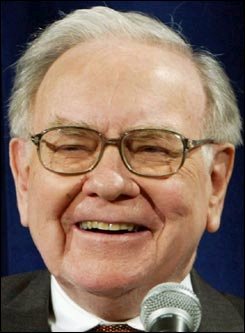 Here’s a great Buffett editorial from today’s New York Sun.
“…As an avowed supporter of the estate tax, Mr. Buffett could have let the government take its share of his estate after he dies. But just as Mr. Buffett has accumulated his vast wealth without paying much personal income tax, he has found a way to avoid the tax man in this maneuver as well, even writing in his letter to Bill and Melinda Gates that a condition of the gift is that the foundation "must continue to satisfy legal requirements qualifying my gifts as charitable and not subject to gift or other taxes."
On the estate tax, watch what Mr. Buffett does, not what he says….”
Need I say more?
"Upbeat Businesses Signal U.S. Economy Is Still Going Strong"
The economic boom keeps chugging right along, despite all the gloom-and-doomers out there...
Today's Investor's Business Daily:
"Jitters over slowing growth abated somewhat last week, as a slew of economically sensitive companies reported stronger results and industrial stocks rebounded.
Economic bellwether FedEx (FDX) on Wednesday headlined the week's bullish earnings. Nickel producer Inco (N) and trucker Old Dominion (ODFL) also reported healthy results and better times ahead.
..."What was driving the stock market down was the idea the economy would slow," said James Paul-sen, chief investment strategist at Wells Fargo Capital Management, which handles $175 billion.
But optimism has returned in the last week.
"The root of it is, the economy is stronger than we thought," he said...."
Today's Investor's Business Daily:
"Jitters over slowing growth abated somewhat last week, as a slew of economically sensitive companies reported stronger results and industrial stocks rebounded.
Economic bellwether FedEx (FDX) on Wednesday headlined the week's bullish earnings. Nickel producer Inco (N) and trucker Old Dominion (ODFL) also reported healthy results and better times ahead.
..."What was driving the stock market down was the idea the economy would slow," said James Paul-sen, chief investment strategist at Wells Fargo Capital Management, which handles $175 billion.
But optimism has returned in the last week.
"The root of it is, the economy is stronger than we thought," he said...."
What Paulson Really Ought to Do
Fred Bergsten has an op-ed in the Washington Post today that basically says Hank Paulson’s main mission at the Treasury should be to depreciate the dollar by 20 to 30 percent, in order to correct trade imbalances which pose a huge threat to the American economy.
Fred is an old friend and a very bright guy. But he is totally wrong.
As I recently wrote in the Wall Street Journal, my advice to Mr. Paulson is to appreciate the dollar in coordination with the Fed in order to stop the mild upturn of inflation expectations.
He should also try to lower corporate tax rates, including full-cash expensing for equipment depreciation. And he should work with Rob Portman at OMB for a big bang spending cut program, including Senator Judd Gregg’s SOS budget reform, which includes a line-item veto, and Gramm-Rudman across the board budget cuts.
As for foreign economic growth, Paulson should support supply-side tax cuts and deregulatory policies. (See today’s WSJ op/ed, “Germany Out of the World Cup” by Guido Westerwelle, chairman of the Free Democratic Party.) He has the story exactly right.
My old friend Fred is dead wrong.
Fred is an old friend and a very bright guy. But he is totally wrong.
As I recently wrote in the Wall Street Journal, my advice to Mr. Paulson is to appreciate the dollar in coordination with the Fed in order to stop the mild upturn of inflation expectations.
He should also try to lower corporate tax rates, including full-cash expensing for equipment depreciation. And he should work with Rob Portman at OMB for a big bang spending cut program, including Senator Judd Gregg’s SOS budget reform, which includes a line-item veto, and Gramm-Rudman across the board budget cuts.
As for foreign economic growth, Paulson should support supply-side tax cuts and deregulatory policies. (See today’s WSJ op/ed, “Germany Out of the World Cup” by Guido Westerwelle, chairman of the Free Democratic Party.) He has the story exactly right.
My old friend Fred is dead wrong.
Friday, June 23, 2006
Tonight's Lineup
 On CNBC's "Kudlow & Company" tonight:
We'll begin the show with a political debate between Ann Coulter, Syndicated Columnist/"Godless" Author; Jim Warren, Managing Editor with The Chicago Tribune; author/nationally syndicated columnist Joel Mowbray; and Peter Beinart, author/editor-at-large for The New Republic.
Steve Emerson, NBC terrorism analyst and author of "The American Jihad," will take a look at the arrests in Miami.
An economic debate between Michael Darda, MKM Partners Chief Economist and Lincoln Anderson, LPL Financial Services CIO & Chief Economist.
A look at markets and oil with Chris Edmonds, Pritchard Capital Partners Energy Analyst; Danielle Hughes, Divine Capital Markets; and Dan Genter, RNC Genter Capital Management CEO.
Tonight's Poll Question:
Should there be a constitutional amendment to ban flag burning?
Cast your vote at www.kudlowcnbc.com.
Surprise Drop in Oil?
A few days ago, Prince Turki al-Faisal, the Saudi Arabian Ambassador to the U.S., told the United States Energy Association that any U.S. conflict with Iran would threaten the Strait of Hormuz and triple the price of oil.
Perhaps Prince Turki is trying to get President Bush to rule out the military option in the Iranian standoff over weaponizing their uranium enrichment program. Of course, President Bush won’t do this, as he should not.
Direct negotiations with Iran, a good idea in my view, will proceed with any number of items on the table, including trade, investment, Iraq, human rights, and so forth. But the Iranians must know that the United States is prepared to defend its security interests if it comes down to that.
Meanwhile, back to the matter of oil prices, the more imminent reality could actually be a sizable price decline, rather than a huge increase. The Energy Department just announced that crude oil supplies rose 1.4 million barrels to 347.1 million for the week ended June 16. Analysts had been expecting a drawdown, not an increase.
Crude oil supplies in the U.S. are now at their highest level since May 29, 1998, when oil was trading around fifteen bucks a barrel. In addition, Canadian inventories are also fully stocked.
Oil tanker executives have recently confirmed that oil in storage aboard very large crude carriers, floating on the high seas, is abnormally high. And, Chevron CEO David O’Reilly informed us recently that gasoline and energy demands here in the U.S. have flattened out, and may be showing signs of declining somewhat.
The bottom line to all this is that Prince Turki’s $200 oil scenario or not, there could very well be a near-term correction in oil prices that will drop far more than anyone imagines possible. Supplies are at their highest levels in eight years, while demand appears to be falling. This of course, would be welcome news for both the stock market and the economy.
Perhaps Prince Turki is trying to get President Bush to rule out the military option in the Iranian standoff over weaponizing their uranium enrichment program. Of course, President Bush won’t do this, as he should not.
Direct negotiations with Iran, a good idea in my view, will proceed with any number of items on the table, including trade, investment, Iraq, human rights, and so forth. But the Iranians must know that the United States is prepared to defend its security interests if it comes down to that.
Meanwhile, back to the matter of oil prices, the more imminent reality could actually be a sizable price decline, rather than a huge increase. The Energy Department just announced that crude oil supplies rose 1.4 million barrels to 347.1 million for the week ended June 16. Analysts had been expecting a drawdown, not an increase.
Crude oil supplies in the U.S. are now at their highest level since May 29, 1998, when oil was trading around fifteen bucks a barrel. In addition, Canadian inventories are also fully stocked.
Oil tanker executives have recently confirmed that oil in storage aboard very large crude carriers, floating on the high seas, is abnormally high. And, Chevron CEO David O’Reilly informed us recently that gasoline and energy demands here in the U.S. have flattened out, and may be showing signs of declining somewhat.
The bottom line to all this is that Prince Turki’s $200 oil scenario or not, there could very well be a near-term correction in oil prices that will drop far more than anyone imagines possible. Supplies are at their highest levels in eight years, while demand appears to be falling. This of course, would be welcome news for both the stock market and the economy.
The Queen of Saboteurs
 The New York Times is doing one heckuva job underming U.S. national security.
 The Gray Lady’s latest attempt to thwart the men and women charged with the vital task of unearthing terrorists, and capturing them before they steal any more innocent American lives, came last night when, against the repeated requests of the White House, the paper went ahead and revealed yet another classified program designed to gather information used to foil terrorist attacks like 9/11.
The saboteurs at the Times provided secret details into the Bush administration’s use of subpoenas to gather large troves of data from the Society for Worldwide Interbank Financial Telecommunication (SWIFT), a Belgium-based consortium that handles international bank transfers. Financial data is used to identify terrorists before they get a chance to kill. It is an eminently sensible program, and one that has reaped rewards.
In one instance, the SWIFT program was used to capture a top Al Qaeda operative, Riduan Isamuddin, in Thailand in 2003.
The folks running the printing presses at the Times don’t seem to care about any of this. They went ahead and made the determination that the SWIFT program was “a matter of public interest.”
Gabriel Schoenfeld, the editor of Commentary magazine, had this to say about the New York Times in an interview with The New York Sun:
"They're courting prosecution...They're increasingly behaving like if we were in the middle of World War II and they learned of plans to invade Normandy. Because they decided it's a matter of public interest, they'd publish it. I think this is reckless and likely to encourage Attorney General Gonzales to prosecute them, if not for this story, for some of the other things they've done."
The New York Times is blinded by its hatred of George W. Bush. And, because of this, these boneheads compromise the lives of all Americans.
The Gray Lady has become the Queen of Saboteurs.
Very good, hard-hitting editorial in the Wall Street Journal today on "The Tancredo Republicans." These guys are hurting the GOP.
Kudlow on the Radio
 The Larry Kudlow Radio Show can be heard live this Saturday from 10:00am until 1:00pm (EST) on New York’s 770 AM radio dial. Topics covered will be the usual blend of Washington to Wall Street. If you are located outside the greater New York area, you can tune in live to the show via the Internet at www.wabcradio.com.
Larry is also a regular guest every Friday night on Hugh Hewitt’s nationally syndicated radio show. Tune in at 7:20pm (EST) to catch Larry and Hugh discuss the latest political and financial news. (Check your local listings or listen live via Hugh’s website at www.hughhewitt.com.)
Subscribe to:
Posts (Atom)