(Vice President Cheney delivered an astounding eulogy for President Ford last night - just remarkable. In case you didn't catch it, here it is in its entirety. Amazing little trivia nugget - Cheney was only 34 years old when he served as Ford's Chief of Staff.)
Mrs. Ford, Susan, Mike, Jack, and Steve; distinguished guests; colleagues and friends; and fellow citizens:
Nothing was left unsaid, and at the end of his days, Gerald Ford knew how much he meant to us and to his country. He was given length of years, and many times in his company we paid our tributes and said our thanks. We were proud to call him our leader, grateful to know him as a man. We told him these things, and there is comfort in knowing that. Still, it is an ending. And what is left now is to say goodbye.
He first stood under this dome at the age of 17, on a high school tour in the Hoover years. In his congressional career, he passed through this Rotunda so many times -- never once imagining all the honors that life would bring. He was an unassuming man, our 38th President, and few have ever risen so high with so little guile or calculation. Even in the three decades since he left this city, he was not the sort to ponder his legacy, to brood over his place in history. And so in these days of remembrance, as Gerald R. Ford, goes to his rest, it is for us to take the measure of the man.
It's hard to imagine that this most loyal of men began life as an abandoned child, facing the world alone with his mother. He was devoted to her always, and also to the fine man who came into their lives and gave the little boy a name he would carry into history. Gerald and Dorothy Ford expected good things of their son. As it turned out, there would be great things, too -- in a journey of 93 years that would fill them with loving pride.
Jerry Ford was always a striver -- never working an angle, just working. He was a believer in the saying that in life you make your own luck. That's how the Boy Scout became an Eagle Scout; and the football center, a college all-star; and the sailor in war, a lieutenant commander. That's how the student who waited tables and washed dishes earned a law degree, and how the young lawyer became a member of the United States Congress, class of 1948. The achievements added up all his life, yet he was known to boast only about one. I heard it once or twice myself -- he said he was never luckier than when he stepped out of Grace Episcopal Church in Grand Rapids with a beautiful girl named Betty as his bride.
Fifty-eight years ago, almost to the day, the new member from Michigan's fifth district moved into his office in the Cannon Building, and said his first hello to the congressman next door, John F. Kennedy of Massachusetts. They belonged to a generation that came early to great duties, and took up responsibilities readily, and shared a confidence in their country and its purposes in the world.
In that 81st Congress were four future Presidents, and others who wished for that destiny. For his part, Mr. Ford of Michigan aspired only to be Speaker of the House, and by general agreement he would have made a fine one. Good judgment, fair dealing, and the manners of a gentleman go a long way around here, and these were the mark of Jerry Ford for a quarter century in the House. It was a Democrat, the late Martha Griffiths, who said, "I never knew him to make a dishonest statement nor a statement part-true and part-false, and I never heard him utter an unkind word."
Sometimes in our political affairs, kindness and candor are only more prized for their scarcity. And sometimes even the most careful designs of men cannot improve upon history's accident. This was the case in the 62nd year of Gerald Ford's life, a bitter season in the life of our country.
It was a time of false words and ill will. There was great malice, and great hurt, and a taste for more. And it all began to pass away on a Friday in August, when Gerald Ford laid his hand on the Bible and swore to preserve, protect, and defend the Constitution of the United States. He said, "You have not elected me as your President by your ballot, and so I ask you to confirm me as your President with your prayers."
What followed was a presidency lasting 895 days, and filled with testing and trial enough for a much longer stay. Even then, amid troubles not of his own making, President Ford proved as worthy of that office as any who had ever come before. He was modest and manful; there was confidence and courage in his bearing. In judgment, he was sober and serious, unafraid of decisions, calm and steady by nature, always the still point in the turning wheel. He assumed power without assuming airs; he knew how to treat people. He answered courtesy with courtesy; he answered discourtesy with courtesy.
This President's hardest decision was also among his first. And in September of 1974, Gerald Ford was almost alone in understanding that there can be no healing without pardon. The consensus holds that this decision cost him an election. That is very likely so. The criticism was fierce. But President Ford had larger concerns at heart. And it is far from the worst fate that a man should be remembered for his capacity to forgive.
In politics it can take a generation or more for a matter to settle, for tempers to cool. The distance of time has clarified many things about President Gerald Ford. And now death has done its part to reveal this man and the President for what he was.
He was not just a cheerful and pleasant man -- although these virtues are rare enough at the commanding heights. He was not just a nice guy, the next-door neighbor whose luck landed him in the White House. It was this man, Gerald R. Ford, who led our republic safely through a crisis that could have turned to catastrophe. We will never know what further unravelings, what greater malevolence might have come in that time of furies turned loose and hearts turned cold. But we do know this: America was spared the worst. And this was the doing of an American President. For all the grief that never came, for all the wounds that were never inflicted, the people of the United States will forever stand in debt to the good man and faithful servant we mourn tonight.
Thinking on all this, we are only more acutely aware of a time in our lives and of its end. And we can be certain that Gerald Ford would now ask only that we remember his wife. Betty, the President was not a hard man to read, and to his friends nothing was more obvious than the source of his great happiness. It was you. And all the good that you shared, Betty, all the good that you did together, has not gone away. All of that is forever.
There is a time to every purpose under Heaven. In the years of Gerald Rudolph Ford, it was a time to heal. There is also, in life, a time to part, when those who are dear to us must go their way. And so for now, Mr. President -- farewell. We will always be thankful for your good life. In Almighty God, we place our confidence. And to Him we confirm you, with our love and with our prayers.
Sunday, December 31, 2006
Edwards Still Doesn't Get It
So, John Edwards has thrown his hat into the presidential ring.
Unfortunately, he has a losing message.
His ultra-liberal approach will elicit only a small niche of support among the ultra lefties in the Democratic Party.
Democrats know (or at least, I think they know) that their success in the 2006 midterm election was largely a function of their best efforts to imitate Republicans. It was the conservative Blue Dog Democrats who were the tail successfully wagging the entire Democratic dog.
That said, if John Edwards somehow managed to reverse this tide and win his party's nomination, he would lead his party to a crushing defeat in 2008.
For starters, he wants to cut and run from Iraq. Such an ill-conceived policy would leave this budding nation in shambles, with terrorists following us back to the United States. It would extinguish the candle of Iraq's democracy experiment -- an experiment that could still pay enormous dividends if the United States follows through with a bold, new troop surge strategy and a refurbished plan of economic reconstruction. These are the actions that will stabilize Baghdad and their democratically elected government, not cutting and running.
On the domestic side, Edwards fares just as badly. He's recycling an old page from the liberal Democratic playbook, saying that he wants to make fighting poverty the great moral issue of our time. He says he'll accomplish this by taxing the rich in order to help the poor. Oh, really?
Tax capital in order to create new jobs? Huh? Haven't we learned that you can't create new jobs (for the poor or anyone else) without healthy businesses and plentiful new business creation? And that businesses require capital in order to expand? And haven't we learned that punishing success through higher tax rates that make it pay less to work, save and invest will only reduce investment, jobs and prosperity?
Well, Edwards forgets that entrepreneurs, not government, create long-lasting jobs and growth. Rather than government spending, it is economic freedom, through a strong incentive structure inside a market economy, that opens the door to new opportunities so that the non-rich can get rich.
What's more, Edwards has failed to consider that poverty has fallen steadily for decades.
Pro-growth, market-oriented policies launched by Ronald Reagan 25 years ago unleashed record wealth creation and economic growth that continues to this very day. In fact, economist Diana Furchtgott-Roth has shown that total compensation and consumer spending for all five income quintiles have steadily increased over the past three decades.
Furthermore, Alan Reynolds has shown that the percentage of households with income (adjusted for inflation) lower than $35,000 has actually fallen from 52.8 percent to 40.9 percent since 1967. (Wait -- it gets even better.) Households with a real income higher than $50,000 rose from 24.9 percent to a remarkable 44.1 percent.
In other words, the middle class is shrinking because America's families are getting wealthier. And the reason lower-class jobs are vanishing is not due to some Lou Dobbs protectionist conspiracy theory, but because our technologically driven, knowledge-based economic pie keeps expanding.
Edwards doesn't understand that without incentives to reward successful investing, entrepreneurship and risk-taking, everyone gets poorer -- right on down the line. Additional investment taxing is precisely the wrong policy to improve wealth or poverty.
Class warriors on the left are loathe to admit it, but America's poor are also a whole lot less poor when public assistance programs like Social Security, Medicaid, the earned income tax credit and other social benefit plans are included in the poverty data. But Edwards, and others of his misguided ilk, have a nostalgic yearning for the Great Society plans of the mid-1960s. You'll recall that these policies dramatically succeeded by raising poverty and reducing wealth. What a neat idea.
Edwards just launched his campaign in New Orleans with a plea to spend even more taxpayer dollars for that beleaguered city. Well, why not -- we've already thrown $120 billion bucks at it!
Instead of Edwards' hackneyed, 1960s Great Society, anti-poverty approach to New Orleans, the United States and New Orleans would have been much better off had we made the entire city a tax-free zone -- with the tax burden limited only to what people spent or consumed, not what they invested or earned. This supply-side approach would have delivered swift currents of investment. It would have all but guaranteed a swift recovery.
But Edwards appears unable to grasp this. This class warrior fails to recognize that when you slam wealth, you raise poverty. Is that what we really want?
Unfortunately, he has a losing message.
His ultra-liberal approach will elicit only a small niche of support among the ultra lefties in the Democratic Party.
Democrats know (or at least, I think they know) that their success in the 2006 midterm election was largely a function of their best efforts to imitate Republicans. It was the conservative Blue Dog Democrats who were the tail successfully wagging the entire Democratic dog.
That said, if John Edwards somehow managed to reverse this tide and win his party's nomination, he would lead his party to a crushing defeat in 2008.
For starters, he wants to cut and run from Iraq. Such an ill-conceived policy would leave this budding nation in shambles, with terrorists following us back to the United States. It would extinguish the candle of Iraq's democracy experiment -- an experiment that could still pay enormous dividends if the United States follows through with a bold, new troop surge strategy and a refurbished plan of economic reconstruction. These are the actions that will stabilize Baghdad and their democratically elected government, not cutting and running.
On the domestic side, Edwards fares just as badly. He's recycling an old page from the liberal Democratic playbook, saying that he wants to make fighting poverty the great moral issue of our time. He says he'll accomplish this by taxing the rich in order to help the poor. Oh, really?
Tax capital in order to create new jobs? Huh? Haven't we learned that you can't create new jobs (for the poor or anyone else) without healthy businesses and plentiful new business creation? And that businesses require capital in order to expand? And haven't we learned that punishing success through higher tax rates that make it pay less to work, save and invest will only reduce investment, jobs and prosperity?
Well, Edwards forgets that entrepreneurs, not government, create long-lasting jobs and growth. Rather than government spending, it is economic freedom, through a strong incentive structure inside a market economy, that opens the door to new opportunities so that the non-rich can get rich.
What's more, Edwards has failed to consider that poverty has fallen steadily for decades.
Pro-growth, market-oriented policies launched by Ronald Reagan 25 years ago unleashed record wealth creation and economic growth that continues to this very day. In fact, economist Diana Furchtgott-Roth has shown that total compensation and consumer spending for all five income quintiles have steadily increased over the past three decades.
Furthermore, Alan Reynolds has shown that the percentage of households with income (adjusted for inflation) lower than $35,000 has actually fallen from 52.8 percent to 40.9 percent since 1967. (Wait -- it gets even better.) Households with a real income higher than $50,000 rose from 24.9 percent to a remarkable 44.1 percent.
In other words, the middle class is shrinking because America's families are getting wealthier. And the reason lower-class jobs are vanishing is not due to some Lou Dobbs protectionist conspiracy theory, but because our technologically driven, knowledge-based economic pie keeps expanding.
Edwards doesn't understand that without incentives to reward successful investing, entrepreneurship and risk-taking, everyone gets poorer -- right on down the line. Additional investment taxing is precisely the wrong policy to improve wealth or poverty.
Class warriors on the left are loathe to admit it, but America's poor are also a whole lot less poor when public assistance programs like Social Security, Medicaid, the earned income tax credit and other social benefit plans are included in the poverty data. But Edwards, and others of his misguided ilk, have a nostalgic yearning for the Great Society plans of the mid-1960s. You'll recall that these policies dramatically succeeded by raising poverty and reducing wealth. What a neat idea.
Edwards just launched his campaign in New Orleans with a plea to spend even more taxpayer dollars for that beleaguered city. Well, why not -- we've already thrown $120 billion bucks at it!
Instead of Edwards' hackneyed, 1960s Great Society, anti-poverty approach to New Orleans, the United States and New Orleans would have been much better off had we made the entire city a tax-free zone -- with the tax burden limited only to what people spent or consumed, not what they invested or earned. This supply-side approach would have delivered swift currents of investment. It would have all but guaranteed a swift recovery.
But Edwards appears unable to grasp this. This class warrior fails to recognize that when you slam wealth, you raise poverty. Is that what we really want?


Friday, December 29, 2006
All Best...
 We are all truly blessed to live in this great country.
I wish each and every single one of you the very best in the upcoming year.
A great, big thank you for tuning into our show, reading (and contributing to) this blog, etc, etc…
May 2007 bring you and your loved ones much peace and prosperity.
God bless…
Thursday, December 28, 2006
Grateful
Contrary to the customary downbeat drumbeat of economic decline, as once again illustrated by David Wessel’s piece in today’s Wall Street Journal (this guy is the paper’s pessimist-in-chief—when he’s not waging class warfare, he is prayerfully forecasting economic gloom) the most recent numbers actually show a pickup in manufacturing and a bottoming in the housing slump
Simply put, there ain’t gonna be any recession.
Bear Stearns chief U.S. economist, John Ryding, is now predicting 2.75 percent real GDP growth in Q4. I would label that “Goldilocks plus.”
And there ain’t no inflation either, as revealed by the recent consumer price reports which showed declining inflation trends.
Bond rates have increased about 30 basis points this month, but the inflation adjusted bond spreads show that it’s a gain in real interest rates that corroborates the better tone in real GDP. Of course, the absolutely phenomenal Goldilocks stock market has been telling us this all along over the past six months.
As economist Arthur Laffer has noted, prosperity-inducing government policies remain in place: low tax rates, steady money, no re-regulation of business, and free trade.
(Speaking of Art, his appearances on CNBC’s Kudlow & Company in recent weeks have all greatly illuminated the interpretation of political and economic information. Many thanks to Mr. Laffer, as well as our many talented guests—both liberal and conservative—for their wonderful contributions.)
From the bottom of my heart, I am grateful to everyone who has worked on this show, appeared on this show, and to our viewers for giving us terrific ratings this holiday season and throughout 2006.
I’m in that kind of mood this afternoon, as the end of the year approaches. I am ever grateful. This great country of ours provides so many incredible blessings and so many wonderful opportunities.
It is a miracle.
Truly, the greatest story never told.
Simply put, there ain’t gonna be any recession.
Bear Stearns chief U.S. economist, John Ryding, is now predicting 2.75 percent real GDP growth in Q4. I would label that “Goldilocks plus.”
And there ain’t no inflation either, as revealed by the recent consumer price reports which showed declining inflation trends.
Bond rates have increased about 30 basis points this month, but the inflation adjusted bond spreads show that it’s a gain in real interest rates that corroborates the better tone in real GDP. Of course, the absolutely phenomenal Goldilocks stock market has been telling us this all along over the past six months.
As economist Arthur Laffer has noted, prosperity-inducing government policies remain in place: low tax rates, steady money, no re-regulation of business, and free trade.
(Speaking of Art, his appearances on CNBC’s Kudlow & Company in recent weeks have all greatly illuminated the interpretation of political and economic information. Many thanks to Mr. Laffer, as well as our many talented guests—both liberal and conservative—for their wonderful contributions.)
From the bottom of my heart, I am grateful to everyone who has worked on this show, appeared on this show, and to our viewers for giving us terrific ratings this holiday season and throughout 2006.
I’m in that kind of mood this afternoon, as the end of the year approaches. I am ever grateful. This great country of ours provides so many incredible blessings and so many wonderful opportunities.
It is a miracle.
Truly, the greatest story never told.
Steve Forbes on Corporate Taxes
 From CNBC's Kudlow & Company:
"America today nominally has the highest corporate tax rate in the world - next to that of Japan. Other countries have learned the lesson: reduce the burden on companies, reduce the burden on people who want to get ahead. Guess what? They start moving forward. So we're living off of past policy. If we want to stay competitive, we've got to reduce that tax burden, not just on companies but on people, too. We should have the lowest taxes in the world. We should be number one."
Wednesday, December 27, 2006
The Ford Legacy
Gerald Ford was a good and gracious man.
He was a dedicated and honest public servant—well liked by all who knew him personally. And I think his controversial pardon of Richard Nixon was a good idea—good in the sense that it got it off the table so the country could move on.
However, President Ford was one of a long line of American executives who presided over the decline of the U.S. in both national security and economic terms. This began under LBJ and stretched out through Richard Nixon, Gerald Ford, and Jimmy Carter.
In national security terms, Mr. Ford was a détentist who accommodated the Soviet Union in a number of ways, including unverifiable arms control deals that Ronald Reagan put an end to when the Gipper assumed the presidency in the 1980’s.
The U.S.’s Vietnam retreat from the rooftop of our embassy in Saigon was one of the low points in the history of American foreign policy—a disgraceful action. Reagan, of course, changed all this in the 1980’s with his many actions to overturn and defeat Soviet communism.
In economic policy, Mr. Ford was a traditional Republican budget balancer who had no pro-growth policies. Arthur Laffer tried to persuade Ford of the merits of supply side economics to reduce marginal tax rates and grow the American economy—but Ford, acting on advice of top economic advisor Alan Greenspan, rejected this.
June Wanniski called this root canal economics and Newt Gingrich described Ford’s futile obsession with the budget deficit as simply the tax collector for the welfare state.
The combination of high inflation interacting with high marginal tax rates led to stagflation and the continued decline of the American economy. And the infamous “whip inflation now” program was nothing more than price controls and state planning.
Again, it took Ronald Reagan to reverse all this by adopting the incentive-minded growth model which slashed tax rates and reignited the U.S. economy in the 1980's - an economy whose fire still burns brightly a quarter of a century later.
At the end of the day, Ford was defeated by Jimmy Carter, who was just as baffled about stagflation and Soviet hegemony as Ford was.
Mr. Ford attempted one last play on the national political stage at the 1980 Republican National Convention in Detroit. Reagan had soundly trounced Papa Bush in the primaries to capture the nomination. But the Papa Bush forces—led by James Baker—attempted a bizarre co-presidency that would have made Ford the vice president and divided up all the executive branch responsibilities.
Reagan himself squashed this, chose Papa Bush instead, crushed Carter in the election, and went on to become one of the greatest presidents in United States history.
Thank God for Ronald Reagan.
He was a dedicated and honest public servant—well liked by all who knew him personally. And I think his controversial pardon of Richard Nixon was a good idea—good in the sense that it got it off the table so the country could move on.
However, President Ford was one of a long line of American executives who presided over the decline of the U.S. in both national security and economic terms. This began under LBJ and stretched out through Richard Nixon, Gerald Ford, and Jimmy Carter.
In national security terms, Mr. Ford was a détentist who accommodated the Soviet Union in a number of ways, including unverifiable arms control deals that Ronald Reagan put an end to when the Gipper assumed the presidency in the 1980’s.
The U.S.’s Vietnam retreat from the rooftop of our embassy in Saigon was one of the low points in the history of American foreign policy—a disgraceful action. Reagan, of course, changed all this in the 1980’s with his many actions to overturn and defeat Soviet communism.
In economic policy, Mr. Ford was a traditional Republican budget balancer who had no pro-growth policies. Arthur Laffer tried to persuade Ford of the merits of supply side economics to reduce marginal tax rates and grow the American economy—but Ford, acting on advice of top economic advisor Alan Greenspan, rejected this.
June Wanniski called this root canal economics and Newt Gingrich described Ford’s futile obsession with the budget deficit as simply the tax collector for the welfare state.
The combination of high inflation interacting with high marginal tax rates led to stagflation and the continued decline of the American economy. And the infamous “whip inflation now” program was nothing more than price controls and state planning.
Again, it took Ronald Reagan to reverse all this by adopting the incentive-minded growth model which slashed tax rates and reignited the U.S. economy in the 1980's - an economy whose fire still burns brightly a quarter of a century later.
At the end of the day, Ford was defeated by Jimmy Carter, who was just as baffled about stagflation and Soviet hegemony as Ford was.
Mr. Ford attempted one last play on the national political stage at the 1980 Republican National Convention in Detroit. Reagan had soundly trounced Papa Bush in the primaries to capture the nomination. But the Papa Bush forces—led by James Baker—attempted a bizarre co-presidency that would have made Ford the vice president and divided up all the executive branch responsibilities.
Reagan himself squashed this, chose Papa Bush instead, crushed Carter in the election, and went on to become one of the greatest presidents in United States history.
Thank God for Ronald Reagan.
Wednesday Night's Lineup
 In light of Gerald Ford's passing, we will spend the first portion of the show looking at his legacy and contributions to our great country.
On board:
*California Congressman David Dreier (R)
*Dr. John Rutledge, chairman of Rutledge Capital and presidential advisor
*Arthur Laffer, CEO of Laffer Associates and presidential advisor to Ronald Reagan
Following the Ford roundtable, we will discuss the state of the economy and outlook for the stock market.
Mr. Laffer and Dr. Rutledge will stick around and will be joined by:
*Russ Koesterich, senior portfolio manager at Barclays Global Investors
*Jim Huguet, president of the Great Companies fund management firm
*Barry Ritlholz, chief market strategist at Ritholtz Research & Analytics
"Goldilocks vs. Gold"
Is there a statute of limitations on predictions of higher inflation?
Jerry Bowyer answers this question in his latest on NRO:
 Larry Kudlow has described this as the Goldilocks economy: decent growth, low inflation. But the gold bugs continue to warn that today’s high gold prices inevitably mean higher inflation.
BuzzCharts has written extensively on the ongoing debate among supply-siders on the usefulness of gold alone as an inflation bellwether. We’ve taken the position that the inclusion of other measures, such as interest rates, helps paint a more complete picture of future inflation.
Here’s some more data that should help settle the matter:
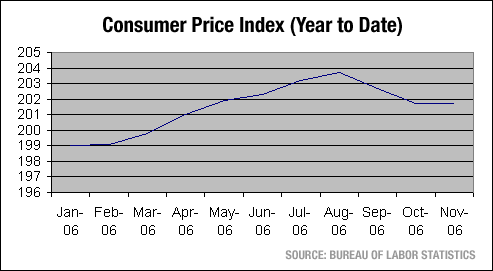
On December 15, the Bureau of Labor Statistics released its monthly consumer-price-index data, which showed that inflation was completely flat from October to November following a half-percent drop in each of the two prior months. This falloff in inflation has taken place despite the fact that gold prices have been rising. Measures like interest rates, however, are more predictive of inflation (or, in this case, the lack thereof). The 10-year Treasury note, for example, stands at 4.6 percent, virtually unchanged from a year ago.
Although the most recent producer price index showed a quick pop-up of inflation to 2 percent, readings for the previous months showed roughly 2 percent deflation. In addition, the implicit price deflator and the PCE price deflator — two other major inflation indicators — have shown very low and absolutely flat inflation, respectively.
Is there a statute of limitations on predictions of higher inflation? Or, to paraphrase Ronald Reagan, “shouldn’t they read the score to us once in awhile?”
— Jerry Bowyer is an economic advisor to Blue Vase Capital Management and the author of The Bush Boom.
Jerry Bowyer answers this question in his latest on NRO:
 Larry Kudlow has described this as the Goldilocks economy: decent growth, low inflation. But the gold bugs continue to warn that today’s high gold prices inevitably mean higher inflation.
BuzzCharts has written extensively on the ongoing debate among supply-siders on the usefulness of gold alone as an inflation bellwether. We’ve taken the position that the inclusion of other measures, such as interest rates, helps paint a more complete picture of future inflation.
Here’s some more data that should help settle the matter:
On December 15, the Bureau of Labor Statistics released its monthly consumer-price-index data, which showed that inflation was completely flat from October to November following a half-percent drop in each of the two prior months. This falloff in inflation has taken place despite the fact that gold prices have been rising. Measures like interest rates, however, are more predictive of inflation (or, in this case, the lack thereof). The 10-year Treasury note, for example, stands at 4.6 percent, virtually unchanged from a year ago.
Although the most recent producer price index showed a quick pop-up of inflation to 2 percent, readings for the previous months showed roughly 2 percent deflation. In addition, the implicit price deflator and the PCE price deflator — two other major inflation indicators — have shown very low and absolutely flat inflation, respectively.
Is there a statute of limitations on predictions of higher inflation? Or, to paraphrase Ronald Reagan, “shouldn’t they read the score to us once in awhile?”
— Jerry Bowyer is an economic advisor to Blue Vase Capital Management and the author of The Bush Boom.
Rest in Peace
 From President Bush's remarks earlier this morning:
...President Ford was a great man who devoted the best years of his life in serving the United States. He was a true gentleman who reflected the best in America's character. Before the world knew his name, he served with distinction in the United States Navy and in the United States Congress.
As a congressman from Michigan, and then as Vice President, he commanded the respect and earned the good will of all who had the privilege of knowing him. On August 9, 1974, he stepped into the presidency without ever having sought the office. He assumed power in a period of great division and turmoil. For a nation that needed healing and for an office that needed a calm and steady hand, Gerald Ford came along when we needed him most.
During his time in office, the American people came to know President Ford as a man of complete integrity who led our country with common sense and kind instincts.
Americans will always admire Gerald Ford's unflinching performance of duty and the honorable conduct of his administration, and the great rectitude of the man himself.
We mourn the loss of such a leader, and our 38th President will always have a special place in our nation's memory.
President Ford lived 93 years, and his life was a blessing to America. And now this fine man will be taken to his rest by a family that will love him always, and by a nation that will be grateful to him forever.
May god bless Gerald Ford.
Tuesday, December 26, 2006
More on "The Mother of All Surprises"
Great op-ed on Iraq’s booming economy (outside the Baghdad disaster zone) from Amir Taheri in today’s New York Post:
Newsweek has just hailed the emergence of a booming market economy in Iraq as "the mother of all surprises," noting that "Iraqis are more optimistic about the future than most Americans are." The reason, of course, is that Iraqis know what is going on in their country while Americans are fed a diet of exclusively negative reporting from Iraq.
Some noteworthy observations of the "growing dynamism of the Iraqi economy" from Taheri’s article:
- A steady increase in the value of the Iraqi currency;
- Civil-servants salaries have increased almost 30 percent (with another 30 percent due to come into effect early next year);
- An unexpected flow of foreign capital (spurred by the removal of tariffs and trade barriers);
- The number of private companies since Saddam’s fall has increased from 8000 to 35,000;
- A private firm marketing soft drinks has seen profits double since the end of 2003;
- The number of luxury cars imported has risen from a few hundred in 2002 to more than 20,000 this year;
- One privately owned mobile phone company is expected to report revenues of more than $500 million this year, a sevenfold increase in three years;
The next step is obviously to stabilize the Baghdad area through a troop surge.
This course of action will help secure the democratically elected government and create a more peaceful and prosperous region. General Alexander Haig on Kudlow & Company told us last week that this is a doable proposition.
Year-end question: Is everybody just too pessimistic about Iraq’s future?
Newsweek has just hailed the emergence of a booming market economy in Iraq as "the mother of all surprises," noting that "Iraqis are more optimistic about the future than most Americans are." The reason, of course, is that Iraqis know what is going on in their country while Americans are fed a diet of exclusively negative reporting from Iraq.
Some noteworthy observations of the "growing dynamism of the Iraqi economy" from Taheri’s article:
- A steady increase in the value of the Iraqi currency;
- Civil-servants salaries have increased almost 30 percent (with another 30 percent due to come into effect early next year);
- An unexpected flow of foreign capital (spurred by the removal of tariffs and trade barriers);
- The number of private companies since Saddam’s fall has increased from 8000 to 35,000;
- A private firm marketing soft drinks has seen profits double since the end of 2003;
- The number of luxury cars imported has risen from a few hundred in 2002 to more than 20,000 this year;
- One privately owned mobile phone company is expected to report revenues of more than $500 million this year, a sevenfold increase in three years;
The next step is obviously to stabilize the Baghdad area through a troop surge.
This course of action will help secure the democratically elected government and create a more peaceful and prosperous region. General Alexander Haig on Kudlow & Company told us last week that this is a doable proposition.
Year-end question: Is everybody just too pessimistic about Iraq’s future?
Cutting Corporate Taxes
Many thanks to the Wall Street Journal’s editorial page for continuing my mantra that lower corporate tax rates will boost worker wages.
They cite economist Kevin Hassett’s worldwide study that capital migration in response to corporate tax rate relief improves economic growth, jobs, and wages.
But the editorial should have cited one additional fact - namely, 70 percent of the corporate tax cost is borne by wage earners (the remaining 30 percent is paid by shareholders).
My friend James Pethokoukis (aka “Jimmy P”) over at U.S. News & World Report has also picked up the theme of cutting corporate taxes to boost wages.
The bottom line here is that if companies paid less in taxes - or better yet none at all - then more money could be paid out to those who work at those companies.
Think of it.
They cite economist Kevin Hassett’s worldwide study that capital migration in response to corporate tax rate relief improves economic growth, jobs, and wages.
But the editorial should have cited one additional fact - namely, 70 percent of the corporate tax cost is borne by wage earners (the remaining 30 percent is paid by shareholders).
My friend James Pethokoukis (aka “Jimmy P”) over at U.S. News & World Report has also picked up the theme of cutting corporate taxes to boost wages.
The bottom line here is that if companies paid less in taxes - or better yet none at all - then more money could be paid out to those who work at those companies.
Think of it.
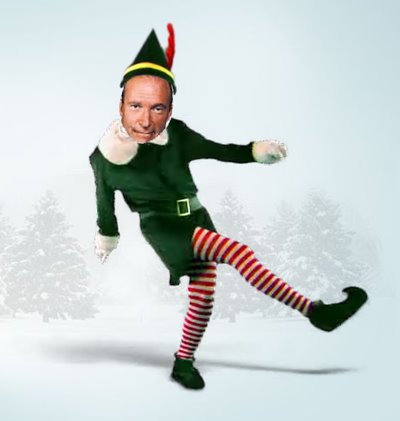
A Kudlow Christmas...
Here's a rather amusing video my friend Barry Ritholz posted on his terrific blog "The Big Picture" yesterday.
Click here to watch the video.

Click here to watch the video.
Friday, December 22, 2006
Tonight's Lineup
On CNBC's "Kudlow & Company" tonight:
On the markets and the economy -- Nouriel Roubini, economic professor at NYU Stern School of Business and Art Laffer, chairman of Laffer Associates.
An oil/energy discussion with Dan Yergin, president of Cambridge Energy Research, Nouriel Roubini, and Art Laffer.
A political debate with Ann Coulter, author/columnist, and Peter Beinart, editor-at-large of The New Republic.
Please tune in!
We wish you all a wonderful holiday season.
On the markets and the economy -- Nouriel Roubini, economic professor at NYU Stern School of Business and Art Laffer, chairman of Laffer Associates.
An oil/energy discussion with Dan Yergin, president of Cambridge Energy Research, Nouriel Roubini, and Art Laffer.
A political debate with Ann Coulter, author/columnist, and Peter Beinart, editor-at-large of The New Republic.
Please tune in!
We wish you all a wonderful holiday season.
Goldi's Happy
Goldilocks loves today's inflation number in the personal income and spending report.
Both the headline and core PCE deflator were flat at 0.0 over the past three months. The headline number is -2.1 percent at an annual rate and the core is 1.8 percent at an annual rate.
Two years of monetary restraint by the Fed has vanquished inflation. That's also the bond market message.
The clock is ticking for the Fed to lower its target rate by one quarter of a percentage point.
Both the headline and core PCE deflator were flat at 0.0 over the past three months. The headline number is -2.1 percent at an annual rate and the core is 1.8 percent at an annual rate.
Two years of monetary restraint by the Fed has vanquished inflation. That's also the bond market message.
The clock is ticking for the Fed to lower its target rate by one quarter of a percentage point.
Senator Backbone
Two of the most important qualities necessary for a run to the Oval Office are decisiveness and strength of character. In recent weeks, John McCain has proven that he has more stock in these traits than most any public official today.
As American fortunes in the battle of Iraq have deteriorated, the senator has forcefully elevated the policy debate by fearlessly offering unpopular advice on how to turn the tide toward victory. In fact, McCain is several steps ahead of nearly everyone on the subject of this war. At his recent news conference, President George W. Bush said the U.S. should expand the size of its armed forces, especially the Army and Marine Corps. McCain has been saying this for years. Bush and his high command are now mulling a possible troop-force surge in Iraq; McCain has been advocating this for quite some time.
Of course, each of these positions is out of favor. But that’s not silencing McCain: “I understand the polls show only 18 percent of the American people support my position. But I have to do what’s right, what I believe is right, and what my experience and knowledge and background tells me is the right thing to do in order to save this situation in Iraq . . . In war, my dear friends, there is no such compromise. You either win or you lose.”
In the midst of the latest doubt, pessimism, and quibbling over our direction in Iraq, here is John McCain digging his heels in the sand. He is fighting the defeatist tide, and though it might endanger his presidential bid, he is entirely comfortable with his posture. I believe this is called courage. Principle. Leadership. It’s what has long described this highly decorated former Navy fighter pilot and Vietnam prisoner of war.
More kudos go to McCain for blasting the defeatist recommendations of the Baker-Hamilton Iraq Study Group.
Speaking to the Senate Armed Services Committee, he said “There’s only one thing worse than an overstressed Army and Marine Corps, and that’s a defeated Army and Marine Corps. I believe this is a recipe that will lead to our defeat sooner than later in Iraq.”
McCain specifically ridiculed the Baker-Hamilton suggestion that American combat troops withdraw from Iraq while more advisors and trainers embed with Iraqi forces. He argued that this would “put at risk a large number of American advisors” who would be subject to hostage-taking and the attacks of rogue militias or terrorists.
McCain also mocked the commission’s idea of seeking peace talks with Iran and Syria, saying “I don’t believe that a peace conference with people who are dedicated to your extinction has much short-term gain.”
The recent McCain narrative is especially important. First, in the Oval Office, the Arizonan privately urged the president to add more troops and reject the Baker-Hamilton withdrawal approach. Then, in Baghdad, McCain pleaded the same case to American generals. Along the way, he has held several news conferences, deftly using the public square to influence the outcome of events.
No public figure today could do all this with as much influence and credibility as Sen. John McCain. If in fact President Bush goes forward with a troop surge -- one that is designed to protect the fledgling Iraqi democracy and repel our enemies in the Middle East -- McCain’s steadfastness and bravery will have sealed that outcome.
Interestingly, new defense secretary Robert Gates heard a McCain-like message from the troops when he traveled to Iraq after his swear-in ceremony. “More troops might hold [the enemy] off long enough to where we can get the Iraqi army trained up,” Private Spc. Jason Green of the 101st Military Intelligence Brigade told Gates. “More troops would help us integrate the Iraq army into patrols more,” said Pfc. Cassandra Wallace of the 10th Mountain Division.
Gates at least echoed McCain in saying that a premature withdrawal from Iraq would be “calamitous.” But there it is again -- the McCain narrative. It’s everywhere.
McCain clearly would rather do the right thing in our nation’s interest than the politically correct thing. He is about leadership and character and decisiveness. He seems to have the ability to assess American national-security needs, not just for the next few weeks, but the next few decades. And he is almost single-handedly lifting our war policy towards strength rather than weakness.
McCain is standing tall against the tides of wartime fatigue, the polls, and the conventional Beltway wisdom. Whatever the outcome of the Iraq debate, and even the 2008 presidential election, the senator is behaving in a remarkably brave and steadfast manner at a time when so many of our leaders are shrinking from those crucial public duties.
A rare bird. Senator Backbone. That’s John McCain.
As American fortunes in the battle of Iraq have deteriorated, the senator has forcefully elevated the policy debate by fearlessly offering unpopular advice on how to turn the tide toward victory. In fact, McCain is several steps ahead of nearly everyone on the subject of this war. At his recent news conference, President George W. Bush said the U.S. should expand the size of its armed forces, especially the Army and Marine Corps. McCain has been saying this for years. Bush and his high command are now mulling a possible troop-force surge in Iraq; McCain has been advocating this for quite some time.
Of course, each of these positions is out of favor. But that’s not silencing McCain: “I understand the polls show only 18 percent of the American people support my position. But I have to do what’s right, what I believe is right, and what my experience and knowledge and background tells me is the right thing to do in order to save this situation in Iraq . . . In war, my dear friends, there is no such compromise. You either win or you lose.”
In the midst of the latest doubt, pessimism, and quibbling over our direction in Iraq, here is John McCain digging his heels in the sand. He is fighting the defeatist tide, and though it might endanger his presidential bid, he is entirely comfortable with his posture. I believe this is called courage. Principle. Leadership. It’s what has long described this highly decorated former Navy fighter pilot and Vietnam prisoner of war.
More kudos go to McCain for blasting the defeatist recommendations of the Baker-Hamilton Iraq Study Group.
Speaking to the Senate Armed Services Committee, he said “There’s only one thing worse than an overstressed Army and Marine Corps, and that’s a defeated Army and Marine Corps. I believe this is a recipe that will lead to our defeat sooner than later in Iraq.”
McCain specifically ridiculed the Baker-Hamilton suggestion that American combat troops withdraw from Iraq while more advisors and trainers embed with Iraqi forces. He argued that this would “put at risk a large number of American advisors” who would be subject to hostage-taking and the attacks of rogue militias or terrorists.
McCain also mocked the commission’s idea of seeking peace talks with Iran and Syria, saying “I don’t believe that a peace conference with people who are dedicated to your extinction has much short-term gain.”
The recent McCain narrative is especially important. First, in the Oval Office, the Arizonan privately urged the president to add more troops and reject the Baker-Hamilton withdrawal approach. Then, in Baghdad, McCain pleaded the same case to American generals. Along the way, he has held several news conferences, deftly using the public square to influence the outcome of events.
No public figure today could do all this with as much influence and credibility as Sen. John McCain. If in fact President Bush goes forward with a troop surge -- one that is designed to protect the fledgling Iraqi democracy and repel our enemies in the Middle East -- McCain’s steadfastness and bravery will have sealed that outcome.
Interestingly, new defense secretary Robert Gates heard a McCain-like message from the troops when he traveled to Iraq after his swear-in ceremony. “More troops might hold [the enemy] off long enough to where we can get the Iraqi army trained up,” Private Spc. Jason Green of the 101st Military Intelligence Brigade told Gates. “More troops would help us integrate the Iraq army into patrols more,” said Pfc. Cassandra Wallace of the 10th Mountain Division.
Gates at least echoed McCain in saying that a premature withdrawal from Iraq would be “calamitous.” But there it is again -- the McCain narrative. It’s everywhere.
McCain clearly would rather do the right thing in our nation’s interest than the politically correct thing. He is about leadership and character and decisiveness. He seems to have the ability to assess American national-security needs, not just for the next few weeks, but the next few decades. And he is almost single-handedly lifting our war policy towards strength rather than weakness.
McCain is standing tall against the tides of wartime fatigue, the polls, and the conventional Beltway wisdom. Whatever the outcome of the Iraq debate, and even the 2008 presidential election, the senator is behaving in a remarkably brave and steadfast manner at a time when so many of our leaders are shrinking from those crucial public duties.
A rare bird. Senator Backbone. That’s John McCain.
Thursday, December 21, 2006
Tonight's Lineup
On CNBC's "Kudlow & Company" tonight:
On the markets and the economy:
Elizabeth MacDonald, senior editor at Forbes Magazine
Joe LaVorgna, Deutsche Bank Chief U.S. Economist
Don Luskin, Chief Investment Officer at Trend Macrolytics
Lincoln Anderson, Chief Investment Officer at LPL Financial Services
A political discussion with:
Bill Press, Democratic commentator
Joel Mowbray, conservative author/columnist
Pat Buchanan, Elizabeth MacDonald, and James Glassman (resident scholar at American Enterprise Institute and editor of The American) will debate outsourcing.
Please tune in!
On the markets and the economy:
Elizabeth MacDonald, senior editor at Forbes Magazine
Joe LaVorgna, Deutsche Bank Chief U.S. Economist
Don Luskin, Chief Investment Officer at Trend Macrolytics
Lincoln Anderson, Chief Investment Officer at LPL Financial Services
A political discussion with:
Bill Press, Democratic commentator
Joel Mowbray, conservative author/columnist
Pat Buchanan, Elizabeth MacDonald, and James Glassman (resident scholar at American Enterprise Institute and editor of The American) will debate outsourcing.
Please tune in!
Wednesday, December 20, 2006
Bush on Target
President Bush delivered a very good speech today.
He said, “Our goal remains a free and democratic Iraq that can govern itself, sustain itself and defend itself, and is an ally in this war on terror.”
Bush talked about working with the new secretary of defense, Bob Gates, to permanently expand the size of both the United States Army and the United States Marines – this is another idea from John McCain’s playbook coming home to roost.
Later on in his speech, he talked about not giving up on the “hundreds of millions of ordinary moms and dads across the Middle East who want the hope and opportunity for their children that the terrorists and extremists seek to deny them.”
He reminded Americans that the “advance of liberty has never been easy” and that we cannot afford to give up in Iraq.
Later on, Bush changed course and discussed keeping the strong U.S. economy growing and the need for further tax and regulatory relief.
He touted the U.S. economy’s extraordinary growth, highlighted by a historically low 4.5 percent unemployment rate and 7 million jobs added since August of 2003.
Notably, Bush also said he would work with Congress to reduce the number of earmarks and reform the earmark process to make it more transparent and accountable. This is obviously a positive development - long overdue, but very positive.
President Bush is on target on the war and the economy.
We still have work left to do in Iraq while the Goldilocks economy remains the greatest story never told.
He said, “Our goal remains a free and democratic Iraq that can govern itself, sustain itself and defend itself, and is an ally in this war on terror.”
Bush talked about working with the new secretary of defense, Bob Gates, to permanently expand the size of both the United States Army and the United States Marines – this is another idea from John McCain’s playbook coming home to roost.
Later on in his speech, he talked about not giving up on the “hundreds of millions of ordinary moms and dads across the Middle East who want the hope and opportunity for their children that the terrorists and extremists seek to deny them.”
He reminded Americans that the “advance of liberty has never been easy” and that we cannot afford to give up in Iraq.
Later on, Bush changed course and discussed keeping the strong U.S. economy growing and the need for further tax and regulatory relief.
He touted the U.S. economy’s extraordinary growth, highlighted by a historically low 4.5 percent unemployment rate and 7 million jobs added since August of 2003.
Notably, Bush also said he would work with Congress to reduce the number of earmarks and reform the earmark process to make it more transparent and accountable. This is obviously a positive development - long overdue, but very positive.
President Bush is on target on the war and the economy.
We still have work left to do in Iraq while the Goldilocks economy remains the greatest story never told.
Soaking the Rich
Illuminating editorial in today's Wall Street Journal:
Maybe our liberal friends are onto something. They keep saying the rich should pay more taxes, and it turns out the rich already are! That's one of the valuable lessons from the IRS's annual study of income tax data, just released for 2004.
Americans who earned more than $1 million in adjusted gross income paid $178 billion, or an average of $740,000 per filer, in income taxes in 2004. That's up about one-third from 2002, the year before the Bush tax cuts in marginal income-tax and dividend and capital gains rates. The wealthiest 1% of tax filers paid a remarkable 35% of all individual income-tax payments that year...
Here's a way to think of the distribution of current income-tax payments: Imagine a banquet attended by 100 random Americans. If the bill for the meal is distributed like the income tax, the richest person in the room is required to pay one-third of the tab -- or more than all 50 attendees with a below-average income. The three richest people are charged as much as the other 97. And the 30 or so lowest-income people in the room -- those with a family income of $30,000 or less -- pay nothing and eat for free....
Maybe our liberal friends are onto something. They keep saying the rich should pay more taxes, and it turns out the rich already are! That's one of the valuable lessons from the IRS's annual study of income tax data, just released for 2004.
Americans who earned more than $1 million in adjusted gross income paid $178 billion, or an average of $740,000 per filer, in income taxes in 2004. That's up about one-third from 2002, the year before the Bush tax cuts in marginal income-tax and dividend and capital gains rates. The wealthiest 1% of tax filers paid a remarkable 35% of all individual income-tax payments that year...
Here's a way to think of the distribution of current income-tax payments: Imagine a banquet attended by 100 random Americans. If the bill for the meal is distributed like the income tax, the richest person in the room is required to pay one-third of the tab -- or more than all 50 attendees with a below-average income. The three richest people are charged as much as the other 97. And the 30 or so lowest-income people in the room -- those with a family income of $30,000 or less -- pay nothing and eat for free....
Setback for Ahmadinejad
Positive development in Iran:
Mahmoud Ahmadinejad's opponents were poised to secure a majority on Tehran's City Council, in the first political setback suffered by Iran's president since he won the office in June 2005.
...The results show that Ahmadinejad's ``populist'' rhetoric hasn't impressed Iranians as much as he may have expected, said Mohammad-Ali Abtahi, a vice-president under Khatami. After a year-and-a-half in office, Ahmadinejad's ``lack of delivery'' on promises to raise living standards and improve economic conditions had registered with voters, Abtahi said in a phone interview in Tehran.
...A failure by his supporters to win Tehran would represent a ``big blow'' to Ahmadinejad and a ``strong endorsement for the centralists,'' Ali Ansari, reader in Middle Eastern politics at St. Andrews University, Scotland, said in a phone interview Dec. 18. Ansari was referring to Iranian politicians seeking economic liberalization and a more conciliatory approach to the U.S....
Mahmoud Ahmadinejad's opponents were poised to secure a majority on Tehran's City Council, in the first political setback suffered by Iran's president since he won the office in June 2005.
...The results show that Ahmadinejad's ``populist'' rhetoric hasn't impressed Iranians as much as he may have expected, said Mohammad-Ali Abtahi, a vice-president under Khatami. After a year-and-a-half in office, Ahmadinejad's ``lack of delivery'' on promises to raise living standards and improve economic conditions had registered with voters, Abtahi said in a phone interview in Tehran.
...A failure by his supporters to win Tehran would represent a ``big blow'' to Ahmadinejad and a ``strong endorsement for the centralists,'' Ali Ansari, reader in Middle Eastern politics at St. Andrews University, Scotland, said in a phone interview Dec. 18. Ansari was referring to Iranian politicians seeking economic liberalization and a more conciliatory approach to the U.S....
Subscribe to:
Posts (Atom)