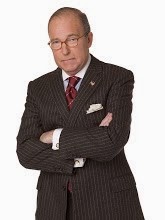
What follows below is an unofficial transcript of my interview on Kudlow & Company last night with investment banker and former Texas Senator Phil Gramm. Mr. Gramm is a top economic advisor to John McCain.
Kudlow: Joining us now is former Senator and chairman of the Senate Banking Committee, Mr. Phil Gramm. He’s John McCain’s top economic dog. Senator Gramm it is a pleasure to see you. Thanks for coming on sir.
Gramm: Thank you Larry.
Kudlow: Unfortunately Senator, this is a rough day. And I want to ask you some questions. Put your hat on.
Gramm: It sounded like a rough day the way you were yelling a minute ago.
Kudlow: Yes, this is not a good day. Markets are down. And I want to ask you, as former chairman of the Senate Banking Committee, Fannie and Freddie are getting clobbered Mr. Gramm. They’re down, really they’re approaching zero. Ten, fifteen points away from zero. The market has completely lost confidence. There’s a Fortune magazine story that’s talking about a doomsday scenario, what would happen if they both failed. I want to ask you, what would happen if they both failed? If the unthinkable happens?
Gramm: Well, let me make it clear you asked me this question.
Kudlow: Yes sir.
Gramm: I’m not speaking for Senator McCain.
Kudlow: Yes sir.
Gramm: Freddie and Fannie are not going to fail. Obviously they have not only the implicit guarantee of the government, but clearly that’s not going to happen. I think today was a very rough day on financials across the board. I do think it’s important to remember that for everybody that sold, somebody bought. And I think Freddie and Fannie are under stress, as the financial sector is. I think maybe Congress ought to go back and look at this taking of Freddie and Fannie funds to fund a program for housing. But Freddie and Fannie are important to the American housing industry. The way our system is structured, if we could go back to the Depression and start over, I don’t doubt we would do it differently. But I expect both of them to survive. But we are going through a very difficult financial period.
Kudlow: As I recall Senator, I used to have these accounts when I worked at the Office of Management and Budget many years ago, when you and I first met. As I recall, they have a credit line to the Treasury that is something like $2.5 billion dollars, which goes back many, many many decades. And obviously is nothing even remotely close to the assets on their balance sheet or the downside risk in the event of default, or worse, bankruptcy. I mean, how should taxpayers look at this? This thing could be a time bomb.
Gramm: Well I think people are obviously concerned about the financial markets. I think at some point here we’re going to feel the bottom of our housing problem. Obviously, I hope it’ll be tomorrow. And when we do, I think confidence will rebuild quickly. But I think clearly we have a problem today. And it’s not just in Freddie and Fannie, it’s in the whole financial sector. But, underlying the financial structure of the country, most of the major institutions are profitable except for their write-offs on subprime. If we can get through this period, I think we’ll see a quick recovery. But I think what anybody who is a policymaker today, and I am not, I’m an investment banker, but I think what anybody’s got to do is try to do the things that will get us through this period quickly. And that is basically trying to stimulate economic growth and investment.
Kudlow: Before we get back to stimulating growth and investment which is always a heck of a good idea, let me ask you about Ben Bernanke. In his speech yesterday, this was a speech heard ‘round the world, he said the Fed is going to have to accept the mantle of promoting financial stability, number one. Number two, he said the Fed is going to have to regulate and supervise the Wall Street banks, the investment banks. I don’t know whether your bank UBS fall into that. It’s certainly Merrill Lynch, and Morgan Stanley and Goldman Sachs and so forth. Number three, and this is a criticism coming from many people, that’s going to give [the Fed] two more mandates, stability and regulation of Wall Street. Their first two mandates, low unemployment and low inflation have not been met. Unemployment is rising. Inflation is rising. Sources tell me The Wall Street Journal editorial page may call for Bernanke’s resignation tomorrow. Do you think Bernanke and the Fed are on a power grab? Do they deserve this added turf? Is this the right thing? Or maybe the stock market’s telling us it’s all wrong?
Gramm: Well we’re already regulated by the Federal Reserve Bank. Look, Larry, when the Federal Reserve Bank stepped in, trying to deal with systemic risk – and I think they did a very good job, and I give Bernanke very high marks on it – they basically changed the nature of investment banks and non-bank financial institutions in America. Having the data to make judgments about systemic risk makes sense. And I think it has been clear since their intervention that this was going to happen. Any move can turn into a power grab. I don’t see this as one as of today. I’m afraid that I think Bernanke has done a very good job. I think he was very clever in auctioning off loans and getting rid of the stigma of borrowing from the Federal Reserve Bank discount window. I think he’s done a good job. Especially given that he had not established a long reputation as Greenspan had. Any idea of him stepping down I think would be wrong. I would be adamantly opposed to it. I’m sure Senator McCain would be opposed to it.
Kudlow: Alright.
Gramm: These are not easy times.
Kudlow: Right.
Gramm: And when you’re being decisive, as he is being, and when you’re beginning to face a threat to the dollar, the inflation threat, in addition to the softness of the economy, this is a tough job. And I think he’s doing a good job at it. And I think we’ve got to be supportive. Leaders, when they face tough decisions, deserve our support.
Kudlow: Alright. So ultimately the buck stops here in the Oval Office, and President, possible President to be John McCain. You’re a top advisor. What would Mr. McCain say? We have rising unemployment. We have rising inflation. We have a falling dollar. What’s he gonna say? How are you advising him? How will he get the economy back on track?
Gramm: Well I think, first of all, he’s going to try to go back to programs that work. We’re not talking about faith; we’re talking about evidence. And we know the evidence, that fiscal responsibility works. It will strengthen the dollar. It will bring down oil prices. We know the corporate tax rate in America is the second highest in the world. And when you bring in state corporate tax rates – which none of the other OECD countries have – we have the highest corporate tax rate in the world.
ITT says they can build a plant and operate it in ten years, for ten years, in Ireland for a billion dollars less than they can do it in the United States because of the corporate tax rate. Obviously, we can’t live with that rate as it is. And I think we can collect more taxes by attracting more investment, by bringing it down from 35 percent to 25 percent. Senator McCain wants to do that. I know it looks popular for some in Congress, and for Senator Obama, to be calling for raising the top tax rates. But the problem is 85 percent of the taxes paid in the top bracket are paid for by small businesses filing as subchapter-S corporations or with pass-through income. And so you’re socking small business at the very moment that we need to create more jobs.
Kudlow: Okay. Let me just get you to react to—you know Senator Obama has been very critical obviously, and this is going to be a major part of the campaign and the debate. Senator Obama says Senator McCain’s plan is for millionaires and big corporations. Instead, he says he’s gonna give everybody under $250,000 a year a $500 tax credit, a thousand dollars per family, per household, to offset Social Security expenses. Let me ask you this, does Obama have a more direct assistance in this plan to the middle class than Mr. McCain?
Gramm: No. Now let me ask you a question. How many people poorer than you have ever hired you?
Kudlow: [Laughter]
Gramm: Zero.
Kudlow: Listen I’m not sculpting Obama’s message. But Obama is ahead by six or seven points in the polls or thereabouts. And I’m just saying that’s the distinction in this campaign. [Obama] says he’s going to give everybody $500 bucks, a thousand per household, help them pay off their Social Security liabilities, and that’s gonna help the middle class. The middle class is up for grabs Senator. Is Senator McCain in favor—does his plan resonate with the middle class as much as Obama’s, in your view?
Gramm: Yeah I think it will. Let me give you an example. Both Senator McCain and Senator Obama came out in the primary for doubling the dependent exemption. Senator Obama came out for doubling it by raising the top tax bracket, which is a tax on small business. Senator McCain came out for a program to reclaim the budget authority from the add-on of $18 billion dollars with earmarks in 2007, and an add-on of $17 billion dollars in 2008. Now when you ask Americans, do you want to fund doubling the dependent exemption so that families have got more money to spend on their own children – something both candidates agree to – do you want to do it by stop building bridges to nowhere, and stop pork barrel add-ons, or do you want to raise taxes on small business? I think the choice is pretty clear.
Kudlow: Alright. Thank you for that. One last one sir. We appreciate your time very much. I’m sorry to bring you on in a rough day. Cap-and-trade, Senator McCain has kind of shifted toward a pro-production, pro-energy production, he’s now in favor of offshore drilling. I think he’s in favor of drilling up in the oil shale. He’s not quite there yet on ANWR. I noticed in his two latest economic speeches – which were very much pro-growth, supply-side speeches – he did not mention cap-and-trade. I also noticed in his 15-page policy pamphlet, which most people don’t read, but I did, and you may have written it, there is no mention of cap-and-trade. Many conservatives think that would be the biggest expansion of government in American history. Is cap-and-trade dead in the McCain campaign?
Gramm: No. But let me make it clear. You know some people have been critical of the senator for moving so aggressively on nuclear power and opening up the [Outer] Continental Shelf where states agree and share in the revenues. But look, if you don’t see the world differently at $140 dollars a barrel then you did at $40 a barrel, something is wrong with you. I mean, the world has changed dramatically. And we need to act dramatically. The old tired clichés of the past—speculators, big oil companies—that’s not gonna get the job done. If we want more energy, we got to produce it. If we can produce more of it here at home, at a price people can afford to pay, we’re going to be better off.
Senator McCain is concerned about the environment. There’s no conflict between trying to expand our ability to produce energy at home and being concerned about the environment. In terms of cap-and-trade, I think we’re gonna have to make a fundamental decision. If the objective is to change the relative price of carbon-generated products, that’s one thing. But the tax also makes people poorer. And I think what we need to do, if we take this policy, and we go in that direction, is we need to take the revenue and give it back by cutting the payroll taxes, income taxes and corporate taxes to eliminate the wealth effect. To simply get the substitution effect to try to deal with global warming. But the idea of letting government spend that money is very frightening. And it would be a disaster for freedom and for America.
Kudlow: Alright, that’s great stuff. Thank you very much, Senator Phil Gramm. We appreciate it sir.
Gramm: Thank you. Calm down. America will survive.
Kudlow: I’m with you. You got to look at the optimism for the long run. Free market capitalism is the best path to prosperity.
Thursday, July 10, 2008
Thursday Night Lineup
 On CNBC's Kudlow & Company at 7pm ET tonight:
THE DYNAMIC DUO...On to debate the fate of Fannie and Freddie, as well as discuss former senator and top McCain economic advisor Phil Gramm's controversial "mental recession" comments are former labor secretary Robert Reich and the Wall Street Journal's Steve Moore.
DRILL, DRILL, DRILL...Sen. Mary Landrieu (D-LA) will join us from Washington with her take on oil and energy.
THE STOCK MARKET & ECONOMY...Our stock market all-stars will discuss and debate all the latest news and developments affecting investors.
On board:
*Mark Zandi, chief economist for Moody's Economy.com
*Don Luskin, chief investment officer, Trend Macro
*Andy Busch, global FX strategist, BMO Capital Markets
*Jim Awad, chairman, WP Stewart Asset Management
PRIMARY POLITICS...Pollsters Scott Rasmussen of Rasmussen Reports and John Zogby of Zogby International will lend their insight on all the latest issues affecting the presidential race between Obama and McCain.
Please join us at 7pm ET on CNBC for another free market edition of Kudlow & Company.


Wednesday, July 09, 2008
Mac’s Off Cap-and-Trade
After writing favorably about Sen. McCain’s recent economics speeches, where he clearly shifted toward the supply-side both on tax cuts and producing more energy, I went back last evening and carefully read his 15-page policy pamphlet called “Jobs for America.” Here’s what I found: There is no mention of cap-and-trade. None. Nada. There is a section about “Cheap, Clean, Secure Energy for America: The Lexington Project.” But that talks about expanded domestic production of oil and gas, as well as the need for more nuclear power and coal along with alternative sources. Then it has the $300 million battery and flex-fuel cars. But nope, no cap-and-trade.
So I picked up the phone and dialed a senior McCain official to make sure these old eyes hadn’t missed it. Sure enough, on deep background, this senior McCain advisor told me I was correct: no cap-and-trade. In other words, this central-planning, regulatory, tax-and-spend disaster, which did not appear in Mac’s two recent speeches, has been eradicated entirely -- even from the detailed policy document that hardly anybody will ever read.
So then I asked this senior official if the campaign has taken cap-and-trade out behind the barn and shot it dead once and for all -- buried it in history’s dustbin of bad ideas. The answer came back that they are interested in jobs right now -- jobs for new energy production and jobs from lower taxes. At that point I became satisfied. Even though a McCain presidency might resurrect cap-and-trade, it will be a much different format. More important, the campaign is cognizant of the conservative rebellion against it.
That’s enough for me.
I might add that in this lengthy policy document there’s a strong statement about appreciating the value of the dollar. “John McCain’s policies will increase the value of the dollar and thus reduce the price of oil.”
This is good. It’s not perfect. Neither is McCain’s tax plan and new energy plan. But it is excellent progress. We’ll see if the next batch of polls shows any positive movement on the basis of McCain’s new pro-growth, supply-side approach. I notice today on the Intrade pay-to-play prediction market that McCain is up almost a full percentage point. That’s good, except he’s still way down, 65 to 31. However, the national average on RealClearPolitics shows a tightening to just over 5 percentage points, 48.2 to 43.0.
If Steve Schmidt had anything to do with McCain’s nouveau supply-side economics, good for him.
So I picked up the phone and dialed a senior McCain official to make sure these old eyes hadn’t missed it. Sure enough, on deep background, this senior McCain advisor told me I was correct: no cap-and-trade. In other words, this central-planning, regulatory, tax-and-spend disaster, which did not appear in Mac’s two recent speeches, has been eradicated entirely -- even from the detailed policy document that hardly anybody will ever read.
So then I asked this senior official if the campaign has taken cap-and-trade out behind the barn and shot it dead once and for all -- buried it in history’s dustbin of bad ideas. The answer came back that they are interested in jobs right now -- jobs for new energy production and jobs from lower taxes. At that point I became satisfied. Even though a McCain presidency might resurrect cap-and-trade, it will be a much different format. More important, the campaign is cognizant of the conservative rebellion against it.
That’s enough for me.
I might add that in this lengthy policy document there’s a strong statement about appreciating the value of the dollar. “John McCain’s policies will increase the value of the dollar and thus reduce the price of oil.”
This is good. It’s not perfect. Neither is McCain’s tax plan and new energy plan. But it is excellent progress. We’ll see if the next batch of polls shows any positive movement on the basis of McCain’s new pro-growth, supply-side approach. I notice today on the Intrade pay-to-play prediction market that McCain is up almost a full percentage point. That’s good, except he’s still way down, 65 to 31. However, the national average on RealClearPolitics shows a tightening to just over 5 percentage points, 48.2 to 43.0.
If Steve Schmidt had anything to do with McCain’s nouveau supply-side economics, good for him.
Wednesday Night Lineup
On CNBC's Kudlow & Company at 7pm ET tonight:THE MARKETS & ECONOMY...Our stock market all-stars will discuss and debate all the latest news and developments affecting investors including today's stock market sell-off.
On board:
*Doug Kass, president, Seabreeze Partners Management
*Michael Pento, Delta Global Advisors, senior market strategist
*Jack Gage, Forbes magazine associate editor
*Dennis Kneale, CNBC media & technology editor
YOUR MONEY, YOUR VOTE: AN INTERVIEW WITH PHIL GRAMM...On to discuss the details and objectives of Senator John McCain's economic plan will be former Texas Senator & top McCain economic advisor Phil Gramm.
Economist Jared Bernstein from the Economic Policy Institute will join the panel following the Gramm interview to discuss Mr. McCain's proposals.
BOEING & THE $35 BILLION DOLLAR TANKER CONTRACT...Jed Babbin, online editor of Human Events and former deputy undersecretary of defense will be aboard to discuss news that Boeing has pushed the Department of Defense to reconsider an Air Force decision on a fuel-tanker contract originally awarded to Northrop Grumman.
Please join us at 7pm ET on CNBC for another free market edition of Kudlow & Company.
Tuesday, July 08, 2008
Mac Is Moving to the Supply-Side
Sen. John McCain gave two economics speeches in the last 48 hours. They were very strong, pro-growth, and pro-energy production. McCain also is finally slamming Obama on taxes and energy. Yesterday in Denver, the senator said, “If you believe you should pay more taxes, I am the wrong candidate for you. Sen. Obama is your man. The choice in this election is stark and simple. Sen. Obama will raise your taxes. I won’t.”
This is good. Strong. I hope it’s the beginning of a Big Mac resurgence under the new management of Steve Schmidt, who is effectively running the campaign as of this past weekend.
McCain also slammed Obama on energy, essentially labeling him Doctor No. In the Denver speech McCain said, “My opponent’s answer is no to more drilling; no to more nuclear power; no to research prizes that help solve the problem of affordable electric cars. For a guy whose ‘official seal’ carried the motto, ‘Yes, We Can,’ Sen. Obama’s agenda sure has a whole lot of ‘No, We Can’t.’” This also is good.
Increasingly McCain is shifting his positions towards the supply-side: across-the-board tax cuts, keeping the Bush tax rates on investment, slashing the corporate tax rate, doubling the child deduction for family dependents, cutting pork-barrel spending, and producing more energy.
On the drill, drill, drill energy front, McCain argued in favor of producing more oil and gas, and he said this would send a message to the market that would result in lower prices. He argued for nuclear power, clean coal, and oil shale. And he noted for the first time that expanded energy production would be a strong job-creator. This is so important in terms of an economic fix.
And here are a couple things missing from McCain’s speech: There was no mention of “obscene profits”; no mention of cap-and-trade; and no mention of reckless traders. We will see if these ideas continue to be absent from the senator’s formal speeches. I hope so. Voters want more drilling and they do not want cap-and-trade, which is really tax-and-raise-gas-pump-prices and ultimately cap-and-kill-the-economy.
By the way, in his second economics speech today in Washington, D.C., Sen. McCain strongly defended free trade, saying it would create more and better jobs, increase wages, keep inflation under control, and make goods more affordable for low- and middle-income consumers.
He also supported more competition for schools and empowering parents with choice. I have not heard him argue for school choice before. He then argued for comprehensive immigration legislation that would include border security first, apprehending illegal felons who commit crimes, recognition of the important economic contributions of immigrants, and finally humanitarian treatment. I still believe the best way to stop illegal immigration is to promote more legal immigration — namely by raising the entry limits to meet U.S. job demands. But McCain is combining this with a tough border-security message, and I think that’s good.
In general, the senator is developing a good supply-side message for economic growth, with a big focus on tax cuts and new energy production. Obama is for tax hikes and opposed to energy production. These are important contrasts. Now it’s up to the Republican standard bearer to keep hammering these key points on the campaign trail. More energy. Lower taxes. A pro-growth economic recovery plan. Perhaps he will even add King Dollar to his repertoire. I might add that increasing the value of the dollar is part of McCain’s 15-page policy blueprint. Right now he is definitely on the right track.
This is good. Strong. I hope it’s the beginning of a Big Mac resurgence under the new management of Steve Schmidt, who is effectively running the campaign as of this past weekend.
McCain also slammed Obama on energy, essentially labeling him Doctor No. In the Denver speech McCain said, “My opponent’s answer is no to more drilling; no to more nuclear power; no to research prizes that help solve the problem of affordable electric cars. For a guy whose ‘official seal’ carried the motto, ‘Yes, We Can,’ Sen. Obama’s agenda sure has a whole lot of ‘No, We Can’t.’” This also is good.
Increasingly McCain is shifting his positions towards the supply-side: across-the-board tax cuts, keeping the Bush tax rates on investment, slashing the corporate tax rate, doubling the child deduction for family dependents, cutting pork-barrel spending, and producing more energy.
On the drill, drill, drill energy front, McCain argued in favor of producing more oil and gas, and he said this would send a message to the market that would result in lower prices. He argued for nuclear power, clean coal, and oil shale. And he noted for the first time that expanded energy production would be a strong job-creator. This is so important in terms of an economic fix.
And here are a couple things missing from McCain’s speech: There was no mention of “obscene profits”; no mention of cap-and-trade; and no mention of reckless traders. We will see if these ideas continue to be absent from the senator’s formal speeches. I hope so. Voters want more drilling and they do not want cap-and-trade, which is really tax-and-raise-gas-pump-prices and ultimately cap-and-kill-the-economy.
By the way, in his second economics speech today in Washington, D.C., Sen. McCain strongly defended free trade, saying it would create more and better jobs, increase wages, keep inflation under control, and make goods more affordable for low- and middle-income consumers.
He also supported more competition for schools and empowering parents with choice. I have not heard him argue for school choice before. He then argued for comprehensive immigration legislation that would include border security first, apprehending illegal felons who commit crimes, recognition of the important economic contributions of immigrants, and finally humanitarian treatment. I still believe the best way to stop illegal immigration is to promote more legal immigration — namely by raising the entry limits to meet U.S. job demands. But McCain is combining this with a tough border-security message, and I think that’s good.
In general, the senator is developing a good supply-side message for economic growth, with a big focus on tax cuts and new energy production. Obama is for tax hikes and opposed to energy production. These are important contrasts. Now it’s up to the Republican standard bearer to keep hammering these key points on the campaign trail. More energy. Lower taxes. A pro-growth economic recovery plan. Perhaps he will even add King Dollar to his repertoire. I might add that increasing the value of the dollar is part of McCain’s 15-page policy blueprint. Right now he is definitely on the right track.
Tuesday Night Lineup
On CNBC's Kudlow & Company at 7pm ET tonight:THE STOCK MARKET, ECONOMY, OIL & MORE...Our stock market and economic all-stars will discuss and debate all the latest news, trends and developments affecting investors including the recent sell-off in oil.
On board:
*David Malpass, economist & president of Encima Global
*Vince Farrell, managing director, Scotsman Capital
*Jerry Bowyer, chief economist, Benchmark Financial Network
*Quentin Hardy, Forbes Silicon Valley bureau chief
A LOOK AT OIL...Kevin Kerr, president of Kerrtrade.com & editor of MarketWatch's Global Resources, will join the aforementioned market panel with his perspective on the recent slide in oil prices.
INTERVIEW WITH SENATOR ENSIGN...We'll have a one-on-one interview with Republican Senator John Ensign of Nevada covering all the latest issues affecting investors.
WASHINGTON TO WALL STREET...Pollster Scott Rasmussen from Rasmussen Reports will join Messrs. Farrell, Bowyer and Hardy with a look at the latest money politics developments in Senators McCain & Obama's presidential campaigns.
Please join us at 7pm ET on CNBC for another free market edition of Kudlow & Company.
My Interview with Senior McCain Advisor Carly Fiorina
What follows below is an unofficial transcript of my interview on Kudlow & Company last night with Carly Fiorina. Ms. Fiorina is the former chairman & CEO of Hewlett-Packard and a senior economic advisor to John McCain.
Kudlow: Alright. Dueling economic visions today from Senators McCain and Obama. Here to talk about it, we welcome back senior McCain advisor Carly Fiorina. Carly it’s wonderful to see you.
Fiorina: Nice to see you Larry.
Kudlow: We’ve got a couple [clips], we’ve got some great sound. I want you to respond. Obama in St. Louis is criticizing your man and his talk out in Denver. First of all, here’s Senator Obama on his tax plan.
[Senator Barack Obama: If Senator McCain wants to debate about taxes in this campaign, then it is a debate I am happy to have. Because if you are a family making less than $250,000 a year, my plan will not raise your taxes. Not your income tax, not your payroll taxes, not your capital gains taxes, not any of your taxes.]
Kudlow: Alright, so he’s saying anything under $250,000 is tax-hike free. What is your response to that?
Fiorina: Well, I don’t know how he does it. Because first of all, he said that he does not agree with making the tax cuts permanent. Which means every American will experience an increase in their taxes. Secondly, 100 million Americans have some form of investment in a mutual fund, some stock market investment. So 100 million Americans would get hit by his capital gains tax increase. Third, in the last six months he has voted twice for a Democratic budget that would raise everyone’s taxes. He voted to increase the tax rate at 23, 25, 28 percent, which basically means if you’re making under $32,000 a year, your taxes would go up. He’s also said that his massive government spending programs are “paid for.” And the only way he can do that is by raising everyone’s taxes.
So one of the things I’ve come to know is, honestly, that I think there is Barack Obama’s words, and then I think there are his actions. And his actions to date support the fact that he would raise taxes. Not only on people making less than $250,000 a year, but importantly, on small business owners, 23 million of whom file as individuals. And it is those small businesses that are the one bright spot in this economy. They have produced 233,000 jobs in the last six months, while the rest of the economy lost 400,000 jobs.
Kudlow: Alright, let me give you another one from Senator Obama today in St. Louis. Here it comes, please listen.
Fiorina: Okay.
[Senator Barack Obama: What Senator McCain is going to need to explain is why his tax cut for the middle class would leave out 101 million households. And why for the families who are lucky enough to get a tax cut under his plan, it would be worth only about $125 dollars in the first year.]
Kudlow: So Carly Fiorina, I don’t understand this. He says Mr. McCain’s middle-class tax cuts would leave out 100 million or 101 million households. Do you have a thought on this? A response?
Fiorina: Well I really can’t respond because I have no idea where he gets the numbers. Here’s what John McCain explicitly has said. First, he would give every family, he would double the exemption for dependents from $3500 dollars to $7000 dollars, for all families, or all parents who are raising children regardless of their income. Second, he would repeal over time, the alternative minimum tax which hits about 60 million Americans. Third, he would make the tax cuts permanent which hit many Americans. Fourth, he would not raise the capital gains tax. Fifth, he would propose to lower the estate tax to 15 percent, while Barack Obama would raise it to 45 percent. So I simply don’t understand where Barack Obama gets his numbers. We’ve laid out the McCain economic plan in great detail today, in a 15-page outline proposal that says very clearly what we’re doing and how we intend to pay for it and balance the budget.
Kudlow: I noticed Mr. McCain is really kind of, pardon the phrase, getting with the energy drill, where he’s now talking about an energy plan that expands all forms including drilling offshore and shale. It will be a big American job creator.
Fiorina: Absolutely.
Kudlow: Not jobs in Bangladesh or Viet Nam, but right here. High paying jobs. This sounds like a change.
Fiorina: Well John McCain has said for quite some time that we need to break our dependence on foreign oil. He’s said for quite some time that we must take the lead in climate change. But he also, to your point Larry, began a very serious conversation with the American people about our dependence on foreign oil as thirty years in the making. And we now have to really get serious about it, because it threatens not only our national security, but our economic security, and as well, our environment. And we’re going to start with producing more of our own energy. Whether that’s nuclear power, which could produce up to 700,000 jobs as we build out nuclear power plants. Whether that’s clean coal, the demonstration projects for clean coal alone will employ about 30,000 Americans. Or whether that’s natural gas, or whether that’s offshore drilling, we have to produce more of our own.
Kudlow: I hear you. I notice—I read the speech very carefully—no mention of cap-and-trade.
Fiorina: Well if you had gone back and read his speeches from his energy, when he launched the Lexington Project, you would have seen some mention of cap-and-trade…
Kudlow: I know, but I don’t want to go back!
Fiorina: I know that you and the Senator…[laughter]
Kudlow: I don’t want to go back. I like this speech. I didn’t see it. I couldn’t see it, I couldn’t smell it. It was awesome! No cap-and-trade.
Fiorina: Well I think, again, knowing that you don’t exactly agree with that part of the plan, I think what Senator McCain is doing with cap-and-trade is to put incentives on the side of alternative technologies. Today all the incentives are on the side of oil, in particular. And so he’s trying to shift the incentive structure. In other words, he’s trying to use techniques that we know work in the free market to try and shift where people make their investment. And by the way, you were talking earlier about the automotive industry. That’s an industry that we clearly need to revitalize. And I think with enough incentives, to really focus on some of these alternative technologies, it could help to revitalize that industry.
Kudlow: Well hope springs eternal on that one, but I appreciate the thought. Let me ask you another one. I did not see the phrase, “obscene profits.” Does this mean Mr. McCain now is throwing his hand with the great American energy companies? It’s okay to be profitable?
Fiorina: Well maybe you’re confusing in that question Senator McCain with Senator Obama. It is Senator Obama who is for a windfall profits tax. Senator McCain…
Kudlow: I understand, but Senator McCain keeps using [the phrase] “obscene profits” which drives me crazy. I didn’t see it today. I was very happy.
Fiorina: Well Senator McCain has said that he is against a windfall profits tax. He has also voted against the 2005 Energy Bill which was full of giveaways to big oil. Barack Obama voted for it. McCain voted against the bill that was laden with pork for agricultural subsidies, which as you know and you would agree I think, distorts markets. Barack Obama voted for it. So, part of my point here is to contrast Barack Obama’s actions with Barack Obama’s words. But also to say that John McCain, while he may absolutely empathize with the American people while they are paying record prices at the pump, and seeing massive, and from their point of view, obscene profits at the oil companies, he doesn’t propose taxing them
Kudlow: Alright. Just one real quickie. I’m sorry we don’t have time. It is being reported that you are meeting with Senator Hillary Clinton’s supporters, particularly her financiers. Can you just tell us one bullet, one line, what are you saying to them on behalf of the McCain campaign?
Fiorina: No woman’s vote should be taken for granted. Women represent 52 percent of the voting public. They are not a constituency, they are the majority. And women are also an economic force, because they start small businesses at twice the rate of men. And we know that small businesses are producing the majority of jobs in this country. So in other words, every woman’s vote deserves to be taken very seriously. John McCain will take every woman’s vote seriously. And he will fight for their votes.
Kudlow: And it’s high time we had a woman in the Treasury Department. Is it not? Running it?
Fiorina: [Laughter] Well Larry, that’s up to somebody else, namely President McCain. Meanwhile I’m happy to be doing my part. And by the way, I still support a strong dollar!
Kudlow: I know you do. And actually, in the policy blueprint today, Mr. McCain came out right at the top of that thing for a strong dollar.
Fiorina: That’s right.
Kudlow: Carly Fiorina, thank you ever so much for coming back. Thank you for your time.
Kudlow: Alright. Dueling economic visions today from Senators McCain and Obama. Here to talk about it, we welcome back senior McCain advisor Carly Fiorina. Carly it’s wonderful to see you.
Fiorina: Nice to see you Larry.
Kudlow: We’ve got a couple [clips], we’ve got some great sound. I want you to respond. Obama in St. Louis is criticizing your man and his talk out in Denver. First of all, here’s Senator Obama on his tax plan.
[Senator Barack Obama: If Senator McCain wants to debate about taxes in this campaign, then it is a debate I am happy to have. Because if you are a family making less than $250,000 a year, my plan will not raise your taxes. Not your income tax, not your payroll taxes, not your capital gains taxes, not any of your taxes.]
Kudlow: Alright, so he’s saying anything under $250,000 is tax-hike free. What is your response to that?
Fiorina: Well, I don’t know how he does it. Because first of all, he said that he does not agree with making the tax cuts permanent. Which means every American will experience an increase in their taxes. Secondly, 100 million Americans have some form of investment in a mutual fund, some stock market investment. So 100 million Americans would get hit by his capital gains tax increase. Third, in the last six months he has voted twice for a Democratic budget that would raise everyone’s taxes. He voted to increase the tax rate at 23, 25, 28 percent, which basically means if you’re making under $32,000 a year, your taxes would go up. He’s also said that his massive government spending programs are “paid for.” And the only way he can do that is by raising everyone’s taxes.
So one of the things I’ve come to know is, honestly, that I think there is Barack Obama’s words, and then I think there are his actions. And his actions to date support the fact that he would raise taxes. Not only on people making less than $250,000 a year, but importantly, on small business owners, 23 million of whom file as individuals. And it is those small businesses that are the one bright spot in this economy. They have produced 233,000 jobs in the last six months, while the rest of the economy lost 400,000 jobs.
Kudlow: Alright, let me give you another one from Senator Obama today in St. Louis. Here it comes, please listen.
Fiorina: Okay.
[Senator Barack Obama: What Senator McCain is going to need to explain is why his tax cut for the middle class would leave out 101 million households. And why for the families who are lucky enough to get a tax cut under his plan, it would be worth only about $125 dollars in the first year.]
Kudlow: So Carly Fiorina, I don’t understand this. He says Mr. McCain’s middle-class tax cuts would leave out 100 million or 101 million households. Do you have a thought on this? A response?
Fiorina: Well I really can’t respond because I have no idea where he gets the numbers. Here’s what John McCain explicitly has said. First, he would give every family, he would double the exemption for dependents from $3500 dollars to $7000 dollars, for all families, or all parents who are raising children regardless of their income. Second, he would repeal over time, the alternative minimum tax which hits about 60 million Americans. Third, he would make the tax cuts permanent which hit many Americans. Fourth, he would not raise the capital gains tax. Fifth, he would propose to lower the estate tax to 15 percent, while Barack Obama would raise it to 45 percent. So I simply don’t understand where Barack Obama gets his numbers. We’ve laid out the McCain economic plan in great detail today, in a 15-page outline proposal that says very clearly what we’re doing and how we intend to pay for it and balance the budget.
Kudlow: I noticed Mr. McCain is really kind of, pardon the phrase, getting with the energy drill, where he’s now talking about an energy plan that expands all forms including drilling offshore and shale. It will be a big American job creator.
Fiorina: Absolutely.
Kudlow: Not jobs in Bangladesh or Viet Nam, but right here. High paying jobs. This sounds like a change.
Fiorina: Well John McCain has said for quite some time that we need to break our dependence on foreign oil. He’s said for quite some time that we must take the lead in climate change. But he also, to your point Larry, began a very serious conversation with the American people about our dependence on foreign oil as thirty years in the making. And we now have to really get serious about it, because it threatens not only our national security, but our economic security, and as well, our environment. And we’re going to start with producing more of our own energy. Whether that’s nuclear power, which could produce up to 700,000 jobs as we build out nuclear power plants. Whether that’s clean coal, the demonstration projects for clean coal alone will employ about 30,000 Americans. Or whether that’s natural gas, or whether that’s offshore drilling, we have to produce more of our own.
Kudlow: I hear you. I notice—I read the speech very carefully—no mention of cap-and-trade.
Fiorina: Well if you had gone back and read his speeches from his energy, when he launched the Lexington Project, you would have seen some mention of cap-and-trade…
Kudlow: I know, but I don’t want to go back!
Fiorina: I know that you and the Senator…[laughter]
Kudlow: I don’t want to go back. I like this speech. I didn’t see it. I couldn’t see it, I couldn’t smell it. It was awesome! No cap-and-trade.
Fiorina: Well I think, again, knowing that you don’t exactly agree with that part of the plan, I think what Senator McCain is doing with cap-and-trade is to put incentives on the side of alternative technologies. Today all the incentives are on the side of oil, in particular. And so he’s trying to shift the incentive structure. In other words, he’s trying to use techniques that we know work in the free market to try and shift where people make their investment. And by the way, you were talking earlier about the automotive industry. That’s an industry that we clearly need to revitalize. And I think with enough incentives, to really focus on some of these alternative technologies, it could help to revitalize that industry.
Kudlow: Well hope springs eternal on that one, but I appreciate the thought. Let me ask you another one. I did not see the phrase, “obscene profits.” Does this mean Mr. McCain now is throwing his hand with the great American energy companies? It’s okay to be profitable?
Fiorina: Well maybe you’re confusing in that question Senator McCain with Senator Obama. It is Senator Obama who is for a windfall profits tax. Senator McCain…
Kudlow: I understand, but Senator McCain keeps using [the phrase] “obscene profits” which drives me crazy. I didn’t see it today. I was very happy.
Fiorina: Well Senator McCain has said that he is against a windfall profits tax. He has also voted against the 2005 Energy Bill which was full of giveaways to big oil. Barack Obama voted for it. McCain voted against the bill that was laden with pork for agricultural subsidies, which as you know and you would agree I think, distorts markets. Barack Obama voted for it. So, part of my point here is to contrast Barack Obama’s actions with Barack Obama’s words. But also to say that John McCain, while he may absolutely empathize with the American people while they are paying record prices at the pump, and seeing massive, and from their point of view, obscene profits at the oil companies, he doesn’t propose taxing them
Kudlow: Alright. Just one real quickie. I’m sorry we don’t have time. It is being reported that you are meeting with Senator Hillary Clinton’s supporters, particularly her financiers. Can you just tell us one bullet, one line, what are you saying to them on behalf of the McCain campaign?
Fiorina: No woman’s vote should be taken for granted. Women represent 52 percent of the voting public. They are not a constituency, they are the majority. And women are also an economic force, because they start small businesses at twice the rate of men. And we know that small businesses are producing the majority of jobs in this country. So in other words, every woman’s vote deserves to be taken very seriously. John McCain will take every woman’s vote seriously. And he will fight for their votes.
Kudlow: And it’s high time we had a woman in the Treasury Department. Is it not? Running it?
Fiorina: [Laughter] Well Larry, that’s up to somebody else, namely President McCain. Meanwhile I’m happy to be doing my part. And by the way, I still support a strong dollar!
Kudlow: I know you do. And actually, in the policy blueprint today, Mr. McCain came out right at the top of that thing for a strong dollar.
Fiorina: That’s right.
Kudlow: Carly Fiorina, thank you ever so much for coming back. Thank you for your time.
Monday, July 07, 2008
Monday Night Lineup
On CNBC's Kudlow & Company at 7pm ET tonight:THE MARKETS & ECONOMY...Our stock market all-stars will discuss and debate all the latest news, trends and developments affecting investors.
On board:
*Don Luskin, chief investment officer, Trend Macro
*Joe Battipaglia, market strategist, Stifel Nicolaus
*Dennis Kneale, CNBC media & technology editor
*Stefan Abrams, Bryden-Abrams Investment Management managing partner
McCAIN'S ECONOMIC PLAN...Carly Fiorina, former CEO of Hewlett-Packard and economic adviser to John McCain, will join us in a one-on-one discussion live from the McCain campaign's headquarters.
OBAMA VS MCCAIN: DUELING ECONOMIC PLANS...The Dynamic Duo will debate. Joining us will be former Clinton labor secretary, author, and UC Berkeley public policy professor Robert Reich and Steve Moore, senior economics writer at The Wall Street Journal.
Please join us at 7pm ET on CNBC for another free market edition of Kudlow & Company.
Thursday, July 03, 2008
My Interview with Obama’s Director of Economic Policy
What follows below is an unofficial transcript of my interview on Kudlow & Company last night with Jason Furman. Mr. Furman is Barack Obama’s director of economic policy.
Kudlow: Alright, can Senator Obama reassure Wall Street and become the growth candidate? To talk about this we have Jason Furman. He’s Obama’s director of economic policy. Jason, welcome back to the program. Appreciate it.
Furman: It’s great to be here Larry.
Kudlow: Alright, good to see you. Congratulations on your new post. Look, you know as well as I do, Wall Street is worried, or at least some people on Wall Street are worried about tax increases and future economic growth. What can you say regarding Senator Obama’s message that would reassure people here up in New York?
Furman: Sure. I mean, the folks I’ve talked to on Wall Street are worried that we’re going to have a continuation of the economic policies of the last eight years. And, they don’t want to see the type of economy we’ve had in the last eight years. When you look at what Barack Obama is talking about, number one, we need to get our economy going today. We have real serious problems. They’re looking more serious by the day. He was out in front in fiscal stimulus in January. Out in front again, calling for another $50 billion dollar round of stimulus.
Second, if we don’t have buy-in, in this economy, Larry, if we don’t have an economy that’s working for people, we’re not going to have people with a lot of support for overall economic, pro-growth, pro-market strategy. So you want tax cuts for middle class families. You want health insurance for everyone. But finally…
Kudlow: What do you think about this bond guy – this is so fascinating Jason, I want to let you take a whack at this – famous bond guy Bill Gross of Pimco out in the West Coast. He’s posted this letter to Senator Obama, and basically he says we need a trillion dollar, a trillion dollar deficit, in order to stimulate the American economy. You’re an old hand on fiscal policy. What’s your response to Bill Gross’s recommendation to Senator Obama?
Furman: Well Larry, you know Senator Obama likes to listen to a wide range of voices and a lot of different ideas. [But] I think a trillion dollar deficit is a little bit outside of the range of advice we’re interested in getting. We want to cut the deficit from where it is this year, and that’s one of the important changes that should reassure people about our economic policy.
Kudlow: In the early 90s – I don’t remember I think it was ‘90 or ‘91 Jason – Papa Bush and Congress instituted a luxury tax on a lot of things, furs, boats, yachts and so forth. And one of things they found out was that well yeah, the wealthier people stopped spending on boats and yachts, but the real losers were the blue-collar workers who were building the big boats. Do you worry that if you raise taxes on the rich you’re going to cut off their demand and the boat builders and the blue-collar folks might get hurt by this?
Furman: You know, if we had a proposal to tax yachts I might be interested in looking into the evidence in that. But we don’t. We have a proposal that says to some of the most affluent families, you can keep only a portion of the Bush tax cuts that you’ve gotten over the last seven or eight years. You can still keep a portion of them, but you’re going to have to give up some, because we need that money for our deficit. We need it for some of the critical investments in education and infrastructure to move our country forward. And we’ll have tax rates below where they were in the 1990s, a period where we created 23 million jobs.
Kudlow: So you’re not worried that if you let the top tax rate go up, and they keep less of what they earn, that they would – I mean a lot of people talk about cap gains and supply-side, I’ll get to that in a second – but just on the demand side, might it not backfire so they have less discretionary income after tax, and again, you know whatever it is, boats, houses, anything, that it’s the blue-collar folk that might get hurt?
Furman: There’s just no evidence for that Larry. Again, we’re going to have lower tax rates than we had during a decade when we created 23 million jobs. Some of the biggest threats to this economy are that it’s getting unbalanced. And it’s getting unbalanced, you see that in the fiscal deficit, you see that in cutting Head Start, you see that in under investment in research and healthcare for example. And it’s some of those imbalances that we need to redress. Those are the real threats to our economy. And we can’t redress those problems while continuing to let the most affluent keep every single one of those very generous tax cuts they’ve gotten over the last seven or eight years.
Kudlow: Going back to the capital gains tax, Senator [Obama] said he would raise the capital gains tax for upper-end people. If we’re looking to generate more energy – and particularly more advanced technology in energy, especially in the alternative energy sources – wouldn’t you want to keep that cap gains tax as low as possible because of the need for these very high risk investments?
Furman: Well first of all lets just remember Ronald Reagan raised the capital gains rate to 28 percent. After that, the stock market went up 270 percent over the next decade. We wouldn’t go above 28 percent. In fact, we believe we can make our budget work with a number coming in a lot closer to 20 percent. Second, no one below $250,000 would be affected. This is a new rate. Families below $250,000 wouldn’t be affected. And finally, and to your point, small businesses and start-ups, they’re going to have a zero capital gains rate. It’s John McCain who wants to tax their capital gains. Barack Obama doesn’t. He wants a zero capital gains rate for small businesses, for start-ups. They’re the ones generating these new ideas. And he wants to encourage that type of growth.
Kudlow: Actually, Reagan cut it. Reagan got it at 28, he took it down to 20. In ’86, in the tax reform, it did move up to 28…
Furman: Uh no, the tax reform, you should look at, oh the Tax Reform Act of 1986 took it up to 28, then we…
Kudlow: Yes. Yes. Initially, Reagan’s tax reforms of ‘81 lowered the cap gains, although it was mostly aimed at reducing the income tax. Jason, let me go to a couple other points though. Here’s George Bush today in the Rose Garden of the White House on energy. Let’s take a listen.
[President Bush: Nobody likes high gasoline prices. And I fully understand why Americans are concerned about gasoline prices. But I want them to understand fully, that we have got the opportunity to find more crude oil here at home, in environmentally friendly ways. And they ought to be writing their congress people about it. And they ought to say you ought to be opening up ANWR and Outer Continental Shelf, and increasing oil shale exploration for the sake of our consumers, as well as become less dependent on oil.]
Kudlow: Jason I hope you heard him. Open up the drilling, Outer Continental Shelf, shale and ANWR. What is Mr. Obama’s take on this?
Furman: Right. I mean, first let’s look at our energy policy today. We’re where we are, John McCain has been in Congress for 26 years. George Bush has been president for eight years. Neither of them has done anything about the problem. They’re the ones that have been overseeing this. They’re the ones that have allowed this to happen. And the reason they’ve allowed this to happen is because they’ve never wanted to make the types of investments in alternative energies, and new energies and efficiency in raising fuel efficiency standards for cars.
There’s a whole range of things we’d do that we know can really work. The problem with [President Bush’s] plan is you don’t get a single drop of oil for another decade. John McCain and his top economic advisor Doug Holtz-Eakin, they admitted it wouldn’t do anything for prices. They did say it would help psychologically, which is Washington-speak for ‘does well in a poll.’
Kudlow: Well it does do well in a poll, you’re quite right. Did you see Marty Feldstein’s story in the [Wall Street] Journal today? He says if you have the expectation of more drilling as the moratoriums come down, traders would sell oil and prices would fall?
Furman: I saw Marty said that. And most of the energy experts I’ve talked to say the exact opposite. You’re talking at something that – and, and one of those experts by the way is the administration’s own Department of Energy, which doesn’t think this would have very much of an impact on prices, and that impact would be, you know, 10 or 20 years from now.
Kudlow: Alright, Jason Furman. We’re going to leave it there. I appreciate you coming back on the show. Hope to see you soon.
Furman: Okay, great Larry. It’s terrific to be back.
Kudlow: Alright, take care.
Kudlow: Alright, can Senator Obama reassure Wall Street and become the growth candidate? To talk about this we have Jason Furman. He’s Obama’s director of economic policy. Jason, welcome back to the program. Appreciate it.
Furman: It’s great to be here Larry.
Kudlow: Alright, good to see you. Congratulations on your new post. Look, you know as well as I do, Wall Street is worried, or at least some people on Wall Street are worried about tax increases and future economic growth. What can you say regarding Senator Obama’s message that would reassure people here up in New York?
Furman: Sure. I mean, the folks I’ve talked to on Wall Street are worried that we’re going to have a continuation of the economic policies of the last eight years. And, they don’t want to see the type of economy we’ve had in the last eight years. When you look at what Barack Obama is talking about, number one, we need to get our economy going today. We have real serious problems. They’re looking more serious by the day. He was out in front in fiscal stimulus in January. Out in front again, calling for another $50 billion dollar round of stimulus.
Second, if we don’t have buy-in, in this economy, Larry, if we don’t have an economy that’s working for people, we’re not going to have people with a lot of support for overall economic, pro-growth, pro-market strategy. So you want tax cuts for middle class families. You want health insurance for everyone. But finally…
Kudlow: What do you think about this bond guy – this is so fascinating Jason, I want to let you take a whack at this – famous bond guy Bill Gross of Pimco out in the West Coast. He’s posted this letter to Senator Obama, and basically he says we need a trillion dollar, a trillion dollar deficit, in order to stimulate the American economy. You’re an old hand on fiscal policy. What’s your response to Bill Gross’s recommendation to Senator Obama?
Furman: Well Larry, you know Senator Obama likes to listen to a wide range of voices and a lot of different ideas. [But] I think a trillion dollar deficit is a little bit outside of the range of advice we’re interested in getting. We want to cut the deficit from where it is this year, and that’s one of the important changes that should reassure people about our economic policy.
Kudlow: In the early 90s – I don’t remember I think it was ‘90 or ‘91 Jason – Papa Bush and Congress instituted a luxury tax on a lot of things, furs, boats, yachts and so forth. And one of things they found out was that well yeah, the wealthier people stopped spending on boats and yachts, but the real losers were the blue-collar workers who were building the big boats. Do you worry that if you raise taxes on the rich you’re going to cut off their demand and the boat builders and the blue-collar folks might get hurt by this?
Furman: You know, if we had a proposal to tax yachts I might be interested in looking into the evidence in that. But we don’t. We have a proposal that says to some of the most affluent families, you can keep only a portion of the Bush tax cuts that you’ve gotten over the last seven or eight years. You can still keep a portion of them, but you’re going to have to give up some, because we need that money for our deficit. We need it for some of the critical investments in education and infrastructure to move our country forward. And we’ll have tax rates below where they were in the 1990s, a period where we created 23 million jobs.
Kudlow: So you’re not worried that if you let the top tax rate go up, and they keep less of what they earn, that they would – I mean a lot of people talk about cap gains and supply-side, I’ll get to that in a second – but just on the demand side, might it not backfire so they have less discretionary income after tax, and again, you know whatever it is, boats, houses, anything, that it’s the blue-collar folk that might get hurt?
Furman: There’s just no evidence for that Larry. Again, we’re going to have lower tax rates than we had during a decade when we created 23 million jobs. Some of the biggest threats to this economy are that it’s getting unbalanced. And it’s getting unbalanced, you see that in the fiscal deficit, you see that in cutting Head Start, you see that in under investment in research and healthcare for example. And it’s some of those imbalances that we need to redress. Those are the real threats to our economy. And we can’t redress those problems while continuing to let the most affluent keep every single one of those very generous tax cuts they’ve gotten over the last seven or eight years.
Kudlow: Going back to the capital gains tax, Senator [Obama] said he would raise the capital gains tax for upper-end people. If we’re looking to generate more energy – and particularly more advanced technology in energy, especially in the alternative energy sources – wouldn’t you want to keep that cap gains tax as low as possible because of the need for these very high risk investments?
Furman: Well first of all lets just remember Ronald Reagan raised the capital gains rate to 28 percent. After that, the stock market went up 270 percent over the next decade. We wouldn’t go above 28 percent. In fact, we believe we can make our budget work with a number coming in a lot closer to 20 percent. Second, no one below $250,000 would be affected. This is a new rate. Families below $250,000 wouldn’t be affected. And finally, and to your point, small businesses and start-ups, they’re going to have a zero capital gains rate. It’s John McCain who wants to tax their capital gains. Barack Obama doesn’t. He wants a zero capital gains rate for small businesses, for start-ups. They’re the ones generating these new ideas. And he wants to encourage that type of growth.
Kudlow: Actually, Reagan cut it. Reagan got it at 28, he took it down to 20. In ’86, in the tax reform, it did move up to 28…
Furman: Uh no, the tax reform, you should look at, oh the Tax Reform Act of 1986 took it up to 28, then we…
Kudlow: Yes. Yes. Initially, Reagan’s tax reforms of ‘81 lowered the cap gains, although it was mostly aimed at reducing the income tax. Jason, let me go to a couple other points though. Here’s George Bush today in the Rose Garden of the White House on energy. Let’s take a listen.
[President Bush: Nobody likes high gasoline prices. And I fully understand why Americans are concerned about gasoline prices. But I want them to understand fully, that we have got the opportunity to find more crude oil here at home, in environmentally friendly ways. And they ought to be writing their congress people about it. And they ought to say you ought to be opening up ANWR and Outer Continental Shelf, and increasing oil shale exploration for the sake of our consumers, as well as become less dependent on oil.]
Kudlow: Jason I hope you heard him. Open up the drilling, Outer Continental Shelf, shale and ANWR. What is Mr. Obama’s take on this?
Furman: Right. I mean, first let’s look at our energy policy today. We’re where we are, John McCain has been in Congress for 26 years. George Bush has been president for eight years. Neither of them has done anything about the problem. They’re the ones that have been overseeing this. They’re the ones that have allowed this to happen. And the reason they’ve allowed this to happen is because they’ve never wanted to make the types of investments in alternative energies, and new energies and efficiency in raising fuel efficiency standards for cars.
There’s a whole range of things we’d do that we know can really work. The problem with [President Bush’s] plan is you don’t get a single drop of oil for another decade. John McCain and his top economic advisor Doug Holtz-Eakin, they admitted it wouldn’t do anything for prices. They did say it would help psychologically, which is Washington-speak for ‘does well in a poll.’
Kudlow: Well it does do well in a poll, you’re quite right. Did you see Marty Feldstein’s story in the [Wall Street] Journal today? He says if you have the expectation of more drilling as the moratoriums come down, traders would sell oil and prices would fall?
Furman: I saw Marty said that. And most of the energy experts I’ve talked to say the exact opposite. You’re talking at something that – and, and one of those experts by the way is the administration’s own Department of Energy, which doesn’t think this would have very much of an impact on prices, and that impact would be, you know, 10 or 20 years from now.
Kudlow: Alright, Jason Furman. We’re going to leave it there. I appreciate you coming back on the show. Hope to see you soon.
Furman: Okay, great Larry. It’s terrific to be back.
Kudlow: Alright, take care.
Thursday Night Lineup
***Please note that Kudlow & Company will air live at 4pm ET today...DYNAMIC DUO DEBATE: IS IT TIME FOR A SECOND STIMULUS?...Squaring off on this subject will be Wall Street Journal senior economics writer Steve Moore and former Clinton labor secretary, author, and public policy professor Robert Reich.
THE STOCK MARKET & ECONOMY...Our stock market and economic all-stars will discuss and debate all the latest news, trends and developments affecting investors including today's jobs number.
On board:
*Joe LaVorgna, chief U.S. economist, Deutsche Bank
*Jerry Bowyer, chief economist, Benchmark Financial Network
*Jim LaCamp, portfolio manager, RBC Dain Rauscher
*John Browne, senior market strategist at Euro Pacific Capital
BEAR STEARNS'S PORTFOLIO & THE FED...CNBC senior economics reporter Steve Liesman and CNBC anchor Sue Herera will both be aboard with breaking news on the value the Fed now places on Bear's portfolio.
YOUR MONEY, YOUR VOTE...On to debate John McCain's new message, Obama's lead in the polls and much more are Democratic strategist and author Bob Shrum and Ben Ginsburg, partner and lobbyist for Patton Boggs LLP.
Please join us at 4pm ET on CNBC for another free market edition of Kudlow & Company.
Bush Talks King Dollar and Drill, Drill, Drill (But Where’s John McCain?)
President Bush led his Rose Garden news conference today with this statement: “We’re strong-dollar people in this administration.” Perfect. It’s a true King Dollar message, and hopefully he’ll carry it to the G8 meeting next week.
It’s unfortunate the administration doesn’t seem ready to back this strong rhetoric with some old-fashioned intervention. The Treasury has the authority to buy dollars and sell euros in the open market. Better yet, it can coordinate these efforts with Jean Claude Trichet of the European Central Bank. President Bush and Treasury man Paulson also are forgetting the key word: “appreciate.” As in appreciate the dollar. That would be a head turner on Wall Street and on global foreign-exchange markets.
But the strong-dollar message is very welcome.
And so is the president’s continued drill, drill, drill offensive. He made it front and center in the Rose Garden, too -- which has me wondering. Where in the world is John McCain on this? Why isn’t the senator saying drill, drill, drill, and pummeling Barack Obama with this message every single day?
That’s the thrust of my latest column. You can read it here.
It’s unfortunate the administration doesn’t seem ready to back this strong rhetoric with some old-fashioned intervention. The Treasury has the authority to buy dollars and sell euros in the open market. Better yet, it can coordinate these efforts with Jean Claude Trichet of the European Central Bank. President Bush and Treasury man Paulson also are forgetting the key word: “appreciate.” As in appreciate the dollar. That would be a head turner on Wall Street and on global foreign-exchange markets.
But the strong-dollar message is very welcome.
And so is the president’s continued drill, drill, drill offensive. He made it front and center in the Rose Garden, too -- which has me wondering. Where in the world is John McCain on this? Why isn’t the senator saying drill, drill, drill, and pummeling Barack Obama with this message every single day?
That’s the thrust of my latest column. You can read it here.
Wednesday, July 02, 2008
Wednesday Night Lineup
On CNBC's Kudlow & Company at 7pm ET tonight:THE STOCK MARKET, ECONOMY, DOLLAR & DRILLING....Our stock market all-stars will discuss and debate all the latest news and developments affecting investors.
On board:
*Jeff Matthews, general partner of Ram Partners, LP
*Michael Pento, Delta Global Advisors, senior market strategist
*Dennis Kneale, CNBC media & technology editor
*Jason Trennert, chief investment strategist and managing partner at Strategas Research Partners
OBAMA MONEY POLITICS...Jason Furman, Senator Barack Obama's economic policy director, will join us for a one-on-one interview to discuss the economy, where Mr. Obama stands on the issues and more.
Our market panel will weigh in with its perspective following our interview with Mr. Furman.
RUSH'S $400 MILLION PAYDAY, A LOOK AT MCCAIN'S CAMPAIGN & MORE...Our political pros will discuss and debate.
On board:
*Kevin Madden, Republican strategist
*Larry Sabato, director of the Center for Politics, University of Virginia
*Jonah Goldberg, editor at large of National Review Online and author of Liberal Fascism
Please join us at 7pm ET on CNBC for another free market edition of Kudlow & Company.
Tuesday, July 01, 2008
Tuesday Night Lineup
On CNBC's Kudlow & Company at 7pm ET tonight:THE MARKETS, OIL, ECONOMY & MORE...Our stock market and economic all-stars will discuss and debate all the latest news and developments affecting investors.
On board:
*John Mauldin, president of Millennium Wave Advisors, LLC
*Don Luskin, chief investment officer, Trend Macro
*Vince Farrell, managing director, Scotsman Capital
*Jim Awad, chairman, WP Stewart Asset Management
Also...Frank Gaffney, president of the Center for Security Policy, will also be aboard.
DRILL, DRILL DRILL...John Pinkerton, president & CEO of Range Resources, will join us in a one-on-one interview to discuss what his company is doing and offer solutions to the American energy crisis.
SUING COUNTRYWIDE...California Attorney General Jerry Brown will discuss the multi state lawsuit accusing Countrywide of misleading borrowers and pushing loans on people who could never afford to repay.
YOUR MONEY, YOUR VOTE...Conservative syndicated columnist Ann Coulter will square off against Keith Boykin, New York Times bestselling author and former Clinton White House aide, on all the latest political news.
Please join us at 7pm ET on CNBC for another free market edition of Kudlow & Company.
Monday, June 30, 2008
Bush Talks Oil, the Dollar, and More
President George W. Bush was strong and in good spirits as he met this morning with a small group of journalists for about 90 minutes in the Oval Office. Topics across the board were discussed. As always in these meetings, some of the juiciest stuff is off the record. Too bad, because the president has an awful lot of important things to say on so many of these issues. But ground rules are ground rules. I hope I don’t get into trouble by mentioning a few economic points that came up.
First, the president will continue his strong push on energy deregulation to open up the offshore outer continental shelf, ANWR, and the shale fields. When asked if he would revoke the executive order moratorium on drilling, he said he was thinking about it. When asked whether he would give a prime-time nationally televised speech on the subject, he said he would think about that too.
He made it clear that the root cause of high gas pump prices and the $140 barrel price of oil is a lack of supply. He said we’re in a transition period from hydrocarbons to alternative technologies, but that drilling for more oil and gas is essential at this stage. He said taxing oil companies will not create any new supply. He also asserted that the marketplace works more effectively than a variety of new regulations.
When asked about the dollar, the president stated clearly that he is for a strong dollar. But he hinted that the non-intervention policy would remain in place. Instead of intervention, he felt that free-trade policies to open markets and expedite the free transfer of capital would send positive signals that would strengthen the currency. He said the Columbia free-trade debate in Congress has undermined the dollar, and he continues to believe that passage of Columbia free trade is a “no-brainer.”
He also believes the European banks have done far less to repair their balance sheets than the American banks. And he hinted that our financial and economic position is stronger than Europe’s, another factor working to strengthen the value of the dollar.
Toward the end of the session he talked in very clear terms about the need to maintain his policy regarding the spread of freedom worldwide and what he called the “universality” of freedom. He quoted from Lincoln that “all men are created equal under God.” He pointed out that there’s a picture of President Lincoln on the wall of the Oval Office. I would add that there’s also a sculpted bust of Lincoln, another bust of Winston Churchill, and a magisterial portrait of George Washington.
Mr. Bush reiterated what he has said in a number of these meetings, that in the office of the president, character matters a lot. He said you have to have clear principles and strong beliefs to execute all the responsibilities that are part of the job.
I’m gonna leave it to others to talk about some of the foreign-policy issues that came up. But I would say as someone who has been privileged to attend these gatherings in the past, not only did the president show the inner strength he always has, but when he does reflect on the tumultuous events of his tenure, he is completely at peace with himself and his decisions.
First, the president will continue his strong push on energy deregulation to open up the offshore outer continental shelf, ANWR, and the shale fields. When asked if he would revoke the executive order moratorium on drilling, he said he was thinking about it. When asked whether he would give a prime-time nationally televised speech on the subject, he said he would think about that too.
He made it clear that the root cause of high gas pump prices and the $140 barrel price of oil is a lack of supply. He said we’re in a transition period from hydrocarbons to alternative technologies, but that drilling for more oil and gas is essential at this stage. He said taxing oil companies will not create any new supply. He also asserted that the marketplace works more effectively than a variety of new regulations.
When asked about the dollar, the president stated clearly that he is for a strong dollar. But he hinted that the non-intervention policy would remain in place. Instead of intervention, he felt that free-trade policies to open markets and expedite the free transfer of capital would send positive signals that would strengthen the currency. He said the Columbia free-trade debate in Congress has undermined the dollar, and he continues to believe that passage of Columbia free trade is a “no-brainer.”
He also believes the European banks have done far less to repair their balance sheets than the American banks. And he hinted that our financial and economic position is stronger than Europe’s, another factor working to strengthen the value of the dollar.
Toward the end of the session he talked in very clear terms about the need to maintain his policy regarding the spread of freedom worldwide and what he called the “universality” of freedom. He quoted from Lincoln that “all men are created equal under God.” He pointed out that there’s a picture of President Lincoln on the wall of the Oval Office. I would add that there’s also a sculpted bust of Lincoln, another bust of Winston Churchill, and a magisterial portrait of George Washington.
Mr. Bush reiterated what he has said in a number of these meetings, that in the office of the president, character matters a lot. He said you have to have clear principles and strong beliefs to execute all the responsibilities that are part of the job.
I’m gonna leave it to others to talk about some of the foreign-policy issues that came up. But I would say as someone who has been privileged to attend these gatherings in the past, not only did the president show the inner strength he always has, but when he does reflect on the tumultuous events of his tenure, he is completely at peace with himself and his decisions.
Monday Night Lineup - From Washington D.C.
On CNBC's Kudlow & Company at 7pm ET tonight:MAKING SENSE OF THE MARKETS AND ECONOMY...Our stock market and economic all-stars will weigh in with their perspective on all the latest news and developments affecting investors.
On board:
*Dennis Gartman, economist & editor of the Gartman Letter
*Jerry Bowyer, chief economist, BenchMark Financial Network
*Andy Busch, global FX strategist, BMO Capital Markets
*Gary Shilling, president of A. Gary Shilling & Co.
RECESSION OR NOT?...Squaring off on the state of the economy will be Washington Post business columnist Steven Pearlstein and economist Jerry Bowyer.
BUSH ON THE DOLLAR & ENERGY, WES CLARK'S ATTACK ON MAC & MORE...Our Washington pros will discuss and debate all the latest political news and developments.
On board:
*Bob Shrum, Democratic strategist
*Ramesh Ponnuru, author & senior editor for National Review
*Scott Rasmussen, pollster & president of Rasmussen Reports
Please join us at 7pm ET on CNBC for another free market edition of Kudlow & Company.
Friday, June 27, 2008
Friday Night Lineup
On CNBC's Kudlow & Company at 7pm ET tonight:OIL, STOCKS, THE ECONOMY & MORE...Our stock market and economic all-stars will discuss and debate all the latest news, trends and developments affecting investors including sagging stocks, continued dollar weakness, and the rise in gold and energy prices.
On board:
*David Kotok, co-founder & CIO, Cumberland Advisors
*Dennis Gartman, economist & editor of the Gartman Letter
*Don Luskin, chief investment officer, Trend Macro
*Stefan Abrams, Bryden-Abrams Investment Management managing partner
Also...Oil expert Dan Yergin, chairman of Cambridge Energy Research, will be aboard with his perspective on $140 oil and what may lie ahead.
GOLD, INFLATION & THE DOLLAR...Chip Hanlon, president of Delta Global Advisers, will join the market panel with his take on all the latest developments and what to expect in the weeks and months ahead.
PRIMARY POLITICS...On to discuss the presidential election battle between Obama and McCain will be Wall Street Journal writer John Fund and Keith Boykin, New York Times bestselling author and former Clinton White House aide.
Please join us at 7pm ET on CNBC for another free market edition of Kudlow & Company.
Thursday, June 26, 2008
Where’s Bernanke’s Inner Volcker?
The Fed turned its back Wednesday on the very inflation-tax problem it helped create.
On the day after an unusually important Fed policy meeting both gold and stocks severely rebuked the central bank’s decision to take no action in support of the weak dollar or to curb rapidly growing inflation. Gold spiked $30, a clear message that Bernanke & Co. won’t stop inflation. Stocks plunged over 200 points, an equally clear message that the Fed’s cheap-dollar inflation is damaging economic growth.
These market warnings are two sides of the same coin. Inflation, which is caused by excess dollar creation, is the cruelest tax of all. It is a tax on consumer and family purchasing power. It is a tax on corporate profits. It is a tax on the value of stocks, homes, and other assets. Crucially, the capital-gains tax — the most important levy on all wealth-creating assets — is un-indexed for inflation. Hence, long before Barack Obama or Congress can legislatively raise the capital-gains tax rate, rising inflation is increasing the effective tax rate on real capital gains. That’s an economy-wide problem.
By doing nothing at the June 25 meeting the Fed turned its back on the very inflation-tax problem it helped create. The spanking it received from the markets was well deserved.
Former Fed chairman Paul Volcker, who is advising Sen. Obama’s presidential campaign, issued a stern warning at the New York Economics Club a few months back. He said inflation is real and the dollar is in crisis. Soon after, Fed head Ben Bernanke changed his tune in public speeches, pledging greater vigilance on inflation and hinting at a defense of the dollar. Treasury man Henry Paulson and President Bush also stepped up their rhetoric regarding a stronger greenback.
But words were no substitute for actions this week.
It is an interesting historical footnote that Paul Volcker is still highly regarded as the greatest inflation fighter of our time. Working with Ronald Reagan, it was Volcker who slew the inflation dragon in the 1980s. Indeed, the combination of tighter monetary control from the Fed and abundant new tax incentives from Reagan launched an unprecedented twenty-five-year prosperity boom characterized by strong growth and rock-bottom inflation. At the center of the boom was a remarkable 12-fold rise in stock market values, a symbol of the renaissance of American capitalism. But that was then and this is now.
Talk of major new tax hikes is in the air today, while the inflationary decline of the American dollar is plain fact. It’s as though our economic memory is being erased, both in tax and monetary terms. Staunchly optimistic supply-siders Arthur Laffer and Steve Moore are even finishing a book on the subject. Called The Gathering Economic Storm, its concluding chapter is titled: “The Death of Economic Sanity.”
The Volcker anti-inflation model presumably handed down to Alan Greenspan and Ben Bernanke always argued that price stability is the cornerstone of economic growth. Yet it appears that today’s Fed has reverted to a 1970s-style Phillips-curve mentality that argues for a trade-off between unemployment and inflation, rather than the primacy of price stability.
History teaches us otherwise. It states that since rising inflation corrodes economic growth, inflation and unemployment move together — not inversely. Even in the last 18 months this is proving true. Inflation bottomed around 1 percent in late 2006. Unemployment bottomed at 4.4 percent about 6 months later. Today, the CPI inflation rate has climbed to over 4 percent, wholesale prices have jumped to 7 percent, and import prices have spiked to 18 percent. Unemployment, meanwhile, has moved up to 5.5 percent.
Over the past five years the greenback has lost 40 percent of its value. Oil is close to $140 a barrel. And gold, now trading above $900 an ounce, is warning that if the Fed fails to stop creating excess dollars, inflation could rise to 6 or 7 percent.
I had hoped Ben Bernanke would reveal his inner Volcker at Wednesday’s meeting. He didn’t. While the Fed acknowledged that “the upside risks to inflation and inflation expectations have increased,” it took no action taken to raise the fed funds target rate, which now stands at 2 percent and is actually minus-2 percent adjusted for inflation. Even a quarter-point rate hike — merely taking back the last easing move in April — would have been a shot heard ’round the world in defense of the beleaguered dollar. It didn’t happen.
Only Richard Fisher, president of the regional Dallas Fed, dissented in favor of a higher target rate. That leaves the hard-money Fisher as the lone remaining protégé of Paul Volcker.
Of course, if Fed policymakers reconvene immediately to right their wrongheaded mistake, the value of our money could be quickly restored. The next scheduled Open Market meeting is August 5, but they needn’t wait that long.
Let’s hope they come to their senses.
On the day after an unusually important Fed policy meeting both gold and stocks severely rebuked the central bank’s decision to take no action in support of the weak dollar or to curb rapidly growing inflation. Gold spiked $30, a clear message that Bernanke & Co. won’t stop inflation. Stocks plunged over 200 points, an equally clear message that the Fed’s cheap-dollar inflation is damaging economic growth.
These market warnings are two sides of the same coin. Inflation, which is caused by excess dollar creation, is the cruelest tax of all. It is a tax on consumer and family purchasing power. It is a tax on corporate profits. It is a tax on the value of stocks, homes, and other assets. Crucially, the capital-gains tax — the most important levy on all wealth-creating assets — is un-indexed for inflation. Hence, long before Barack Obama or Congress can legislatively raise the capital-gains tax rate, rising inflation is increasing the effective tax rate on real capital gains. That’s an economy-wide problem.
By doing nothing at the June 25 meeting the Fed turned its back on the very inflation-tax problem it helped create. The spanking it received from the markets was well deserved.
Former Fed chairman Paul Volcker, who is advising Sen. Obama’s presidential campaign, issued a stern warning at the New York Economics Club a few months back. He said inflation is real and the dollar is in crisis. Soon after, Fed head Ben Bernanke changed his tune in public speeches, pledging greater vigilance on inflation and hinting at a defense of the dollar. Treasury man Henry Paulson and President Bush also stepped up their rhetoric regarding a stronger greenback.
But words were no substitute for actions this week.
It is an interesting historical footnote that Paul Volcker is still highly regarded as the greatest inflation fighter of our time. Working with Ronald Reagan, it was Volcker who slew the inflation dragon in the 1980s. Indeed, the combination of tighter monetary control from the Fed and abundant new tax incentives from Reagan launched an unprecedented twenty-five-year prosperity boom characterized by strong growth and rock-bottom inflation. At the center of the boom was a remarkable 12-fold rise in stock market values, a symbol of the renaissance of American capitalism. But that was then and this is now.
Talk of major new tax hikes is in the air today, while the inflationary decline of the American dollar is plain fact. It’s as though our economic memory is being erased, both in tax and monetary terms. Staunchly optimistic supply-siders Arthur Laffer and Steve Moore are even finishing a book on the subject. Called The Gathering Economic Storm, its concluding chapter is titled: “The Death of Economic Sanity.”
The Volcker anti-inflation model presumably handed down to Alan Greenspan and Ben Bernanke always argued that price stability is the cornerstone of economic growth. Yet it appears that today’s Fed has reverted to a 1970s-style Phillips-curve mentality that argues for a trade-off between unemployment and inflation, rather than the primacy of price stability.
History teaches us otherwise. It states that since rising inflation corrodes economic growth, inflation and unemployment move together — not inversely. Even in the last 18 months this is proving true. Inflation bottomed around 1 percent in late 2006. Unemployment bottomed at 4.4 percent about 6 months later. Today, the CPI inflation rate has climbed to over 4 percent, wholesale prices have jumped to 7 percent, and import prices have spiked to 18 percent. Unemployment, meanwhile, has moved up to 5.5 percent.
Over the past five years the greenback has lost 40 percent of its value. Oil is close to $140 a barrel. And gold, now trading above $900 an ounce, is warning that if the Fed fails to stop creating excess dollars, inflation could rise to 6 or 7 percent.
I had hoped Ben Bernanke would reveal his inner Volcker at Wednesday’s meeting. He didn’t. While the Fed acknowledged that “the upside risks to inflation and inflation expectations have increased,” it took no action taken to raise the fed funds target rate, which now stands at 2 percent and is actually minus-2 percent adjusted for inflation. Even a quarter-point rate hike — merely taking back the last easing move in April — would have been a shot heard ’round the world in defense of the beleaguered dollar. It didn’t happen.
Only Richard Fisher, president of the regional Dallas Fed, dissented in favor of a higher target rate. That leaves the hard-money Fisher as the lone remaining protégé of Paul Volcker.
Of course, if Fed policymakers reconvene immediately to right their wrongheaded mistake, the value of our money could be quickly restored. The next scheduled Open Market meeting is August 5, but they needn’t wait that long.
Let’s hope they come to their senses.
Drill, Drill, Drill: My Interview with Alaska Governor Sarah Palin
 Alaska Governor Sarah Palin, frequently touted by conservatives as Sen. McCain’s running mate, gave an outstanding performance last night on Kudlow & Co. It was drill, drill, drill -- all the way. In particular, she said look, if the people of Alaska want to drill in ANWR, why should the Congress in Washington stop this? She added that there are tens of billions of more barrels of oil both onshore and offshore Alaska. Yes, it might take five years to get ANWR on line. But we have to start sometime to solve a problem of massive oil prices.
Gov. Palin also said John McCain is wrong about ANWR and that she hopes to persuade him of that. And she agreed with me that we need an America-first energy policy that deregulates and decontrols all possible energy sources, unleashing the U.S. energy business.
She was clearheaded and plainspoken. Very impressive. The unofficial transcript follows below.
Kudlow: All right, drill, drill, drill! Nobody does it better than Alaska, if only Congress would let it. So here to tell us all about it, Alaska Republican Governor Sarah Palin.
Governor Palin, thank you ever so much for coming on. We appreciate it. I want to start with this, it’s an oddball question. I mean, Senator McCain says it's too pristine to drill. Senator Obama says the drilling won't work. What is your response to this? How do you fight back?
Palin: Well it will work. And Senator McCain is wrong on that issue. He’s right on a whole lot of other issues, so thank goodness that he’s understanding and evolving with his position on OCS [Outer Continental Shelf]. So that’s encouraging. I think he’s going to evolve into, eventually, supporting ANWR opening also.
Obama is way off base on all that. I think those politicians who don’t understand that we need more domestic supply of energy flowing into our hungry markets, you know, they’re living in La-La Land. And we’re in a world of hurt if their agenda continues to be to lock up these safe, secure domestic supplies of energy.
Kudlow: Tell me about the “world of hurt” in your judgment. The criticism of ANWR is - this is what you hear from people in both political parties - there’s not enough to matter, it’ll take too long, and it won’t impact the price of oil internationally or gas at the pump. How do you respond to that?
Palin: Well it will impact, in a positive sense, the price of fuel eventually. We’ve got to start somewhere. Again, we’ve got domestic supplies sitting there underground. The reserves are ready to be tapped. And you know, nowhere more than Alaska – Alaskans - would be impacted by development in ANWR. And here in Alaska, our constituents, the people who live here, want it drilled. So that tells you that we have confidence in the safety and the responsibility that we’ll see there with the development of ANWR.
Remember too Larry, we’re talking about a sliver of the coastal plain of Alaska being explored and drilled for oil. It’s about a footprint of a 2000-acre plot of land. That’s smaller than the footprint of LAX, for instance. So it’s not so grandiose an acreage that it is out of the realm of possibility for others to start understanding why it is that we can do this safely. We can have a small footprint, and not adversely impact the land, the wildlife, that’s part of Alaska.
Kudlow: Well what do you have up there around ANWR? Is it a bunch of big fat blue flies? People say nobody goes up there. Humanoids don’t populate it. It’s just the blue flies. I mean, I want to keep blue flies healthy. Maybe you can tell us about that?
Palin: Well sure, we want to keep the blue flies healthy also. [Laughter]. But again, it’s a small portion of land up there. Alaskans understand that while we have these reserves underground, ready to be tapped, you know, we want to invite safe responsible development. We want those who can safely develop it. We want them to compete for the right to tap those resources and start feeding these hungry markets.
Kudlow: How long would it take? How long would it take? I hear so many, Senator Obama says this, and a lot of Democrats say this, some Republicans, how long will it take Governor? What’s your estimate on this? To start lifting out of ANWR?
Palin: It’s going to take at least five years. You know, and there are other areas in Alaska too, that have the reserves that need to be tapped, certainly offshore. There’s trillions of cubic feet of natural gas, and billions of barrels of oil there too that need to be tapped. We also have a natural gas pipeline that is underway now, a process to get that constructed, where we can build infrastructure and allow known reserves of natural gas up on our North Slope - it’s already there, it’s already proven – to be tapped and flow through a natural gas pipeline. Our legislature is dealing with that issue right now, getting ready to license a company to build that gas line. Again, to feed these hungry markets.
Kudlow: Alright, so now you’ve got another case where both candidates seem to be off course. Senator Obama wants a windfall profits tax on oil companies. And Senator McCain talks about obscene profits, which I regard as the near cousin to the windfall profits tax. What’s your response to these criticisms?
Palin: Well we just went through a process of making sure that the oil and gas resources that Alaskans own are properly taxed. And we just increased a tax on profits of oil companies up here, because an earlier version of Alaska’s tax formula had been corrupted by some politicians who are now in prison for the corruption. But we had to revisit the way that we were going to tax profits on oil companies. We just got through that, and it wasn’t an obscene amount of tax placed upon them. In fact, it’s driven more by a desire to explore and to develop with independent companies coming into Alaska. So you know, on a national level, they’re going to have to deal with that, but we just dealt with it on Alaska’s level. And we have a healthy valuation of our oil and gas reserves, and we’re deriving healthy revenue for our state off that.
Kudlow: Well are profits a dirty word? In energy, or other businesses?
Palin: Well no, of course not. And low taxes of course, we know spur the economy. I’m a Republican. I am for low taxes. We have to make sure though that an appropriate value is placed oil and gas resources. And that the people who own these resources are able to benefit from the development of them. But no, profit is not a dirty word.
Kudlow: Why don’t we just liberate, and decontrol, and deregulate the whole bloody energy business – whether it’s oil, gas, shale, nuclear, coal, natural gas, as well as wind and solar – why don’t we just decontrol, deregulate, go for an America first energy policy? Get independent of Saudi Arabia? America first. Create all of these millions of high paying jobs. Why isn’t anybody talking about that in this race? That’s the natural, Reaganesque thing to do. Isn’t it?
Palin: Yeah absolutely! You’re hitting the nail right on the head. That’s what so many of us normal Americans are asking. The same thing. Why aren’t the candidates talking like that? Where we can secure America and we can be more independent when we talk about energy sources if we could drill domestically.
Here we sent [Energy] Secretary Bodman overseas the other day, and our president had to visit the Saudis a few weeks ago, to ask them to ramp up development. That’s nonsense. Not when you know that we have the supplies here. You have the supplies in your sister state called Alaska, where we’re ready, willing and we’re able to pump these supplies of energy, flow them into hungry markets across the U.S. We want it to happen. It’s Congress holding us back.
Kudlow: Alright. I’ve got some sound from Senator John McCain. Please take a listen.
[Video Clip:
Audience member: Would you consider Alaska Governor Sarah Palin for a vice-presidential running mate?
McCain: Could I say that this meeting is adjourned? [Laughter]. We’re still going through the process, but the governor of Alaska is a wonderful person, and very popular in her state, and very honest and straightforward, and I think has a future in our party]
Kudlow: Alright Governor, you probably heard Senator McCain waltz his way through that one. Let me just ask you. If he asked you to be his vice-president, would you accept in light of your disagreement, apparently, over ANWR drilling?
Palin: Well I’d like the opportunity to get to change his mind about ANWR, I’ll tell you that. But Larry, I’m gonna give you the same answer that any other potential VP gives you and that is you know, I really enjoy my job here in Alaska as governor. I believe that there’s a lot that Alaska could be and should be doing to contribute to the rest of the U.S. And I think I can do that in my job here in Alaska. And I know that, again, the other potential VPs are saying the same thing that they like where they are today. So I also have to say though that it’s really probably out of the realm of possibility to be tapped for that position, so I don’t even have to worry about it.
Kudlow: Well okay. You’ve got a lot of work to do drilling up there to help the rest of America. But let me ask one final question. In your judgment, is it time for the Republican Party to put a woman on the ticket?
Palin: Oh, we’re overdue for that. Absolutely. I would love to see that happen.
Kudlow: Alright. Governor Sarah Palin, Alaska. Thank you very much Governor. Appreciate it.
Thursday Night's Special Lineup
On CNBC's Kudlow & Company at 7pm ET tonight:TODAY'S STOCK MARKET PLUNGE, THE FED'S ROLE, OIL'S SPIKE & MUCH MORE...Our stock market and economic all-stars will weigh in with their thoughts and perspective on today's tough 300-plus point market sell-off, $5 oil spike and other pressing issues facing investors.
On board:
*Michael Pento, Delta Global Advisors, senior market strategist
*Vince Farrell, managing director, Scotsman Capital
*Jack Gage, Forbes magazine associate editor
*Dennis Kneale, CNBC media & technology editor
PRIMARY POLITICS...Our political pros will offer up all their latest Washington to Wall Street insight on the race between McCain and Obama and whether too much is being made out of Obama's current lead in the polls.
On board:
*Scott Rasmussen, president of Rasmussen Reports
*Frank Newport, editor in chief of the Gallup Poll
*Larry Hugick, chairman of Princeton Survey Research Associates International
MORE ON THE MARKETS & ECONOMY...Our experts will discuss and debate all the latest news, trends and developments.
On board:
*Art Laffer, economist and chairman of Laffer Associates
*Steve Moore, senior economic writer, Wall Street Journal
*Robert Reich, former Clinton labor secretary, author & Berkeley professor of public policy
Please join us at 7pm ET on CNBC for another free market edition of Kudlow & Company.
Wednesday, June 25, 2008
Wednesday Night Lineup
On CNBC's Kudlow & Company at 7pm ET tonight:THE STOCK MARKET, ECONOMY FED & MORE...Our stock market and economic all-stars will discuss and debate all the latest news, trends and developments affecting investors including today's Fed decision.
Market Panel:
*Jerry Bowyer, chief economist, BenchMark Financial Network
*Joe Battipaglia, market strategist, Stifel Nicolaus
*Jim Lacamp, portfolio manager at RBC Dain Rauscher
Fed Panel:
*Wayne Angell, former Federal Reserve Governor
*Lyle Gramley, former Federal Reserve Governor
*Michelle Girard, senior economist at RBS Greenwich Capital
AN INTERVIEW WITH GOVERNOR SARAH PALIN...Joining us live from Anchorage, Alaska will be the much talked about possible McCain vice-presidential pick Sarah Palin. She'll discuss drilling for oil on the Outer Continental Shelf and the Arctic National Wildlife Refuge.
WASHINGTON TO WALL STREET....The Wall Street Journal's Steve Moore will debate former Clinton labor secretary/Berkeley professor/author Robert Reich on a host of issues including the housing bill, energy and more.
Please join us at 7pm ET on CNBC for another free market edition of Kudlow & Company.
Tuesday, June 24, 2008
Is the Inner Bernanke Up to the Task?
 All eyes are on the Fed meeting to see if the inner Ben Bernanke will lean toward inflation hawk Paul Volcker and follow through to stop inflation and defend — indeed recreate — King Dollar.
 Volcker told us a few months ago that we were in a dollar crisis. Since then, Bernanke has been talking tough. No one expects a rate-hike announcement tomorrow at 2:15 p.m., but all eyes will be watching and reading the Fed policy statement to see if inflation is rated public-enemy number one. The artful term among Fed watchers is “inflation bias.”
Is inflation really a problem? Well of course sky-high oil and fuel prices make it thus. Check out today’s consumer confidence report: 12-month inflation expectations have skyrocketed to 7.7 percent! As recently as early 2003, that number was 4 percent — a rock-bottom reading that is seldom violated in these surveys.
And inflation is rising all over the world, especially for countries whose currencies are tied or shadowing the sinking U.S. dollar: China, India, South Korea, Thailand, Vietnam, Saudi Arabia, and Russia. Whenever the dollar sinks, global inflation is sure to follow. Even the strong-minded euro, piloted by inflation hawk Jean-Claude Trichet, has jumped to 3.7 percent from just over 1 percent a few years ago.
Many on Wall Street and in Washington say the Fed can’t tighten policy because the economy is weak. But you know what? The economy is weak in large part because of rising inflation, which is the cruelest tax of all. It diminishes corporate profits and family incomes. It also is forcing the unemployment rate higher.
Now the Phillips curve argues a tradeoff between unemployment and inflation. That Keynesian view is why all the Keynesian Wall Street and Washington economists are telling the Fed not to get tough. But check out some facts: The U.S. consumer price index bottomed in October 2006 at 1.3 percent. The unemployment rate bottomed six months later in March 2007 at 4.4 percent. Through May 2008, the latest readings have U.S. inflation at 4.2 percent and the unemployment rate at 5.5 percent. This is what we learned in the 1970s. Instead of moving in opposite directions, unemployment and inflation are moving up together. When you tax something you get less of it. By raising the inflation tax we are getting less job creation and higher unemployment.
This is not to say that the housing problem and the credit crunch haven’t weakened the economy. But it is to say that if the Fed can bring down inflation by taking back its easy-money rate cuts in the next 4 or 5 months, it will lower the inflation tax, resurrect King Dollar, and just maybe save the economy.
Is the inner Bernanke up to the task? We will soon know.
Drill, Drill, Drill: My Interview with Anadarko Petroleum CEO James Hackett
 What follows below is an unofficial transcript of my interview last night with James Hackett. Mr. Hackett is the president & CEO of Anadarko Petroleum. He also happens to be an incredibly bright man whose thoughts and ideas on energy are right on the money.
Kudlow: Alright, drill, drill, drill. So here to talk about the whole energy situation is James Hackett, president and CEO of Anadarko Petroleum. Mr. Hackett, welcome. Let me just ask you, drilling, this big debate, you know all about it. Ending the moratorium. Decontrolling. Allowing us to produce more supply. First of all, let me get your quick take. How long would it take to bring some oil online if we go to the Outer Continental Shelf?
Hackett: Generally five to seven years from the initial leasing until you actually have production. And we’ve proven that in 8100 feet of water, in a platform that we operate in the eastern Gulf of Mexico right now.
Kudlow: So why are these senators – and I’m not even gonna even say which political party they’re from, because I would never politicize an issue – why are these senators saying it would take five to ten years and the price impact wouldn’t be felt until 2030? In fact, listen for one second, it’s a non-senator, I’ve got some sound from former Energy Secretary Bill Richardson. Hang on a second. Here he comes.
[Bill Richardson video clip courtesy of CBS/"Face the Nation": “I was Energy Secretary, and I can tell you that every bipartisan administration has opposed offshore drilling for pristine reasons, the ecosystem. But also, the fact that you’re not going to get any of this oil out offshore for the next ten years, and prices won’t go down till the year 2030 according to the Energy Information Agency which is part of the Department of Energy."]
Kudlow: Mr. Hackett, you heard him. Ten years to get it out and then nothing until 2030 on prices. What’s he talking about?
Hackett: Well, I think that it’s one man’s view. We happen to be operators in the Gulf of Mexico. I don’t think Secretary Richardson actually did operate a well in the deep offshore areas. As I mentioned, we’ve got a world class project that is the deepest producing well in the history of the world. It’s providing clean, natural gas to America, about 1.5 percent of all of our gas supply. Everyday it’s being provided from a football field and a half sized environmental footprint, a two-hour flight away from the shoreline. So it’s not in any visual contact with any human being. These platforms have gone through 200-year hurricanes, back in 2005, without any environmental consequences. It’s a bit of a fiction hoisted on us by people who don’t know better.
Kudlow: Alright, I hear you. People who don’t know better. What’s the price impact and how much is out there? I mean, there’s a lot of estimates. What is it, 86 billion barrels in theory, maybe 20 billion barrels are going to be available and provable. What’s your take on the volume that you could put on the market? And when would the price adjust?
Hackett: Well I think that the price would adjust actually as soon as you started drilling it. There’s a psychology with regard to speculative elements in any commodity market, whether it’s grains, or metals, or oil and gas. If the world really felt that there were plenty of places to go look for oil and gas, the markets would start trading as if that were a reality. Today it’s quite the opposite reality, especially with the geopolitical elements overlaying that. So, every time we say to the world, ‘We want energy security, but we want you to produce it, and we’re not going to do anything,’ the elements in the trading community say, ‘well that means that access is getting tougher.’
If you want the things that everybody says we want, we should go and open up our own shores to drill. We can do it environmentally well. We’ve got the proven technology. And we don’t know how much is left out there. Every time we go and find new resources, we find there are more than we thought there were. You could have gone back fifty years, and said that there were less resources, now there are more because we actually went and did good science, produced it responsibly, and have found new horizons in deeper and deeper areas of the horizon to be able to test and bring out.
Kudlow: What about this other argument that is sort of the political talking points of one of the two major parties, although nobody is really totally clean on analyzing this. The leases. I heard a U.S. senator on one of the talk shows yesterday say well, ‘there’s 41 million acres worth of leases out there, but they’re only using 10 million.’ What’s that all about? What is your response to that argument?
Hackett: Well one, it shows a very poor understanding of how the oil and gas business actually works. It’s a bit like the real estate development arena. If you were developing a real estate development, you wouldn’t just do it on one acre, you wouldn’t just build one house. To make it economic you’d actually buy, let’s call it fifty acres and you’d build a housing development. In our case, we don’t just take just one lease to get a well drilled. We actually take several leases if we’re lucky enough to get them. It’s all competitively bid. The federal government collects billions of dollars from this stuff. It’s as if they don’t get anything if you listen to the soundbites. We also pay annual rentals.
So we’re putting together an economically developable area, because remember, we’re drilling miles into the ocean sometimes, miles into the ground, without knowing there’s anything there. So to assume it’s on that one acre that you actually bought is crazy. And so what we’ll do is we’ll actually get ten or fifteen leases, and then we’ll drill, and then we’ll figure out if it’s there or if it’s on the next lease next door. And these things take time. You have to permit them. You have to shoot seismic to be able to do the right science, image it below salt. And then you go and drill it, if you’re lucky enough to get a permit, after you’ve done all your environmental studies.
But they’re talking about offshore. You go onshore, there’s places where we wait on permits for two months to two years. And even though it’s leased, it can’t actually physically be drilled. And that’s what people don’t really understand. With the environmental restrictions and environmental lawsuits, there are lots of places where we hold leases, [but] we’re not allowed to drill because the federal government that leased it to us actually won’t give us the permits.
Kudlow: Yup. Alright before we break, let me just ask you a couple others. What would cap-and-trade do to drilling?
Hackett: Cap-and-trade would probably hurt drilling. Because there’s a lot of risk that it would not actually be implemented properly. And the unintended consequences of a very complex system, that’s administered by governmental agencies, would have to be one that I would predict would actually make supply harder to get to consumers which I think is a mistake.
Kudlow: What about those who are saying now the energy business in general is much too profitable, it’s time to charge a windfall profits tax and use the proceeds of that tax for consumers so they can buy more gasoline at the pump? What’s your response to that one?
Hackett: Well first of all, I hope any American that is as old as I am, and was around in the ‘70s, realized that failed once. We actually started importing about 13 percent more oil, after we slapped a windfall profits tax on it. That money is much better spent within the private enterprise sector that’s good at finding new supplies. You’re actually discouraging supplies from being developed. A much healthier tax is actually opening up access, where you actually generate tax revenues for the government from the additional drilling. You get supplies, plus you get additional taxes. And that’s where we ought to be headed. It’s good for consumers.
Kudlow: Do you have a problem giving some of those royalties to the states if they let you drill off their shores?
Hackett: We’ve been huge supporters of that because it provides them an incentive to provide education, coastal restoration or any kind of fish and wildlife type of activity. We’ve been very active as part of our association, we’re trying to get that done.
Kudlow: What about the shale story? President Bush talked about shale in his speech the other day. Green River Formation, they’re talking about maybe 800 billion in recoverable barrels equivalent. Some people like the Rand Corporation have said close to 2 trillion. And also the Bakken Shale formation, which is to the north of that. Are you doing any shale? It’s not drilling, I guess it’s extraction. Are you in that business? Is that a promising business?
Hackett: Well we have huge amounts of shale exposure if you will, because of our old land grant with the Union Pacific Railroad. But I think it is a long-dated technology. We tried it in the 70s. We will try it again ultimately if oil stays high. I think there are other answers we should be searching for as well. But I think everything is up for consideration in an environment where we ought to be looking for more supplies and more alternative fuels. Just remembering that we’ve got a bridge we’ve got to make until we get to that ideal future of alternative energy. And recognizing that gasoline doesn’t come from wind power. Gasoline doesn’t come from solar firms. Gasoline comes from sometimes, really bad alternatives like corn-based ethanol. And we’ve got to be real careful not to prescribe political solutions, as opposed to funding research and letting science lead us to the right answers.
Kudlow: …What do you say to the peak oil crowd? You don’t sound like you believe in peak oil.
Hackett: I think that the peak oil is determined by price. And I think that it is also determined by what you allow to be alternative forms of energy. I think there are places in the world where peak oil has not occurred. I do think that oil will not be able to grow to the sky in terms of supply, forever and ever. I think it’s harder to get. It’s getting more expensive to get. I think that we need to continue to develop a broad based fuel sourcing, including nuclear energy. But prices are having some effect. It’s both impacting demand, which we all need to conserve a lot more than we do. We’ve become a very lazy country since the late 70s. Nobody talks about conservation. They’re talking about taxing the oil industry, instead of talking about turning off your air-conditioners, or driving smaller cars, which is what we really need to do. It has that immediate impact.
Kudlow: Well isn’t the high price a blessing? Doesn’t the high price cause conservation? And doesn’t the high price cause production, if it were deregulated?
Hackett: Absolutely. It’s Economics 101. We don’t have to have the government necessarily solve this for us. But it’s not to say that anybody likes [higher] prices. Because it’s not necessarily good for companies like us. It’s not good for demand. But it is having the intended effect. People are riding in buses. They’re taking mass transit. And they’re [creating a smaller] environmental footprint by virtue of doing that. We are finding new supplies in more and more remote parts of the world where you can’t do that at $30 oil.
Kudlow: Alright, I got to take a commercial break Mr. Hackett. You’re gonna stay with us. I really appreciate your time very much, sir. Our distinguished panel is going to join us to drill down – pardon the phrase – on many of these issues we’ve discussed. By the way, Mr. Hackett is chairman of the board of directors of the Dallas Federal Reserve. So we might even go in that direction too. We’re for keeping America on the right track. You heard Mr. Hackett, we have a lot of drilling, profitably, to do. We can get it done. This is America. America first. Let us stay away from Saudi Arabia. We can do it right here. Kudlow and Company straight ahead.
Subscribe to:
Posts (Atom)