Tuesday, September 28, 2010

On CNBC's Kudlow Report Tonight

Tonight at 7pm ET on CNBC:


BIG BIZ CONFIDENCE DOWN ON THE ECONOMY


-WHY IS CONFIDENCE FALLING?
-IS WASHINGTON THE OBSTACLE?
-WILL ELECTION ROLL BACK THE SCOPE OF GOVERNMENT?
-UNCERTAINTY VS. CONFIDENCE - ELECTION IS EVERYTHING
-IS TEA PARTY FREE MARKET CAPITALISM BULLISH?

- Art Laffer, Chief Investment Officer, Laffer Investments; Fmr. Reagan Economic Advisor
- Julian Epstein, LMG CEO; Fmr. Democratic Chief Counsel
- James Pethokoukis, Reuters Money & Politics Columnist
- Joy Reid, Editor of ReidReport.com; columnist for the Miami Herald

THE FED: QE2, QE1.5 . . . WHATEVER

- Jon Hilsenrath, Chief Economc Correspondent; The Wall Street Journal - DC/WSJ Bureau
- Michael Pento, Euro Pacific Capital; Senior Economist/Vice President Managed Products

NEW GOP LEADERSHIP: WHERE'S THE SENATE'S PLEDGE TO AMERICA?

- Sen. John Barrasso (R-WY)

FOLLOW THE MONEY: NEW RUNNERS RAISING MORE MONEY THAN INCUMBENTS

- CNBC’s Eamon Javers reports.

ARE DEMOCRATS PLAYING A GAME OF TAX CUT CHICKEN?

- Robert Reich, Fmr. Labor Secretary; "Aftershock" author; CNBC Contributor; Univ. of CA., Berkeley, Prof. of Public Policy
- Steve MooreSenior Economics Writer for WSJ Editorial Board; "Return to Prosperity" co-author

Please join us. The Kudlow Report. 7pm ET. CNBC.

Monday, September 27, 2010

TARP Again?

President Obama is crowing about his small-business bill, signed into law on Monday. “It was critical that we cut taxes and made more loans available to entrepreneurs,” he said. Trouble is, small businesses and community banks don’t want Obama’s $30 billion program. That’s right. They don’t want it.

An AP story quotes community bankers who do not want the Treasury Department or other federal agencies to own stock in their banks. They know the regulatory takeover risk that will come with this program. Next thing you know, the government will order banks to make unaffordable mortgages available to low-income folks, or perhaps force business loans on the basis of race or gender.

“We have taken a strategic decision not to have our primary regulator, the government, also be a partner in our bank,” said William Chase Jr., CEO of Triumph Bank in Memphis, Tenn. The upshot is that Obama’s whacky $30 billion mini-TARP is likely to be rejected by the vast majority of small banks. They took a look at the TARPed-up regulation overhanging the big banks, and they don’t want any part of it.

Triumph’s Chase also said that his “business customers are mired in uncertainty and are reluctant to invest in their businesses.” Chase is onto something. According to the National Federation of Independent Business (NFIB), only 4 percent of small-business owners surveyed in August cited a lack of financing as their top business problem. And a full 91 percent say all their credit needs are met.

So what’s the real problem? It’s the economy, stupid. And it will get worse should the entire Bush tax-cut plan, including the alternative minimum tax, wind up in flames at year-end. If the Bush rates expire, an already sluggish recovery will be doomed. That’s the real issue.

But Obama thinks his $30 billion mini-TARP will do the trick. Most folks may not know it, but as part of this plan, the Treasury would buy stock in the community banks that qualify, with those banks having to pay an annual dividend of 5 percent to the government. If those banks make loans to small businesses, the dividend payment might drop to 4 percent. But if they don’t use the money for loans, the dividend payment becomes a penalty at 7 percent. That amounts to Treasury control of the small banks that play this silly game.

Who in their right mind would sign up for this? This is government-planning intervention almost beyond belief.

Now, the Obama plan includes some tiny targeted tax cuts for capital gains and faster business depreciation. But why not universalize those ideas for all businesses on a permanent basis, instead of just small-ball targeting? If you believe those investment-related tax cuts will work for a year for small businesses, why not believe they will work permanently for all businesses?

Just lower the cost of capital and raise the investment return permanently to reignite sagging animal spirits in the economy. Then let markets — not government planners — make the final decisions.

Another business-tax point: In the Pledge to America, the GOP House leadership unnecessarily plays small ball with its own small-business tax plan. The Republicans want a tax deduction equal to 20 percent of small-business income. But they would be much better advised to take a big-bang approach that would lower the marginal tax rate on all business profits, large, medium, and small. Take the top rate of 35 percent down to 15 or 20 percent. Better yet, replace the corporate-profits tax for all businesses with a sales tax net of all investment expenses. This would end the double tax on business capital and provide new tax-rate incentives.

And one other bee in my bonnet: Republicans should support a 5.25 percent tax holiday on the repatriation of $1 trillion in U.S. corporate profits that reside overseas. This Bush-era idea worked in 2005 by bringing about $350 billion of new investment into the United States. And the stakes are even higher now. At the lower tax rate, American firms will bring their money home. Since some portion of that new money will go into new investment and job hires, this plan will pay for itself.

So I encourage the GOP to think big on business taxes, not small. And also to think big on major flat-tax reform to radically simplify the crazy IRS system, slash the marginal rate, and broaden the base to get rid of all special-interest tax subsidies.

Let free-enterprise know that change is really coming.

On CNBC's Kudlow Report Tonight

Tonight at 7pm ET on CNBC:


RAILROADS & RECOVERY
PLUS…BUSINESS' PERSPECTIVE ON OBAMANOMICS & THE GOP PLEDGE TO AMERICA


-Matt Rose, BNSF Chairman & CEO will be on set.

REPUBLICANS & RECOVERY: OBAMA ATTACKS GOP PLEDGE TO AMERICA...DOES THE REPUBLICAN PLAN HAVE ENOUGH TEETH?

- Rep. Eric Cantor (R-VA) will be aboard.

SENATE ELECTION WATCHLIST
- Scott Rasmussen, founder and president of Rasmussen Reports has all the latest election details.

Please join us. The Kudlow Report. 7pm ET. CNBC.

Thursday, September 23, 2010

Destroying King Dollar Is Not the Solution

Fed head Ben Bernanke and the FOMC dropped a new policy bomb at their meeting this week. Now they say inflation is too low. That’s the real problem. And the solution? Punch up the money supply and punch down the dollar — or what I used to call King Dollar. No more.

In the 24 hours following the Fed announcement, gold rocketed up toward $1,300, a new record high. And the dollar plunged. It’s a big vote against the central bank and its constant tinkering and fine-tuning.

The Fed actually has opened the door even wider for more money-creating, balance-sheet expanding, Treasury-bond-buying actions at its next scheduled meeting, which will come the day after the midterm elections on November 3. That’s when QE2 may sail. “Quantitative easing” is what they call it. I call it dollar whack-a-mole.

Here’s a currency-trader quote from the Wall Street Journal: “Quantitative easing is broadly viewed to be corrosive to a currency’s value.” Right on, brother. Even though Bernanke doesn’t get it, the weaker dollar will rev up inflation mighty fast.

But right now, the reflation trade is king, not the dollar. Gold, commodities, some stocks, and foreign currencies are the place to be.

And do we really need more inflation? And should the Fed sacrifice the value of the dollar to get it?

Wall Street economist John Ryding doesn’t think so. He notes that over the past four-and-a-half decades, the consumer price index (CPI) has increased six-fold. So Ryding believes it’s absurd for the Fed to worry about a low inflation rate over the past year or so. Ryding is right.

Regarding the so-called too-low inflation rate, here are some facts: The CPI over the past year is up 1.1 percent. Producer prices paid by businesses are up 3.1 percent. And import prices are rising 4.1 percent. So it’s not as though all these indexes are actually plunging. And to the extent that the CPI and the personal consumption deflator (1.5 percent) are rising only a bit, well, that should be a good thing.

But here’s what the Fed is really missing, or ignoring: All of these price indicators are backward-looking. Sensitive, forward-looking inflation proxies — like gold and the CRB spot raw-materials index — are surging upwards. And the dollar downwards.

One of the cornerstones of economic growth in a free-market model is domestic price stability and a stable, reliable dollar. This is crucial for confidence and capital formation. In fact, Nobelist Robert Mundell always argued for low tax rates to spur growth and a steady dollar linked to gold to ensure price stability.

But now we are moving deeper into monetary Keynesian fine-tuning to control the economy. That, plus an overspending Keynesian fiscal policy, may be combined with higher tax rates and an ever-weakening dollar. It’s totally wrong. It’s exactly the reverse of Mundell’s thesis. Sinking the greenback and pumping more money into the system while raising tax rates and overspending is, over time, a prescription for stagflation: too much money chasing too few goods.

Now think of this: With all the Fed’s pump-priming since late 2008, there is still $1 trillion of excess bank reserves sitting on deposit at the central bank. This massive cash hoard suggests that liquidity is not the problem for the financial system or the economy. And putting another $1 trillion into excess reserves only doubles the problem.

A much better idea would be a fiscal freeze on spending, tax rates, and regulations. This is apparently what the tea-party driven Republican congressional leaders intend for their election platform.

Such a freeze would go a long way toward reducing the massive overhang of uncertainty that has plagued the economy and stifled the animal spirits. The Fed can print money, but it can’t print new jobs or growth. On the other hand, a rollback of the big-government obstacles to growth would get folks to put money to work. Not only the $1 trillion in excess bank reserves, but the massive corporate cash hoard, estimated at roughly $2 trillion.

And a lot of that corporate cash is lodged overseas to avoid punitive U.S. taxation. So, in addition to freezing tax rates at home, why not move to a 5 percent tax-rate holiday on repatriated foreign corporate profits? The result would be $300 billion to $400 billion flowing back into the U.S. economy for investment and job-creating purposes.

In other words, pro-growth fiscal action is the solution, not wrecking the value of the dollar or somehow boosting the future domestic inflation rate.

Historically, nothing good has ever come to our economy from a steadily rising gold price. Doesn’t anybody around here have enough common horse sense to see that? Maybe that’s what this midterm election is going to be all about.

Wednesday, September 22, 2010

On CNBC's Kudlow Report Tonight

Tonight at 7pm ET on CNBC:

WHAT IS GOLD'S HISTORIC RALLY TELLING US?

- Don Luskin -Trend Macro Chief Investment Officer
- Dean Barber - Barber Financial Group President


STOCKS VS. BONDS: WHERE TO PUT YOUR MONEY

- Jack Ablin - Harris Private Bank
- Jim Iuorio - TJM Institutional Services...Options Action Contributor

FORBES WEALTHIEST PEOPLE IN THE WORLD

- Forbes Bruce Upbin joins us.

THE NEW REPUBLICAN AGENDA: IS IT THE SAVIOR FOR THE ECONOMY?

-Joy Reid - editor of ReidReport.com and columnist for the Miami Herald
-Ben Ferguson - syndicated Talk Radio Host

THE NEW GOP REPUBLICAN AGENDA

Rep. Cathy McMorris Roders (R) Washington/House GOP Conference Vice Chair

Please join us. The Kudlow Report. 7pm ET. CNBC.

Tuesday, September 21, 2010

On CNBC's Kudlow Report Tonight

Tonight at 7pm ET on CNBC:


LARRY SUMMERS LEAVING THE WHITE HOUSE?

- CNBC’s Eamon Javers reports.


THE FED

- Jeff Saut - Raymond James Chief Investment Strategist
- David Goldman - First Things Magazine
- Vince Reinhart - Former Federal Reserve Board's Division of Monetary Affairs Director

THE REPUBLICAN PLAN FOR ECONOMIC GROWTH

- Rep. Paul Ryan - (R) Wisconsin
- Sen. Judd Gregg - (R) New Hampshire

VIEW FROM THE CORNER OFFICE
Is Washington assaulting business and undermining economic recovery?

-Jim Tisch. Pres. & CEO of Loews

CAN THE TEA PARTY FIX THE ECONOMY?

*Steve Moore - Wall Street Journal Editorial Board Sr
*David Goodfriend- Fmr. Clinton W.H. Official

THE CASE FOR ZERO PERCENT CAP GAINS

-Allen Sinai - Decision Economics Chief Global Economist

Please join us. The Kudlow Report. 7pm ET. CNBC.

Kyl Rebuts Obama on Bush Tax Cuts

During CNBC's live townhall yesterday, President Obama refused to back down from his opposition to an extension of all the Bush tax cuts. He said such a move would be irresponsible. Shortly afterward, Senate Minority Whip Jon Kyl of Arizona joined me to offer the Republican response.


Monday, September 20, 2010

On CNBC's Kudlow Report Tonight

Tonight at 7pm ET on CNBC:

REACTION TO PRESIDENT OBAMA’S CNBC TOWNHALL

-Evan Newmark -"Mean Street" columnist for the online Wall Street Journal
-David Goodfriend -Fmr. Clinton W.H. Official
-CNBC’s Rick Santelli

MARKETS & ECONOMY
SO THE RECESSION’S OVER, NOW WHAT?


-Bob Froehlich - The Hartford, Sr. Managing Director-
-Jim LaCamp - Macroportfolio Advisors
-CNBC’s John Carney

OBAMA REACTION FROM CAPITOL HILL
- Sen. Kyl (R-AZ) will be aboard.

UNTRA-EASY FED & RECORD GOLD PRICES

- Vince Reinhart - Former Federal Reserve Board's Division of Monetary Affairs Director
- Andy Busch - CNBC Contributor & BMO Capital Markets

Please join us. The Kudlow Report. 7pm ET. CNBC.

Friday, September 17, 2010

Canary in the Inflation Mine

Gold hit a fresh record high of $1,277 today. Lately it’s been on another tear. People have a thousand reasons for the gold rally: Safe havens. Uncertainty. European debt. American debt. Better than stocks. And on and on.

My take?

Gold keeps rising because of bad money. The Fed’s target rate is negative and will remain so. The dollar and other paper currencies are in a race to the bottom. The Fed is contemplating printing even more money. And when you add all this up, the inflation outlook is higher, not lower.

Gold is the canary in the inflation mine.

Now, today’s CPI is low: only 1.1 percent over the last 12 months. But producer prices are 3.1 percent. And import prices are 4.1 percent. Meanwhile, commodity indexes are rallying everywhere. Silver has gotten back to $20.

In the short run, I know that inflation is not a big problem. I also know, whatever the unemployment rate, that deflation is not a problem. And I continue to believe that proper economic reform should re-link the dollar to gold. If the Fed and Treasury do not do this, inflation is going to become a problem.

A Bullish Tea-Party Revolt

This past week I gave a speech to a group of investors. The organizer of the event e-mailed me the night before, asking that I please try to be optimistic. Well, that’s my usual habitat. But optimism has been hard for me this year. Our muddle-through economy and lackluster stock market, challenged by so many taxing, spending, and regulating problems coming out of Washington, are the reasons why.

In fact, until recently, I’ve been advising people to take profits in the stock market, rather than buy-and-hold. You should keep your money before the Obama IRS takes it from you.

But following the tea-party primary victories in Delaware, New York, and New Hampshire this week, I’m once again getting energized.

Free-market capitalism is on the comeback trail. That’s one of the key tea-party messages. And make no mistake about it: The free-market power of the tea-party political revolt is totally bullish for stocks and the economy.

In short, this is a revolution.

The political elites in both parties don’t get it. Nor do the mainstream media. But the tea-party movement is stopping Obamanomics dead in its tracks. And it will overturn the Keynesian big-government planning effort now in full force in our nation’s capital. The tea parties are Reaganism reincarnate, and then some.

It’s all there in the Contract from America: Limited government, individual liberty, economic freedom. Defund Obamacare. No tax-and-nationalize energy scheme. Stop the tax hikes and move to a flat-tax system. No special favors and subsidies. No crony capitalism.

Oh, and let me underscore the tea-party revolt against runaway government spending and debt-creation. No TARP. No stimulus. No Obamacare. No Bailout Nation for GM, Fannie, Freddie, and AIG. Instead of federal spending running up to 25, 26, or 27 percent of GDP, look for our new tea-party representatives to move it back to 20 percent of the economy, or even less.

There’s a great story in Friday’s Wall Street Journal called “Tea Party’s Rise Gives Business Pause.” The thrust is that big businesses and their K Street lobbyists are worried that special tax breaks and subsidies for Wall Street, timber, fast food, road building, energy, farming, autos (such as cash for clunkers for the car lobby), and housing (including homebuyer tax credits for the realtor and homebuilder lobbies) will be blown away by the new tea-party representatives. Well, they should be worried.

Quoted in the article, Raul Labrador, the tea-party-backed House candidate from Idaho, says he opposes all government programs that help one segment of business over another. “I’m against all of them,” he tells the Journal. “I don’t think the government should be picking winners and losers. We should have taxes low for everybody, and not just for a particular industry or segment.”

In other words, this is not going to be your father’s Congress. Nor is it going to be your father’s Republican party. The party of George W. Bush and George H. W. Bush is about to be totally transformed. Constitutional spending limits. Low flat-tax rates. Slam-downs on budget baselines. Pitchforks maybe, but not pork.

A few months ago I wrote about the emergence of a new free-market nucleus, motivated by tea-party ideals, in the Republican caucus of the Senate. That nucleus is set to grow. And that’s exactly why I’m getting more optimistic.

The new blood includes Carly Fiorina from California, Ken Buck from Colorado, Pat Toomey from Pennsylvania, Rand Paul from Kentucky, John Boozman from Arkansas, Mike Lee from Utah, Marco Rubio from Florida, Joe Miller from Alaska, Kelly Ayotte from New Hampshire, John Raese from West Virginia, and Linda McMahon from Connecticut. And who knows, maybe even Christine O’Donnell from Delaware.

They will join free-market Senate stalwarts like Jim DeMint, Tom Coburn, John Thune, Jon Kyl, Richard Shelby, and Jeff Sessions. Again, I repeat, this will not be your father’s Republican Senate. This is a new transformational breed. This is a free-market revolution powered by the tea party. Along with a likely Republican takeover in the House, we could be looking at a free-market Congress, something I never dreamed possible.

The new tea-party breed in Washington will unleash entrepreneurship and capitalism by holding back the government tide. In other words, folks, tea-party economics are very bullish.

Wednesday, September 15, 2010

An Interview with the Most Powerful Tax Man in Washington

Senate Republican Leader Mitch McConnell made a strong case against any tax hikes during my interview with him on last night's Kudlow Report. He also called for a permanent extension of the 2003 tax rates. So, while he can stop the Obama Democrats, does he have the Senate votes for extension? Should he compromise on temporary extension?

The interview begins at the 1:55 mark.


Tuesday, September 14, 2010

On CNBC's Kudlow Report tonight

Tonight at 7pm ET on CNBC:


IS THERE A BIG BANG TAX DEAL IN THE WORKS?

***Sen. Mitch McConnell (R) Kentucky


THE DOUBLE DIP IS DEAD.

- John Rutledge, Fmr. Reagan Economic Advisor
- Mike Ozanian, Forbes National Editor

THE MESSAGE OF BULLISH GOLD

- David Gilmore, Foreign Exchange Analytics partner
- Michael Purves, BGC Financial chief equity strategist

WHY IS $250,000 CONSIDERED RICH?

- Howard Dean, Fmr. Vermont Governor; CNBC Contributor; Fmr. Presidential Candidate
- CNBC’s Michelle Caruso-Cabrera

SAN BRUNO BLAST : IS THE NAT GAS INFRASTRUCTION FALLING APART?

- John Kilduff, CNBC Contributor; Again Capital LLC Partner

Please join us. The Kudlow Report. 7pm ET. CNBC.

The McConnell Tax-Rate Freeze

Sen. Mitch McConnell’s excellent floor speech Monday unleashed a political thunderbolt: The Obama plan for higher tax rates on the wealthy — including successful earners, investors, and profitable small businesses — is dead. At least before the election.

Mr. McConnell is submitting legislation to freeze all tax rates for a year. With the latest defection by independent Joe Lieberman, along with Democrats James Webb, Ben Nelson, Evan Bayh, and probably Kent Conrad, the Republican leader more than likely has the votes to block Obama. Harry Reid hasn’t even submitted legislation, nor has he scheduled any floor votes. So McConnell has the whip hand.

And the Republican leader nailed the president’s inner big spender by quoting an Obama remark that the so-called “savings” from taxing the rich would be spent on “better things.” So it would never be used for deficit reduction; it would be the government’s money, not the taxpayers. That’s the Obama philosophy.

But the abnormally high level of uncertainty that has plagued investors and businesses will continue. Where is tax policy really going?

Before and after the elections, the Senate GOP caucus and pro-growth Democrats can block any tax hikes. But can they pass an extension of the 2003 Bush tax cuts? The clock is ticking. The tax-cut program expires in 117 days (just about). Then the top tax rate goes up to 39.6 percent (actually 41 percent without exemptions). Capital gains go to 20 percent while the estate tax reverts to 55 percent. And dividends will rise back to 39.6 percent from 15 percent.

This is all harsh medicine, especially for investors.

Year-end tax selling is more likely as the tax cost of capital goes up and after-tax investment returns go down. The profits-driven stock rally, accompanied by incredibly low interest rates, has a ceiling.

Republicans are right to draw a line in the sand on tax hikes of any kind. They are also drawing a second line in the sand for government spending.

Should a Republican November landslide include both the Senate and the House, the odds of extending the tax cuts would improve, but the outcome might still depend on overturning an Obama veto. That’s tough to do if the president stays on the left rather than embarking on a Clintonesque trip to the center.

Mitch McConnell’s tax freeze is good politics and good economics. Legislatively, perhaps he’s thinking one step at a time. But the fate of the Bush tax rates is still very much in doubt until some big-bang spending-and-tax-limitation package can be worked out.

Friday, September 10, 2010

Bashing Bush and Boehner Won’t Work

Under pressure from a barrage of bad midterm-election polls, President Obama has gone on the campaign trail to blame Pres. George W. Bush for all our economic problems, and to bash House Republican leader John Boehner as nothing more than a Bush retread.

In Friday’s dreary news conference, Obama acknowledged that economic progress is “painfully slow,” and that voters may blame him for the economy. Yet he nonetheless continued to finger Bush “for policies that cut taxes, especially for millionaires and billionaires, cut regulations for corporations and for special interests, and left everyone else pretty much fending for themselves.”

“Millionaires and billionaires” has become Obama’s favorite phrase as he calls for tax hikes on the wealthy and renews his attacks on Bush. In Cleveland last week, Obama actually blamed the Bush tax cuts for the financial meltdown and severe recession. Now that’s a reach. A big reach.

While Mr. Bush made plenty of economic mistakes, his 2003 reductions of marginal tax rates led to more than 8 million new jobs in the next four and a half years. Under Bush, the unemployment rate dropped to 4.6 percent.

And almost all economists agree that the 2007-08 financial meltdown was a housing-bubble and credit event. It had nothing at all to do with cutting taxes.

Regarding John Boehner, Obama slammed the GOP leader eight times in Cleveland. He claimed “no new policies from Mr. Boehner,” saying the Republican leader’s philosophy “led to this mess in the first place: cut more taxes for millionaires and cut more rules for corporations.”

Well, none of this is going to work come November 2.

Take a good look at the latest Wall Street Journal/NBC poll. It is very revealing on these points.

Voters were asked, if Republicans win control of Congress, will they return to the economic policies of George W. Bush, or will they have different ideas to deal with the economy? The response: 58 percent said different ideas, 35 percent said the policies of George W. Bush. Voters were then asked, if Democrats maintain control of Congress, will they continue with the economic policies of Barack Obama, or will they have different ideas on the economy? The response: 62 percent said the policies of Obama, 32 percent said different ideas.

The poll also found that 56 percent of voters disapprove of Obama’s handling of the economy while 39 percent approve; that 71 percent disapprove of the job Congress is doing; and that 62 percent think it better that different parties control Congress and the White House. Overall, on the generic congressional vote, likely voters favor Republicans over Democrats 49 to 40 percent.

Clearly, Obama is barking up the wrong tree with his assaults on Bush and Boehner.

It’s the Obama agenda, especially on the economy, that has voters agitated. It’s a couple trillion dollars worth of big-government spending stimulus. It’s add-ons like cash for clunkers, cash for caulkers, and homebuyer tax credits. It’s the never-ending mortgage-default assistance. It’s two years of unemployment benefits. It’s more government-union bailouts for the states. It’s GM, Fannie, and Freddie. And of course, it’s Obamacare, which remains hugely unpopular.

Folks simply don’t think they got much for their money. And now they want to get their money back. They even want strict constitutional limits on the size, scope, spending, and taxing of the federal government, which has just made the biggest power grab they’ve ever seen.

The point is, your average Joe the Plumber in all those flyover states has probably barely even heard of John Boehner. This Boehner attack reminds me of the GOP’s futile attempt to demonize Nancy Pelosi in the autumn of 2006. Back then, nobody had much heard of Pelosi. But people voted the Republicans out because of overspending, bridges to nowhere, corruption, and the Iraq War.

Today, while the GOP is developing a platform that is expected out at the end of the month, voters seem to know that a nearly united Republican party opposes Bailout Nation, big spending and borrowing, Obamacare, and a new national energy tax. Republicans are far from perfect. But they have slowly developed a good message: Freeze spending, keep tax rates down, hold back the redistributionist government tide, help entrepreneurs, reward success, and create jobs and economic growth through the traditional American route of private-sector business, not government planning.

In the next seven weeks, if Republicans can stay on this message, they will win big.

Thursday, September 09, 2010

On a Special Edition of CNBC's Kudlow Report Tonight

Tonight at 7pm ET on CNBC:

FREE MARKET 12-STEP PATH TO PROSPERITY:


***Larry's 3-policy game changers for Government Spending & Regulation

- Sen. Judd Gregg, (R) New Hampshire; Budget Cmte Ranking Member
- Sen. Byron Dorgan (D) North Dakota
- Rep. Jason Chaffetz (R) Utah

Plus…

A debate between former Vermont Governor Howard Dean and CNBC’s Michelle Caruso-Cabrera.

EPA ASKS "WHAT'S IN THE FRACKING FLUIDS?"
CNBC’s Hampton Pearson reports.

EXCESSIVE EPA REGULATION?

- Michael Brune, Sierra Club executive director
- John Kilduff, CNBC Contributor; Again Capital LLC Partner

MARKETS

- Bob Froehlich, The Hartford, Sr. Managing Director
- Jim LaCamp, Macroportfolio Advisors Sr. VP, Portfolio Manager

CNBC'S DIRTY DOZEN: COLORADO
CNBC chief Washington correspondent John Harwood reports.

Please join us. The Kudlow Report. 7pm ET. CNBC.

Wednesday, September 08, 2010

Free Market Housing Fixes with FDIC's Sheila Bair

Earlier this evening I had the opportunity to discuss the idea of a free market housing fix with distinguished FDIC chair Sheila Bair. We focused on the need for tighter, more conservative lending practices.

It's the second edition of a weeklong series we're doing on Kudlow Report dedicated to my free market, 12-Step Path to Prosperity. Thursday night, we'll be focusing on the need for some serious tea party spending restraint from Washington.

If you'd like to read the transcript, click here.


On Tonight's Special Edition of The Kudlow Report

Tonight at 7pm ET on CNBC:

FREE MARKET 12-STEP PATH TO PROSPERITY:


OBAMA'S ECONOMIC PUSH
- CNBC’S Eamon Javers reports.

IS THIS A TURNING POINT IN CORPORATE TAX CUTS? SHOULD GOP SEIZE THE MOMENT FOR GOOD TAX REFORM? ISN'T THIS BULLISH?

- Rep. Jeb Hensarling (R) Texas

THE FREE MARKET HOUSING FIX: DO WE NEED TO GET GOVT OUT & LET FREE MARKET PRIVATE SECTOR RULE?

- Henry Cisneros, CityView Chairman & CEO; Former Mayor of San Antonio, TX; Former HUD Secretary
- Edward Pinto, consultant to the mortgage finance industry, fmr. executive VP & chief credit officer at Fannie Mae in the late 1980s

FIXING THE HOUSING MESS: SHOULD THERE BE TIGHTER, MORE CONSERVATIVE LENDING PRACTICES & QUALIFICATIONS?
-Sheila Bair, FDIC Chair

DO WE NEED FREE MARKET SHOCK THERAPY FOR HOME PRICES & SALES?

- Anthony B. Sanders, George Mason Univ. Distinguished Professor of Finance
- John Taylor, National Community Reinvestment Coalition President and CEO

TIME TO GET BULLISH ON THE STOCK MARKET?
- Jeffrey Kleintop, LPL Financial Chief Market Strategist

Please join us. The Kudlow Report. 7pm ET. CNBC.

Tuesday, September 07, 2010

Obama Gets Write-Offs Right, Misses Mark on More Stimulus

It’s all midterm-election politics, but Obama’s last-minute idea for 100 percent tax write-offs for corporate investment is, in fact, a good idea.

He proposes a two-year window to incentivize businesses to bring forward their investments. From the standpoint of investment, it’s the right way to go. Perhaps Larry Summers now thinks tax cuts are the right way to go, too.

CEOs like Fred Smith of FedEx have argued for full cash expensing for many years, along with a big drop in the corporate tax rate itself. This is what Team Obama should have done in the first place: Slash business tax rates and accelerate investment-depreciation schedules.

Years ago, Gary and Aldona Robbins did work showing that accelerated investment depreciation gives the biggest bang for the buck — roughly $10 of new GDP for each dollar of faster tax write-offs for investment. Those write-offs, a lower capital-gains tax rate, and a cut in the corporate tax have been powerful economic stimulants in the past. Perhaps a Republican Congress in 2011 will go back to these business tax-cutting approaches. When businesses invest, they create new jobs. (Of course, any of these business tax provisions should be universalized for large, medium, and small companies.)

Meanwhile, Obama’s other proposal for $50 billion in infrastructure spending is a laughing stock. More failed spending stimulus. Think of it. I guess Team Obama had to put this in to please their union supporters who will get the Davis-Bacon wage rate rather than a true market rate.

And Obama’s infrastructure-bank idea is going nowhere. It’s like Fannie Mae for road building. But we already have Fannie and Freddie, and they’re broke. And the taxpayers own them. It’s a big political boondoggle.

So I guess Team Obama really is addicted to these big-government, big-spending, economic-planning ideas. They need a 12-step program to get off them. And that’s coming. It’s called the midterm elections.

On Tonight's Special Edition of The Kudlow Report

Tonight at 7pm ET on CNBC:

FREE MARKET 12-STEP PATH TO PROSPERITY:

HOW DOES TAX POLICY NEED TO BE CHANGED TO PUT AMERICA BACK ON THE 12-STEP PATH TO PROSPERITY?

- Howard Dean, Fmr. Vermont Governor; CNBC Contributor; Fmr. Presidential Candidate
- Dick Armey, Former House Majority Leader; Chairman of FreedomWorks.org

OBAMA'S SEPTEMBER PLAN
CNBC’s Hampton Pearson reports.

THE REPUBLICAN RESPONSE TO KUDLOW'S PATH TO PROSPERITY
House Republican Leader John Boehner joins us.

SHOULD THE CORPORATE PROFITS TAX BE ABOLISHED?

- Robert Reich, Fmr. Labor Secretary"Aftershock: The Next Economy and America's Future" author; CNBC Contributor
- Steve Moore, Senior Economics Writer for WSJ Editorial Board; "Return to Prosperity" co-author; Founder & former President of the Club for Growth

MARKETS: STOCKS & TAXES…EUROPEAN DEBT FEAR…GOLD HIGH

- Don Luskin, Trend Macro Chief Investment Officer
- Michael Farr, CNBC Contributor; Farr, Miller & Washington President

ARE VEGAS'S PROBLEMS OBAMA'S FAULT?
CNBC’s Jane Wells reports.

Please join us. The Kudlow Report. 7pm ET. CNBC.

Wednesday, September 01, 2010

The Business of America Is Business

Corporate profits are at all-time highs and bond rates in the Treasury market are virtually at record lows. That’s a good combination for stocks, and it helped trigger a 255 point rally in Wednesday’s trading. What’s more, a surprisingly positive read on the ISM August manufacturing report delivered a strong blow to the double-dip recession pessimism that has plagued investors for many months.

Without question, the jobs picture is going to remain cloudy. There’s just too much uncertainty over the economy and the tax-and-regulatory threats coming out of Washington. Businesses can’t be sure about the costs of hiring. Meanwhile, over in housing — our other weakest sector — an inventory glut threatens further price declines.

But make no mistake about this: Businesses, at least the publically owned ones, are in very good shape. U.S. firms scored a record $1.2 trillion in profits during the second quarter and are sitting on roughly $2 trillion in cash. Our private-sector companies are resilient, and they have recovered significantly from the economic plunge.

And while their hiring is still behind schedule, they have begun the process of investing in equipment, software, and other capital goods. Business investment in the June quarter rose 16 percent above year-ago levels. This is all to the good. Healthy businesses are crucial to the stock market as well as the overall economic outlook.

In fact, since 2001, business profits have doubled, even while the stock market dial has hardly moved. If Washington can just keep its paws off of business and let market processes work, firms will continue to prosper domestically and internationally and will eventually pick up their hiring.

I hate to sound too much like Calvin Coolidge, who after Reagan is my favorite 20th century president, but the business of America is business.

Yes, when second-quarter GDP came out last week, the revised 1.6 percent growth number was universally derided as a step on the road to a new recession. But not so fast.

In a blog titled “What Everyone Missed in the Revised GDP Data,” brilliant Washington economist Alan Reynolds noted that real gross domestic purchases, which are purchases by U.S. residents of goods and services wherever produced, actually increased 4.9 percent annually — a full percentage-point stronger than the first-quarter results. Reynolds blamed a government accounting miscue over falling import prices for a misread on the trade deficit that subtracted about 4 percentage points from GDP.

So import prices actually increased in the second quarter, which lends credence to the idea that the economy is doing better than folks think. And by the way, the bulk of those imports are being used for capital-goods investment, which is a good thing, not a bad one.

Smoothing out the quarterly ups and downs, the real economy is growing about 3 percent year-on-year, with the domestic economy rising by 3.7 percent. This is a tribute to the resilient and durable free-market system in America.

It’s a pity that Team Obama and the Democratic Congress had to waste nearly $1 trillion on ineffectual spending stimulus, temporary tax rebates, cash for clunkers, and temporary homeowner tax credits — all of which have probably slowed recovery and prevented equilibrium in key sectors. And that’s not to speak of our huge and burdensome future debt.

Which brings me to the regime change coming in the midterm elections. That’s another bullish factor. As we speed toward November, the Republican party looks set to publish an agenda of limited spending, regulatory restraint, and low taxes, while momentum is gathering to at least temporarily extend the Bush tax cuts of 2003.

And lo and behold, President Obama and his economic team apparently are talking about additional tax cuts of one kind or another. I’m not holding my breath. They are likely to go for temporary and targeted tax relief, the most ineffectual kind there is. They should go Reagan, by reducing marginal tax rates across-the-board for personal, business, and investor incomes. That’s what they ought to do — strengthen incentives to reignite risk-taking. But the Republican tide is rolling in so strong right now, we just might see Democrats turn to lower taxes.

All this is good for stocks. Using conservative earnings estimates, the S&P 500 looks to be valued at a historically low 11.5 times earnings. That comes to an 8.7 percent yield on shares, compared with only a 2.5 percent rate on 10-year Treasuries.

In other words, profits up, rates down, tax cuts may be coming. In the new political environment, year-end tax-selling by investors may no longer be necessary in 2010 to beat the Obama IRS in 2011.

Let’s have a little optimism for change.

On CNBC's Kudlow Report Tonight

Tonight at 7pm ET on CNBC:

MARKETS: WILL SEPTEMBER FIZZLE OR SIZZLE?

- Michael Farr, CNBC Contributor; Farr, Miller & Washington President
- Jim LaCamp, Macroportfolio Advisors Sr. VP, Portfolio Manager


WHAT IS THE OBAMA ADMINISTRATION CONSIDERING TO BOOST GROWTH?
CNBC chief Washington correspondent John Harwood reports from Washington.

IS A TAX CUT PACKAGE ON THE TABLE?
Rep. Mike Pence (R-Ind) will join us.

INSIDE THE FED WITH DONALD KOHN
CNBC senior economics reporter Steve Liesman reports.

IS THE DOUBLE-DIP DEAD?

- Christopher Whalen, Institutional Risk Analytics
- James Glassman, George W. Bush Institute Executive Director; Kiplinger's Personal Finance Columnist

FDIC 'TOO BIG TO FAIL' HEARING
CNBC’s Hampton Pearson reports.

IS AN OBAMA SEPTEMBER TAX CUT/STIMULUS SURPRISE IN THE CARDS?

- Dean Baker, Co-Director of the Center for Economic and Policy Research
- James Pethokoukis, Reuters Money & Politics Columnist

TEA PARTY CANDIDATE 'S STUNNING WIN OVER LISA MURKOWSKI
- Joe Miller, Alaska Republican Senate Candidate

Please join us. The Kudlow Report. 7pm ET. CNBC.

Friday, August 27, 2010

John Boehner’s Pro-Growth Message

It’s a bit too early for House Republican leader John Boehner to measure the drapes and pick out new wallpaper. But the Intrade pay-to-play prediction markets are now showing a 76 percent chance of a GOP House takeover in November, along with a 60 percent probability that Republicans will capture at least seven new Senate seats.

So Boehner’s lengthy broadside attack on Obamanomics at the City Club of Cleveland this week takes on special meaning. Headlines following the speech were all about Boehner’s call for the resignation of Obama policy generals Larry Summers and Timothy Geithner. But the more substantive question is this: What might a newly ascendant congressional Republican majority actually stand for?

Republican leaders are expected to publish a governing agenda next month, probably an updated version of the bold and successful Newt Gingrich/Dick Armey “Contract with America” of 1994. John Boehner is a key alumnus of that effort. But folks around the country are waiting to see if congressional Republicans will make a strong and aggressive case for a true economic-growth and jobs agenda now, in 2010.

The stock market, for example, has known for months that the GOP will capture the House. But investors are not yet confident that the GOP will focus on GDP, instead of mere ambiguous generalities, trying to be all things to all people. Indeed, if the Republicans borrow heavily from the tea-party “Contract from America” — and its call for constitutional limits to government, tough spending restraint, free-market reforms, and supply-side tax policies — stocks could mount a mighty rally in the weeks ahead.

Well, Mr. Boehner’s speech was a very promising beginning to all this.

Near the top he said, “Right now, America’s employers are afraid to invest in an economy stalled by ‘stimulus’ spending and hamstrung by uncertainty. The prospect of higher taxes, stricter rules, and more regulations has employers sitting on their hands.”

His first proposal to break that uncertainty? Boehner said, “President Obama should announce he will not carry out his plan to impose job-killing tax hikes on families and small businesses.” In other words, extend all the Bush tax cuts. To this end, Boehner quoted former President John F. Kennedy: “An economy constrained by high tax rates will never produce enough revenue to balance the budget, just as it will never create enough jobs.”

And Boehner was just getting started.

He called for an Obama pledge to veto any lame-duck congressional actions that would damage the economy, including the union card-check bill and a national cap-and-trade energy tax.

He called for the repeal of Obamacare’s job-killing 1099 mandate that would require small-business paperwork to show any purchases of more than $600.

He slammed Obamacare in general, noting the creation of more than 160 boards, bureaucracies, programs, and commissions, and the 3,833 pages of new regulations already in place.

He called for an aggressive spending-reduction package that would rollback non-defense discretionary expenditures to 2008 levels, before the stimulus plan was put in place.

He said he wants to end TARP and all TARP bailouts.

He bemoaned the fact that no one in the White House has any business experience, chiding Obama by saying, “We’ve tried 19 months of government-as-community-organizer. It hasn’t worked. Our fresh start needs to begin now.”

He called for a freeze on federal pay and hiring. He noted that, on average, federal employees now make more than double what private-sector workers take in.

He cited Wisconsin congressman Paul Ryan’s plan for $1.3 trillion in specific spending cuts. He called for strict budget caps. And he argued for pro-growth tax reform that would get rid of “the undergrowth of deductions, credits, and special carve-outs in order to bring simplicity and certainty, instead of transfer payments to the favored few.”

And he spotlighted the fiscal restraint of governors Bob McConnell of Virginia and Chris Christie of New Jersey, elected Republican officials who balanced their budgets by throttling spending instead of raising taxes.

All this is good. Very good.

Instead of playing it safe, it looks like Republicans intend to be aggressive in changing the statist, government-planning, socialist-lite agenda of President Obama, Majority Leader Harry Reid, and House Speaker Nancy Pelosi. It sounds like the new Republican party intends to end the ongoing war against private-capital investment, entrepreneurial rewards, free-market incentives, and private business that is plaguing the economy and sapping the strength of the recovery.

In a little over two months, the election will take place. In a little over four months, the 2003 tax cuts will expire. And in just a few weeks, congressional Republicans will presumably put more meat on the bones of their new platform. John Boehner’s Cleveland speech was a very encouraging beginning. Now let’s see if the Republican’s next step will truly provide some much needed optimism to the economy and body politic.

Tuesday, August 24, 2010

Why Is the Paris-Based OECD Pushing Obama's Big-Government Agenda With Your Tax Dollars?

Here's the latest must-see mini-documentary from my old friend Dan Mitchell.

According to Dan:

U.S. taxpayers finance nearly 25% of the budget for the Paris-based Organization for Economic Cooperation and Development (OECD), an international bureaucracy that routinely advocates for more government - including more taxes and spending in the United States. In just the past couple of years, the OECD has used American tax dollars to advocate Obamacare-type health policies, push for failed Keynesian stimulus spending, promote Al Gore-style carbon taxes, and urge the enactment of a value-added tax. This CF&P Foundation video advocated in order to reduce wasteful spending and protect America's free market system, American subsidies for this Paris-based bureaucracy should be eliminated.

Friday, August 20, 2010

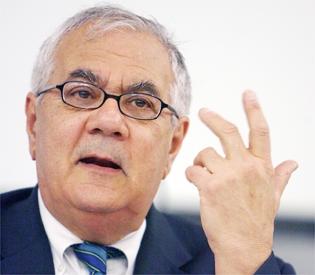
Barney Frank Comes Home to the Facts

Can you teach an old dog new tricks? In politics, the answer is usually no. Most elected officials cling to their ideological biases, despite the real-world facts that disprove their theories time and again. Most have no common sense, and most never acknowledge that they were wrong.

But one huge exception to this rule is Democrat Barney Frank, chairman of the House Financial Services Committee.

For years, Frank was a staunch supporter of Fannie Mae and Freddie Mac, the giant government housing agencies that played such an enormous role in the financial meltdown that thrust the economy into the Great Recession. But in a recent CNBC interview, Frank told me that he was ready to say goodbye to Fannie and Freddie.

“I hope by next year we’ll have abolished Fannie and Freddie,” he said. Remarkable. And he went on to say that “it was a great mistake to push lower-income people into housing they couldn’t afford and couldn’t really handle once they had it.” He then added, “I had been too sanguine about Fannie and Freddie.”

When I asked Frank about a long-term phase-out plan that would shrink Fannie and Freddie portfolios and mortgage-purchase limits, and merge the agencies into the Federal Housing Administration (FHA) for a separate low-income program that would get government out of middle-income housing subsidies, he replied: “Larry, that, I think, is exactly what we should be doing.”

Frank also said that any federal housing guarantees should be transparently priced and put on budget. But he added that the private sector must be encouraged to re-enter housing finance just as the government gradually withdraws from it.

Some would say Frank’s mea culpa is politically motivated in advance of an election where bailout nation and big government are public enemies number one and two. Of course, poll after poll shows that the $150 billion Fan-Fred bailout, which the Congressional Budget Office estimates could rise to $400 billion, is detested by voters and taxpayers everywhere.

In fact, these failed government agencies are in such bad shape that they can’t even pay Uncle Sam the dividends owed under the conservatorship deal reached two years ago. That’s right. In order to pay a $1.8 billion dividend on Treasury department stock, Fan and Fred had to borrow $1.5 billion from — you guessed it — the Treasury.

Then there’s this head-scratching detail: In an absolutely outrageous move last Christmas Eve, President Obama signed off on $42 million in bonuses for the top twelve Fannie and Freddie executives, including $6 million apiece for the two CEOs. (Hat tip to attorney Stephen B. Meister.)

Voters are on to all this. So politics may indeed be motivating Barney Frank’s turnaround. But I’m going to credit him with more than that.

I think Chairman Frank watched these government behemoths descend into hell and then witnessed the financial catastrophe that ensued. And I think he has come to realize that the whole system of federal affordable-housing mandates that was central to the real-estate collapse — including the mandates on Fannie and Freddie and the myriad bad decisions made by private banks and other lenders in response to the government’s overreach — simply needs to be abolished.

Noteworthy is the fact that Treasury Secretary Tim Geithner has come to a similar conclusion. Geithner told a recent Washington conference on the future of housing finance that the system needs fundamental change. He said, “We will not support a return to the system where private gains are subsidized by taxpayer losses.”

Of course, the withdrawal of housing markets from government programs, and the onset of a reinvigorated private sector for providing mortgages, must be done gradually over a period of years. But it is possible that the federal mortgage madness is coming to an end.

We will have to see if Congress really does say good-bye to Fan and Fred, as Republicans like Jeb Hensarling are advocating. Equally important, we will have to see if the federal affordable-housing mandates created by Congress and implemented by HUD and banking regulators are similarly repealed.

And then we will have to see if reformed federally guaranteed housing insurance includes larger down-payments, stricter underwriting standards, and greater reliance on private capital markets, lenders, and insurers. In other words, we need to see if housing will be restored to a market-based system and removed from the government-backed system that has proved so disastrous.

The broader lesson here is that government planning doesn’t work. And if left to their own devices, market processes will work. I don’t know if President Obama gets this. But my hat goes off to a man who does, Chairman Barney Frank.

Thursday, August 19, 2010

On CNBC's Kudlow Report Tonight

Tonight at 7pm ET on CNBC:

IS "RECOVERY SUMMER" SLIPPING AWAY INTO A DOUBLE-DIP RECESSION?

WHAT NEEDS TO BE DONE TO BRING THE ECONOMY BACK?


- Robert Reich, Fmr. Labor Secretary; "Aftershock: The Next Economy and America's Future" author; CNBC Contributor; Univ. of CA., Berkeley Prof.
- Steve Moore, Sr. Economics Writer for WSJ Editorial Board; "Return to Prosperity" co-author; Founder & Fmr. President of the Club for Growth

TECH AFTER THE BELL: DELL, HP & INTEL
-CNBC’s Jon Fortt reports.

WHAT EXACTLY IS AN INVESTOR TO DO THESE DAYS?

- David Kelly, JP Morgan Funds Chief Market Strategist
- Joe Battipaglia, Stifel Nicolaus Market Strategist -

U.S HOUSING MOOD DETERIORATION
CNBC’S Diana Olick reports.

SEC SUES NEW JERSEY FOR PENSION FRAUD

- Harvey Pitt, Kalorama Partners, CEO & Founder; Former SEC Chairman
- Steve Malanga, Manhattan Institute Sr. Fellow; City Journal Contributing Editor

NOVEMBER REGIME CHANGE?
GOP Connecticut Senate candidate Linda McMahon will be aboard.

Please join us. The Kudlow Report. 7pm ET. CNBC.

Wednesday, August 18, 2010

My Interview with Barney Frank on Fannie & Freddie

The estimable Barney Frank, Democratic chairman of the House Financial Services Committee, told me on last night's Kudlow Report that he opposes any more government housing stimulus. He also said he favors putting an end to Fannie and Freddie, as soon as the market can bear it. I say bravo.

Our conversation begins at the 1:48 mark.


Tuesday, August 17, 2010

Lessons of the Summer Swoon

The economy is suffering from something like a summer swoon. In the words of business columnist Jimmy Pethokoukis, the recovery summer has gone bust. We all know this from the sloppy statistics coming in for jobs, retail sales, and most recently manufacturing. But market-based indicators are telling the same story.

Let’s start with the Treasury bond market. Yields have fallen to 2.6 percent today from 4.1 percent last April. Decomposing this Treasury rally shows that real yields have dropped 79 basis points, which is a signal of lower economic expectations.

Meanwhile, inflation break-even TIPS (Treasury inflation-protected securities) have fallen 64 basis points, showing that price expectations also have dropped. The consumer price index is only rising 1 percent over the past year. And long-term inflation fears have fallen all the way to 1.7 percent. It’s not deflation. It’s disinflation.

The corporate-bond market shows a similar decline of economic-growth and profits expectations. Credit-risk spreads are widening. The spread between investment-grade corporate bonds and risk-free Treasuries have widened 62 basis points, while higher-yielding junk-bond spreads have increased 138 basis points.

Now, all these bond-market indicators don’t tell us a whole lot about the future. But they are corroborating the summer slump in the present. Lower inflation is a good thing, but lower growth is not.

And here’s another hitch in the story. Using the break-even TIPS, the Federal Reserve’s zero target rate is really minus-1.7 percent, which is the same sort of negative real interest rate we had in the early and mid-2000s. This is undoubtedly why Kansas City Fed president Thomas Hoenig is worried about a new boom-bust cycle.

Hoenig calls the Fed’s latest decision to maintain the zero-interest-rate target a “dangerous gamble.” Those are strong words of criticism leveled at Ben Bernanke and the other Fed bigwigs. Hoenig says the financial emergency is over and predicts a modest economic recovery that requires small increases in the Fed’s target rate — still accommodative, but slightly less so.

Hoeing also echoes the fears of Stanford economist and former Treasury official John Taylor, who argues that the Fed is keeping its target rate too low for too long, just as it did between 2002 and 2005.

Are we doomed to repeat the boom-bust cycle? Very few people agree with Hoenig and Taylor. But one market that does is gold. While bond rates have been declining this summer, gold has jumped $100, and it is hovering near its all-time nominal high. That’s food for thought.

And let me repeat my own mantra: The Fed can produce new money, but it cannot produce new jobs. Fiscal policy — and its threat of overtaxing, over-regulating, and overspending — is what’s ailing the economy. And that threat is reverberating through stock and bond markets. (The stock market, by the way, is still about 11 percent below its late-April peak.)

So the long-run message of the gold rally may be this: The Fed may print too much money, but taxes and regulations may hold back the production of goods and services. And if too much money chasing too few goods is inflationary, then lower taxes and regulations to encourage more goods would promote stronger prosperity and domestic price stability.

Free-market supply-side father Robert Mundell argued for lower tax rates and stable money. Is anyone listening?

Friday, August 13, 2010

On CNBC's Kudlow Report Tonight

Tonight at 7pm ET on CNBC:

WILL A GOP MID-TERM SWEEP RESCUE THE STOCK MARKET?

- Larry Sabato, Director, University of Virginia Center for Politics
- David Wasserman, The Cook Political Report House Editor

plus…

- Greg Valliere, Chief Political Strategist; Potomac Research Group CNBC Contributor
- Andy Busch, BMO Capital Markets; CNBC Contributor

IRANIAN NUKES & $200 OIL

- John Kilduff, CNBC Contributor; Again Capital
- Frank Gaffney, Center for Security Policy President; Former Asst Secy of Defense for International Security Policy Under Reagan

TO RAISE OR NOT TO RAISE RATES:
FED'S HOENIG: GET OFF ZERO RATES! FED NEEDS TO RAISE RATES, END 0% RATE POLICY

- Ron Insana, CNBC Contributor; "How to Make a Fortune from the Biggest Bailout in U.S. History" Author
- Michael Pento, Chief Economist; senior economist at Euro Pacific Capital

MARKETS: WHAT'S AN INVESTOR TO DO?

- Joe Battipaglia, Stifel Nicolaus Market Strategist
- Warren Meyers, CNBC Market Analyst; Walter J. Dowd CEO

FANNIE/FREDDIE SUMMIT PREVIEW

CNBC’s Diana Olick reports.

Please join us. The Kudlow Report. 7pm ET. CNBC.

Thursday, August 12, 2010

On CNBC's Kudlow Report Tonight

Tonight at 7pm ET on CNBC:


JULY FORECLOSURES JUMP 9%
CNBC real estate correspondent Diana Olick reports.

IS HOUSING GETTING WORSE? WILL IT DRAG DOWN THE ECONOMY?

- Brian Wesbury, First Trust Advisors Chief Economist
- Gary Shilling, A. Gary Shilling & Co. President

MARKETS: WHAT'S AN INVESTOR TO DO?

- James Paulsen, Wells Capital Management Chief Investment Strategist
- Jim Glassman, Fmr. Undersecretary of State; George W. Bush Institute Executive Director - avail

GM GETS A NEW CEO
CNBC’S Phil LeBeau reports.

71% WANT ALL BUSH TAX CUTS EXTENDED

CNBC’s Eamon Javers reports.

ARE POLITICAL PRIORITIES ON ECONOMIC GROWTH BACKWARDS? IS A PANIC STIMULUS COMING? WHY IS GOVT WILLING TO SPEND $30 BILLION TO BAILOUT THE TEACHERS UNION & OTHER GOVT UNIONS, BUT NOT TO CUT MARGINAL TAX RATES FOR INVESTORS

- Robert Reich, Fmr. Labor Secretary; "Aftershock: The Next Economy and America's Future" author; CNBC Contributor; Univ. of CA., Berkeley Prof.
- Steve Moore, Sr Economics Writer for WSJ Editorial Board;"Return to Prosperity" co-author; Founder & Fmr. President of the Club for Growth

DOES STOCKS FOR THE LONG RUN STILL WORK? WILL THE MARKETS RATE OF RETURN & YOUR NEST EGG EVER COME BACK?

- Megan McArdle, The Atlantic Business & Economics Editor
- Jeremy Siegel, Professor of Finance Wharton School at Univ. of Pennsylvania; "Stocks for the Long Run" author

Please join us. The Kudlow Report. 7pm ET. CNBC.

Wednesday, August 11, 2010

On CNBC's Kudlow Report Tonight

Tonight at 7pm ET on CNBC:


DID THE FED TRIGGER A PESSIMISM PANIC? WHAT DO THEY KNOW THAT WE DON'T KNOW? PLUS THE CHINA ECONOMIC MONKEY WRENCH


- Barry L. Ritholtz, Fusion IQ; CEO, Director of Equity Research
- Art Hogan, Global Equity Product Director
- Jim LaCamp, Macroportfolio Advisors Sr. VP, Portfolio Manager
- John Rutledge, Rutledge Capital Chairman; Fmr. Reagan Economic Advisor

DO GENTLEMEN STILL PREFER BONDS?

- CNBC’s Rick Santelli and Sue Herera
- Dave Goldman, Senior Editor First Things Magazine; Fmr. Wall St. Economist: Bear Stearns & Credit Suisse

A HOUSING DOUBLE DIP ON THE HORIZON?

- Robert Shiller, Economics Prof, Yale School of Management's Int'l Center for Finance; Chief Economist Macromarkets
- Joseph LaVorgna, Deutsche Bank Chief U.S. Economist

BUSINESS, THE ECONOMY & WASHINGTON POLICY

- Jim Amos, Tasti-D-Lite CEO
- Rich Karlgaard, Forbes Publisher; "Life 2.0" Author

WHAT TO EXPECT FROM MARKETS TOMORROW
CNBC’s Sue Herera and Ron Insana will be aboard.

Please join us. The Kudlow Report. 7pm ET. CNBC.

Tuesday, August 10, 2010

The Fed Can Print More Money, but It Can’t Print Jobs

Did the Fed choose stimulus over dollar stability? The greenback fell and gold rose after the FOMC signaled today that it would keep its balance sheet steady by reinvesting the proceeds of mortgage bonds into Treasuries. This is the first Fed policy shift in about a year. It comes in response to a slower economy and disappointing job numbers, with the Fed downgrading its economic outlook in its FOMC statement.

By itself, this is a modest move. But it could be the start of something bigger. If recovery conditions continue to slow, the Fed could be more aggressive by monetizing more Treasury debt and expanding the balance sheet to print money. If it does that, the dollar will depreciate more and gold will rise more. A lot more.

But here’s the central problem. The Fed can print more money, but it can’t print jobs -- or capital formation, or productivity. With a trillion dollars of excess bank reserves already in the system, there’s no shortage of money. The recovery is being held up by the tax-and-regulatory threats and anti-business attitude coming out of Washington.

Today, for example, the House passed a $26 billion spending plan to bail out Democratic blue states and government unions. That money could have been used to extend the 2003 tax cuts on upper-income earners and investors. And part of this state bailout is a tax hike on the foreign earnings of big corporations. Of course, on top of that, nobody understands how Obamacare mandates and regulations will ultimately affect the cost of doing business and the hiring of new workers.

So in terms of Fed money-pumping, you can lead a horse to water, but you can’t make it drink. You can add more cash, but that doesn’t mean businesses and entrepreneurs will use it. Fiscal policy is the obstacle right now, not a shortage of money.

Oh, by the way, did you see the USA Today report that federal workers now earn double their private-sector counterparts? Total pay and benefits come to about $123,000 for federal workers in 2009, compared with $61,000 for private-sector workers. And who’s paying for that? You are. And President Obama wants a 1.4 percent across-the-board pay hike for the federal workforce in 2011.

It’s all a matter of priorities. Who do you trust? Well, Washington trusts government. So the private sector is very slow to spend and invest.

On CNBC's Kudlow Report Tonight

Tonight at 7pm ET on CNBC:

EASY MONEY FED?

- John Tamny, Editor, RealClearMarkets
- Steve Liesman, CNBC senior economics reporter
- Vincent Reinhart, AEI Resident Scholar; Fmr Dir. of monetary affairs at the FOMC

MARKETS: THE HUNT FOR YIELD, WHERE CAN YOU GET SOME RETURN?

- James Altucher, Formula Capital Managing Director
- Mike Ozanian, Forbes National Editor
- Don Luskin, CNBC Contributor; Trend Macro Chief Investment Officer

WASHINGTON TO WALL STREET
- Is state aid a jobs bill or govt union bailout?
- Why can't states balance budget w/out fed govt?
- Big panic Dem stimulus coming?
- Update on Bush tax cuts


- Rep. Mike Pence (R-Indiana)

STATE AID: IS THIS A JOBS BILL OR A GOVT UNION BAILOUT?

- Matt Miller, Center for American Progress; The Daily Beast Columnist; Public Radio's "Left, Right and Center" Host
- James Pethokoukis, CNBC Contributor; Reuters Money & Politics Columnist

COMPENSATION GAP:
DO GOVERNMENT WORKERS GET PAID TOO MUCH, AT THE EXPENSE OF TAXPAYERS?

- Diane Furchtgott-Roth, fmr. Chief Economist, US Dept of Labor; Hudson Institute senior fellow
- Gary Burtless, Brookings Institute Sr. Fellow

Please join us. The Kudlow Report. 7pm ET. CNBC.

Monday, August 09, 2010

A Democratic Panic Attack?

With the disappointingly soft jobs report for July, and a faltering recovery overall, is Team Obama getting ready for some sort of new, liberal-left, Keynesian, big-bang stimulus package? Will they be desperate to “do something”?

Already there are rumors of an August surprise (to use the phrase of business columnist Jimmy Pethokoukis) where Fannie Mae and Freddie Mac forgive underwater mortgages held by millions of Americans. And with state and local government jobs having fallen 169,000 year-to-date, perhaps the Democratic Congress and the White House will seek an even bigger spending plan for teachers and Medicaid workers -- on top of the $26 billion plan that just passed the Senate.

Or maybe the Democrats will come up with a new infrastructure-spending bill, perhaps for green technologies and whatnot. Or maybe they’ll extend unemployment benefits even more. My liberal friend Robert Reich is even talking up the New Deal’s Works Progress Administration (WPA), where the government employed millions during the 1930s.

With the announcement this week that Council of Economic Advisers chair Christy Romer will leave the White House to go back to teach at Berkeley, it looks like the center of economic gravity will shift leftward inside the West Wing.

Meanwhile, over at the Fed, it seems ever more likely that the FOMC meeting next week will produce a much more dovish policy statement, one that will lengthen the “extended period” near-zero-interest-rate language and hint at new cash purchases of Treasury and mortgage bonds to increase the central bank’s balance sheet and expand the basic money supply. Already, in recent weeks, the dollar has been plunging.

Of course, Republicans will push harder to keep the Bush tax cuts for the wealthy -- as they should. But Democrats are now trapped by Treasury man Tim Geithner’s statements that extending low tax rates for successful earners, investors, and small businesses would actually imperil economic recovery. This is his war against investment and capital formation.

Maybe the Democratic revolt in favor of keeping all the Bush tax cuts will gather steam. But Democrats are more likely to push for greater spending than investment tax incentives. They’d rather take your money than let you keep it.

The GOP also should call for lower corporate tax rates, including full cash expensing for businesses. But so far they haven’t made much noise on this, despite the fact that cash-rich businesses are mostly avoiding new hires in the face of the Obamacare regulatory threats and the uncertainty about future tax burdens.

The bottom line? Panic over this stalled economy may be setting in.

The unemployment rate is hanging stubbornly at 9.5 percent and economic growth looks to be slipping to only 2 to 3 percent. In order to get unemployment down significantly, the economy has to grow by at least 4 percent.

Inside July’s jobs report, small-business household employment dropped by 159,000 jobs -- a very bad sign. In the three months to April, this survey produced 417,000 new jobs. In the three months to July, it fell by 151,000.

At the same time, private payrolls in the corporate survey rose by only 71,000 in July, compared with an expected gain of 100,000. In the three months to April, payrolls gained by 154,000. Over the past three months, payrolls have increased only 51,000. They need to grow at a better-than 200,000 monthly pace in order to reduce joblessness.

So just like the overall economy, the jobs recovery is faltering. It isn’t a double-dip recession. But the story is moving in the wrong direction. And if the Democrats in power push for a big-bang summer surprise that seeks even more failed stimulus spending, they will do much more harm than good.

The Intrade pay-to-play investment parlor already shows a 60 percent likelihood of a GOP House takeover this November. That’s the ultimate silver lining in this story.

Friday, August 06, 2010

The Washington War on Investment

Will higher tax penalties on investment really spur jobs and faster economic growth? Most commentators would say no. It’s really a matter of economic common sense. But Tim Geithner says, Yes!

Speaking to a group in Washington this week, the Treasury secretary said that extending tax cuts for the wealthiest Americans would imperil the fragile economic recovery. He argued that government needs the revenues from those top-end tax hikes. So failure to raise taxes would harm growth. And then he went on to say that the trouble with the wealthy is that they save more of their tax breaks than do other groups.

Okay. Are you confused now? Most people would be.

Let’s start at the top. The coming tax bomb would raise the top marginal tax rate on capital gains from 15 to 20 percent, on dividends from 15 to 20 percent (or perhaps all the way to 39.6 percent), and on top incomes from 35 to 40 percent. Meanwhile, the estate tax could go as high as 55 percent.

Now, it is indisputable that cap-gains, dividends, and estates are essentially investment. What’s more, most successful earners who pay top personal tax rates are by near all accounts the folks who are most likely to save and invest.

But Mr. Geithner is suggesting the economy doesn’t need more saving. This thought was echoed by Jared Bernstein, a top White House economist, who told me in an interview that the saving and investment multipliers for economic growth are way below the stimulative effects of government transfer payments, such as more aid to state and local governments and further extensions of unemployment benefits.

Echoing that thought, the Senate this week voted to approve $26 billion in aid for state and local governments -- partly funded, by the way, by an $11 billion yearly tax increase on the foreign earnings of U.S. multinational corporations. Here, too, a tax on profits is a tax on investment. The Senate also rejected an amendment by South Carolina Republican Jim DeMint that would extend all the Bush tax cuts.

In effect, pulling all this together, the position of the Democratic party in power in Washington is that transfer payments (taxing and borrowing from Peter to pay Paul) are good for growth, and that investment is bad.

Go figure. I guess it’s a battle between the demand side and the investment (or supply) side.

The great flaw in the thinking of the Democrats is that they are ignorant of the economic power of saving and investment. Saving is a good thing. Stocks, bonds, bank deposits, money-market funds, commercial paper, venture capital, private equity, real estate partnerships -- all that saving is channeled into business investment. And whether that capital goes into new start-ups or small businesses or large firms, it finances the kind of new investment in plants and equipment and software and buildings that ultimately creates jobs and family incomes. And that, in turn, spurs consumption.

But pulling out just one dollar from the private sector and rechanneling it through the government as a transfer to someone else creates nothing. At best it’s a safety net. At worst it may damage private-business activity and actually reduce employment.

Without saving there can be no investment. And without investment there can be no enhanced productivity, which is the ultimate source of long-term prosperity and wealth.

Now, there are some Democrats who understand this. Senators Evan Bayh and Joe Lieberman, among others, support an extension of the upper-end tax cuts precisely to increase investment incentives that will create jobs. Bayh and Lieberman often refer to the John Kennedy tax cuts that lowered marginal rates across-the-board for successful earners and businesses. They correctly worry about small-business job creation in this process. And they have moved from the demand-side of today’s Democratic party over to the supply-side of the John Kennedy era.

Bayh and Lieberman have the story exactly right. And Treasury man Geithner has it fundamentally wrong.

Geithner tries to make a deficit-reduction argument, saying that extending tax cuts for the wealthy will cost $700 billion over the next ten years. But the real debate in advance of the Erskine Bowles deficit commission, which will restructure budget and tax reform, is about a one-year extension of the Bush tax cuts. That’s priced at $30 billion by the White House, about the same as the new bill to aid state and local governments. Which policy would help growth more?

My answer is to keep the incentives for investment. Or, find spending cuts immediately to cover both options. That would restore even more confidence.

We might also be surprised when the growth-and-revenue-increasing benefits of lower investment tax rates pay for those tax cuts in the future -- just as they have in the past.

Wednesday, August 04, 2010

Behind the Fed's Policy Leak

A front-page WSJ story, “Fed Mulls Symbolic Shift,” is a great leak from the central bank to reporter Jon Hilsenrath. Basically, the Fed wants to stop its $2.3 trillion balance-sheet portfolio from shrinking and therefore tightening monetary policy. So, when its mortgage-bond holdings mature, the Fed would take the principal and interest and go into the open market to replace the bonds. This would keep the Fed’s holdings flat, or stable, rather than have the holdings run off.

Inflation-sensitive markets did very little on the news yesterday. Gold was up slightly to $1,189, and the trade-weighted dollar continued its recent drop by about half a percent to 80.6.

What’s really behind the Fed move -- if the central bank announces it at its mid-month FOMC meeting -- is fear of an economic slowdown. The Fed doesn’t want to be seen as tightening its policy. The target rate is near zero already. But the balance sheet is the key to money creation.

Noteworthy is the fact that the monetary base has been flat-lined at $2 trillion for about 10 months, going back to last October. In sound-money terms, it would be okay with me if the Fed held the monetary base steady for a long, long time. That would keep the dollar stable and would probably keep gold prices steady. If investors actually believed in a stable policy, perhaps the greenback would rise while gold fell.

But alas, Bernanke is still engaged in economic fine-tuning rather than dollar value. We have no exchange-rate policy. Nor is there a gold policy. So no one could possible know where these prices are going.

Thinking back to Robert Mundell’s original idea years ago, an optimal policy would include low marginal tax rates and a steady dollar backed by gold. But marginal tax rates may go up, the dollar is not backed by gold, and the fate of the greenback is anyone’s guess.

Meanwhile, buying more bonds to create new cash for the economy is futile. There’s already $1 trillion of excess bank reserves on deposit at the Fed. In other words, the financial system has more dollars than it knows what to do with.

The economic recovery and job creation are being held back by tax and regulatory obstacles, not by a shortage of money. It’s fiscal policy that is wrongheaded. But then again, without a strong-dollar policy, no one can really give the Fed any kudus either.

Monday, August 02, 2010

Dave Stockman Totally Backed Down

Dave Stockman totally backed down on his assault against supply-side tax cuts, but he’s given up on the fight to curb spending and entitlements.


The Flaws in Dave Stockman's Thinking


My former boss Dave Stockman blames Republicans and supply-side tax cuts -- rather than big-spending by the Democrats -- for our debt problems and (by inference) the weak economy. I disagree.

We have a bipartisan spending problem, largely driven by entitlements over the long run and ineffectual stimulus in the short term. Stockman seems to want to solve the spending problem with higher taxes. Some recent estimates suggest the need for an 80 or 90 percent tax rate to do that. But what would it do to the economy? Or global competitiveness?

We’re not going to tax our way out of the entitlement quagmire. That’s the fundamental flaw in Stockman’s thinking.

By the way, in the ’80s and ’90s, the debt-to-GDP ratio averaged around 40 percent. Nothing destructive there. Reagan’s low tax rates, which on balance were maintained during the Clinton years (Clinton raised the top personal rate but signed the Republican bill to lower the capital-gains tax rate), generated a long boom of 3.7 percent annual growth, 39 million new private jobs, and low inflation.

I agree with Stockman that Paul Volcker was the great inflation killer. Absolutely. But lower tax rates helped spur growth while Volcker brought down the money supply and stabilized the dollar. In fact, gold basically declined through the whole period, while stocks went up. Government debt held by the public did increase $2.4 trillion. But household wealth jumped $32 trillion.

Incidentally, budget spending as a share of GDP declined during the whole period, from near 24 percent to around 18 percent. Much of that was during the Clinton years, when the president worked with the Gingrich Congress. And a lot of the spending restraint came from the peace dividend after the Soviets folded and defense spending was cut.

Now, Stockman is more on target when he says Bush and the GOP overspent and created new entitlements. But blaming Bush’s tax cuts for the Great Recession and for dropping revenues to 15 percent of GDP is utter poppycock. Of course, Obama is overspending even more, with still more entitlements.

The truth is that spending on entitlements and a stimulus that didn’t really work has made for some truly horrible long-term debt projections. So let’s address the spending instead of jacking up tax rates.

And let’s not forget that tax rates are coming down around the world, both for individuals and businesses. High tax rates in the U.S. will cause us to lose the global race for capital. At some point the question of taxes is really an issue of economic freedom. Let people keep more of what they earn. Marginal tax rates produce huge incentive effects for work, investment, and risk. Higher tax rates undermine economic growth and entrepreneurship. So let’s go for tax reform, with flatter rates and a broader base that gets rid of unnecessary deductions, credits, exemptions, loopholes, and special-interest subsidies.

The goal of policy should be to limit spending and taxes.

Now, I really do agree with Stockman when he fingers the Fed’s erratic stop-and-go monetary policy over the past ten years. Re-linking the dollar to gold or some commodity standard to impose financial and trade discipline is a very good idea. Putting limits on financial leverage is another good idea.

But I would say to my former boss Dave Stockman: You know there’s a spending problem. Let’s tackle that without crippling the economy.