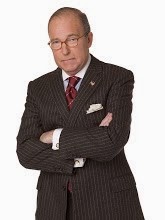
The media favorite has a very poor grasp of basic economic principles.
It’s rather amusing watching the liberal media launch a full-scale attack on George Stephanopoulos and Charles Gibson, with General Tom Shales of the Washington Post leading the charge. ABC’s Stephanopoulos and Gibson had the audacity to ask Obama some tough questions during the Democratic debate Tuesday night. Challenge Obama with well-informed questions on tax policy and politics? Wound the media favorite? How dare they?
The fallout is fascinating. With members of the mainstream liberal media lunging at each others throats, it’s kind of like watching Hillary and Obama go at it.
But here’s the deal: During the debate, Obama bungled his answers on tax policy, big time. Period. End of sentence. End of story. To my liberal friends in the media, all I can say is: Get over it. Your guy has a very poor grasp of basic economic principles.
First off, you don’t raise taxes during a recession. That’s a no-brainer. Second, doubling the capital-gains tax rate will affect Americans up and down the income ladder, not just rich hedge-fund managers. In addition, capital-gains tax cuts are self-financing, and they stimulate jobs and the economy. You want to raise budget revenues and spark economic growth? Cut the cap-gains tax rate. That’s what history shows.
The Wall Street Journal’s Steve Moore points out that in 2005, almost half of all tax returns reporting capital gains came from households with incomes under $50,000, while more than three-quarters came from households earning less than $100,000.
Obama also proposed uncapping the payroll tax, another blunder that will hit people up and down the income ladder. While Obama pledges tax hikes only for folks earning more that $200,000 a year, his tax hike on payrolls would actually slam middle-income earners. The cap on wages subject to the payroll tax is presently $102,000. By eliminating that cap Obama will be soaking veteran firemen, cops, teachers, and health-service workers, along with a variety of other occupations.
In fact, in America’s largest cities, a firefighter married to a school teacher can earn close to $200,000 filing jointly. So not only will each spouse separately pay more for Social Security and health care under Obama’s plan, together they’ll also be slammed by Obama’s cap-gains tax increase.
This is more than just a failure to understand the Laffer curve. It’s another cultural misstep by Obama. I can’t help but wonder if the senator knows any cops or firemen. His appeal is to well-educated latte liberals. That remark about middle-income folks having turned to God, faith, and guns because of economic setbacks? Not only was it ill-advised, it illustrates the wide cultural chasm that exists between the candidate and the rest of America.
In effect, Obama’s economics are bad and his social circle is very limited. This is one of the many reasons why a quarter of the Hillary Democrats are telling pollsters they’ll likely move to John McCain in the general election.
Obama’s real agenda is far-liberal left. It’s an ideology that places income redistribution above economic growth. That’s his real message. And it’s the same one that sunk Carter, Mondale, Dukakis, Gore, and Kerry. Bill Clinton? He was a growth Democrat. So he won twice. But Obama is aligning himself with the Democratic losers. And that will make him a loser as well.
The Gallup poll taken after the Democratic debate reveals that Hillary’s pit-bull routine may have worked. We’ll learn more on that front come Tuesday when Pennsylvanians head to the voting booths. But that’s a different issue. What I’m saying is that liberals need to quit blaming Charlie Gibson and George Stephanopoulos for Obama’s shortcomings. Instead, they need to blame Obama for failing to grasp how tax penalties on upward mobility will hurt the very people he thinks he’s going to help.
Jack Kemp has effectively made the point that African American communities desperately need capital in order to create new businesses and jobs. Yet as Obama takes the capital out of capitalism, all those who are not rich will be hurt when the rich folks with capital have less of it — after tax — to invest in those new businesses and new jobs.
That’s exactly why wealth-redistribution plans always backfire. Robbing Peter to pay Paul is a surefire economic loser. So is putting government in charge of the economy, which is what Mr. Obama is proselytizing.
This marks the third mistake for the Illinois senator. Not only does he not understand economics; not only is he set apart from middle-class values and beliefs; he apparently hasn’t read much history either.
Did someone say inexperience?
Friday, April 18, 2008
Thursday, April 17, 2008
Thursday Night Lineup
 On CNBC's Kudlow & Company at 7pm ET tonight:
THE MARKETS & ECONOMY...Our all-star panel of stock market and economic experts will discuss and debate all the latest news, trends, and developments affecting investors.
Topics will include whether the market established a Bear Stearns Bottom...Is the worst over for Goldilocks?...An Eye on Earnings, Google, etc...Inflation...The Dollar...and more.
On board:
*Don Luskin, chief investment officer at Trend Macro
*Vince Farrell, managing director of Scotsman Capital
*Joe LaVorgna, chief U.S. economist Deutsche Bank
*Jim Awad, chairman of WP Stewart Asset Management
*Michael Pento, Delta Global Advisors, senior market strategist
*Jason Trennert, chief investment strategist for Strategas Research Partners
WASHINGTON TO WALL STREET...Our money politics panel will sift through all the latest news and events.
Topics will include Weird Economics at last night's Hill-Bama Debate...Obama's Cap Gains Bomb -- capitalism without capital?...Is Hillary better for Business?...Protectionism...Elections Making Foreign Firms Jumpy...Hedge Funds Eyeing Student Loans and more.
On board:
*Jimmy Pethokoukis, senior writer at U.S. News & World Report
*Jared Bernstein, senior economist at the Economic Policy Institute
*Keith Boykin, New York Times bestselling author and former Clinton White House aide
*Steve Moore, senior economic writer & member of the Wall Street Journal editorial board
Please join us at 7pm ET on CNBC for another free market edition of Kudlow & Company.


Gibson Hammers Hill-Bama on Cap Gains
ABC's Charlie Gibson did a heck of a job advancing the supply-side ball during last night's Democratic debate. Gibson laid out clear evidence showing that whenever the capital gains rate has been cut in the past 20 years, revenues have shot up, while the one time the rate was raised - surprise, surprise - revenues headed south. Gibson then confronted Obama with his promise to essentially double the capital gains rate if he were elected president.
Obama didn't budge. The reality that a lower cap gains rate brings in more government tax revenue didn’t faze him one bit. Apparently, nor does the fact that raising the cap gains rate diminishes jobs, enervates capital formation, and leads to lousy economic growth. Obama's response and sole concern remains sticking it to rich people, like hedge fund managers.
Someone ought to point out to Sen. Obama that of the 8.5 million tax filers who declared capital gains in 2005, 79 percent had incomes under $100,000. 79 percent! The unfortunate fact is that Wall Street won't be the only one hard hit by Obama's populism, Main Street would be hit even harder.
***FYI: John Podhoretz thinks Charlie Gibson turned into yours truly...
Obama didn't budge. The reality that a lower cap gains rate brings in more government tax revenue didn’t faze him one bit. Apparently, nor does the fact that raising the cap gains rate diminishes jobs, enervates capital formation, and leads to lousy economic growth. Obama's response and sole concern remains sticking it to rich people, like hedge fund managers.
Someone ought to point out to Sen. Obama that of the 8.5 million tax filers who declared capital gains in 2005, 79 percent had incomes under $100,000. 79 percent! The unfortunate fact is that Wall Street won't be the only one hard hit by Obama's populism, Main Street would be hit even harder.
***FYI: John Podhoretz thinks Charlie Gibson turned into yours truly...
Attention, Permabears
 My old friend, Stefan Abrams, sent me the following email earlier this morning. Stefan is a managing partner at Bryden-Abrams Investment Management and a regular guest on Kudlow & Company. He's also a savvy Wall Street veteran who knows a thing or two about the markets...
----- Original Message -----
From: Stefan Abrams
To: Lawrence Kudlow
Sent: Thursday, April 17, 2008 10:57 AM
Subject: Permabears
From: Stefan Abrams
To: Lawrence Kudlow
Sent: Thursday, April 17, 2008 10:57 AM
Subject: Permabears
As large, multinational industrials come through with good first quarter results and encouraging guidance going forward; as stocks that miss no longer get crushed, as the market shakes off bad macro news, most of which is redundant, as the rates of contraction in various sectors begin to level off, as the stimulus package approaches, as the massive amount of cash on the sidelines starts bargain hunting, etc.,etc., your cast of permabears needs to find some new reasons to ignore this emerging bottom for equities. All the best, Stefan
"Bull Moose McCain Gores Wall Street"
My good buddy Jimmy Pethokoukis over at U.S. News & World Report has a great little blog today discussing the debate over whether John McCain truly is following down the Gipper's path.
It's worth checking out:
Click here to continue reading.
It's worth checking out:
Some Capital Commerce readers took offense at my post yesterday that highlighted Reaganesque aspects of the economic agenda that John McCain outlined. In particular, they pointed out that President Reagan never harangued business the way McCain did in that speech. (To be fair to me, I pointed out that the speech was a mix of Reagan, Mike Huckabee, and Teddy Roosevelt.) It was probably this portion that bugged them, the part of the speech where McCain named names:
Click here to continue reading.
Wednesday, April 16, 2008
Wednesday Night Lineup
On CNBC's Kudlow & Company at 7pm ET tonight:IN-DEPTH: THE STOCK MARKET, ECONOMY, EARNINGS, COMMODITIES, DOLLAR, INFLATION & MORE...Our stock market and economic all-stars will discuss and debate all of the news, trends, and developments affecting investors.
On board:
*Andy Busch, global FX strategist at BMO Capital Markets
*Jerry Bowyer, chief economist at Benchmark Financial Network
*John Browne, senior market strategist at Euro Pacific Capital
*Jeffrey Kleintop, chief market strategist at LPL Financial Services
*Herb Greenberg, senior Marketwatch columnist/CNBC contributor
WASHINGTON TO WALL STREET...Greg Valliere, Washington strategist at Stanford Policy Research, will join Messrs. Busch, Bowyer and Greenberg in a look at all of the latest money politics issues.
Please join us at 7pm ET on CNBC for another free market edition of Kudlow & Company.
K&C Quotables
Here are a few notable guest comments from last night’s show in response to my interview with Republican presidential candidate John McCain. Incidentally, one area in particular where McCain has it absolutely right is lowering corporate tax rates. This would work wonders for U.S. economic growth. It would rehabilitate the ailing dollar and reduce inflation. Mac is right on the money here.
Restoring King Dollar I think we heard, once again, a lot of talk about spending cuts and balanced budgets—and a lot of discomfort in talking about tax decreases. So you know, I’ll take a tax cut wherever I can get it. I think the problem there is [McCain] is talking about suspending the gas tax, but in fact, what he should be talking about is a stronger dollar. That would actually drive down the oil price and gasoline prices a lot more…I think [the lack of a discussion on the dollar] is a big shame. One of these candidates is going to wake up to the fact that that’s the number one populist issue—strengthening the dollar. It would be a big vote getter. A weak dollar is bad for the middle classes.
-John Tamny, editor of RealClearMarkets & senior economist with H.C. Wainwright Economics.
Channeling the Gipper You made the point that there was this kind of combination of TR and Ronald Reagan in John McCain’s rhetoric. I agree with that. I really loved his line that sounded so much like the Gipper when [McCain] said the problem in Washington is not that we don’t have enough revenue, it’s that we spend too much. As you know Larry, that’s right out of the Gipper’s playbook. The other thing I really liked about this interview, and the reason I think John McCain is going to win this race, is he’s genuine. You listen to Obama and Hillary—Hillary Clinton is now a Bible-thumpin’, gun-totin’ Democrat—they just seem artificial. John McCain is the real deal. I don’t always agree with him, but I think he’s genuine.
-Steve Moore, Wall Street Journal senior economics writer & editorial board member
McCain Targets Cayne I think [Bear Stearns CEO] Jimmy Cayne has suffered enough. He went from $170 a share. He sold at $11. Anybody else could have sold at $11. I don’t know that he’s the proper whipping boy here. [But] I agree with a lot of the sentiment of Senator McCain on these exorbitant pay packages. I do like the idea of a non-binding “say-on-pay.” But non-binding. And I don’t want the government involved in it at all. But I think it's probably a poor example [for Sen. McCain] to take Jimmy Cayne.
-Vince Farrell, managing director at Scotsman Capital Management
Restoring King Dollar I think we heard, once again, a lot of talk about spending cuts and balanced budgets—and a lot of discomfort in talking about tax decreases. So you know, I’ll take a tax cut wherever I can get it. I think the problem there is [McCain] is talking about suspending the gas tax, but in fact, what he should be talking about is a stronger dollar. That would actually drive down the oil price and gasoline prices a lot more…I think [the lack of a discussion on the dollar] is a big shame. One of these candidates is going to wake up to the fact that that’s the number one populist issue—strengthening the dollar. It would be a big vote getter. A weak dollar is bad for the middle classes.
-John Tamny, editor of RealClearMarkets & senior economist with H.C. Wainwright Economics.
Channeling the Gipper You made the point that there was this kind of combination of TR and Ronald Reagan in John McCain’s rhetoric. I agree with that. I really loved his line that sounded so much like the Gipper when [McCain] said the problem in Washington is not that we don’t have enough revenue, it’s that we spend too much. As you know Larry, that’s right out of the Gipper’s playbook. The other thing I really liked about this interview, and the reason I think John McCain is going to win this race, is he’s genuine. You listen to Obama and Hillary—Hillary Clinton is now a Bible-thumpin’, gun-totin’ Democrat—they just seem artificial. John McCain is the real deal. I don’t always agree with him, but I think he’s genuine.
-Steve Moore, Wall Street Journal senior economics writer & editorial board member
McCain Targets Cayne I think [Bear Stearns CEO] Jimmy Cayne has suffered enough. He went from $170 a share. He sold at $11. Anybody else could have sold at $11. I don’t know that he’s the proper whipping boy here. [But] I agree with a lot of the sentiment of Senator McCain on these exorbitant pay packages. I do like the idea of a non-binding “say-on-pay.” But non-binding. And I don’t want the government involved in it at all. But I think it's probably a poor example [for Sen. McCain] to take Jimmy Cayne.
-Vince Farrell, managing director at Scotsman Capital Management
Tuesday, April 15, 2008
Transcript: The McCain Interview
What follows is the transcript of my conversation earlier today with Sen. John McCain.
LARRY KUDLOW, host:
Senator John McCain, welcome back to KUDLOW & COMPANY, sir.
Senator JOHN McCAIN: Thank you, Larry. It's nice to be back.
KUDLOW: Let me begin, in your speech today, and also in recent speeches, you're really blasting corporate greed and reckless corporate conduct. It sounds a little bit like the business attacks by Senator Clinton and Senator Obama. Can you tell us, what do you mean by these criticisms? What are you driving at?
Sen. McCAIN: I'm driving at the people who get compensation which is not approved of by the stockholders, even a nonbinding fashion. I'm talking about people like Mr. Cayne, who the day--right around the time the government took over Bear Stearns--or bailed out, excuse me, bail--Bear Stearns--who went to the market and got $11 a share rather than $10 a share. I'm talking about people that when their corporation has losses, that they are rewarded with exorbitantly high pay packages. And it gives Wall Street a bad name, Larry. And that's--and that's pure and simple. I do not believe in government intervention, I do not believe in government control, I do not believe that. But I do believe we should take steps to increase transparency and also
shareholder input into the compensation of CEOs. After all, that's who the CEOs work for. And I also think CEOs and chairmen should have--be different people.
KUDLOW: OK. Well, do you support the say on pay bill? That's a key point. And would you make that mandatory?
Sen. McCAIN: In a nonbinding. I would--I believe in say on pay. I believe that Aflac is--supposedly on May 5th they're going to vote on that. I don't think that stock--shareholders should be prevented from voicing their opinion on it, but I do not believe it should be binding. I think nonbinding is just fine. I think that sends enough of a signal to corporate executives.
KUDLOW: When you are criticizing these corporations, I mean, there's 140 million Americans work for corporations, in rough numbers. Companies are the ones who create jobs in America, they're the ones who really generate the family incomes, and of course companies need capital investment. Do you ever worry that you're sending a very tough anti-business message to the firms, to the work force and to investors?
Sen. McCAIN: Larry, in all due respect, don't you think that when corporate executives take exorbitant pay packages that are not justified by the--by the performance of the corporations that they have stewardship of and millions of--and 250,000 Americans in the last short period of time have lost their jobs, that that gives corporate America a bad name and then increases the
influence of those who are basically anti-business? Don't you think that is also one of the--one of the spillovers here? We expect corporate America to be transparent, honest, accountable, and I don't care how much executive compensation is as long as it's justified by corporate performance. And you know and I know there are many of them that that's not the case. Not the majority, but there's enough of them that it gives Wall Street and corporate America a bad name, the strength and basis of America's economy. You and I are not in that much disagreement. But just like there are bad politicians that--who need to be punished, there are bad corporate executives and corporate greed that has to be checked, as well.
KUDLOW: Why? In the case of James Cayne--I mean, I don't want to get too deep into this...
Sen. McCAIN: Yeah.
KUDLOW: ...because neither of us are securities analysts.
Sen. McCAIN: Yeah. Yeah. Yeah.
KUDLOW: But he didn't do anything that broke the law. He worked there for 40 years.
Sen. McCAIN: Of course not.
KUDLOW: He collected stock over that whole period of time. And you yourself supported the JPMorgan/Bear Stearns deal. So I'm not sure where the issue is here, because he didn't do anything illegal.
Sen. McCAIN: Yeah. Well, when a politician gets corporate contributions and then writes an earmark for that corporation, which is not competed or any other virtue that I know of, that's not illegal, either. OK? But it ain't right. I'm saying that there are corporate executives--I'm sorry to waste our--I mean, to spend so much of our time together on this particular issue,
because we're not that much in disagreement. I want accountability and transparency, and I know that you do, too. And there are bad corporate heads just as there have been bad politicians and there have been bad everything, unfortunately, in America. And transparency and accountability to shareholders is the best way to check it. And you and I are not in that much
of disagreement of it.
KUDLOW: Yeah.
Sen. McCAIN: But I cringe when I hear--when I hear my constituents saying, `Wait, I just lost my job and that corporate CEO just cashed in X,' OK?
KUDLOW: All right. So as someone once said, let us move on, sir.
Recently...
Sen. McCAIN: OK, sure.
KUDLOW: Recently, you've talked--you've said pretty clearly that the US economy is in recession. In terms of your speech today, can you tick off your major recovery points?
Sen. McCAIN: Bring spending, obviously, under control. That is very obvious. Have a balanced budget. Reduce corporate taxes from 35 to 25. Allow expensing in the first year of new equipment. Job retraining and education programs that work, that give us qualified workers into the work force. Let's have a gas tax holiday and maybe just give everyday Americans some relief this summer. Become--make it a national priority to--for energy independence. We're sending, as you know, $400 billion a year, half of our trade deficit, to countries that don't like us very much, and some of that money ends up in the hands of terrorist organizations. We--spending and spending and spending. In other words, we need to have a year pause, a year pause on discretionary spending, except for veterans and defense. And let's scrutinize every agency of government. You could--and by the way, how do you pay for it? Just the $35 billion in pork barrel projects that parents sign--the president signed into law the last two years, plus the 60 billion in pork barrel projects that are already in the pipeline. And let's get the spending under control so that we can give Americans real and meaningful tax relief, which they need, because--and we cannot make the tax--present tax cuts--we can't repeal the present tax cuts and we have to take a--many other measures. But I would argue with you that if we're going to really restore our confidence and trust, we cannot increase the tax burden on American families and businesses. It is not taxes that are insufficient, it's spending that's out of control. And one of the areas I would go after first and hardest is defense acquisition.
KUDLOW: On the corporate tax--on the corporate tax cut...
Sen. McCAIN: Yeah.
KUDLOW: ...which you've talked about pretty much all year, in order to help finance it, you mention you want to close some loopholes in corporate welfare. Would you raise the...(unintelligible)...interest tax on buyout funds and private partnerships as a means of financing your reduction in the corporate tax rate overall?
Sen. McCAIN: No. I would--no. But I'll tell you what, I would eliminate ethanol subsidies. I would eliminate the tariff on imported ethanol. I think our market is being very badly distorted as far as food prices are concerned. I know you know food prices skyrocketed 17 percent in a very short period of time. That's because we're distorting the market. I'm for biofuels, I'm for
all that stuff, but let's let the market play. Let's not subsidize ethanol or any other alternate form of energy. Let's go ahead and take away the imports. Let's eliminate sugar protection. My God, it's amazing, still, the power of some of the sections of agriculture in America. And let's eliminate loopholes that are specially targeted, rifle-shotted to specific industries and--both agriculture and business, and let's let them all compete.
KUDLOW: Come back to this summer gas tax holiday that you unveiled in your speech today. It's a pretty interesting point. I don't think anybody's talked about anything like that. Let me just ask you, though, you've been very tough on the issue of carbon emissions, for example. Now, if you waive the gas tax...
Sen. McCAIN: Yeah.
KUDLOW: ...for motorists, isn't that going to actually spur gasoline consumption and increase carbon emissions?
Sen. McCAIN: Look, I'd love to tell you that would happen. We're talking about 18 cents a gallon for regular fuel and 24 percent--24 cents for diesel. I'm not sure that it stimulates it. I think it eases the burden. The people that drive the furthest in America are the lowest income people. You spent enough time in Washington, DC, to know that the wealthiest live in Georgetown and can almost walk to work; the least wealthy live the furthest away and drive many, many miles. I think that there--that it is a disproportionate burden on low income Americans that don't have access to mass transportation, that have to go a long way to work. But I'd like to see Americans get some relief this summer and maybe feel a little better. That's--and I think it'd be a nice thing to do, a good thing to do, including suspending further purchases of oil--of gas and oil for--of oil for the Strategic Petroleum Reserve.
KUDLOW: Well, some people have looked at this proposal this morning, which I said is a novel proposal, and they said, `Well, OK, but...'
Sen. McCAIN: Mm-hmm.
KUDLOW: `...isn't this going to provide, ultimately, more revenues for Saudi Arabia and OPEC, which is the reverse of what you have argued for in the past?'
Sen. McCAIN: No, I don't--look, I do not believe that we can continue our efforts to alternate fuels and alternate energy sources, including nuclear, which is vital, and still give Americans a little bit of relief and let them afford a vacation this summer. So all I can tell you is I'd like to give Americans some relief and it will have little or no impact of any kind on our overall effort that we must mount to become energy independent, and that has to do with a lot of alternate energy, again, and I emphasize nuclear.
KUDLOW: All right. A month ago on the housing and the mortgage issue, you gave a strong speech and you said one of your core principles--it is not the duty of government to bail out and reward those who act irresponsibly.
Sen. McCAIN: Yep.
KUDLOW: Last week in Brooklyn, New York, you unveiled your home plan...
Sen. McCAIN: Mm-hmm.
KUDLOW: ...which is essentially a widespread FHA assistance program not unlike what Obama and Hillary are saying. Why the switch?
Sen. McCAIN: Well, actually, I said that we should not reward people who have--who have acted in an unscrupulous fashion, and this doesn't--this is targeted at as many as 400,000 homeowners who had a legitimate home mortgage, they--it's their primary residence and all the--all of a sudden they find themselves unable to make the payments. These people are not the ones I was talking about then. There has been no switch. I said at that time I wanted to help people who need the help, who are deserving of it. And these people are deserving of it, who are in their primary residences, who are eligible to have a mortgage that they can afford. And it's in the lender's interest as well as the borrower's interest; otherwise, that home becomes vacant. And in the event--by the way, in the event of sale of that home, over time with appreciation, one third would go to the lender, one third to the FHA and one third to the homeowner. So I think it's a--it's a very badly needed relief to honest, legitimate, home-owning Americans who find themselves trapped in this terrible problem of owning--of realizing--not being able to realize the
American dream.
KUDLOW: Does your version of this differ from the Democratic version?
Sen. McCAIN: I haven't read their version, but from what I understand theirs is very massive and very expensive. But I haven't read theirs.
KUDLOW: Would you consider, by the way, rolling back the Community Reinvestment Act, which a lot of people say triggered this, mandating banks and other lenders to make substandard loans in the first place, and the creator of the subprime mortgages back in the middle '90s? Is it time to take a look at the Community Reinvestment Act?
Sen. McCAIN: Absolutely, Larry. There were people who predicted that the Community Reinvestment Act might lead to reckless and unsound lending practices just to sort of fill a--you know, a amount of--I don't like to use the word "quota," but certain percentages of a--of a home--of the bank's lending practices. Yes, it has to be re-examined, it has to be judged by its
effect, and we need to find out how this particular system affected the overall insolvency of the subprime lending issue. And I think it--I'm not saying it needs to be repealed, but it certainly needs to be re-examined and what its effects have been. And we'll be able to figure that out.
KUDLOW: Just one last one, sir. This morning's wholesale inflation report for the month of March, headline inflation, 7 percent year on year. Consumer prices, as you know, up 4 percent, probably on the way to 5 percent. Former Fed Chairman Paul Volcker the other day in New York said we are in a dollar crisis. Would you support or would you recommend a Fed/Treasury/G7 action to defend the dollar and to strengthen the dollar as a way of holding down these inflationary pressures?
Sen. McCAIN: I certainly would give it every consideration, but you and I both know that a weak dollar is a symptom of fundamental problems, such as our trade deficit, half of it being accounted for by our need to import foreign oil, our debt to the--to the Chinese, the spending practices--our continuing burgeoning out of control behavior in Washington which then has given us an unsound economy, reflected in the weakening dollar. The best way we can--in my view, to strengthen the dollar over time, let's have free trade, let's exchange goods and services with every nation in the world, let's have--reduce our deficit, let's lower taxes, let's give the American people a sound basis for economy and hope and optimism for the future. And I'm confident--I am confident that the fundamentals of our economy are strong and we will recover and America will be stronger over time. But right now, we are facing very serious challenges. I see you talk about them every single day.
KUDLOW: Senator John McCain, thank you, sir, for coming back on KUDLOW & COMPANY. We appreciate it very much.
Sen. McCAIN: Thank you, Larry.
LARRY KUDLOW, host:
Senator John McCain, welcome back to KUDLOW & COMPANY, sir.
Senator JOHN McCAIN: Thank you, Larry. It's nice to be back.
KUDLOW: Let me begin, in your speech today, and also in recent speeches, you're really blasting corporate greed and reckless corporate conduct. It sounds a little bit like the business attacks by Senator Clinton and Senator Obama. Can you tell us, what do you mean by these criticisms? What are you driving at?
Sen. McCAIN: I'm driving at the people who get compensation which is not approved of by the stockholders, even a nonbinding fashion. I'm talking about people like Mr. Cayne, who the day--right around the time the government took over Bear Stearns--or bailed out, excuse me, bail--Bear Stearns--who went to the market and got $11 a share rather than $10 a share. I'm talking about people that when their corporation has losses, that they are rewarded with exorbitantly high pay packages. And it gives Wall Street a bad name, Larry. And that's--and that's pure and simple. I do not believe in government intervention, I do not believe in government control, I do not believe that. But I do believe we should take steps to increase transparency and also
shareholder input into the compensation of CEOs. After all, that's who the CEOs work for. And I also think CEOs and chairmen should have--be different people.
KUDLOW: OK. Well, do you support the say on pay bill? That's a key point. And would you make that mandatory?
Sen. McCAIN: In a nonbinding. I would--I believe in say on pay. I believe that Aflac is--supposedly on May 5th they're going to vote on that. I don't think that stock--shareholders should be prevented from voicing their opinion on it, but I do not believe it should be binding. I think nonbinding is just fine. I think that sends enough of a signal to corporate executives.
KUDLOW: When you are criticizing these corporations, I mean, there's 140 million Americans work for corporations, in rough numbers. Companies are the ones who create jobs in America, they're the ones who really generate the family incomes, and of course companies need capital investment. Do you ever worry that you're sending a very tough anti-business message to the firms, to the work force and to investors?
Sen. McCAIN: Larry, in all due respect, don't you think that when corporate executives take exorbitant pay packages that are not justified by the--by the performance of the corporations that they have stewardship of and millions of--and 250,000 Americans in the last short period of time have lost their jobs, that that gives corporate America a bad name and then increases the
influence of those who are basically anti-business? Don't you think that is also one of the--one of the spillovers here? We expect corporate America to be transparent, honest, accountable, and I don't care how much executive compensation is as long as it's justified by corporate performance. And you know and I know there are many of them that that's not the case. Not the majority, but there's enough of them that it gives Wall Street and corporate America a bad name, the strength and basis of America's economy. You and I are not in that much disagreement. But just like there are bad politicians that--who need to be punished, there are bad corporate executives and corporate greed that has to be checked, as well.
KUDLOW: Why? In the case of James Cayne--I mean, I don't want to get too deep into this...
Sen. McCAIN: Yeah.
KUDLOW: ...because neither of us are securities analysts.
Sen. McCAIN: Yeah. Yeah. Yeah.
KUDLOW: But he didn't do anything that broke the law. He worked there for 40 years.
Sen. McCAIN: Of course not.
KUDLOW: He collected stock over that whole period of time. And you yourself supported the JPMorgan/Bear Stearns deal. So I'm not sure where the issue is here, because he didn't do anything illegal.
Sen. McCAIN: Yeah. Well, when a politician gets corporate contributions and then writes an earmark for that corporation, which is not competed or any other virtue that I know of, that's not illegal, either. OK? But it ain't right. I'm saying that there are corporate executives--I'm sorry to waste our--I mean, to spend so much of our time together on this particular issue,
because we're not that much in disagreement. I want accountability and transparency, and I know that you do, too. And there are bad corporate heads just as there have been bad politicians and there have been bad everything, unfortunately, in America. And transparency and accountability to shareholders is the best way to check it. And you and I are not in that much
of disagreement of it.
KUDLOW: Yeah.
Sen. McCAIN: But I cringe when I hear--when I hear my constituents saying, `Wait, I just lost my job and that corporate CEO just cashed in X,' OK?
KUDLOW: All right. So as someone once said, let us move on, sir.
Recently...
Sen. McCAIN: OK, sure.
KUDLOW: Recently, you've talked--you've said pretty clearly that the US economy is in recession. In terms of your speech today, can you tick off your major recovery points?
Sen. McCAIN: Bring spending, obviously, under control. That is very obvious. Have a balanced budget. Reduce corporate taxes from 35 to 25. Allow expensing in the first year of new equipment. Job retraining and education programs that work, that give us qualified workers into the work force. Let's have a gas tax holiday and maybe just give everyday Americans some relief this summer. Become--make it a national priority to--for energy independence. We're sending, as you know, $400 billion a year, half of our trade deficit, to countries that don't like us very much, and some of that money ends up in the hands of terrorist organizations. We--spending and spending and spending. In other words, we need to have a year pause, a year pause on discretionary spending, except for veterans and defense. And let's scrutinize every agency of government. You could--and by the way, how do you pay for it? Just the $35 billion in pork barrel projects that parents sign--the president signed into law the last two years, plus the 60 billion in pork barrel projects that are already in the pipeline. And let's get the spending under control so that we can give Americans real and meaningful tax relief, which they need, because--and we cannot make the tax--present tax cuts--we can't repeal the present tax cuts and we have to take a--many other measures. But I would argue with you that if we're going to really restore our confidence and trust, we cannot increase the tax burden on American families and businesses. It is not taxes that are insufficient, it's spending that's out of control. And one of the areas I would go after first and hardest is defense acquisition.
KUDLOW: On the corporate tax--on the corporate tax cut...
Sen. McCAIN: Yeah.
KUDLOW: ...which you've talked about pretty much all year, in order to help finance it, you mention you want to close some loopholes in corporate welfare. Would you raise the...(unintelligible)...interest tax on buyout funds and private partnerships as a means of financing your reduction in the corporate tax rate overall?
Sen. McCAIN: No. I would--no. But I'll tell you what, I would eliminate ethanol subsidies. I would eliminate the tariff on imported ethanol. I think our market is being very badly distorted as far as food prices are concerned. I know you know food prices skyrocketed 17 percent in a very short period of time. That's because we're distorting the market. I'm for biofuels, I'm for
all that stuff, but let's let the market play. Let's not subsidize ethanol or any other alternate form of energy. Let's go ahead and take away the imports. Let's eliminate sugar protection. My God, it's amazing, still, the power of some of the sections of agriculture in America. And let's eliminate loopholes that are specially targeted, rifle-shotted to specific industries and--both agriculture and business, and let's let them all compete.
KUDLOW: Come back to this summer gas tax holiday that you unveiled in your speech today. It's a pretty interesting point. I don't think anybody's talked about anything like that. Let me just ask you, though, you've been very tough on the issue of carbon emissions, for example. Now, if you waive the gas tax...
Sen. McCAIN: Yeah.
KUDLOW: ...for motorists, isn't that going to actually spur gasoline consumption and increase carbon emissions?
Sen. McCAIN: Look, I'd love to tell you that would happen. We're talking about 18 cents a gallon for regular fuel and 24 percent--24 cents for diesel. I'm not sure that it stimulates it. I think it eases the burden. The people that drive the furthest in America are the lowest income people. You spent enough time in Washington, DC, to know that the wealthiest live in Georgetown and can almost walk to work; the least wealthy live the furthest away and drive many, many miles. I think that there--that it is a disproportionate burden on low income Americans that don't have access to mass transportation, that have to go a long way to work. But I'd like to see Americans get some relief this summer and maybe feel a little better. That's--and I think it'd be a nice thing to do, a good thing to do, including suspending further purchases of oil--of gas and oil for--of oil for the Strategic Petroleum Reserve.
KUDLOW: Well, some people have looked at this proposal this morning, which I said is a novel proposal, and they said, `Well, OK, but...'
Sen. McCAIN: Mm-hmm.
KUDLOW: `...isn't this going to provide, ultimately, more revenues for Saudi Arabia and OPEC, which is the reverse of what you have argued for in the past?'
Sen. McCAIN: No, I don't--look, I do not believe that we can continue our efforts to alternate fuels and alternate energy sources, including nuclear, which is vital, and still give Americans a little bit of relief and let them afford a vacation this summer. So all I can tell you is I'd like to give Americans some relief and it will have little or no impact of any kind on our overall effort that we must mount to become energy independent, and that has to do with a lot of alternate energy, again, and I emphasize nuclear.
KUDLOW: All right. A month ago on the housing and the mortgage issue, you gave a strong speech and you said one of your core principles--it is not the duty of government to bail out and reward those who act irresponsibly.
Sen. McCAIN: Yep.
KUDLOW: Last week in Brooklyn, New York, you unveiled your home plan...
Sen. McCAIN: Mm-hmm.
KUDLOW: ...which is essentially a widespread FHA assistance program not unlike what Obama and Hillary are saying. Why the switch?
Sen. McCAIN: Well, actually, I said that we should not reward people who have--who have acted in an unscrupulous fashion, and this doesn't--this is targeted at as many as 400,000 homeowners who had a legitimate home mortgage, they--it's their primary residence and all the--all of a sudden they find themselves unable to make the payments. These people are not the ones I was talking about then. There has been no switch. I said at that time I wanted to help people who need the help, who are deserving of it. And these people are deserving of it, who are in their primary residences, who are eligible to have a mortgage that they can afford. And it's in the lender's interest as well as the borrower's interest; otherwise, that home becomes vacant. And in the event--by the way, in the event of sale of that home, over time with appreciation, one third would go to the lender, one third to the FHA and one third to the homeowner. So I think it's a--it's a very badly needed relief to honest, legitimate, home-owning Americans who find themselves trapped in this terrible problem of owning--of realizing--not being able to realize the
American dream.
KUDLOW: Does your version of this differ from the Democratic version?
Sen. McCAIN: I haven't read their version, but from what I understand theirs is very massive and very expensive. But I haven't read theirs.
KUDLOW: Would you consider, by the way, rolling back the Community Reinvestment Act, which a lot of people say triggered this, mandating banks and other lenders to make substandard loans in the first place, and the creator of the subprime mortgages back in the middle '90s? Is it time to take a look at the Community Reinvestment Act?
Sen. McCAIN: Absolutely, Larry. There were people who predicted that the Community Reinvestment Act might lead to reckless and unsound lending practices just to sort of fill a--you know, a amount of--I don't like to use the word "quota," but certain percentages of a--of a home--of the bank's lending practices. Yes, it has to be re-examined, it has to be judged by its
effect, and we need to find out how this particular system affected the overall insolvency of the subprime lending issue. And I think it--I'm not saying it needs to be repealed, but it certainly needs to be re-examined and what its effects have been. And we'll be able to figure that out.
KUDLOW: Just one last one, sir. This morning's wholesale inflation report for the month of March, headline inflation, 7 percent year on year. Consumer prices, as you know, up 4 percent, probably on the way to 5 percent. Former Fed Chairman Paul Volcker the other day in New York said we are in a dollar crisis. Would you support or would you recommend a Fed/Treasury/G7 action to defend the dollar and to strengthen the dollar as a way of holding down these inflationary pressures?
Sen. McCAIN: I certainly would give it every consideration, but you and I both know that a weak dollar is a symptom of fundamental problems, such as our trade deficit, half of it being accounted for by our need to import foreign oil, our debt to the--to the Chinese, the spending practices--our continuing burgeoning out of control behavior in Washington which then has given us an unsound economy, reflected in the weakening dollar. The best way we can--in my view, to strengthen the dollar over time, let's have free trade, let's exchange goods and services with every nation in the world, let's have--reduce our deficit, let's lower taxes, let's give the American people a sound basis for economy and hope and optimism for the future. And I'm confident--I am confident that the fundamentals of our economy are strong and we will recover and America will be stronger over time. But right now, we are facing very serious challenges. I see you talk about them every single day.
KUDLOW: Senator John McCain, thank you, sir, for coming back on KUDLOW & COMPANY. We appreciate it very much.
Sen. McCAIN: Thank you, Larry.
Tuesday Night Lineup
On CNBC's Kudlow & Company at 7pm ET tonight:THE MARKETS, ECONOMY & MCCAIN...Our all-star market panel will weigh in on all the latest stock market and economic news. We'll also take a look at Sen. McCain's economic speech proposals from earlier today and our interview shortly afterwards.
On board:
*Joe Battipaglia, market strategist at Stifel Nicolaus
*Vince Farrell, managing director of Scotsman Capital
*Quentin Hardy, Forbes Silicon Valley Bureau Chief
*Joe LaVorgna, chief U.S. economist Deutsche Bank
THE MCCAIN INTERVIEW...The Republican presidential nominee and I sat down earlier today to discuss a number of economic subjects including CEO pay, the dollar, and his "gas tax holiday" proposal.
MONEY POLITICS...Our Washington to Wall Street panel will discuss and debate my interview with Sen. McCain in addition to other primary politics issues.
On board:
*Steve Moore, Wall Street Journal senior economics writer & editorial board member
*John Tamny, editor of RealClearMarkets, senior economist with H.C. Wainwright Economics, NRO columnist
*Quentin Hardy,Forbes Silicon Valley Bureau Chief
Please join us at 7pm ET on CNBC for another free market edition of Kudlow & Company.
Tax Day...
Top tax reform expert Dan Mitchell from the Center for Freedom and Prosperity just forwarded me the following video. He explains why either a flat tax or sales tax would be a better approach than our current system.
My Interview with McCain
I just wrapped up a lengthy interview with Republican presidential nominee John McCain. We spent some time discussing his recent statements on corporate greed and excessive CEO pay. It was a very lively debate. I asked Sen. McCain if he doesn’t sound a lot like Hillary and Obama on all this stuff.
We also talked at length about his new economic proposals announced in his speech earlier today. We covered his thoughts on fighting off recession and, in particular, his new idea to have a summer holiday for federal gas taxes. McCain’s “gas-tax holiday'' would eliminate the 18.4 cents-per-gallon federal tax from Memorial Day to Labor Day this year.
Sen. McCain had some very interesting comments on the sagging dollar and rising inflation, too. I also asked him why he switched his view on the FHA bailout.
You can catch the whole interview this evening on Kudlow & Company (7 p.m. EST on CNBC).
We also talked at length about his new economic proposals announced in his speech earlier today. We covered his thoughts on fighting off recession and, in particular, his new idea to have a summer holiday for federal gas taxes. McCain’s “gas-tax holiday'' would eliminate the 18.4 cents-per-gallon federal tax from Memorial Day to Labor Day this year.
Sen. McCain had some very interesting comments on the sagging dollar and rising inflation, too. I also asked him why he switched his view on the FHA bailout.
You can catch the whole interview this evening on Kudlow & Company (7 p.m. EST on CNBC).
Monday, April 14, 2008
Monday Night Lineup
On CNBC's Kudlow & Company at 7pm ET tonight:SAGGING DOLLAR & SURGING COMMODITIES...Our all-star panel of experts will weigh in with their thoughts on the news, trends, and developments affecting the stock market and economy.
On board:
*Andy Busch, global FX strategist at BMO Capital Markets
*Gary Shilling, president of A. Gary Shilling & Co.
*Dennis Kneale, CNBC media and technology editor
*Steve Moore, senior economics writer, Wall Street Journal
*Kevin Kerr,president of Kerrtrade.com and editor of MarketWatch's Global Resources
THE MARKETS...Our market guests will discuss and debate all the latest market news including possible deals between Delta & Northwest and Circuit City & Blockbuster.
On board:
*Andrew Ross Sorkin, New York Times reporter
*Rob Cox, U.S. editor, Breakingviews.com
*Dennis Kneale, CNBC media and technology editor
*Herb Greenberg, senior Marketwatch columnist/CNBC contributor
PRIMARY POLITICS: THE POLLS...Joining us with a look at what the latest numbers are saying are Rasmussen Report's Scott Rasmussen, and Dick Bennett, president of the American Research Group.
PRIMARY POLITICS: DEBATE...Squaring off this evening on McCain, Hillary, and Obama are The Wall Street Journal's Steve Moore, and Keith Boykin, New York Times bestselling author and former Clinton White House aide.
Please join us at 7pm ET on CNBC for another free market edition of Kudlow & Company.
So the Big Boys Are Finally Focusing on the Dollar
 The Fed, the Treasury, and the G7 may have discovered that the U.S. peso (a.k.a. “the dollar”) has been falling and world inflation is rising.
 According to the official statement of the G7 finance ministers and central bank governors: “since our last meeting, there have been at times sharp fluctuations in major currencies, and we are concerned about their possible implications for economic and financial stability. We continue to monitor exchange markets closely, and cooperate as appropriate.”
Okay, so the big boys are finally focused on the sinking greenback and the resulting worldwide inflation pressure. But what are they going to do about it? My sources tell me that the G7 is not yet ready to put their money where their mouth is. In other words, no dollar-buying — at least not yet.
The statement itself (which is more aggressive than recent statements on currencies) is intended as a warning to global currency traders to stop their non-stop dollar shorting. The dollar index is off nearly 1 percent this morning. Traders may be testing the Treasury and the G7 with more dollar sales. Treasury sources tell me that European Central Bank head Jean-Claude Trichet is not ready to help with a dollar-support operation. And with the euro target rate at 4 percent, compared to the Fed’s 2.25 percent, the Treasury believes it will be tough to support the dollar at this point.
If the Fed does not lower its target rate at the next Fed meeting on April 30, that would signal dollar-support. But money markets are still pricing in two more quarter-point rate cuts by the Fed. So I think the G7 currency statement could be viewed as a first step to a dollar-stabilization action, but it’s still very iffy to conclude anything else.
Friday, April 11, 2008
Friday Night Lineup
On CNBC's Kudlow & Company at 7pm ET tonight:THE GE PROFITS PICTURE, MSFT-YAHOO! DEAL, & TODAY'S ECONOMIC STATS...Our stock market panel will discuss and debate these topics and more.
On board:
*Andrew Ross Sorkin, New York Times reporter
*Vince Farrell, managing director of Scotsman Capital
*Joe Battipaglia, market strategist at Stifel Nicolaus
*Don Luskin, chief investment officer at Trend Macro
*Stefan Abrams, Bryden-Abrams Investment Management managing partner
THE G7, GLOBAL INFLATION, YUAN & GREENBACK, & RECESSION...Our panel of economic experts will weigh in with their perspective on all the latest developments.
On board:
*Bob Hormats, Goldman Sachs International vice-chairman
*Joe LaVorgna, chief U.S. economist Deutsche Bank
*John Taylor, Stanford University economics professor & former Under Secretary of the Treasury for International Affairs
FINANCIAL EARNINGS WATCH, MONEY POLITICS & MORE...Our Washington to Wall Street panel will lend its insight.
On board:
*Vince Farrell, managing director of Scotsman Capital
*Don Luskin, chief investment officer at Trend Macro
*Joe Battipaglia, market strategist at Stifel Nicolaus
*Mark Skousen, financial economist, author, professor and editor of Forecasts & Strategies
Please join us at 7pm ET on CNBC for another free market edition of Kudlow & Company.
K&C Quotables
Some notable quotes from last night's Kudlow & Company:
The More Dems Change, the More They Stay the Same My fear is that these people really are headed down the wrong path—Hillary, Obama, Congress, the governors, and the legislatures—they really want to repudiate Reagannomics and supply-side economics. They want to try a new brand of economics, which pays people not to work, and taxes them if they do work. They want to tax rich people and give the money to poor people—and hope there are more rich people, which is just silly. They don’t like stores that sell high quality products at low cost. They want to make sure that people sell it to us at the highest prices possible, so we can get more jobs here. It’s crazy stuff.
-Arthur Laffer, former Reagan economic advisor & chairman of Laffer Associates
Hey, Mr. Taxman! If you take 2005, for example, 8.5 million tax filers declared capital gains. Of those 8.5 million, 79 percent had incomes of under $100,000. Now to a lot of people, $100,000 is a lot of money. But it’s not the province of the rich. So [Democrats] are so off base in saying they’re going to raise taxes on the rich. They’re nuts. [They are taxing] the basic core of America—some guy selling a small business, some guy monetizing his life’s work. He has a capital gain that is not indexed to inflation. And 80 percent of [these tax filers] have incomes of less than $100,000. [Democrats] are completely misguided in what they’re doing. Low taxes stimulate economic growth, I don’t care what [Democrats] say.
-Vince Farrell, managing director of Scotsman Capital
The More Dems Change, the More They Stay the Same My fear is that these people really are headed down the wrong path—Hillary, Obama, Congress, the governors, and the legislatures—they really want to repudiate Reagannomics and supply-side economics. They want to try a new brand of economics, which pays people not to work, and taxes them if they do work. They want to tax rich people and give the money to poor people—and hope there are more rich people, which is just silly. They don’t like stores that sell high quality products at low cost. They want to make sure that people sell it to us at the highest prices possible, so we can get more jobs here. It’s crazy stuff.
-Arthur Laffer, former Reagan economic advisor & chairman of Laffer Associates
Hey, Mr. Taxman! If you take 2005, for example, 8.5 million tax filers declared capital gains. Of those 8.5 million, 79 percent had incomes of under $100,000. Now to a lot of people, $100,000 is a lot of money. But it’s not the province of the rich. So [Democrats] are so off base in saying they’re going to raise taxes on the rich. They’re nuts. [They are taxing] the basic core of America—some guy selling a small business, some guy monetizing his life’s work. He has a capital gain that is not indexed to inflation. And 80 percent of [these tax filers] have incomes of less than $100,000. [Democrats] are completely misguided in what they’re doing. Low taxes stimulate economic growth, I don’t care what [Democrats] say.
-Vince Farrell, managing director of Scotsman Capital
Are Hank and Ben Gonna Address Inflation?
G7 finance ministers are meeting in Washington this weekend to discuss the sub-prime credit mess and ways to coordinate measures aimed at backstopping the world financial system against various credit strains and systemic risks. All that is well and good. But are any of these financial bigwigs paying attention to the rise in global inflation?
Yesterday’s Wall Street Journal highlighted this story on its front page. Former Fed chief Paul Volcker expressed worry about rising prices earlier this week. Mr. Volcker — probably the hardest-money American central banker in the 20th century — strongly (and rightfully) criticized the chronic weakness in the U.S. dollar.
Today, the latest print on import prices from March added further fuel to the fire. It revealed an eye-popping 2.8 percent monthly jump, and a knee-knocking 14.8 percent bulge over the past 12 months. Yikes is that bad news. It’s one of the reasons why consumer purchasing power is declining and corporate profits are falling. Even when you exclude fuels the yearly change is still 5 percent — a harbinger of higher consumer prices at home.
A story in today’s Wall Street Journal notes that China has appreciated its yuan currency by roughly 20 percent, in order fight off rising inflation pressures. Across the pond, Jean-Claude Trichet and the Europeans have appreciated the euro to hold down the global inflation surge and its impact.
So I’m wondering whether Treasury man Hank Paulson and Fed head Ben Bernanke are thinking about, or talking about, the U.S. inflation story at this G7 meeting. I’m wondering whether they are considering ways and means to appreciate the U.S. peso, and perhaps even begin to turn it back into the U.S. dollar.
Yesterday’s Wall Street Journal highlighted this story on its front page. Former Fed chief Paul Volcker expressed worry about rising prices earlier this week. Mr. Volcker — probably the hardest-money American central banker in the 20th century — strongly (and rightfully) criticized the chronic weakness in the U.S. dollar.
Today, the latest print on import prices from March added further fuel to the fire. It revealed an eye-popping 2.8 percent monthly jump, and a knee-knocking 14.8 percent bulge over the past 12 months. Yikes is that bad news. It’s one of the reasons why consumer purchasing power is declining and corporate profits are falling. Even when you exclude fuels the yearly change is still 5 percent — a harbinger of higher consumer prices at home.
A story in today’s Wall Street Journal notes that China has appreciated its yuan currency by roughly 20 percent, in order fight off rising inflation pressures. Across the pond, Jean-Claude Trichet and the Europeans have appreciated the euro to hold down the global inflation surge and its impact.
So I’m wondering whether Treasury man Hank Paulson and Fed head Ben Bernanke are thinking about, or talking about, the U.S. inflation story at this G7 meeting. I’m wondering whether they are considering ways and means to appreciate the U.S. peso, and perhaps even begin to turn it back into the U.S. dollar.
Thursday, April 10, 2008
Thursday Night Lineup
On CNBC's Kudlow & Company at 7pm ET tonight:THE MARKETS...Our all-star market panel will discuss and debate all the latest stock market and economic news and developments.
On board:
*Quentin Hardy, Forbes Silicon Valley Bureau Chief
*Art Laffer, economist, president of Laffer Associates
*Vince Farrell, managing director of Scotsman Capital
*Jimmy Pethokoukis, senior writer at U.S. News & World Report
MCCAIN'S ECONOMIC SPEECH...Douglas Holtz-Eakin, economic adviser to John McCain and former director of the Congressional Budget Office will lend his thoughts and perspective.
The market panel will return following our interview with Mr. Holtz-Eakin.
WASHINGTON TO WALL STREET...Our money politics panel will debate all the latest news including the Democrats' attack on free trade, the presidential candidates, and taxes.
On board:
*Rep. Charlie Rangel (D-NY), House Ways and Means Chairman
*Steve Moore, senior economics writer & member of The Wall Street Journal editorial board
*Robert Reich, former Clinton labor secretary, professor of public policy at UCal Berkeley, and "Supercapitalism" author
Please join us at 7pm ET on CNBC for another free market edition of Kudlow & Company.
K&C Quotables
Some notable quotes from last night’s Kudlow & Company:
Dems Dissing Free Trade [Trade protectionism] is one of the biggest risks to our economy out there…Look around the world. What is wrong with our government? If you look at what other governments are doing, they’re fighting over each other to see who can sign trade agreements. And we’re taking the ones that we have, we want to redo them, we don’t want to do the one with Colombia. Do we not want to participate in the global economy? Do we want to go into an isolationist economy that’s never ever worked for anybody? I don’t understand it. It’s just populism politics. It’s preying on the uneducated. I think it’s a very big risk to the economy.
– RBC Dain Rauscher portfolio manager Jim Lacamp
The Lone Star State’s Goldilocks Economy It didn’t happen by accident. We made some decisions back in 2003. We cut back on government spending. We smoothed up our regulatory process. We passed the most sweeping tort reform in the nation. And we continue to invest in our public schools. So, government can’t create jobs, but what government can do is create a climate for the private sector to have job growth…and in Texas we’ve done just that. We’ve created a climate where people know that they can come, they can risk their capital, and have a good chance of seeing a good return on investment. And that’s exactly what the last five years have seen in Texas.
-Texas Republican Governor Rick Perry on his state’s economic strength amidst a national slowdown
Giving Shareholders a Say on CEO Pay I believe our company works on the premise of pay for performance. And as long as I’m performing, I hope that I will stay at the top end of the range. And I think that’s the way you want it to be. Now, I think where most shareholders become upset, is where you aren’t performing, and you’re getting paid a lot of money. And under our system [of giving shareholders a “say on pay”], that just won’t happen.
–Dan Amos, Aflac chairman & CEO
Dems Dissing Free Trade [Trade protectionism] is one of the biggest risks to our economy out there…Look around the world. What is wrong with our government? If you look at what other governments are doing, they’re fighting over each other to see who can sign trade agreements. And we’re taking the ones that we have, we want to redo them, we don’t want to do the one with Colombia. Do we not want to participate in the global economy? Do we want to go into an isolationist economy that’s never ever worked for anybody? I don’t understand it. It’s just populism politics. It’s preying on the uneducated. I think it’s a very big risk to the economy.
– RBC Dain Rauscher portfolio manager Jim Lacamp
The Lone Star State’s Goldilocks Economy It didn’t happen by accident. We made some decisions back in 2003. We cut back on government spending. We smoothed up our regulatory process. We passed the most sweeping tort reform in the nation. And we continue to invest in our public schools. So, government can’t create jobs, but what government can do is create a climate for the private sector to have job growth…and in Texas we’ve done just that. We’ve created a climate where people know that they can come, they can risk their capital, and have a good chance of seeing a good return on investment. And that’s exactly what the last five years have seen in Texas.
-Texas Republican Governor Rick Perry on his state’s economic strength amidst a national slowdown
Giving Shareholders a Say on CEO Pay I believe our company works on the premise of pay for performance. And as long as I’m performing, I hope that I will stay at the top end of the range. And I think that’s the way you want it to be. Now, I think where most shareholders become upset, is where you aren’t performing, and you’re getting paid a lot of money. And under our system [of giving shareholders a “say on pay”], that just won’t happen.
–Dan Amos, Aflac chairman & CEO
Wednesday, April 09, 2008
Free-Trade Schadenfreude
I feel sorry for Mark Penn. Really, I do. As everyone knows by now, Hillary’s chief strategist was demoted following news that he was working with Colombian officials to promote that nation’s free-trade deal. But, as the old saying goes, misery loves company.
With that thought in mind, can’t we all agree that Bill Clinton should immediately resign from Hillary’s campaign? Or at least be demoted?
After all — and to his credit — Bill’s been a big supporter of this trade deal for quite some time. Almost a decade, actually. In fact, a Colombian development firm based in Bogota paid him $800,000 for various appearances a few years ago. Nice chunk of change! Moreover, the ex-president has met repeatedly with Colombian President Alvaro Uribe. One of those meetings actually took place at the Clinton home in Chappaqua, New York.
Let me get this straight: Bill’s been out and about, actively working on, supporting, throwing his weight around, and getting paid (handsomely) for his support on this Colombian trade deal. Just like Mark Penn.
Where’s Hillary’s outrage? And where’s Teamster James Hoffa now that we need him?
With that thought in mind, can’t we all agree that Bill Clinton should immediately resign from Hillary’s campaign? Or at least be demoted?
After all — and to his credit — Bill’s been a big supporter of this trade deal for quite some time. Almost a decade, actually. In fact, a Colombian development firm based in Bogota paid him $800,000 for various appearances a few years ago. Nice chunk of change! Moreover, the ex-president has met repeatedly with Colombian President Alvaro Uribe. One of those meetings actually took place at the Clinton home in Chappaqua, New York.
Let me get this straight: Bill’s been out and about, actively working on, supporting, throwing his weight around, and getting paid (handsomely) for his support on this Colombian trade deal. Just like Mark Penn.
Where’s Hillary’s outrage? And where’s Teamster James Hoffa now that we need him?
Wednesday Night Lineup
On CNBC's Kudlow & Company at 7pm ET tonight:THE MARKETS & ECONOMY...Our guests will discuss and debate all the latest trends and developments affecting the stock market and economy.
On board:
*Joe LaVorgna, chief U.S. economist Deutsche Bank
*Don Luskin, chief investment officer at Trend Macro
*Jim Lacamp, portfolio manager at RBC Dain Rauscher
*John Browne, financial news columnist
TEXAS'S RECESSION-PROOF ECONOMY...Republican Governor Rick Perry will join us live from Austin with a look at his state's economic strength.
Our market panel will return following our interview with Governor Perry.
INTERVIEW WITH AFLAC'S CEO...Daniel Amos, chairman & CEO of insurance giant Aflac will join us with a look at how is company is faring. We'll also discuss CEO pay packages.
DEBATE: CEO PAY...Squaring off on this controversial subject will be Washington Post business columnist Steven Pearlstein and Trend Macro CIO Don Luskin.
Please join us at 7pm ET on CNBC for another free market edition of Kudlow & Company.
Subscribe to:
Posts (Atom)