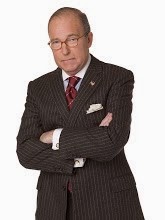
What follows below is my interview on last night's Kudlow & Company with former New York City mayor and former Republican presidential candidate, Rudy Giuliani. Mr. Giuliani joined us live from the Democratic convention in Denver. Hat tip to CQ Politics.
KUDLOW: But joining us now, America’s mayor, as I still call him a great friend, along with Charlie Rangel, Rudy Giuliani, obviously a former presidential candidate, former New York mayor. He’s, by the way, going to be a keynote speaker at the Republican convention. And this evening, he is visiting with us from Denver with the Democrats as a McCain surrogate.
Mr. Mayor, it’s great to see you, sir.
GIULIANI: Good to see you, Larry.
Charlie, good to see you.
KUDLOW: I love this love-in there, Giuliani and Rangel. I think that’s a great story. Mr. Mayor...
GIULIANI: I need all the help I can get on the floor of the Democratic convention, believe me.
KUDLOW: I thought they’d all embrace you for good sense and wisdom. But I really -- one of the big topics of this program tonight for investors is, are we going to return to a real tax-and-spend approach to economic policy, which was used in the 1970s? As you well know, it caused -- it caused sluggish economic growth, it spurred inflation. Stock markets did very badly.
The Wall Street Journal highlights it on page one. It lays out the risks, spending, spending, spending, higher taxes. What is your first response to this whole question?
GIULIANI: My first response is that that is clearly what would happen if Barack Obama was elected. After all, you have a ticket right now with the most liberal of the United States Senate leading the ticket, Barack Obama , and the number-three liberal in the Senate, Joe Biden, number three in the Senate, who is the number-two on the ticket.
So you’re going to end up with a very, very left-wing approach to the economy. Barack Obama has promised enormous spending, not just on health care. He doesn’t talk about it as much now, but he has this whole plan to end poverty, in which he’s going to spend billions and billions of dollars. Someone described it as a possible U.N. tax.
I mean, the reality is, he’s going to raise taxes. He does not agree with Charlie Rangel, with you, and with me that corporate taxes should be lowered. He’s resisted that.
And we’re going to see individual income taxes go up. We’re going to see the inheritance remain high and actually go up. And we’re going to see taxes at the highest level since I think the 1970s.
KUDLOW: I want to ask you a McCain question in just a minute, Mr. Mayor, but let me ask you just to qualify. The advisers to Mr. Obama -- and we have Robert Reich on the program tonight, as we talked, we have Jared Bernstein, two distinguished economists, friends of mine, and brilliant guys.
They will say that, in fact, most of Obama’s tax plan is a tax reduction for roughly 95 percent and only the top end, the so-called rich, are going to have tax hikes. What do you make of that? Is it credible? What’s the economic impact?
GIULIANI: It’s gobbledygook. The reality is, if you raise taxes and you have to collect the kind of money he’s spending, you have to raise taxes on everyone. Every Democrat who’s raised taxes and said they’re going to raise it on the rich raises it on everyone.
Not enough people pay taxes in order to raise the kind of money they’re talking about. So if you add up what Barack Obama has promised to spend, he is not going to be able to afford it by raising taxes on just a few people.
KUDLOW: All right.
GIULIANI: And the reality is, when you raise the capital gains tax, which he has promised to do, you’re raising taxes on over 50 percent of the American people. That’s not just the rich.
KUDLOW: That’s the investor class.
GIULIANI: It’s a very substantial...
KUDLOW: The investor class.
GIULIANI: Not just the investor -- everybody who has a 401(k).
KUDLOW: That’s what I mean.
GIULIANI: Everyone who has a pension plan, absolutely, 50 percent of America, the American middle class. So they’re not telling you the truth when they tell you they’re not going to raise taxes on the middle class.
An increase in the capital gains tax goes right to the heart of the middle class. It will hurt our economy, I think in a way that you understand, Larry. It’s exactly the worst thing to do right now in the economic cycle that we’re in.
KUDLOW: All right, now, let me turn to Senator McCain. And if you can just bear with us, you can hear this. We’re going to play an ad from the McCain campaign. It’s called “Broken.” Please take a listen and, if you can, take a look. Here it comes, sir.
GIULIANI: Sure. (BEGIN VIDEO CLIP)
(UNKNOWN): Washington’s broken. John McCain knows it. We’re worse off than we were four years ago. Only McCain has taken on big tobacco, drug companies, fought corruption in both parties. He’ll reform Wall Street, battle Big Oil, make America prosper again. He’s the original maverick.
One is ready to lead, McCain.
I’m John McCain , and I approve this message.
(END VIDEO CLIP)
KUDLOW: Now, Mr. Mayor, I find that a very troubling ad for two reasons. I want you to respond to it.
GIULIANI: Sure.
KUDLOW: Number one, he is basically saying, as he has more specifically in an earlier ad that was an iteration of this, that we are worse off today -- that we were worse off today than we were four years ago. I don’t believe the data support that view.
And, number two, Mr. McCain is engaging in some very interesting class warfare bashing of business, of Wall Street, of so-called Big Oil, of drug companies. Now, this to me is self-defeating. This sounds like Obama and Biden in their speeches in Springfield. It’s class warfare.
Why is John McCain going there? It totally dilutes his message and defeats his effort to make a distinction. What’s your take on this?
GIULIANI: I think the point of that whole ad is that he’s a different kind of Republican, that he’s always been an independent. He’s always been somewhat of a maverick and that he is someone that independents and Democrats who are disillusioned with Barack Obama can vote for.
Look, we realize that there is tremendous animosity in the Democratic Party because Hillary Clinton was not selected for vice president. She was the logical choice. She had 48 percent of the vote of the Democratic Party. She had 18 million votes; Joe Biden had 9,000 votes.
Some of those people are inclined to vote for John McCain , if they believe that he’s someone who can be bipartisan, someone who can reach out, someone who can work with the other side.
Senator Obama says that but has never done it. He is the single most liberal member of the United States Senate, the single most partisan member of the United States Senate, never passed a single bit of bipartisan legislation in his life. I’m not sure he’s passed any legislation, actually, he’s been in the Senate so little.
John McCain has been one of the leaders in passing bipartisan legislation. So I believe, like John McCain does, that you win elections in the middle. Going for independents, Democrats, I think that John McCain will do that, and that’s why he’s going to get elected.
KUDLOW: But Mayor Giuliani, if I may, when you ran for president, you had, in my judgment, the strongest, most pro-growth, supply-side message I have ever heard, even in some respects stronger than my former boss, Ronald Reagan. You were unbelievable, if you ask me.
You’re saying McCain is a different kind of Republican, but if McCain sounds like Obama, then it seems to me a lot of the Republican base is going to stay home. A lot of the business folks are going to stay home.
Why bash business? He’s not going to get those votes, Rudy. You know it, and I know it. This ad’s a mistake...
GIULIANI: Larry...
KUDLOW: ... and you should tell Mr. McCain to get it off the air.
GIULIANI: Well, first of all, I have my own areas in which I differ with the party, and I’m independent. It happens to be in economic policy I’m very conservative, because I think it works.
I think you have to be able in modern America to demonstrate that. And when John McCain is talking about the country being broken, he’s not talking about the country. He’s talking about the political system. Every American knows this.
We are so partisan now that we can’t get anything done. And I think we have a chance to elect a senator who has actually gotten things done with Democrats. He’s gotten campaign finance reform, things that maybe even Republicans disagree with.
But the reality is he will be so much better for business that there is no choice. He will lower the corporate tax. He’s in favor of that. He’s actually said he’ll lower it to 25 percent. He will keep the inheritance tax low, not see it go way back up to where it used to be.
He will -- he will retain the Bush tax cuts, which is to avoid a tax increase. There will be a substantial difference.
And John McCain is very conservative in one area that’s enormously important. He’s very conservative on spending. He’s probably been the single most hawkish senator in terms of keeping government spending low.
KUDLOW: All right. All right.
GIULIANI: So those are all things that our economy needs right now.
KUDLOW: All I’ll say, Mr. Mayor...
GIULIANI: You can never have 100 percent, Larry.
KUDLOW: You’re right, sir. All I’ll say, Mr. Mayor...
GIULIANI: Never 100 percent. It never works that way.
KUDLOW: ... I hope you stay close to him. He needs your economic advice, Mayor Rudy Giuliani.
GIULIANI: He’s a good friend and a great American. KUDLOW: It’s great to see you. It’s great to see you, sir.
GIULIANI: Thank you.
KUDLOW: Thanks ever so much.
Wednesday, August 27, 2008
Tuesday, August 26, 2008
That's a Relief
Whew. I'm glad McCain's not running against Hillary. She gave a stemwinder. Sure, plenty of Democratic pap. I'll read the transcript for details to be rebutted. Absolutely, she gave Obama a minimal endorsement. Her speech was about her, not him. And as I wrote this afternoon, only he can make the sale for his candidacy. No one else can do it for him. But the last quarter of her speech had a lot of optimism and confidence about America's future. No hardships or obstacles can stop America. I like that a lot. Obama never does it; he's a pessimist. Sometimes John McCain borders on cranky pessimism. But Hillary gave a very strong speech, an American leadership speech, very close to an American exceptionalism speech. Dems never do that. Reagan taught us all how powerful it can be. Hillary has come a long way.


Tuesday Night Special Lineup
 On CNBC's Kudlow & Company at 7pm ET tonight:
THE DEMOCRATIC CONVENTION, MONEY POLITICS & MORE...Our money politics panel will weigh in with its perspective on all the latest from Denver.
On board:
*Rep. Charlie Rangel, House Ways and Means Chairman
*Steve Moore, senior economics writer, Wall Street Journal
*Jared Bernstein, senior economist, Economic Policy Institute
*"Jimmy P" Pethokoukis, money and politics blogger for U.S. News & World Report
*Robert Reich, author, public policy professor & former Clinton labor secretary.
THE MARKETS & ECONOMY...Our stock market all-stars will discuss and debate all the latest news and developments affecting investors.
On board:
*Don Luskin, chief investment officer, Trend Macro
*Jim Lacamp, portfolio manager, RBC Dain Rauscher
*Gary Shilling, president, A. Gary Shilling & Co.
UPDATE FROM THE DEMOCRATIC CONVENTION…CNBC chief Washington correspondent John Harwood will deliver a live report from the convention hall in Denver.
WASHINGTON TO WALL STREET DEBATE…Squaring off on a host of money politics subjects on this evening’s program will be Democratic strategist Bob Shrum and Republican strategist Ben Ginsberg.
Please join us at 7pm ET on CNBC for another free market edition of Kudlow & Company.
The Denver Dems Aren't Making the Sale
There is no Biden bounce according to the latest Gallup tracking poll, as John McCain actually is taking a 46-44 lead over Barack Obama. Scott Rasmussen reports a 46-46 tie after the Democratic National Convention’s first night, which reverses a 3 percentage point Obama lead.
Meanwhile, another Gallup poll says 50 percent expect their taxes to be raised under Obama, despite the complaints of his economic advisors that they’re only raising taxes on the top few percent.
Make no mistake about it: There are many doubts and unanswered questions about the Illinois senator regarding his experience, his foreign policy, his economics, and his prior political and spiritual relationships. And despite some good moments last night, I don’t think Michelle Obama made the sale. At the end, only her husband can do it. Hillary can’t do it. If the badly split Democrats can be united at this late date, only Obama can do the job. No one else.
Reagan united a split GOP in 1980. George W. Bush united the McCain, Forbes, and cultural-conservative factions in 2000. Goldwater couldn’t do it in ’64. Neither could Humphrey in ’68. Of course, Jerry Ford couldn’t do it in ’76. And Carter failed dismally in 1980. But Bill Clinton succeeded in 1992.
Now it’s Obama’s task in 2008. That’s his job. No one else can do it for him.
And as the stock market looks on warily, falling slightly today after plunging yesterday, the lead story in this morning’s Wall Street Journal is a serious indictment of Obama’s economic program. “Senator Obama is proposing to use the government to remake economic policies in a way that hasn’t been seen in Washington in decades.” And if it’s a three-house Dem sweep, it will be Katy bar the door. Big-government spending programs, tax increases, trade restraints, a government health-care plan, cap-and-trade on climate change -- all without any real deficit restraints, which are accorded a low priority.
Incidentally, while the public clamors for drill, drill, drill, Obama wants high-cost, cap-and-trade carbon regulation enforced by the Environmental Protection Agency. Now, McCain also wants cap-and-trade, but not if India and China don’t go along. Apparently Obama will not be constrained by the rest of the world.
Sure, the economy is languishing. But do we really want a big-government, high-tax solution? Do we really want higher investment taxes that would leave government bigger and private enterprise smaller? Do Americans really blame “rich” people? Or do they actually believe success is a good thing and should not be punished? Do rank-and-file working folks really want to do away with the secret ballot for unionization in the form of the so-called card check? And if there were a three-house Dem sweep, wouldn’t Obama’s middle-class tax credit be overturned in favor of even more government spending, just as Bill Clinton’s plans were subverted back in 1993? The National Taxpayers Union says Obama’s new spending would total $344 billion. That’s a big number. One has to wonder if that’s the opening bid or the final one.
The Obama economists sincerely believe that theirs is a growth program. His advisors are friends of mine -- all of them terribly smart: Jason Furman, Austan Goolsbee, Robert Reich, Jarrod Bernstein. So this is surely not personal on my part. But I question their economic model. Raising marginal tax rates will minimize -- not maximize -- economic growth and jobs. Ditto for enlarging the size, scope, and sweep of government.
Business cycles come and go. Each has its own set of excesses and subsequent corrections. It is the nature of free-market capitalism. But heavy-handed government solutions are being rejected worldwide, and it seems foolhardy for the USA to move away from economic freedom when virtually the rest of the world is moving toward it.
One of the greatest tax reformers of all time was John F. Kennedy. He slashed marginal tax rates across the board for businesses and people of all income levels. The economy boomed in the 1960s. Reagan copied the JFK model in the 1980s. Are we turning back this supply-side model? I fear the Obama men are doing just that. I think that fear is worrying the stock market right now.
John McCain’s economic program is certainly not flawless. And his ad bashing business, oil, and others nearly reaches the class-warfare level of Obama-Biden. It’s a Big Mac mistake. Nor does McCain have a solid tax-cutting program for the middle class. More on all that later.
But as the Democrats discuss the economy tonight, I’m willing to bet they are not gonna make the sale. Obama’s task Thursday night will be a monumental challenge.
Meanwhile, another Gallup poll says 50 percent expect their taxes to be raised under Obama, despite the complaints of his economic advisors that they’re only raising taxes on the top few percent.
Make no mistake about it: There are many doubts and unanswered questions about the Illinois senator regarding his experience, his foreign policy, his economics, and his prior political and spiritual relationships. And despite some good moments last night, I don’t think Michelle Obama made the sale. At the end, only her husband can do it. Hillary can’t do it. If the badly split Democrats can be united at this late date, only Obama can do the job. No one else.
Reagan united a split GOP in 1980. George W. Bush united the McCain, Forbes, and cultural-conservative factions in 2000. Goldwater couldn’t do it in ’64. Neither could Humphrey in ’68. Of course, Jerry Ford couldn’t do it in ’76. And Carter failed dismally in 1980. But Bill Clinton succeeded in 1992.
Now it’s Obama’s task in 2008. That’s his job. No one else can do it for him.
And as the stock market looks on warily, falling slightly today after plunging yesterday, the lead story in this morning’s Wall Street Journal is a serious indictment of Obama’s economic program. “Senator Obama is proposing to use the government to remake economic policies in a way that hasn’t been seen in Washington in decades.” And if it’s a three-house Dem sweep, it will be Katy bar the door. Big-government spending programs, tax increases, trade restraints, a government health-care plan, cap-and-trade on climate change -- all without any real deficit restraints, which are accorded a low priority.
Incidentally, while the public clamors for drill, drill, drill, Obama wants high-cost, cap-and-trade carbon regulation enforced by the Environmental Protection Agency. Now, McCain also wants cap-and-trade, but not if India and China don’t go along. Apparently Obama will not be constrained by the rest of the world.
Sure, the economy is languishing. But do we really want a big-government, high-tax solution? Do we really want higher investment taxes that would leave government bigger and private enterprise smaller? Do Americans really blame “rich” people? Or do they actually believe success is a good thing and should not be punished? Do rank-and-file working folks really want to do away with the secret ballot for unionization in the form of the so-called card check? And if there were a three-house Dem sweep, wouldn’t Obama’s middle-class tax credit be overturned in favor of even more government spending, just as Bill Clinton’s plans were subverted back in 1993? The National Taxpayers Union says Obama’s new spending would total $344 billion. That’s a big number. One has to wonder if that’s the opening bid or the final one.
The Obama economists sincerely believe that theirs is a growth program. His advisors are friends of mine -- all of them terribly smart: Jason Furman, Austan Goolsbee, Robert Reich, Jarrod Bernstein. So this is surely not personal on my part. But I question their economic model. Raising marginal tax rates will minimize -- not maximize -- economic growth and jobs. Ditto for enlarging the size, scope, and sweep of government.
Business cycles come and go. Each has its own set of excesses and subsequent corrections. It is the nature of free-market capitalism. But heavy-handed government solutions are being rejected worldwide, and it seems foolhardy for the USA to move away from economic freedom when virtually the rest of the world is moving toward it.
One of the greatest tax reformers of all time was John F. Kennedy. He slashed marginal tax rates across the board for businesses and people of all income levels. The economy boomed in the 1960s. Reagan copied the JFK model in the 1980s. Are we turning back this supply-side model? I fear the Obama men are doing just that. I think that fear is worrying the stock market right now.
John McCain’s economic program is certainly not flawless. And his ad bashing business, oil, and others nearly reaches the class-warfare level of Obama-Biden. It’s a Big Mac mistake. Nor does McCain have a solid tax-cutting program for the middle class. More on all that later.
But as the Democrats discuss the economy tonight, I’m willing to bet they are not gonna make the sale. Obama’s task Thursday night will be a monumental challenge.
Obama Bounce?
Top pollster Scott Rasmussen revealed some rather interesting numbers in his "Daily Presidential Tracking Poll" earlier this morning.
According to Rasmussen Reports:
The Democratic National Convention has begun and the poll numbers are bouncing, but not in the direction that most people anticipated.
The Rasmussen Reports daily Presidential Tracking Poll for Tuesday shows Barack Obama attracting 44% of the vote while John McCain also earns 44%. When "leaners" are included, it’s still tied with Obama at 46% and McCain at 46%...
Click here to continue reading.
According to Rasmussen Reports:
The Democratic National Convention has begun and the poll numbers are bouncing, but not in the direction that most people anticipated.
The Rasmussen Reports daily Presidential Tracking Poll for Tuesday shows Barack Obama attracting 44% of the vote while John McCain also earns 44%. When "leaners" are included, it’s still tied with Obama at 46% and McCain at 46%...
Click here to continue reading.
Monday, August 25, 2008
Monday Night Special Lineup
On CNBC's Kudlow & Company at 7pm ET tonight:THE DEMOCRATIC CONVENTION, STOCK MARKET POLITICS & MORE...Our money politics panel will discuss and debate Obamanomics, McCain, and all the latest Washington to Wall Street news and developments.
On board:
*Mike Ozanian, Forbes magazine senior editor
*Jared Bernstein, Economic Policy Institute, senior economist
*"Jimmy P" Pethokoukis, money and politics blogger for U.S. News & World Report
UPDATE FROM DENVER...CNBC chief Washington correspondent John Harwood will join us with an update and insight into all the latest convention news.
THE STOCK MARKET & ECONOMY…Our stock market all stars will discuss and debate all the latest news, trends, and developments affecting investors.
On board:
*Joe Battipaglia, market strategist, Stifel Nicolaus
*Dr. Bob Froehlich, chief investment strategist, DWS Scudder
*Mike Ozanian, Forbes magazine senior editor
DYNAMIC DUO DEBATES DEMS & DENVER…Joining us to debate all the latest will be Wall Street Journal senior economics writer Steve Moore and Robert Reich, author, public policy professor & former Clinton labor secretary.
Political commentator Lawrence O'Donnell will also be joining us live from Denver.
INTERVIEW WITH GEORGE MCGOVERN...The former senator from South Dakota and 1972 Democratic presidential candidate will join us live from the Democratic Convention to discuss unions, card check and much more.
Please join us at 7pm ET on CNBC for another free market edition of Kudlow & Company.
Are the Denver Dems Downing Stocks?
Are the Denver Dems downing the stock market today? The Dow is off 230 points, starting right from the get-go. So-called market analysts are blaming financials and the credit crunch as they always do. But there’s more.
Obama and Biden gave us plenty of class warfare in their Springfield, Ill., get together on Saturday. Tax the rich. Redistribute income and wealth. Go after all those corporate meanies. Trade protection. Card-check for the Unions to stop secret elections (not even former Democratic presidential candidate George McGovern agrees with that one.)
Then there’s Nancy Pelosi on TV bashing oil. And a huge New York Times Magazine article on Obamanomics by David Leonhardt tells us about tax fairness and redistribution from Obama, and shows that my good friend Robert Reich is in the driver’s seat with lots of public spending for the Obama plan. Deficit hawks like Jason Furman, the Robert Rubin protégé, seem to be in second place.
Taxing capital gains, dividends, and rich people makes me wonder who exactly is gonna supply the capital and investment to grow the economy. And while Obama’s Wall Street supporters helped put a 20 percent lid on investment tax rates, a three-house Democratic sweep could make matters much worse on the capitalism front.
Meanwhile, the Barron’s cover story called “Dueling Visions” by my friend Jim McTague says that Obama wants to repeat the mistakes of Herbert Hoover, raising individual and corporate taxes and siphoning needed investment capital out of the markets and into the hands of bureaucrats. It doesn’t seem like much of an economic recovery program.
Another problem is on the spending side for consumer demand. Hate to say it, but rich people are not only the biggest investors, they’re also the biggest spenders. According to the Tax Policy Center, Obamanomics would boost their average tax bill by $94,000 to as much as $653,000. Phew.
With the Denver Dems strutting their stuff, this could be a bumpy week for stocks. Did anyone say free-market capitalism is the best path to prosperity?
Obama and Biden gave us plenty of class warfare in their Springfield, Ill., get together on Saturday. Tax the rich. Redistribute income and wealth. Go after all those corporate meanies. Trade protection. Card-check for the Unions to stop secret elections (not even former Democratic presidential candidate George McGovern agrees with that one.)
Then there’s Nancy Pelosi on TV bashing oil. And a huge New York Times Magazine article on Obamanomics by David Leonhardt tells us about tax fairness and redistribution from Obama, and shows that my good friend Robert Reich is in the driver’s seat with lots of public spending for the Obama plan. Deficit hawks like Jason Furman, the Robert Rubin protégé, seem to be in second place.
Taxing capital gains, dividends, and rich people makes me wonder who exactly is gonna supply the capital and investment to grow the economy. And while Obama’s Wall Street supporters helped put a 20 percent lid on investment tax rates, a three-house Democratic sweep could make matters much worse on the capitalism front.
Meanwhile, the Barron’s cover story called “Dueling Visions” by my friend Jim McTague says that Obama wants to repeat the mistakes of Herbert Hoover, raising individual and corporate taxes and siphoning needed investment capital out of the markets and into the hands of bureaucrats. It doesn’t seem like much of an economic recovery program.
Another problem is on the spending side for consumer demand. Hate to say it, but rich people are not only the biggest investors, they’re also the biggest spenders. According to the Tax Policy Center, Obamanomics would boost their average tax bill by $94,000 to as much as $653,000. Phew.
With the Denver Dems strutting their stuff, this could be a bumpy week for stocks. Did anyone say free-market capitalism is the best path to prosperity?
Monday, August 18, 2008
Thoughts on McCain's Veep Choice
It is being widely reported that John McCain will announce his Veep pick on August 29,the day after the Dem Convention in Dayton, Ohio. My immediate thought is Rob Portman.
Portman is a former Republican House member who served as President Bush’s special trade representative and also served in the Bush Administration as the Director of the Office of Management and Budget. He is a strong conservative. He is a tax-cutting supply-sider who is a strong foe of earmarks and other budget pork.
As OMB director he talked Bush into the President’s first veto of his entire administration. Later he resigned quietly, largely because senior White House officials behind the scenes thwarted another Portman veto recommendation -- I believe on the farm bill. Portman has good international experience as trade rep., where he was a strong free trader, traveling the world and meeting international leaders. Portman is also a social conservative with a pro-life record. He is well spoken, a good debater, and an attractive personality.
One glitch in my theory, however, is that Portman is from Cincinnati, rather than Dayton. I am certain Portman is also for drill, drill, drill. Of course, my top drilling choice for Veep is Alaska Governor Sarah Palin, who just got the new Alaska pipeline through her state legislature. But Portman would be an excellent Veep choice for McCain.
Portman is a former Republican House member who served as President Bush’s special trade representative and also served in the Bush Administration as the Director of the Office of Management and Budget. He is a strong conservative. He is a tax-cutting supply-sider who is a strong foe of earmarks and other budget pork.
As OMB director he talked Bush into the President’s first veto of his entire administration. Later he resigned quietly, largely because senior White House officials behind the scenes thwarted another Portman veto recommendation -- I believe on the farm bill. Portman has good international experience as trade rep., where he was a strong free trader, traveling the world and meeting international leaders. Portman is also a social conservative with a pro-life record. He is well spoken, a good debater, and an attractive personality.
One glitch in my theory, however, is that Portman is from Cincinnati, rather than Dayton. I am certain Portman is also for drill, drill, drill. Of course, my top drilling choice for Veep is Alaska Governor Sarah Palin, who just got the new Alaska pipeline through her state legislature. But Portman would be an excellent Veep choice for McCain.
Friday, August 15, 2008
My Kind of Flip-Flop

Lo and behold, Team Obama is moving toward the supply-side and pivoting toward the political center on key aspects of its tax policy. Writing in Thursday’s Wall Street Journal, Obama advisors Jason Furman and Austan Goolsbee outlined a plan that would only raise tax rates on capital-gains and dividends from 15 percent to 20 percent for individuals making more than $200,000 and on family incomes above $250,000. Prior to this, investors worried that Obama would double the 15 percent tax rate on cap-gains and bring the 15 percent rate on dividends back to 40 percent.
Can investors take some relief from this? I reckon they can. And key Obama advisors say these investment tax rates will be consistent with the economic and stock market boom of the 1990s. That’s their trump card in all this.
Well, okay. But in 1997 the capital-gains tax was cut from 28 percent to 20 percent. That provided an 11 percent increase in retained income for the extra dollar put at risk by investors. In 2003, President Bush reduced the cap-gain levy to 15 percent, providing another 6 percent incentive.
With Sen. Obama’s 20 percent rate on investment, investors would suffer a 6 percent incentive loss on their cap-gain incomes and another 5.5 percent incentive drop on dividends. The cost of capital would rise under Obama and investment returns would decline by more than 11 percent. Uncle Sam will keep more and investors will retain less, all while the economy is languishing.
The McCain folks say a weak economy is no time to raise taxes. It’s a strong point, isn’t it? Former undersecretary of the Treasury John Taylor, a senior McCain advisor, notes that raising investment taxes will undermine business and lessen new job creation, which is the ultimate source of consumer incomes and spending power.
The Obama people counter that their middle-class tax credit of $1,000 per family is much more powerful than Sen. McCain’s plan to double the child exemption. In the Journal piece, Messrs. Furman and Goolsbee argue that McCain’s larger dependent exemption skips 101 million families with no children or dependents.
But tax credits are an inefficient source of stimulus because of various income-thresholds that determine eligibility. Phasing-in these credits provide temporary relief, but phasing them out as earners gain higher incomes actually raises marginal tax rates and provides a work disincentive for the extra dollar earned.
Another glitch in the Obama plan is the difference between the $200,000 income limit for individuals and the $250,000 threshold for two-earner families. If two singles each earning $200,000 get married, one will have to surrender over half of what he or she earns to the government. And raising the top income-tax rate from 35 percent to 39.6 percent is a work deterrent of roughly 7 percent. The extra dollar earned leaves only 60.4 cents take-home pay at the 39.6 percent tax rate compared with 65 cents at the current 35 percent rate. At the margin, this work disincentive can really matter.
Nonetheless, it appears the Obama people acknowledge at least some effects from supply-side incentives. And perhaps they are implicitly recognizing the likelihood that higher tax rates on cap-gains and dividends will generate lower revenues and a higher budget deficit.
It also seems clear that the Obama tax plan is not a growth policy, but a social policy that uses tax fairness as a means of redistributing income. There’s a long history of failed redistributionism, and this is where the Obama plan falls apart.
Plus, the world’s changed since the 1990s. The flat-tax revolution coming out of Eastern Europe has slashed marginal rates on individuals and corporations, resulting in strong growth and big revenue gains that keep budget deficits down.
Sen. McCain’s plan to maintain the Bush tax cuts and move toward a lower corporate tax rate will leave the U.S. in a much more competitive position in the global race for capital and labor. But I still believe the best tax reform is a flat tax that would end the multiple tax on saving and investment by doing away with taxes on capital gains, dividends, and estates. Corporate tax rates also should be slashed and all forms of corporate welfare, subsidies, and loopholes should be eliminated. This would put K Street lobbyists out of business and put tremendous torque behind our future economy.
But Team Obama’s small shift toward the supply-side remains a positive development.
The McCain folks are now slamming Obama’s credibility on tax hikes and other issues. They infer that the young Illinois senator is a flip-flopper. Well, that’s true. But some flip-flops are better than others. Sen. McCain flip-flopped on the Bush tax cuts and drilling. Bravo for that. And if Sen. Obama is flip-flopping toward lower investment taxes, so much the better.
Wednesday, August 13, 2008
McCain Should Link Tsar Putin with Drill, Drill, Drill
Will John McCain turn Tsar Putin’s invasion of Georgia into a drill, drill, drill issue? He should. It will throw Democrats even more on the defensive -- especially Sen. Obama whose weak response to Putin’s neo-Soviet actions have already put him way behind the eight ball on Russia.
McCain’s responses have been superb. And President Bush today adopted many of them -- in particular the warnings on world trade, the G8 (G7?), and a Truman-like airlift of humanitarian assistance relief. Even sending Condi Rice over there and putting SecDef Bob Gates into play.
McCain has been appropriately tough all along. And this Putin ploy will resonate with voters much more than Beltway pundits believe.
But global strategist Thomas Barnett has the energy angle on Russia’s invasion of Georgia exactly right. He says, “Now we all have clarity about the nasty nature of Putin’s Russia,” and this gives us clarity on the need to dramatically reduce our dependence on foreign oil. He asks: Why would the U.S. want to expose the American economy to the potential risk of being held hostage by a couple of oil pipelines that run through the old Soviet empire? He goes on to say, “It’s all-of-the-above time, gang -- domestic drilling, nukes, concentrated solar, deep geothermal, clean coal, and whatever else Silicon Valley and heroic capitalists everywhere can dream up as we conduct a market-driven transition to a post-hydrocarbon economy.” (Hat tip to Jimmy Pethokoukis.)
Barnett is exactly right. I simply call it drill, drill, drill -- total deregulation and decontrol of the great American energy sector. Unleash all manner of energy for an America First energy policy that not only will fuel our economy but will create millions of high-paying jobs in the future.
This is where the Tsar Putin warning should take us this political season. It’s another huge Republican opportunity, led by McCain, to merge Obama’s naïveté and inexperience on national security with his nutty reliance on the enviromaniacs of the left who still control the Democrats.
I notice the Intrade prediction market, which downgraded the end-the-drilling-ban contract to 40 percent yesterday, has popped up the probability of that contract to 50 percent today. I also notice this morning’s Wall Street Journal story that says conservative Republicans in the Senate are not happy with the Gang of 10 drilling compromise. They shouldn’t be happy with it. All that’s necessary is 41 votes to stop a budget spending bill that is likely to contain another one-year extension of the drilling moratorium. That would mean the moratorium is dead on Oct. 1; it expires Sept. 30. This will be the closest thing to an up-or-down vote on drilling.
Do we really want OPEC, Hugo Chavez, and Tsar Putin to control our energy prices? Or will we be brave enough to seize energy independence?
McCain can really lead on this issue.
McCain’s responses have been superb. And President Bush today adopted many of them -- in particular the warnings on world trade, the G8 (G7?), and a Truman-like airlift of humanitarian assistance relief. Even sending Condi Rice over there and putting SecDef Bob Gates into play.
McCain has been appropriately tough all along. And this Putin ploy will resonate with voters much more than Beltway pundits believe.
But global strategist Thomas Barnett has the energy angle on Russia’s invasion of Georgia exactly right. He says, “Now we all have clarity about the nasty nature of Putin’s Russia,” and this gives us clarity on the need to dramatically reduce our dependence on foreign oil. He asks: Why would the U.S. want to expose the American economy to the potential risk of being held hostage by a couple of oil pipelines that run through the old Soviet empire? He goes on to say, “It’s all-of-the-above time, gang -- domestic drilling, nukes, concentrated solar, deep geothermal, clean coal, and whatever else Silicon Valley and heroic capitalists everywhere can dream up as we conduct a market-driven transition to a post-hydrocarbon economy.” (Hat tip to Jimmy Pethokoukis.)
Barnett is exactly right. I simply call it drill, drill, drill -- total deregulation and decontrol of the great American energy sector. Unleash all manner of energy for an America First energy policy that not only will fuel our economy but will create millions of high-paying jobs in the future.
This is where the Tsar Putin warning should take us this political season. It’s another huge Republican opportunity, led by McCain, to merge Obama’s naïveté and inexperience on national security with his nutty reliance on the enviromaniacs of the left who still control the Democrats.
I notice the Intrade prediction market, which downgraded the end-the-drilling-ban contract to 40 percent yesterday, has popped up the probability of that contract to 50 percent today. I also notice this morning’s Wall Street Journal story that says conservative Republicans in the Senate are not happy with the Gang of 10 drilling compromise. They shouldn’t be happy with it. All that’s necessary is 41 votes to stop a budget spending bill that is likely to contain another one-year extension of the drilling moratorium. That would mean the moratorium is dead on Oct. 1; it expires Sept. 30. This will be the closest thing to an up-or-down vote on drilling.
Do we really want OPEC, Hugo Chavez, and Tsar Putin to control our energy prices? Or will we be brave enough to seize energy independence?
McCain can really lead on this issue.
Monday, August 11, 2008
Drill, Drill, Drill Is on a Roll, Roll, Roll
Nearly two-thirds of Americans (64 percent) support offshore oil drilling, according to a new Rasmussen poll. And 42 percent say offshore oil drilling would have the biggest impact in terms of reducing oil prices. Only 20 percent of Americans now oppose offshore drilling. And in terms of reducing oil prices, building more nuclear plants and developing more fuel-efficient cars rate only 16 percent.
Public support for drill, drill, drill clearly continues to grow. And that’s one key reason why oil prices continue to fall. In today’s trading oil is off another $2 to $113 a barrel, despite the war between Russia and Georgia. According to government sources in Georgia, the Baku pipeline is still functioning and oil is flowing through Georgia.
Let me return to my theme that the plunge in oil prices is solving the economy’s problems. In today’s stock market trading, while overall prices are up 100 points, retailers and banks are the leading sectors. This follows on last Friday’s huge 300-point jump, largely on the strength of collapsing oil. Retailers and financials led Friday’s action also.
As oil and gas pump prices descend, homeowners will have more extra cash to pay their mortgages on time. This means the mortgage bonds owned by banks are worth more. Hence the oil drop solves the credit crunch as well as the housing decline.
And there’s more. Gold has dropped another $35 today to $830 an ounce. The greenback is up again. This means of course that the oil drop solves the inflation problem as well. Essentially, we are witnessing a complete reversal of the damaging oil shock that has been the single-biggest economic depressant this year. You couldn’t ask for any better news.
And I want to repeat my view that the reversal to lower oil prices is a function of a) lower energy demand through greater conservation in response to the prior price increase and b) the likelihood that Congress will reverse its ban on drilling. Oil traders are selling the black gold in anticipation of greater future energy supplies. The InTrade prediction markets are showing a 45 percent probability that the congressional ban on drilling will be removed before year-end. In early July this contract was less than 10 percent. We are watching a combination of economic and political forces acting to depress oil prices.
My suggestion to Sen. John McCain, who has capitalized on the drilling surge, is to maintain his drilling mantra every day on the campaign trail. Sen. McCain has Obama on the run on this issue and the Arizonan should not let up the pressure. In some sense President Bush launched all this in back-to-back speeches in mid-July. He removed the executive ban on drilling, thereby capturing a public revolt against higher energy prices. McCain must ride this wave for all it’s worth.
Public support for drill, drill, drill clearly continues to grow. And that’s one key reason why oil prices continue to fall. In today’s trading oil is off another $2 to $113 a barrel, despite the war between Russia and Georgia. According to government sources in Georgia, the Baku pipeline is still functioning and oil is flowing through Georgia.
Let me return to my theme that the plunge in oil prices is solving the economy’s problems. In today’s stock market trading, while overall prices are up 100 points, retailers and banks are the leading sectors. This follows on last Friday’s huge 300-point jump, largely on the strength of collapsing oil. Retailers and financials led Friday’s action also.
As oil and gas pump prices descend, homeowners will have more extra cash to pay their mortgages on time. This means the mortgage bonds owned by banks are worth more. Hence the oil drop solves the credit crunch as well as the housing decline.
And there’s more. Gold has dropped another $35 today to $830 an ounce. The greenback is up again. This means of course that the oil drop solves the inflation problem as well. Essentially, we are witnessing a complete reversal of the damaging oil shock that has been the single-biggest economic depressant this year. You couldn’t ask for any better news.
And I want to repeat my view that the reversal to lower oil prices is a function of a) lower energy demand through greater conservation in response to the prior price increase and b) the likelihood that Congress will reverse its ban on drilling. Oil traders are selling the black gold in anticipation of greater future energy supplies. The InTrade prediction markets are showing a 45 percent probability that the congressional ban on drilling will be removed before year-end. In early July this contract was less than 10 percent. We are watching a combination of economic and political forces acting to depress oil prices.
My suggestion to Sen. John McCain, who has capitalized on the drilling surge, is to maintain his drilling mantra every day on the campaign trail. Sen. McCain has Obama on the run on this issue and the Arizonan should not let up the pressure. In some sense President Bush launched all this in back-to-back speeches in mid-July. He removed the executive ban on drilling, thereby capturing a public revolt against higher energy prices. McCain must ride this wave for all it’s worth.
Friday, August 08, 2008
Friday Night Lineup
On CNBC's Kudlow & Company at 7pm ET tonight:THE STOCK MARKET, ECONOMY & FED...Our stock market and economic all-stars will discuss and debate all the latest news and developments affecting investors.
On board:
Dennis Kneale - CNBC Media & Technology Editor
Michael Pento - Delta Global Advisors, senior market strategist
Jared Bernstein - Economic Policy Institute, senior economist
Dan Henninger - Wall Street Journal editorial page director
We'll discuss the government shutdown over drilling and Fannie Mae and Freddie Mac lobbyists with Sen. Jim DeMint (R-SC).
Our WASHINGTON TO WALL STREET panel will include:
Walt Williams - Professor of Economics @ George Mason University
Jared Bernstein - Economic Policy Institute, senior economist
Please join us at 7pm ET on CNBC for another free market edition of Kudlow & Company.
The Oil Tax Cut is Good for Growth, Lower Inflation, and Solving the Credit Crunch
The tax-cut effects of lower oil prices are the single-biggest economic story right now. Even with Fannie Mae’s terrible reported earnings, stocks are up 240 points in today’s trading. Why? Because oil is down another $4 to $116. That’s a more than 20 percent drop from its peak in mid-July, about the time President Bush launched his drill, drill, drill offensive to roll back the moratorium on offshore and domestic production, including shale and ANWR.
Bush removed the executive moratorium order, and now the entire country is clamoring for Congress to remove its moratorium. So far the Reid-Pelosi Democrats continue to dither and oppose new drilling. And as Kim Strassel wrote in today’s Wall Street Journal, the so-called “Gang of 10” compromise is a lousy deal. Obama is flirting with that compromise, but he has basically positioned himself as the anti-driller. Fortunately John McCain has repositioned himself as the pro-driller, and his rising polls show popular support.
But oil markets see the political tide in favor of drilling. As poll after poll is released -- showing huge public support for drilling -- oil traders are selling contracts short in anticipation of greater oil supplies in the future. And while all this is going on, the oil shock of the past six-to-nine months has curbed energy demand and promoted conservation. In other words, markets work. The combination of expected future supply increases and a pullback in demand is working to bring down prices.
Again, oil-price drops have a huge tax-cut effect on the economy. What many pessimists overlook, however, is that the tax-cut effect of lower oil will significantly help solve the credit-crunch problem in financial markets and at the large banks. Think about this. Declining oil enhances consumer purchasing power, raises profits, and gives everyone more economic strength. Folks struggling to pay mortgages will have a better time of it with lower energy costs. Pocketbooks will stretch further. Business commodity costs will go down and profits will go up. All that sub-prime mortgage paper sitting in bank portfolios will be worth more as homeowners can better service their mortgages in the wake of shrinking energy burdens.
The very key point here -- which is being missed by so many -- is that lower oil will solve the credit crunch. Just as the price shock of the last few quarters deepened the credit crunch and brought the economy to the edge of recession, today’s oil-price plunge will ease the credit crunch and strengthen economic growth. Not only that, but plunging gold prices and the strengthening of King Dollar show the counter-inflationary impact of lower oil. Real interest rates are rising in the Treasury market as oil prices fall.
The oil tax cut is good for growth, good for lower inflation, and good for solving the credit crunch that has plagued financial markets. In effect, the credit problems that continued to resurface are yesterday’s story, and the credit solution coming from plunging oil is tomorrow’s headline.
This is why the Goldilocks summer stock market rally has legs.
Bush removed the executive moratorium order, and now the entire country is clamoring for Congress to remove its moratorium. So far the Reid-Pelosi Democrats continue to dither and oppose new drilling. And as Kim Strassel wrote in today’s Wall Street Journal, the so-called “Gang of 10” compromise is a lousy deal. Obama is flirting with that compromise, but he has basically positioned himself as the anti-driller. Fortunately John McCain has repositioned himself as the pro-driller, and his rising polls show popular support.
But oil markets see the political tide in favor of drilling. As poll after poll is released -- showing huge public support for drilling -- oil traders are selling contracts short in anticipation of greater oil supplies in the future. And while all this is going on, the oil shock of the past six-to-nine months has curbed energy demand and promoted conservation. In other words, markets work. The combination of expected future supply increases and a pullback in demand is working to bring down prices.
Again, oil-price drops have a huge tax-cut effect on the economy. What many pessimists overlook, however, is that the tax-cut effect of lower oil will significantly help solve the credit-crunch problem in financial markets and at the large banks. Think about this. Declining oil enhances consumer purchasing power, raises profits, and gives everyone more economic strength. Folks struggling to pay mortgages will have a better time of it with lower energy costs. Pocketbooks will stretch further. Business commodity costs will go down and profits will go up. All that sub-prime mortgage paper sitting in bank portfolios will be worth more as homeowners can better service their mortgages in the wake of shrinking energy burdens.
The very key point here -- which is being missed by so many -- is that lower oil will solve the credit crunch. Just as the price shock of the last few quarters deepened the credit crunch and brought the economy to the edge of recession, today’s oil-price plunge will ease the credit crunch and strengthen economic growth. Not only that, but plunging gold prices and the strengthening of King Dollar show the counter-inflationary impact of lower oil. Real interest rates are rising in the Treasury market as oil prices fall.
The oil tax cut is good for growth, good for lower inflation, and good for solving the credit crunch that has plagued financial markets. In effect, the credit problems that continued to resurface are yesterday’s story, and the credit solution coming from plunging oil is tomorrow’s headline.
This is why the Goldilocks summer stock market rally has legs.
Thursday, August 07, 2008
Thursday Night Lineup
On CNBC's Kudlow & Company at 7pm ET tonight:THE MARKETS & ECONOMY...Our stock market all-stars will discuss and debate all the latest news, trends, and developments affecting investors.
On board:
*Joe Battipaglia, market strategist, Stifel Nicolaus
*Jack Gage, Forbes magazine associate editor
*Don Luskin, chief investment officer, Trend Macro
*Gary Shilling, president of A. Gary Shilling & Co.
HOUSING & THE MARKETS...Economist Charles Calomiris, visiting scholar at the American Enterprise Institute, will join the market panel with his thoughts and perspective on what lies ahead in the housing market and the U.S. economy.
ELECTION POLLS & POLITICS...Top pollster Scott Rasmussen from Rasmussen Reports will deliver all the latest goods and insight in the McCain/Obama race for the White House.
THE DYNAMIC DUO...Squaring off this evening on a host of Washington to Wall Street subjects will be the Wall Street Journal's Steve Moore and Robert Reich, author, public policy professor & former Clinton labor secretary.
Please join us at 7pm ET on CNBC for another free market edition of Kudlow & Company.
Wednesday, August 06, 2008
Wednesday Night Lineup
On CNBC's Kudlow & Company at 7pm ET tonight:THE STOCK MARKET & ECONOMY...Our stock market all-stars will discuss and debate all the latest news, trends, and developments affecting investors.
Our guests tonight include:
*Mike Maiello, Forbes magazine staff writer
*Dennis Kneale, CNBC media & technology editor
*Andy Busch, global FX strategist, BMO Capital Markets
*Jim Lacamp, portfolio manager, RBC Dain Rauscher
*Jim Awad, chairman, WP Stewart Asset Management
*Mark Skousen, financial economist, author, editor of the financial advice newsletter Forecasts & Strategies
INTERVIEW WITH HUNT RAMSBOTTOM...The CEO of Rentech, a provider of clean energy solutions, will offer his perspective and insight on energy solutions and drill, drill, drill. Rentech transforms under-utilized domestic energy resources into alternative fuels and chemicals. These energy resources include natural gas, biomass, municipal solid waste, petroleum coke and coal.
POLLSTERS TALK POLITICS...Joining us to discuss and debate all the latest developments inside the world of politics and the presidential race will be Geoffrey Garin, president of Peter D. Hart Research Associates and Kellyanne Conway, president of the polling company.
Please join us at 7pm ET on CNBC for another free market edition of Kudlow & Company.
Drill, Drill, Drill Plus Price Stability
Yesterday’s Federal Reserve policy statement not only failed to defend King Dollar, it actually shifted on balance to a more dovish position. The FOMC looks like it’s more worried about the economy than it was a month ago and less worried about inflation in the wake of plunging oil prices.
The drill, drill, drill political scenario coming out of Washington and spreading throughout the country is really helping Fed policy right now. Since President Bush launched his offensive to roll back the drilling moratorium, the oil price has dropped more than $30 from near $150 to below $120. The barrel price is actually down again today to around $118. In connection with the big oil drop, gold has fallen and the dollar has appreciated. Gas prices at the pump have come off about 25 cents. Presumably, headline inflation will moderate a bit next month.
So you might say drill, drill, drill along with reduced energy demands is lending a big helping hand to the Fed’s inflation worry.
At the same time, these energy-price drops are acting much like a tax cut on the economy and the stock market. So it’s understandable that stocks have picked up since mid-July. The likelihood is that the economy at the margin will do better, not worse, in the months ahead. The oil-price shock has really taken a toll on the economy and stocks over the past nine months, and to the extent this shock is reversed, it’s great news.
September 30 is the cutoff for the congressional moratorium on domestic and offshore drilling. Republican Sen. Jim DeMint is mounting a campaign to shut down the government’s budget appropriations unless there is a clear up-and-down vote on the expiring moratorium. The GOP, with the public behind them, knows full well that chances for congressional pickups rather than losses are at stake in this oil battle.
But the Fed should really stick to its own knitting on inflation control. Energy deregulation leading to more supply production is a great pro-growth tonic for the economy. The Fed, however, should be aiming for price stability and King Dollar. There are two policy levers here. One is the tax-cut effect of drill, drill, drill. The other is monetary restraint for the anti-inflation goal of price stability and a strong greenback.
While gold has come down — it is still $882 — the chance that this lofty gold level is consistent with inflation of 2 percent or less is very low. Using a bond-market model of real interest rates and inflation expectations, monetary policy over the past year has become very loose again. The real federal funds target rate has dropped from nearly 3 percent to negative territory. The yield curve differential between 10-year Treasury rates and the fed funds rate was negative from mid-2006 to the end of 2007, indicating tight money. But that yield spread has turned quite positive in 2008.
Meanwhile, the adjusted monetary base controlled by the central bank has shifted from minus-4 percent growth at the beginning of this year to plus-9 percent growth at an annual rate. And while the greenback has stabilized as a result of the oil drop, it hasn’t yet really broken out into a stronger range.
There are basically two key question marks hovering around this potential stock market summer rally: First, will we get an America-first energy policy with total deregulation that would produce more supplies to bring prices even lower and create more jobs for economic recovery in the process? And second, will the Phillips-curve-minded Fed go back to inflation-targeting, price-level stability, and King Dollar?
For Goldilocks to truly succeed, both conditions must be met.
The drill, drill, drill political scenario coming out of Washington and spreading throughout the country is really helping Fed policy right now. Since President Bush launched his offensive to roll back the drilling moratorium, the oil price has dropped more than $30 from near $150 to below $120. The barrel price is actually down again today to around $118. In connection with the big oil drop, gold has fallen and the dollar has appreciated. Gas prices at the pump have come off about 25 cents. Presumably, headline inflation will moderate a bit next month.
So you might say drill, drill, drill along with reduced energy demands is lending a big helping hand to the Fed’s inflation worry.
At the same time, these energy-price drops are acting much like a tax cut on the economy and the stock market. So it’s understandable that stocks have picked up since mid-July. The likelihood is that the economy at the margin will do better, not worse, in the months ahead. The oil-price shock has really taken a toll on the economy and stocks over the past nine months, and to the extent this shock is reversed, it’s great news.
September 30 is the cutoff for the congressional moratorium on domestic and offshore drilling. Republican Sen. Jim DeMint is mounting a campaign to shut down the government’s budget appropriations unless there is a clear up-and-down vote on the expiring moratorium. The GOP, with the public behind them, knows full well that chances for congressional pickups rather than losses are at stake in this oil battle.
But the Fed should really stick to its own knitting on inflation control. Energy deregulation leading to more supply production is a great pro-growth tonic for the economy. The Fed, however, should be aiming for price stability and King Dollar. There are two policy levers here. One is the tax-cut effect of drill, drill, drill. The other is monetary restraint for the anti-inflation goal of price stability and a strong greenback.
While gold has come down — it is still $882 — the chance that this lofty gold level is consistent with inflation of 2 percent or less is very low. Using a bond-market model of real interest rates and inflation expectations, monetary policy over the past year has become very loose again. The real federal funds target rate has dropped from nearly 3 percent to negative territory. The yield curve differential between 10-year Treasury rates and the fed funds rate was negative from mid-2006 to the end of 2007, indicating tight money. But that yield spread has turned quite positive in 2008.
Meanwhile, the adjusted monetary base controlled by the central bank has shifted from minus-4 percent growth at the beginning of this year to plus-9 percent growth at an annual rate. And while the greenback has stabilized as a result of the oil drop, it hasn’t yet really broken out into a stronger range.
There are basically two key question marks hovering around this potential stock market summer rally: First, will we get an America-first energy policy with total deregulation that would produce more supplies to bring prices even lower and create more jobs for economic recovery in the process? And second, will the Phillips-curve-minded Fed go back to inflation-targeting, price-level stability, and King Dollar?
For Goldilocks to truly succeed, both conditions must be met.
Tuesday, August 05, 2008
Tuesday Night Lineup
On CNBC's Kudlow & Company at 7pm ET tonight:THE STOCK MARKET, ECONOMY & FED...Our stock market and economic all-stars will discuss and debate all the latest news and developments affecting investors including today's Fed announcement, the continuing sell-off in oil, and the Dow's 331-point stock market surge.
On board:
*Michael Pento, Delta Global Advisors, senior market strategist
*Vince Farrell, managing director, Scotsman Capital
*Jerry Bowyer, chief economist at Benchmark Financial
*Stefan Abrams, Bryden-Abrams Investment Management managing partner
FED DEBATE...Joining us to discuss the latest Fed news and the economy will be former Fed governor Wayne Angell and Michelle Girard, senior economist at RBS Greenwich Capital.
MCCAIN VS OBAMA, DRILL, DRILL, DRILL & MORE...Our political guests will square off. On board this evening will be Keith Boykin, New York Times bestselling author and former Clinton White House aide and David Freddoso, NRO reporter & author of "The Case Against Barack Obama."
Please join us at 7pm ET on CNBC for another free market edition of Kudlow & Company.
Kristol Responds
My old friend Bill Kristol shares some interesting observations on my latest column over at The Weekly Standard today. . .
Kristol: The Energy Revolt of 2008?
Larry Kudlow makes an interesting suggestion in his article on NRO:
Wishful thinking? Or the lessons of history?
Kristol: The Energy Revolt of 2008?
Larry Kudlow makes an interesting suggestion in his article on NRO:
As Sen. John McCain and the GOP leadership nationalize the drill, drill, drill message, the Republican party might conceivably be riding a summer political rally. The question of offshore drilling, along with expanded domestic energy production, has suddenly become the biggest political and economic wedge issue of this election....There is a voter revolt going on, and it reminds me of the anti-tax rebellion that lifted Ronald Reagan into office twenty-eight years ago. Is the conventional wisdom about to be swept away?...I've had the contrarian instinct for a while that global warming had peaked (both substantively and politically) as an issue. Al Gore's Nobel Prize felt like a pretty good contrarian indicator. And now the drilling issue is beginning to feel a little like tax cuts thirty years ago--key to, and emblematic of, a pro-growth, populist/capitalist/anti-declinist agenda. Obama's tire gauge is reminiscent of Jimmy Carter's sweater. And leave aside the tax revolt analogy; it's worth remembering that energy itself was an issue in 1980. Reagan took what seemed at first a politically dicey drill/deregulate position, and ended up clobbering Carter and being vindicated by the policy of deregulation.
Without even realizing it, the GOP drilling offensive has become a new contract with America. And it appears to be working. The public is putting aside global warming and choosing instead new-energy production, a stronger economy, and more job creation. Voters want growth, not austerity. They want Ronald Reagan, not Thomas Malthus. And by resisting this grassroots call, the Democratic party is digging itself into one of the biggest political dry holes in history.
Wishful thinking? Or the lessons of history?
Wanted: A Tough-on-Inflation Message to Boost King Dollar
The Fed meets today and will announce its policy decision at 2:15 p.m. Let’s hope it talks tough on inflation and King Dollar.
Yesterday’s consumer inflator report was up 4.1 percent over the past year, the biggest rise in 17 years. Core inflation is much lower at 2.3 percent, but still above the Fed’s target. Right now commodity markets are nose-diving across the board. This is a good sign for diminished future inflation risk.
Much of the commodity plunge is driven by the oil slump, where black gold has fallen under $119 a barrel — falling another $2.50 today. I attribute this mainly to the drill, drill, drill movement that was launched by President Bush almost a month ago and is now catching fire politically throughout the country. Even Obama appears to be joining it, sort of.
Traders are now handicapping a pro-drilling strategy offshore and domestically by selling futures. Even retail gas pump prices have dropped below $4 a gallon. Gold is off nearly $20, and has fallen below $900. Stocks are surging over 200 points on the reduced energy tax and the hope of a decline in the future inflation tax. All of this is good.
There even is evidence that the demand for dollars is picking up. The monetary base and M1 are both surging in recent months. At the prevailing 2 percent fed funds rate, the Fed will add reserves to accommodate higher money demands. That is probably why base growth has jumped to nearly 10 percent at an annual rate from a zero reading four months ago.
I think much of this dollar stability is a sign of more credit confidence in the banking system as the federal authorities have backstopped Wall Street and Fannie and Fred. But the inflation question and the value of the dollar is far from solved — even despite some recent favorable omens.
Demand-siders on Wall Street want the central bank to stay easy in order to stimulate the economy. But supply-siders know better. The Fed should take back its last quarter-of-a-point rate cut in order to strengthen the dollar and send a message on price stability. Washington should drill, drill, drill to produce more energy supplies and should move to lower the corporate tax rate while keeping the Bush tax cuts in place.
Undoubtedly the Fed will not move its rate up today. But it would be nice if Bernanke listened to hard-money Fed presidents like Dick Fisher of Dallas, Gary Stern of Minneapolis, and Charlie Plosser of Philadelphia. A tough-on-inflation message to boost King Dollar would bring energy and other commodity prices even lower in the months ahead. A hard dollar, not a soft one, is the best pro-growth policy.
Yesterday’s consumer inflator report was up 4.1 percent over the past year, the biggest rise in 17 years. Core inflation is much lower at 2.3 percent, but still above the Fed’s target. Right now commodity markets are nose-diving across the board. This is a good sign for diminished future inflation risk.
Much of the commodity plunge is driven by the oil slump, where black gold has fallen under $119 a barrel — falling another $2.50 today. I attribute this mainly to the drill, drill, drill movement that was launched by President Bush almost a month ago and is now catching fire politically throughout the country. Even Obama appears to be joining it, sort of.
Traders are now handicapping a pro-drilling strategy offshore and domestically by selling futures. Even retail gas pump prices have dropped below $4 a gallon. Gold is off nearly $20, and has fallen below $900. Stocks are surging over 200 points on the reduced energy tax and the hope of a decline in the future inflation tax. All of this is good.
There even is evidence that the demand for dollars is picking up. The monetary base and M1 are both surging in recent months. At the prevailing 2 percent fed funds rate, the Fed will add reserves to accommodate higher money demands. That is probably why base growth has jumped to nearly 10 percent at an annual rate from a zero reading four months ago.
I think much of this dollar stability is a sign of more credit confidence in the banking system as the federal authorities have backstopped Wall Street and Fannie and Fred. But the inflation question and the value of the dollar is far from solved — even despite some recent favorable omens.
Demand-siders on Wall Street want the central bank to stay easy in order to stimulate the economy. But supply-siders know better. The Fed should take back its last quarter-of-a-point rate cut in order to strengthen the dollar and send a message on price stability. Washington should drill, drill, drill to produce more energy supplies and should move to lower the corporate tax rate while keeping the Bush tax cuts in place.
Undoubtedly the Fed will not move its rate up today. But it would be nice if Bernanke listened to hard-money Fed presidents like Dick Fisher of Dallas, Gary Stern of Minneapolis, and Charlie Plosser of Philadelphia. A tough-on-inflation message to boost King Dollar would bring energy and other commodity prices even lower in the months ahead. A hard dollar, not a soft one, is the best pro-growth policy.
Drill, Drill, Drill Is Working
Is there a Republican tsunami in the making?
As Sen. John McCain and the GOP leadership nationalize the drill, drill, drill message, the Republican party might conceivably be riding a summer political rally. The question of offshore drilling, along with expanded domestic energy production, has suddenly become the biggest political and economic wedge issue of this election. Is there a Republican tsunami in the making?
According to the major polls, Sen. McCain has overcome a big deficit to pull even with Obama. Meanwhile, according to a Rasmussen survey, Democratic party identification has slumped.
While Republicans on the House floor shouted “vote, vote, vote” and “lower gas prices,” the Democratic majority turned off the lights, cameras, and microphones. Determined Republican Senate leader Mitch McConnell offered unanimous-consent requests to vote on lifting the ban on deep-water exploration, and the Democrats objected. When McConnell asked Democrats if they’d overturn the ban at $4.50 a gallon, they replied “no.” When he raised the price to $5, $7, and $10, they cried “no,” “no,” and “no.”
On the Stephanopoulos Sunday news show, House Speaker Nancy Pelosi underscored her refusal to allow a drilling vote. Asked about the Republican rebellion in the House, she said, “What you saw in the Congress this week was the war dance of the handmaidens of the oil companies.” She went on to say, “We are spending all of this time on a parliamentary tactic, when nothing less is at stake than the planet, the air we breathe, our children breathe.”
Oh really? Voters have a much different view. Polls suggest that two-thirds to three-quarters of the nation wants to drill. To wit, while a just-released Obama campaign ad attacks McCain as a tool of big oil, McCain has taken his first-ever lead in a Rasmussen tracking poll.
There is a voter revolt going on, and it reminds me of the anti-tax rebellion that lifted Ronald Reagan into office twenty-eight years ago. Is the conventional wisdom about to be swept away? As Republicans press home the drill, drill, drill message, might they pick up seats in Congress this year? And might the national clamor for a more realistic and balanced energy policy — one that includes more oil, natural gas, clean coal, nuclear, and the alternatives of wind, solar, and cellulosic — carry John McCain to a convincing victory over Obama?
Without even realizing it, the GOP drilling offensive has become a new contract with America. And it appears to be working. The public is putting aside global warming and choosing instead new-energy production, a stronger economy, and more job creation. Voters want growth, not austerity. They want Ronald Reagan, not Thomas Malthus. And by resisting this grassroots call, the Democratic party is digging itself into one of the biggest political dry holes in history.
New economic statistics highlight the damage done by the unprecedented oil-price shock. Only a year ago real gross domestic product was growing at 4 to 5 percent. Then came the dramatic rise of energy prices and down came the economy.
GDP contracted slightly late last year and rose a miniscule 0.9 percent in this year’s first quarter. And although real growth picked up to nearly 2 percent in the second quarter, that number is suspect since the government does not count surging import prices from food and energy.
Wall Street blames everything on the housing slump and the sub-prime credit crisis. Of course, these are significant. But the drop in housing starts, sales, and prices has been going on for nearly two years, without crunching down the economy.
It’s the oil shock that has brought us perilously close to recession. In fact, despite a slight rise in GDP, nonfarm corporate payrolls have declined for seven consecutive months while private payrolls have fallen for eight straight months. A year ago the unemployment rate was 4.5 percent. Today it’s 5.7 percent. Topping it off, the inflation rate has climbed from 2 to 4 percent over the past year.
Right now the recession call is still an open question. But the economic damage caused by skyrocketing energy prices is a no-brainer.
When President George W. Bush eliminated the executive moratorium on offshore drilling a month ago, effectively launching the drill, drill, drill offensive, oil was close to $150 a barrel. Since then, the barrel price has dropped to nearly $120 as futures-market traders anticipate a major shift in federal drilling policy.
Over at the Intrade pay-to-play prediction market, the probability of an offshore drilling bill passing in 2008 is now handicapped at 50 percent, up from 25 percent only a few days ago. Clearly, investors know market prices will move well before we see actual new energy supplies from offshore drilling. The likelihood of greater energy supply will incentivize those much-vilified traders to slash barrel prices much more, bringing relief at the pump and earning the gratitude of a whole nation.
At the same time, those wrongheaded Democratic leaders, from Obama to Reid to Pelosi, will see their political fortunes plummet deep into bear-market territory.
As Sen. John McCain and the GOP leadership nationalize the drill, drill, drill message, the Republican party might conceivably be riding a summer political rally. The question of offshore drilling, along with expanded domestic energy production, has suddenly become the biggest political and economic wedge issue of this election. Is there a Republican tsunami in the making?
According to the major polls, Sen. McCain has overcome a big deficit to pull even with Obama. Meanwhile, according to a Rasmussen survey, Democratic party identification has slumped.
While Republicans on the House floor shouted “vote, vote, vote” and “lower gas prices,” the Democratic majority turned off the lights, cameras, and microphones. Determined Republican Senate leader Mitch McConnell offered unanimous-consent requests to vote on lifting the ban on deep-water exploration, and the Democrats objected. When McConnell asked Democrats if they’d overturn the ban at $4.50 a gallon, they replied “no.” When he raised the price to $5, $7, and $10, they cried “no,” “no,” and “no.”
On the Stephanopoulos Sunday news show, House Speaker Nancy Pelosi underscored her refusal to allow a drilling vote. Asked about the Republican rebellion in the House, she said, “What you saw in the Congress this week was the war dance of the handmaidens of the oil companies.” She went on to say, “We are spending all of this time on a parliamentary tactic, when nothing less is at stake than the planet, the air we breathe, our children breathe.”
Oh really? Voters have a much different view. Polls suggest that two-thirds to three-quarters of the nation wants to drill. To wit, while a just-released Obama campaign ad attacks McCain as a tool of big oil, McCain has taken his first-ever lead in a Rasmussen tracking poll.
There is a voter revolt going on, and it reminds me of the anti-tax rebellion that lifted Ronald Reagan into office twenty-eight years ago. Is the conventional wisdom about to be swept away? As Republicans press home the drill, drill, drill message, might they pick up seats in Congress this year? And might the national clamor for a more realistic and balanced energy policy — one that includes more oil, natural gas, clean coal, nuclear, and the alternatives of wind, solar, and cellulosic — carry John McCain to a convincing victory over Obama?
Without even realizing it, the GOP drilling offensive has become a new contract with America. And it appears to be working. The public is putting aside global warming and choosing instead new-energy production, a stronger economy, and more job creation. Voters want growth, not austerity. They want Ronald Reagan, not Thomas Malthus. And by resisting this grassroots call, the Democratic party is digging itself into one of the biggest political dry holes in history.
New economic statistics highlight the damage done by the unprecedented oil-price shock. Only a year ago real gross domestic product was growing at 4 to 5 percent. Then came the dramatic rise of energy prices and down came the economy.
GDP contracted slightly late last year and rose a miniscule 0.9 percent in this year’s first quarter. And although real growth picked up to nearly 2 percent in the second quarter, that number is suspect since the government does not count surging import prices from food and energy.
Wall Street blames everything on the housing slump and the sub-prime credit crisis. Of course, these are significant. But the drop in housing starts, sales, and prices has been going on for nearly two years, without crunching down the economy.
It’s the oil shock that has brought us perilously close to recession. In fact, despite a slight rise in GDP, nonfarm corporate payrolls have declined for seven consecutive months while private payrolls have fallen for eight straight months. A year ago the unemployment rate was 4.5 percent. Today it’s 5.7 percent. Topping it off, the inflation rate has climbed from 2 to 4 percent over the past year.
Right now the recession call is still an open question. But the economic damage caused by skyrocketing energy prices is a no-brainer.
When President George W. Bush eliminated the executive moratorium on offshore drilling a month ago, effectively launching the drill, drill, drill offensive, oil was close to $150 a barrel. Since then, the barrel price has dropped to nearly $120 as futures-market traders anticipate a major shift in federal drilling policy.
Over at the Intrade pay-to-play prediction market, the probability of an offshore drilling bill passing in 2008 is now handicapped at 50 percent, up from 25 percent only a few days ago. Clearly, investors know market prices will move well before we see actual new energy supplies from offshore drilling. The likelihood of greater energy supply will incentivize those much-vilified traders to slash barrel prices much more, bringing relief at the pump and earning the gratitude of a whole nation.
At the same time, those wrongheaded Democratic leaders, from Obama to Reid to Pelosi, will see their political fortunes plummet deep into bear-market territory.
Monday, August 04, 2008
Monday Night Lineup
On CNBC's Kudlow & Company at 7pm ET tonight:THE STOCK MARKET & ECONOMY...Our stock market all-stars will discuss and debate all the latest news, trends and developments affecting investors including the continued sell-off in oil.
On board:
*Don Luskin, chief investment officer at Trend Macro
*Quentin Hardy, Forbes Silicon Valley Bureau Chief
*Bob Froehlich, chief investment strategist at DWS Scudder
DUELING ECONOMIC VISIONS: MCCAIN VS OBAMA...Top Obama economic advisor & University of Chicago economics professor Austan Goolsbee will debate Steve Forbes, McCain economic adviser & editor-in-chief of Forbes magazine.
ON THE CAMPAIGN TRAIL...Conservative syndicated columnist Ann Coulter will square off against Quentin Hardy, Forbes Silicon Valley Bureau Chief, on a host of Washington related subjects including Mac's surge in the presidential horse race, attack ads, as well as Democratic fumbling on drill, drill, drill.
Please join us at 7pm ET on CNBC for another free market edition of Kudlow & Company.
Friday, August 01, 2008
My Interview with Alaska Governor Sarah Palin
Alaska Gov. Sarah Palin has exactly the high energy, political toughness, and conservative reform message that would boost Sen. John McCain’s presidential run if Big Mac were to put her on the ticket. In an interview last evening on CNBC, Palin was very clear on her drill, drill, drill message for Alaska and the rest of the U.S., along with her strong supply-side tax-cutting and free-market economic views. She did not shirk from questions about an investigation of her firing the state’s safety commissioner. She told us she has nothing to hide — let them bring it on.
Palin is dealing with Alaska’s culture of corruption by supporting all manner of reform and investigation. She basically dissed Ted Stevens, calling him a distraction. She then talked about cleansing the Republican party of all the pork-barrel corruption that cost it the congressional election of November 2006.
Palin’s response to all the vice-presidential talk is fascinating. It was a point of view I have never heard before and it underscored her independence. I have interviewed all the veep prospects, and I still have Gov. Palin at the top of my list.
I hope readers will enjoy this interview:
Kudlow: All right, now we’re pleased to welcome back to the program the much talked about rising Republican star Governor of Alaska, Sarah Palin. Welcome back Governor.
Palin: Thank you so much Larry.
Kudlow: Here’s the bad news. The Congress is going to take their summer recess without a vote - not even a vote - on rolling back the moratorium on drilling onshore and offshore. Not even a vote. Nothing on ANWR. Nothing on shale. Nothing on the Outer Continental Shelf. What’s your reaction to this?
Palin: Well with all due respect to Congress, it’s pretty pathetic, that action they’ve taken. I appreciate the President’s call to lift the moratorium. I appreciate the President’s call to drill in ANWR, to do all those things for American production opportunities. Very, very disappointed in Congress though.
Kudlow: You know we talked about a month ago, or last time you were on the program, you told me you were going to persuade Senator McCain to drill in ANWR. Now actually, McCain’s come a long way on drilling Outer Continental Shelf. Have you yet talked him into ANWR?
Palin: I have not talked him into ANWR yet. But yeah, aren’t you appreciative though that his mind has evolved into being open enough to say yes to that offshore? Obama certainly hasn’t gone there. So, you know, for me it’s all the more reason to support the Republican ticket heading into the next era in American economy here. We certainly need this. We need it for American security, for energy independence. All those things we talked about last time. I think we need McCain in that White House despite, still, the close-mindedness on ANWR. I think he’s going to get there though.
Kudlow: All right, well we need you to persuade him. Now you’re fighting a battle in the state. You want to get a new natural gas pipeline, as I understand it. You’ve got to get it through your state legislature. You’re going to run that up from the North Slope down through Canada and eventually to the lower forty-eight. What’s the state of play on that? Are you winning or losing on your new gas pipeline?
Palin: We’re winning and I’m glad that you asked that question. It’s so timely because it could be today that our lawmakers vote yay or nay on the TransCanada pipeline, natural gas pipeline being built 1700 miles. This is North America’s largest, most expensive, private sector infrastructure project in our history. It’s $30 to $40 billion dollars to deal with the energy crisis—get this safe, stable, clean domestic supply of energy and natural gas flowing from our rich reserves up in Prudhoe Bay on the North Slope of Alaska, into the hungry markets in the Midwest especially.
Kudlow: Now you’re fighting with the legislature. You may get a vote this evening. Have you gone out and done a poll? Have you talked to the polar bears, and the caribou, and the large black flies? Are you sure? I want everyone on board here.
Palin: Well we do want everyone on board there. And as for the wildlife, you know, they’re doing just fine under the Trans-Alaska oil pipeline of course that has been up and running for thirty years in Alaska. So we think that even they will be on our side also, as we build this next economic lifeline for Alaska and for the rest of the U.S.
Kudlow: All right, let me go to some tougher issues up in Alaska, the so-called culture of corruption, this energy services company Veco, buying favors for state and federal contracts. I guess people linked to Veco, a couple of state legislators have been convicted, a couple more investigations, a couple more being indicted, and Senator Ted Stevens has now been caught in that loop. What can you tell us about Senator Stevens? Have you spoken to him since his seven criminal charges?
Palin: No, I haven’t spoken to him yet. And you know, it was very dismaying. It was like an earthquake that hit up here in Alaska the other day with that indictment. Very sad. Hopefully though, this won’t be a distraction and get people’s minds off what has to be done in the grand scheme of things here. And it’s like what you’re talking about all the time Larry, it is energy independence that is needed for this country. And we need folks in Congress, in the Senate, who understand that we do have to drill, that we have to unlock the lands here in Alaska, and allow, through competition, entities competing for the right to tap these resources and flow energy sources into hungry markets.
So hopefully, the Ted Stevens issues won’t be a distraction. But yeah, lots and lots of damage has been done by this oil industry service company, Veco. You know we have some local lawmakers who are serving prison time right now for their undue influence, their corruption, their bribery that was involved in this oil services company. Now Ted Stevens, as you mentioned, is embroiled in this also. Not good for Alaska. But hopefully…
Kudlow: Well what about the Republican Party in general? I mean, it seems to me the GOP has just got to cleanse itself of all the pork barrel corruption, lobbying, cash-for-favors that cost them the Congress back in November 2006. And for better or worse, Mr. Stevens has served for a very long time, I’m not here to judge him. I’m merely here to report the fact that he’s in a heap of trouble. I mean, shouldn’t he resign for example? Shouldn’t leaders like yourself and elsewhere just say, “Senator, all right, clean break, please resign?”
Palin: Well, I thought that it would be my job as governor working on the state level with those who were indicted for the corruption and bribery, to call for their stepping down. And that’s what I did. And for the most part they have stepped down. And again, some of them are facing prison terms now and are in prison. But as for Senator Stevens, still not knowing enough about that indictment yet. I think that two days later it would be premature for me to chime in and say whether he has to step down or not.
But you’re absolutely right on the cleansing that’s needed in our party, in the Republican Party. And you know I think Senator McCain is on the right track with the earmark reform that he is so adamant about. I’m right there with him. We for instance here in Alaska, our administration, we cancelled that Bridge to Nowhere. You know, we know that that earmark was not in Alaska’s, it wasn’t in the nation’s best interest. So we’re going to be a part of that reform also. It’s absolutely necessary, or the Republican agenda, which I do believe is the right agenda for Alaska and for…
[Technical disruption]
Kudlow: …Governor Palin you’re back. Okay. You see that? I’m going to call it divine intervention, trumping the technological difficulties. I appreciate your comments on Senator Stevens and the rest. Let me ask you this. Wall Street Journal today is running a story about yourself. The possibility of a state probe, “Alaska’s Palin Faces Probe.” It’s I guess an independent prosecutor. You [allegedly] tried to get your former brother-in-law fired as a state trooper. Now the legislature is trying to come after you. What’s this about? What can you tell us here?
Palin: Well, a couple of lawmakers who were pretty angry with me for replacing… [Technical disruption]…at-will political appointment who was serving in my cabinet which every governor does, a couple lawmakers who were not happy with that decision certainly are looking at me as a kind of target right now, and wanting to probe and find out why I did replace this cabinet member. And it’s cool. I want them to ask me the questions. I don’t have anything to hide. And I didn’t do anything wrong there. And it is a governor’s prerogative, a right, to fill that cabinet with members whom she or he believes will do best for the people whom we are serving. So I look forward to any kind of investigation or questions being asked because I’ve got nothing to hide.
Kudlow: Governor Palin, people want to know why you did fire your police commissioner, or public safety commissioner Monegan. And is it because he stopped you from getting rid of your brother-in-law or what? People want to know if this is an ethical lapse on your part.
Palin: I’m glad that you’re asking, because I never tried to fire a former brother-in-law who’s been divorced from my sister for quite some time. No, it was the commissioner, that we were seeking more results, more action, to fill vacant trooper positions to deal with bootlegging and alcohol abuse problems in our rural villages especially. We just needed some new direction, a lot of new energy in that position. That is why the replacement took place there of the commissioner of public safety. It had nothing to do with an estranged former brother-in-law, a divorce that had happened some years ago.
Kudlow: All right. You have a legion of fans who want you to become Senator McCain’s vice-presidential candidate. In fact, on the world’s largest pay-to-play prediction market, betting parlor, called InTrade, you are in third place with a 20 percent support probability behind former Governor Romney and present Governor of Minnesota Pawlenty. Is this police flap, state investigation, going to disqualify you from becoming Senator McCain’s vice-presidential candidate?
Palin: Well it shouldn’t disqualify me from anything, including progressing the state’s agenda here towards more energy production so we can contribute more to the U.S. Nor should it dissuade any kind of agenda progress in any arena because again, I haven’t done anything wrong. And through an investigation of our lawmakers who are kind of looking at me as a target, we invite those questions so that we can truthfully answer the questions.
But as for that VP talk all the time, I’ll tell you, I still can’t answer that question until somebody answers for me what is it exactly that the VP does everyday? I’m used to being very productive and working real hard in an administration. We want to make sure that that VP slot would be a fruitful type of position, especially for Alaskans and for the things that we’re trying to accomplish up here for the rest of the U.S., before I can even start addressing that question.
Kudlow: Well I worked in the White House during President Reagan’s first term, let me assure you, and I’ve spent a lot of time in the Bush White House as a journalist in meetings with interviews. It’s a pretty big job, Madame Governor. It’s a real big job. You’d be surprised by how big the veep job is these days!
Palin: Well this is a pretty cool job here too though as Governor of Alaska—the wealthiest state in the union in consideration of the natural resources that we have. Again, and we being in a position ready, willing and able to tap these resources, flow them into hungry markets across the U.S. to lead towards a more secure nation; to lead towards a more peaceful nation also and energy independence. All those things that Alaska should be contributing. I think that I can help do that as Governor of Alaska.
Kudlow: All right, last one. McCain is ahead in Alaska, but it’s only 45-40 over Obama. It’s a traditional Republican state. Why isn’t this a bigger lead for Mac? What’s he got to do up there to make sure you carry Alaska?
Palin: That’s a good question. And you did your homework, Larry. That’s impressive. Usually yes, such a red state up here. It’s a no-brainer that the “R” is going to take the cake up here. But this is a little bit different situation now with Obama’s message resonating, even with Alaskans. That being change, a desire for no embracing of the status quo and politics as usual. But something different, something dynamic and charismatic. That does resonate well, that message of Obama’s. I still do believe of course McCain will take Alaska because he’s right on so many of the issues when it comes to - in my opinion - he’s right on war, he’s right on with energy independence measures that need to be taken. Wrong on ANWR, but we’re still working on that one.
Kudlow: Governor Sarah Palin, terrific stuff. We know you’re busy. Good luck on the pipeline vote coming up this evening. We appreciate your visiting with us very much.
Palin: Thank you so much sir.
Palin is dealing with Alaska’s culture of corruption by supporting all manner of reform and investigation. She basically dissed Ted Stevens, calling him a distraction. She then talked about cleansing the Republican party of all the pork-barrel corruption that cost it the congressional election of November 2006.
Palin’s response to all the vice-presidential talk is fascinating. It was a point of view I have never heard before and it underscored her independence. I have interviewed all the veep prospects, and I still have Gov. Palin at the top of my list.
I hope readers will enjoy this interview:
Kudlow: All right, now we’re pleased to welcome back to the program the much talked about rising Republican star Governor of Alaska, Sarah Palin. Welcome back Governor.
Palin: Thank you so much Larry.
Kudlow: Here’s the bad news. The Congress is going to take their summer recess without a vote - not even a vote - on rolling back the moratorium on drilling onshore and offshore. Not even a vote. Nothing on ANWR. Nothing on shale. Nothing on the Outer Continental Shelf. What’s your reaction to this?
Palin: Well with all due respect to Congress, it’s pretty pathetic, that action they’ve taken. I appreciate the President’s call to lift the moratorium. I appreciate the President’s call to drill in ANWR, to do all those things for American production opportunities. Very, very disappointed in Congress though.
Kudlow: You know we talked about a month ago, or last time you were on the program, you told me you were going to persuade Senator McCain to drill in ANWR. Now actually, McCain’s come a long way on drilling Outer Continental Shelf. Have you yet talked him into ANWR?
Palin: I have not talked him into ANWR yet. But yeah, aren’t you appreciative though that his mind has evolved into being open enough to say yes to that offshore? Obama certainly hasn’t gone there. So, you know, for me it’s all the more reason to support the Republican ticket heading into the next era in American economy here. We certainly need this. We need it for American security, for energy independence. All those things we talked about last time. I think we need McCain in that White House despite, still, the close-mindedness on ANWR. I think he’s going to get there though.
Kudlow: All right, well we need you to persuade him. Now you’re fighting a battle in the state. You want to get a new natural gas pipeline, as I understand it. You’ve got to get it through your state legislature. You’re going to run that up from the North Slope down through Canada and eventually to the lower forty-eight. What’s the state of play on that? Are you winning or losing on your new gas pipeline?
Palin: We’re winning and I’m glad that you asked that question. It’s so timely because it could be today that our lawmakers vote yay or nay on the TransCanada pipeline, natural gas pipeline being built 1700 miles. This is North America’s largest, most expensive, private sector infrastructure project in our history. It’s $30 to $40 billion dollars to deal with the energy crisis—get this safe, stable, clean domestic supply of energy and natural gas flowing from our rich reserves up in Prudhoe Bay on the North Slope of Alaska, into the hungry markets in the Midwest especially.
Kudlow: Now you’re fighting with the legislature. You may get a vote this evening. Have you gone out and done a poll? Have you talked to the polar bears, and the caribou, and the large black flies? Are you sure? I want everyone on board here.
Palin: Well we do want everyone on board there. And as for the wildlife, you know, they’re doing just fine under the Trans-Alaska oil pipeline of course that has been up and running for thirty years in Alaska. So we think that even they will be on our side also, as we build this next economic lifeline for Alaska and for the rest of the U.S.
Kudlow: All right, let me go to some tougher issues up in Alaska, the so-called culture of corruption, this energy services company Veco, buying favors for state and federal contracts. I guess people linked to Veco, a couple of state legislators have been convicted, a couple more investigations, a couple more being indicted, and Senator Ted Stevens has now been caught in that loop. What can you tell us about Senator Stevens? Have you spoken to him since his seven criminal charges?
Palin: No, I haven’t spoken to him yet. And you know, it was very dismaying. It was like an earthquake that hit up here in Alaska the other day with that indictment. Very sad. Hopefully though, this won’t be a distraction and get people’s minds off what has to be done in the grand scheme of things here. And it’s like what you’re talking about all the time Larry, it is energy independence that is needed for this country. And we need folks in Congress, in the Senate, who understand that we do have to drill, that we have to unlock the lands here in Alaska, and allow, through competition, entities competing for the right to tap these resources and flow energy sources into hungry markets.
So hopefully, the Ted Stevens issues won’t be a distraction. But yeah, lots and lots of damage has been done by this oil industry service company, Veco. You know we have some local lawmakers who are serving prison time right now for their undue influence, their corruption, their bribery that was involved in this oil services company. Now Ted Stevens, as you mentioned, is embroiled in this also. Not good for Alaska. But hopefully…
Kudlow: Well what about the Republican Party in general? I mean, it seems to me the GOP has just got to cleanse itself of all the pork barrel corruption, lobbying, cash-for-favors that cost them the Congress back in November 2006. And for better or worse, Mr. Stevens has served for a very long time, I’m not here to judge him. I’m merely here to report the fact that he’s in a heap of trouble. I mean, shouldn’t he resign for example? Shouldn’t leaders like yourself and elsewhere just say, “Senator, all right, clean break, please resign?”
Palin: Well, I thought that it would be my job as governor working on the state level with those who were indicted for the corruption and bribery, to call for their stepping down. And that’s what I did. And for the most part they have stepped down. And again, some of them are facing prison terms now and are in prison. But as for Senator Stevens, still not knowing enough about that indictment yet. I think that two days later it would be premature for me to chime in and say whether he has to step down or not.
But you’re absolutely right on the cleansing that’s needed in our party, in the Republican Party. And you know I think Senator McCain is on the right track with the earmark reform that he is so adamant about. I’m right there with him. We for instance here in Alaska, our administration, we cancelled that Bridge to Nowhere. You know, we know that that earmark was not in Alaska’s, it wasn’t in the nation’s best interest. So we’re going to be a part of that reform also. It’s absolutely necessary, or the Republican agenda, which I do believe is the right agenda for Alaska and for…
[Technical disruption]
Kudlow: …Governor Palin you’re back. Okay. You see that? I’m going to call it divine intervention, trumping the technological difficulties. I appreciate your comments on Senator Stevens and the rest. Let me ask you this. Wall Street Journal today is running a story about yourself. The possibility of a state probe, “Alaska’s Palin Faces Probe.” It’s I guess an independent prosecutor. You [allegedly] tried to get your former brother-in-law fired as a state trooper. Now the legislature is trying to come after you. What’s this about? What can you tell us here?
Palin: Well, a couple of lawmakers who were pretty angry with me for replacing… [Technical disruption]…at-will political appointment who was serving in my cabinet which every governor does, a couple lawmakers who were not happy with that decision certainly are looking at me as a kind of target right now, and wanting to probe and find out why I did replace this cabinet member. And it’s cool. I want them to ask me the questions. I don’t have anything to hide. And I didn’t do anything wrong there. And it is a governor’s prerogative, a right, to fill that cabinet with members whom she or he believes will do best for the people whom we are serving. So I look forward to any kind of investigation or questions being asked because I’ve got nothing to hide.
Kudlow: Governor Palin, people want to know why you did fire your police commissioner, or public safety commissioner Monegan. And is it because he stopped you from getting rid of your brother-in-law or what? People want to know if this is an ethical lapse on your part.
Palin: I’m glad that you’re asking, because I never tried to fire a former brother-in-law who’s been divorced from my sister for quite some time. No, it was the commissioner, that we were seeking more results, more action, to fill vacant trooper positions to deal with bootlegging and alcohol abuse problems in our rural villages especially. We just needed some new direction, a lot of new energy in that position. That is why the replacement took place there of the commissioner of public safety. It had nothing to do with an estranged former brother-in-law, a divorce that had happened some years ago.
Kudlow: All right. You have a legion of fans who want you to become Senator McCain’s vice-presidential candidate. In fact, on the world’s largest pay-to-play prediction market, betting parlor, called InTrade, you are in third place with a 20 percent support probability behind former Governor Romney and present Governor of Minnesota Pawlenty. Is this police flap, state investigation, going to disqualify you from becoming Senator McCain’s vice-presidential candidate?
Palin: Well it shouldn’t disqualify me from anything, including progressing the state’s agenda here towards more energy production so we can contribute more to the U.S. Nor should it dissuade any kind of agenda progress in any arena because again, I haven’t done anything wrong. And through an investigation of our lawmakers who are kind of looking at me as a target, we invite those questions so that we can truthfully answer the questions.
But as for that VP talk all the time, I’ll tell you, I still can’t answer that question until somebody answers for me what is it exactly that the VP does everyday? I’m used to being very productive and working real hard in an administration. We want to make sure that that VP slot would be a fruitful type of position, especially for Alaskans and for the things that we’re trying to accomplish up here for the rest of the U.S., before I can even start addressing that question.
Kudlow: Well I worked in the White House during President Reagan’s first term, let me assure you, and I’ve spent a lot of time in the Bush White House as a journalist in meetings with interviews. It’s a pretty big job, Madame Governor. It’s a real big job. You’d be surprised by how big the veep job is these days!
Palin: Well this is a pretty cool job here too though as Governor of Alaska—the wealthiest state in the union in consideration of the natural resources that we have. Again, and we being in a position ready, willing and able to tap these resources, flow them into hungry markets across the U.S. to lead towards a more secure nation; to lead towards a more peaceful nation also and energy independence. All those things that Alaska should be contributing. I think that I can help do that as Governor of Alaska.
Kudlow: All right, last one. McCain is ahead in Alaska, but it’s only 45-40 over Obama. It’s a traditional Republican state. Why isn’t this a bigger lead for Mac? What’s he got to do up there to make sure you carry Alaska?
Palin: That’s a good question. And you did your homework, Larry. That’s impressive. Usually yes, such a red state up here. It’s a no-brainer that the “R” is going to take the cake up here. But this is a little bit different situation now with Obama’s message resonating, even with Alaskans. That being change, a desire for no embracing of the status quo and politics as usual. But something different, something dynamic and charismatic. That does resonate well, that message of Obama’s. I still do believe of course McCain will take Alaska because he’s right on so many of the issues when it comes to - in my opinion - he’s right on war, he’s right on with energy independence measures that need to be taken. Wrong on ANWR, but we’re still working on that one.
Kudlow: Governor Sarah Palin, terrific stuff. We know you’re busy. Good luck on the pipeline vote coming up this evening. We appreciate your visiting with us very much.
Palin: Thank you so much sir.
Friday Night Lineup
On CNBC's Kudlow & Company at 7pm ET tonight:DYNAMIC DUO DEBATE…We’ll begin tonight’s program with a money politics debate over jobs, the economy, the drill, drill, drill debate in Congress and more. Joining us will be former Clinton labor secretary, author, and Berkeley public policy professor Robert Reich and the Wall Street Journal’s Steve Moore.
THE STOCK MARKET & ECONOMY…Our stock market all-stars will discuss and debate all the latest news, trends and developments affecting investors.
On board:
*Michael Pento, Delta Global Advisors, senior market strategist
*Andy Busch, global FX strategist, BMO Capital Markets
*Dave Maney, co-Founder & chairman of Headwaters MB
*"Jimmy P" Pethokoukis, money and politics blogger for U.S. News & World Report
ECONOMIC SHOWDOWN…Joining us to debate the jobs number, recession, and more will be Joe LaVorgna, chief U.S. economist at Deutsche Bank and Brian Wesbury, chief economist at First Trust Advisors.
The market panel will rejoin us following the economic debate.
Please join us at 7pm ET on CNBC for another free market edition of Kudlow & Company.
Thursday, July 31, 2008
Palin on Deck
Tonight on CNBC I’ll be talking with Alaska Governor Sarah Palin. Obviously, Palin’s a leading candidate to be McCain’s veep. InTrade prediction markets have her at 20 percent, third behind Romney and Pawlenty. I’ll be talking to her about drill, drill, drill. Has she made any progress persuading McCain to drill in ANWR? And what’s the latest in her battle for a new Alaska pipeline? We’ll also talk about the Sen. Ted Stevens indictment, as well as Don Young (the other Alaska pork-barreler). I’m also going to ask her what it means to be a conservative these days.
Thursday Night Lineup
On CNBC's Kudlow & Company at 7pm ET tonight:THE MARKET & ECONOMY...Our stock market and economic all-stars will discuss and debate all the latest news, trends and developments affecting investors including today's GDP report.
On board:
*Joe Battipaglia, market strategist, Stifel Nicolaus
*Vince Farrell, managing director, Scotsman Capital
*Jerry Bowyer, chief economist at Benchmark Financial
*Mark Skousen, financial economist, author, editor of the financial advice newsletter Forecasts & Strategies
INTERVIEW WITH GOV. SARAH PALIN...Joining us from Juneau, Alaska will be Republican Governor Sarah Palin. We'll discuss her status in the McCain campaign veepstakes, drill, drill, drill, and more.
OBAMA VS. MCCAIN...Our Washington pros will offer their perspective on all the latest developments in the presidential campaign including what appears to be a ratcheting up of the rhetoric between the two candidates.
On board:
*Keith Boykin, New York Times bestselling author and former Clinton White House aide
*Deroy Murdoch, conservative syndicated columnist
Please join us at 7pm ET on CNBC for another free market edition of Kudlow & Company.
Drill, Drill, Drill: My Interview with Senator Jon Kyl
What follows below is an unofficial transcript of my interview last night with Senate Republican Whip Jon Kyl of Arizona.
Kudlow: All right, drill, drill, drill. Or not? So we welcome back Senate Republican Whip Jon Kyl of Arizona. Hopefully, he's going to give us the inside scoop. Senator, before I get started, I just want to play a quick sound of President Bush on this topic today.
[President Bush: “The need for congressional action is urgent. So I’ve lifted the executive restrictions on offshore exploration. I’ve done my part. And that means the only thing now standing between the American people and these vast oil resources is the United States Congress.”]
Kudlow: All right, since President Bush started to aggressively go for this drill, drill, drill, oil prices have come down a lot from near $150 to about $125 bucks. Senator Kyl it’s great to see you again sir.
Sen. Kyl: Thank you.
Kudlow: Now this thing has gone back and forth. It is a huge issue. It’s a political issue. It’s an economic issue. It’s a stock market issue, as I’m sure you know. Let me just ask you, late in the day, here’s what we got. Senator Harry Reid calls on [Republican Senate Leader Mitch] McConnell to work with him to organize a bipartisan energy summit. Mr. Kyl, can you tell us what that means?
Kyl: [Laughter] Well it’s Harry Reid’s way of trying to pass the blame to somebody else, when in fact, for the last two weeks, he has prevented us from getting amendments that would permit us to drill offshore.
You’re right about the President’s announcement. It immediately began to drive prices down. And if we were able to pass legislation that opened up some of the off coast and deep waters of the Gulf areas to exploration, you’d see those long prices go down even more. The reality is the American people understand we need more drilling. And certainly it would help the economy if we were to do that. But we’ve got to get by this congressional impasse that has prevented Republicans from being able to drill for more.
What Harry Reid also said, if I could Larry, is that while Democrats favor a lot of other things, the one thing they will not vote for is more drilling off our coasts.
Kudlow: How does Mr. Reid unequivocally rule out amendments regarding drill, drill, drill? Some kind of rollback of the moratorium? Or for example, some kind of compromise—we’ve had [Democratic] Senator Mary Landrieu of Louisiana on a couple times, she’s working with a group of five Democrats and five Republicans. She wants to include offshore drilling. She wants to include shale drilling, not ANWR. And she says some kind of CFTC regulation of speculators has to be part of it. Has Reid ruled out that gang of ten compromise?
Kyl: Well for right now. But I think there’s no doubt that if we’re not able to do anything before Congress recesses for August, that when we come back, this so-called gang of ten that is a bipartisan group that’s worked on a proposal, will get a vote on their proposal. And my guess is, having talked to some of their members, it’s something which could get pretty broad support on both sides of the aisle.
Kudlow: But when you say they’ll be a vote, look, this is Wednesday evening sir, you’ve got Thursday and Friday, you all go out Friday, would that vote come in the next 48 hours? Or do we have to wait for Godot to appear?
Kyl: Well the latter unfortunately. I think we’re talking about no votes on energy for the next two days. So this bipartisan bill would have to be proposed first part of September. But Larry, here’s the good news I think. Even though we haven’t been able to get amendments for drilling this week, when it should have happened, I think public opinion is now building behind this to such an extent, and it will continue to crescendo during the month of August, that it will be irresistible in September. And while it may not be quite strong enough now, by September it will be strong enough to have a good result.
Kudlow: Even tougher against drilling, House Speaker Nancy Pelosi. I mean, she just flatly again today said no way she’s gonna vote. Let me ask you. It’s a tactical question. I just want your judgment and your forecast. If the Senate got the kind of votes you’re talking about, a compromise vote, even though it might have to wait until after the recess to get it in September—might a Senate bill influence action on the floor of the House and stop the stonewalling in the House?
Kyl: It would have a significant influence. Whether or not it could break the hold that the far left has with Nancy Pelosi as Speaker would remain to be seen. But there are a bunch of Democrat Blue Dogs, and other Democrats, that I think would really like to drill. And combined with Republicans, I think we can get it done.
Kudlow: All right, Senator John Kyl. All the best sir. Thanks for coming back on. Appreciate it.
Kyl: Thank you Larry.
Kudlow: All right, drill, drill, drill. Or not? So we welcome back Senate Republican Whip Jon Kyl of Arizona. Hopefully, he's going to give us the inside scoop. Senator, before I get started, I just want to play a quick sound of President Bush on this topic today.
[President Bush: “The need for congressional action is urgent. So I’ve lifted the executive restrictions on offshore exploration. I’ve done my part. And that means the only thing now standing between the American people and these vast oil resources is the United States Congress.”]
Kudlow: All right, since President Bush started to aggressively go for this drill, drill, drill, oil prices have come down a lot from near $150 to about $125 bucks. Senator Kyl it’s great to see you again sir.
Sen. Kyl: Thank you.
Kudlow: Now this thing has gone back and forth. It is a huge issue. It’s a political issue. It’s an economic issue. It’s a stock market issue, as I’m sure you know. Let me just ask you, late in the day, here’s what we got. Senator Harry Reid calls on [Republican Senate Leader Mitch] McConnell to work with him to organize a bipartisan energy summit. Mr. Kyl, can you tell us what that means?
Kyl: [Laughter] Well it’s Harry Reid’s way of trying to pass the blame to somebody else, when in fact, for the last two weeks, he has prevented us from getting amendments that would permit us to drill offshore.
You’re right about the President’s announcement. It immediately began to drive prices down. And if we were able to pass legislation that opened up some of the off coast and deep waters of the Gulf areas to exploration, you’d see those long prices go down even more. The reality is the American people understand we need more drilling. And certainly it would help the economy if we were to do that. But we’ve got to get by this congressional impasse that has prevented Republicans from being able to drill for more.
What Harry Reid also said, if I could Larry, is that while Democrats favor a lot of other things, the one thing they will not vote for is more drilling off our coasts.
Kudlow: How does Mr. Reid unequivocally rule out amendments regarding drill, drill, drill? Some kind of rollback of the moratorium? Or for example, some kind of compromise—we’ve had [Democratic] Senator Mary Landrieu of Louisiana on a couple times, she’s working with a group of five Democrats and five Republicans. She wants to include offshore drilling. She wants to include shale drilling, not ANWR. And she says some kind of CFTC regulation of speculators has to be part of it. Has Reid ruled out that gang of ten compromise?
Kyl: Well for right now. But I think there’s no doubt that if we’re not able to do anything before Congress recesses for August, that when we come back, this so-called gang of ten that is a bipartisan group that’s worked on a proposal, will get a vote on their proposal. And my guess is, having talked to some of their members, it’s something which could get pretty broad support on both sides of the aisle.
Kudlow: But when you say they’ll be a vote, look, this is Wednesday evening sir, you’ve got Thursday and Friday, you all go out Friday, would that vote come in the next 48 hours? Or do we have to wait for Godot to appear?
Kyl: Well the latter unfortunately. I think we’re talking about no votes on energy for the next two days. So this bipartisan bill would have to be proposed first part of September. But Larry, here’s the good news I think. Even though we haven’t been able to get amendments for drilling this week, when it should have happened, I think public opinion is now building behind this to such an extent, and it will continue to crescendo during the month of August, that it will be irresistible in September. And while it may not be quite strong enough now, by September it will be strong enough to have a good result.
Kudlow: Even tougher against drilling, House Speaker Nancy Pelosi. I mean, she just flatly again today said no way she’s gonna vote. Let me ask you. It’s a tactical question. I just want your judgment and your forecast. If the Senate got the kind of votes you’re talking about, a compromise vote, even though it might have to wait until after the recess to get it in September—might a Senate bill influence action on the floor of the House and stop the stonewalling in the House?
Kyl: It would have a significant influence. Whether or not it could break the hold that the far left has with Nancy Pelosi as Speaker would remain to be seen. But there are a bunch of Democrat Blue Dogs, and other Democrats, that I think would really like to drill. And combined with Republicans, I think we can get it done.
Kudlow: All right, Senator John Kyl. All the best sir. Thanks for coming back on. Appreciate it.
Kyl: Thank you Larry.
Wednesday, July 30, 2008
Wednesday Night Lineup
On CNBC's Kudlow & Company at 7pm ET tonight:THE MARKETS & ECONOMY...Our stock market all-stars will discuss and debate all the latest news, trends and developments affecting investors.
On board:
*Dennis Gartman, economist & editor of the Gartman Letter
*Doug Kass, president, Seabreeze Partners Management
*Don Luskin, chief investment officer, Trend Macro
*Stefan Abrams, Bryden-Abrams Investment Management managing partner
DRILL, DRILL, DRILL...Arizona Senator Jon Kyl (R) will give us an update on all the latest energy and drilling developments coming out of Congress.
The market panel will rejoin us following our interview with Senator Kyl.
TRANSPORTATION & PRIVATE FUNDING...Transportation Secretary Mary Peters will give us an update on the Bush administration's call for new tolls on freeways and more private investment to finance road and mass-transit projects.
OBAMA VS. MCCAIN...Larry Sabato, Director of the Center for Politics, University of Virginia, will offer his insight on all the latest election developments.
Please join us at 7pm ET on CNBC for another free market edition of Kudlow & Company.
McCain Talks Straight on Fan-Fred Reform
This is Big Mac at his very best.
There will be no more business as usual for housing lenders Fannie Mae and Freddie Mac if John McCain is elected president. That’s McCain’s clear message in a recent hard-hitting op-ed in the St. Petersburg Times and in various straight-talk media interviews.
Politically powerful Fannie and Freddie may be popping champagne corks in Washington, where a congressional bailout package provides full government backing for their outsized management pay packages, massive political-contribution and lobbying practices, and private portfolio hedge-fund activities. These government-sponsored enterprises (GSEs) got just what they wanted, and they now have the power to pay more dividends to their shareholders without any caps on compensation.
But Big Mac is gonna put an end to this if he’s elected come November.
“Americans should be outraged at the latest sweetheart deal in Washington,” writes McCain. “Congress will put U.S. taxpayers on the hook for potentially hundreds of billions of dollars to bail out Fannie Mae and Freddie Mac. It’s a tribute to what these two institutions — which most Americans have never heard of — have bought with more than $170-million worth of lobbyists in the past decade.”
Fannie and Freddie represent the worst of Washington’s bailout fever. Using government power for private profit is how Wall Street Journal editor Paul Gigot puts it. Privatizing gains while socializing losses is the complaint registered by former House majority leader Dick Armey. Government semi-socialism is how I see it.
The GSEs spread political vigorish in turn for more power and more privilege. Just this year alone their portfolio caps were raised twice while their capital reserve requirements were lowered. And now, with an explicit government guarantee, unlimited credit lines, and the possibility of federal stock purchases, they’ll be GSEs on steroids. All this in the name of helping housing, the most favored political sector in the American economy.
Budget assistance for homebuyers is already staggering. The Housing and Urban Development department spends $52 billion a year. The home mortgage interest deduction is worth about $80 billion yearly. A capital-gains exclusion is estimated at $29 billion. And the local property-tax deduction comes to roughly $14 billion. That’s a total of $175 billion in annual assistance to the housing sector. And that’s before we get to the Fannie-Freddie bailout.
Some people talk about a so-called Marshall Plan to spur American energy independence. But for years we’ve had a Marshall Plan for housing. It’s enough already. There are other economic sectors worthy of investment.
John McCain has taken a strong reform position here, and he’s totally right. This is McCain at his very best. He argues that Fannie and Freddie employees manipulated financial reports to line the pockets of senior executives. He calls the GSEs a danger to financial markets. And he says if one dime of taxpayer money ends up in those institutions “the management and the board should immediately be replaced, multimillion dollar salaries should be cut, and bonuses and other compensation should be eliminated. They should cease all lobbying activities and drop all payments to outside lobbyists.”
He also argues for strong regulation of Fan and Fred “that limits their ability to borrow, shrinks their size until they are no longer a threat to our economy, and privatizes and eliminates their links to the government.”
McCain economic advisor Steve Forbes wants to breakup Fannie and Freddie into 10 or 12 companies, completely severing their ties to the government. With these private companies competing in the mortgage market, Forbes says the entire housing sector will be revived, with taxpayers off the hook for a change.
On the other hand, Treasury Secretary Henry Paulson is putting his reform hopes on new Fannie-Freddie regulator James Lockhart, who runs the Office of Federal Housing Enterprise Oversight. Lockhart is a reformist skeptic of Fannie and Freddie. But his term would only last until year-end. After that, his successor will be subject to Senate confirmation and a public grilling from the two banking committees, all while Fan and Fred pour money into the campaign coffers of the Democrats and Republicans serving on those committees.
Does this sound like true reform? Highly doubtful. In fact, the bailout bill should be completely rewritten to stipulate the kind of privatization program outlined by Sen. McCain.
Former Reagan Treasury official Peter Wallison has warned for years that Fannie and Freddie would blow up financial markets. Well, we just witnessed the blow-up. But now we should also blow up the Fannie-Freddie bailout. It’s not real reform.
Obama won’t do it. He says there must be an essential role for Fan and Fred. And Obama advisor Franklin Raines — the former Fannie Mae CEO who was forced to resign over accounting scandals — argues for the status quo. But McCain is talking real reform. Bravo for the Arizonan. He’s the real candidate of change.
There will be no more business as usual for housing lenders Fannie Mae and Freddie Mac if John McCain is elected president. That’s McCain’s clear message in a recent hard-hitting op-ed in the St. Petersburg Times and in various straight-talk media interviews.
Politically powerful Fannie and Freddie may be popping champagne corks in Washington, where a congressional bailout package provides full government backing for their outsized management pay packages, massive political-contribution and lobbying practices, and private portfolio hedge-fund activities. These government-sponsored enterprises (GSEs) got just what they wanted, and they now have the power to pay more dividends to their shareholders without any caps on compensation.
But Big Mac is gonna put an end to this if he’s elected come November.
“Americans should be outraged at the latest sweetheart deal in Washington,” writes McCain. “Congress will put U.S. taxpayers on the hook for potentially hundreds of billions of dollars to bail out Fannie Mae and Freddie Mac. It’s a tribute to what these two institutions — which most Americans have never heard of — have bought with more than $170-million worth of lobbyists in the past decade.”
Fannie and Freddie represent the worst of Washington’s bailout fever. Using government power for private profit is how Wall Street Journal editor Paul Gigot puts it. Privatizing gains while socializing losses is the complaint registered by former House majority leader Dick Armey. Government semi-socialism is how I see it.
The GSEs spread political vigorish in turn for more power and more privilege. Just this year alone their portfolio caps were raised twice while their capital reserve requirements were lowered. And now, with an explicit government guarantee, unlimited credit lines, and the possibility of federal stock purchases, they’ll be GSEs on steroids. All this in the name of helping housing, the most favored political sector in the American economy.
Budget assistance for homebuyers is already staggering. The Housing and Urban Development department spends $52 billion a year. The home mortgage interest deduction is worth about $80 billion yearly. A capital-gains exclusion is estimated at $29 billion. And the local property-tax deduction comes to roughly $14 billion. That’s a total of $175 billion in annual assistance to the housing sector. And that’s before we get to the Fannie-Freddie bailout.
Some people talk about a so-called Marshall Plan to spur American energy independence. But for years we’ve had a Marshall Plan for housing. It’s enough already. There are other economic sectors worthy of investment.
John McCain has taken a strong reform position here, and he’s totally right. This is McCain at his very best. He argues that Fannie and Freddie employees manipulated financial reports to line the pockets of senior executives. He calls the GSEs a danger to financial markets. And he says if one dime of taxpayer money ends up in those institutions “the management and the board should immediately be replaced, multimillion dollar salaries should be cut, and bonuses and other compensation should be eliminated. They should cease all lobbying activities and drop all payments to outside lobbyists.”
He also argues for strong regulation of Fan and Fred “that limits their ability to borrow, shrinks their size until they are no longer a threat to our economy, and privatizes and eliminates their links to the government.”
McCain economic advisor Steve Forbes wants to breakup Fannie and Freddie into 10 or 12 companies, completely severing their ties to the government. With these private companies competing in the mortgage market, Forbes says the entire housing sector will be revived, with taxpayers off the hook for a change.
On the other hand, Treasury Secretary Henry Paulson is putting his reform hopes on new Fannie-Freddie regulator James Lockhart, who runs the Office of Federal Housing Enterprise Oversight. Lockhart is a reformist skeptic of Fannie and Freddie. But his term would only last until year-end. After that, his successor will be subject to Senate confirmation and a public grilling from the two banking committees, all while Fan and Fred pour money into the campaign coffers of the Democrats and Republicans serving on those committees.
Does this sound like true reform? Highly doubtful. In fact, the bailout bill should be completely rewritten to stipulate the kind of privatization program outlined by Sen. McCain.
Former Reagan Treasury official Peter Wallison has warned for years that Fannie and Freddie would blow up financial markets. Well, we just witnessed the blow-up. But now we should also blow up the Fannie-Freddie bailout. It’s not real reform.
Obama won’t do it. He says there must be an essential role for Fan and Fred. And Obama advisor Franklin Raines — the former Fannie Mae CEO who was forced to resign over accounting scandals — argues for the status quo. But McCain is talking real reform. Bravo for the Arizonan. He’s the real candidate of change.
Drill, Drill, Drill: My Interview with Devon Energy CEO Larry Nichols
Stop all restrictions, just say no to cap and trade.
What follows below is an unofficial transcript of my interview last night with Devon Energy chairman & CEO Larry Nicols on the subject of oil shale. Devon Energy is a fabulous company. And I completely agree with Mr. Nichols. We should be lifting restrictions on oil shale and all of our energy sources.
Kudlow: All right. Drill, drill, drill. The incredible Barnett Shale on top of Dallas-Fort Worth is America’s biggest natural gas find. Here to tell us about this really great story is Larry Nichols, chairman and CEO of Devon Energy Corporation. He’s the one. He joins us now. Hello Larry. Thank you very much for coming on.
You know, I could talk about your stock which is up 270 percent over the last five years. Your profits are rising about 50 percent a year. But I want to talk about this incredible Barnett Shale. First of all sir, what’s shale? Describe to our viewers as quick as you can the shale story.
Nichols: Well the shale story—shale is a formation that is not like sand or limestone. It’s a dark, dense rock that historically the industry did not know how to complete. They knew gas was there, but they didn’t know how to get that gas out. In 2002, Devon established a position in the Barnett Shale, in the middle of Dallas-Fort Worth, the central part of Texas. And using technology that literally ten years ago did not exist have made ourselves the largest natural gas producer in Texas. We’re producing over billion cubic feet a day and using technology that did not exist ten years ago.
Kudlow: You know, I was reading—actually the first time I saw this sir, the New York Sun here in New York wrote a big story, a big editorial, about the Barnett Shale. So let me get this right. You’re sitting on top of Dallas-Fort Worth, schools, houses, airports. What’s the environmental impact? Because you know, a lot of greenies don’t want us to go after shale.
Nichols: Well most of it is actually not under Dallas. It’s more under Fort Worth in the western and southern and northern suburbs, and out into the prairie of Fort Worth. It’s an easy place to drill. It’s flat land. There are lots of oil and gas pipelines there. So it’s a very simple place to drill.
Kudlow: Have you decimated the local environment as a consequence of your exploration and drilling?
Nichols: [Laughter]. The local environment is as robust as anyplace in the world.
Kudlow: And you put a lot of money into it from what I gather.
Nichols: Our company alone will spend $1.5 billion dollars drilling wells in that area alone. That creates a tremendous amount of jobs; a tremendous amount of taxes for schools, and hospitals and roads. It really increases the wealth of that part of the world significantly.
Kudlow: The number that was in the editorial was 100,000 new jobs. That’s pretty hefty for Dallas-Fort Worth, central Texas.
Nichols: I have no doubt that’s a true number because there’s thousands of wells being drilled there. We’re up to about 3500 wells ourselves. The gas we’re producing is about 2 percent of the natural gas in the United States. It will heat something like 13,000 homes for an entire year out of that one field.
Kudlow: Now look it, even our friend Boone Pickens, who is sort of smooching with wind power, he says natural gas is essential to solving our energy problem. I want to ask you about that. Do you agree with Boone? You must because you’re doing this work. But can we convert the natural gas to transportation?
Nichols: That’s more challenging. However it’s used, natural gas is our cleanest burning fuel. It’s a fuel that we’re growing in the United States, even with all the restrictions we have on where we can drill. Our industry is still growing this fuel. And it’s going to be an important fuel for our country for a long time to come.
Kudlow: Now what about all the shale up in the Rocky Mountains? Some people are guesstimating that there might be 2 trillion barrels worth of oil up there. I think the low-end estimates are about 800 billion. Congress, in its wisdom, in late 2007, put a moratorium on extracting or drilling for oil and gas in the Rocky Shale. Isn’t that a dumb idea?
Nichols: All these restrictions we have on natural gas, on oil exploration, on coal, on nuclear, on wind, on all of our forms of energy, should not be restricted. We need to encourage all of them. We need to stop exporting jobs outside this country, exporting dollars outside this country to import oil and import gas. Our country has a tremendous amount of resources.
Kudlow: Finally, real quick. If Congress imposes cap-and-trade on your business, what will that do to it?
Nichols: It will have a very significant negative impact. Cap-and-trade is nothing more than a BTU tax. They don’t like to call it a tax. It’ll take dollars away from our industry. And that can only mean that we’ll drill less natural gas wells and prices will go up.
Kudlow: Larry Nichols, Devon Energy. You’re terrific sir. Good luck. Thanks very much.
What follows below is an unofficial transcript of my interview last night with Devon Energy chairman & CEO Larry Nicols on the subject of oil shale. Devon Energy is a fabulous company. And I completely agree with Mr. Nichols. We should be lifting restrictions on oil shale and all of our energy sources.
Kudlow: All right. Drill, drill, drill. The incredible Barnett Shale on top of Dallas-Fort Worth is America’s biggest natural gas find. Here to tell us about this really great story is Larry Nichols, chairman and CEO of Devon Energy Corporation. He’s the one. He joins us now. Hello Larry. Thank you very much for coming on.
You know, I could talk about your stock which is up 270 percent over the last five years. Your profits are rising about 50 percent a year. But I want to talk about this incredible Barnett Shale. First of all sir, what’s shale? Describe to our viewers as quick as you can the shale story.
Nichols: Well the shale story—shale is a formation that is not like sand or limestone. It’s a dark, dense rock that historically the industry did not know how to complete. They knew gas was there, but they didn’t know how to get that gas out. In 2002, Devon established a position in the Barnett Shale, in the middle of Dallas-Fort Worth, the central part of Texas. And using technology that literally ten years ago did not exist have made ourselves the largest natural gas producer in Texas. We’re producing over billion cubic feet a day and using technology that did not exist ten years ago.
Kudlow: You know, I was reading—actually the first time I saw this sir, the New York Sun here in New York wrote a big story, a big editorial, about the Barnett Shale. So let me get this right. You’re sitting on top of Dallas-Fort Worth, schools, houses, airports. What’s the environmental impact? Because you know, a lot of greenies don’t want us to go after shale.
Nichols: Well most of it is actually not under Dallas. It’s more under Fort Worth in the western and southern and northern suburbs, and out into the prairie of Fort Worth. It’s an easy place to drill. It’s flat land. There are lots of oil and gas pipelines there. So it’s a very simple place to drill.
Kudlow: Have you decimated the local environment as a consequence of your exploration and drilling?
Nichols: [Laughter]. The local environment is as robust as anyplace in the world.
Kudlow: And you put a lot of money into it from what I gather.
Nichols: Our company alone will spend $1.5 billion dollars drilling wells in that area alone. That creates a tremendous amount of jobs; a tremendous amount of taxes for schools, and hospitals and roads. It really increases the wealth of that part of the world significantly.
Kudlow: The number that was in the editorial was 100,000 new jobs. That’s pretty hefty for Dallas-Fort Worth, central Texas.
Nichols: I have no doubt that’s a true number because there’s thousands of wells being drilled there. We’re up to about 3500 wells ourselves. The gas we’re producing is about 2 percent of the natural gas in the United States. It will heat something like 13,000 homes for an entire year out of that one field.
Kudlow: Now look it, even our friend Boone Pickens, who is sort of smooching with wind power, he says natural gas is essential to solving our energy problem. I want to ask you about that. Do you agree with Boone? You must because you’re doing this work. But can we convert the natural gas to transportation?
Nichols: That’s more challenging. However it’s used, natural gas is our cleanest burning fuel. It’s a fuel that we’re growing in the United States, even with all the restrictions we have on where we can drill. Our industry is still growing this fuel. And it’s going to be an important fuel for our country for a long time to come.
Kudlow: Now what about all the shale up in the Rocky Mountains? Some people are guesstimating that there might be 2 trillion barrels worth of oil up there. I think the low-end estimates are about 800 billion. Congress, in its wisdom, in late 2007, put a moratorium on extracting or drilling for oil and gas in the Rocky Shale. Isn’t that a dumb idea?
Nichols: All these restrictions we have on natural gas, on oil exploration, on coal, on nuclear, on wind, on all of our forms of energy, should not be restricted. We need to encourage all of them. We need to stop exporting jobs outside this country, exporting dollars outside this country to import oil and import gas. Our country has a tremendous amount of resources.
Kudlow: Finally, real quick. If Congress imposes cap-and-trade on your business, what will that do to it?
Nichols: It will have a very significant negative impact. Cap-and-trade is nothing more than a BTU tax. They don’t like to call it a tax. It’ll take dollars away from our industry. And that can only mean that we’ll drill less natural gas wells and prices will go up.
Kudlow: Larry Nichols, Devon Energy. You’re terrific sir. Good luck. Thanks very much.
Subscribe to:
Posts (Atom)